By
By  August 18th, 2026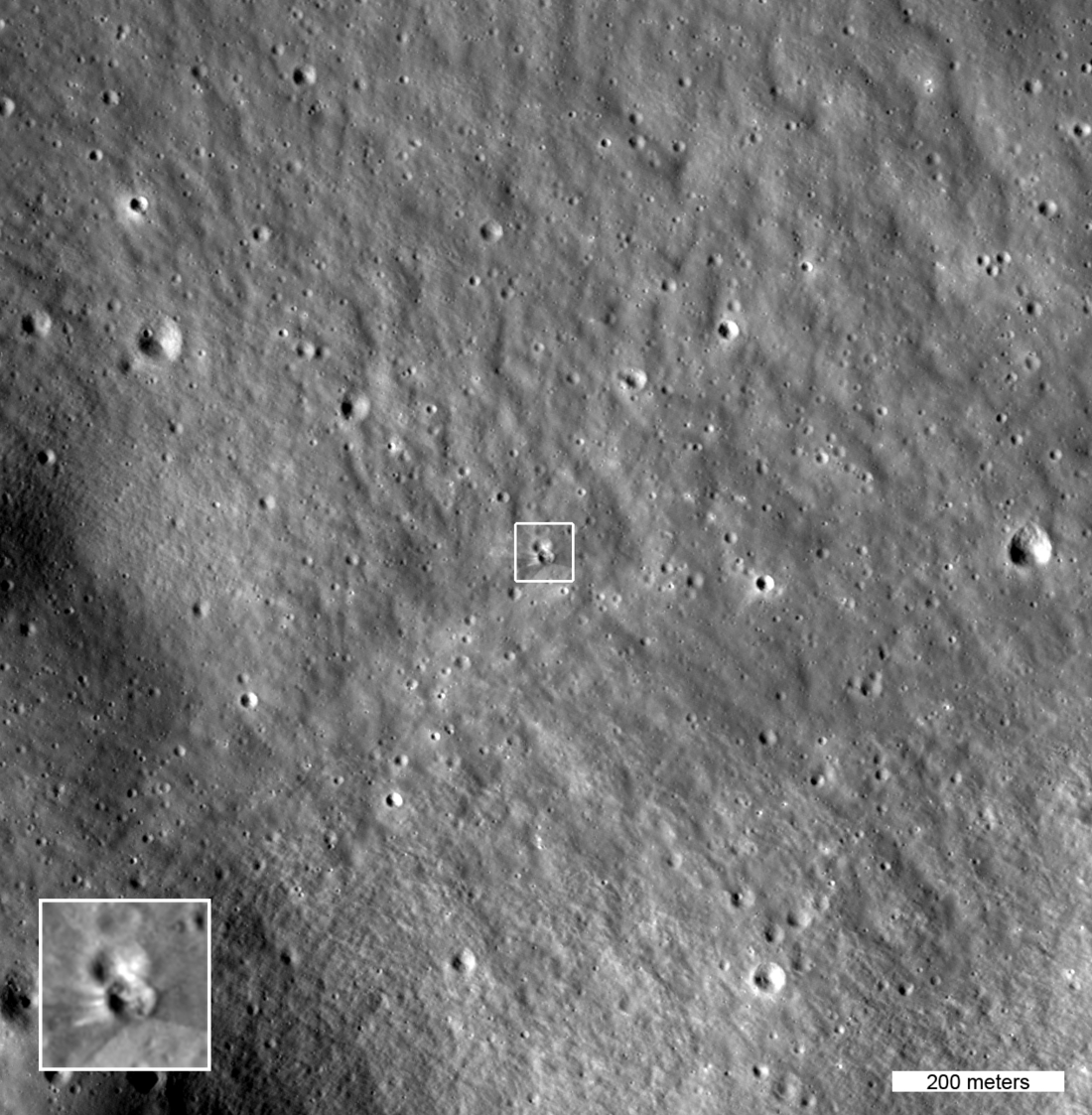
The box in the center of the image highlights two small craters; the lower crater formed on August 5th (6:35 UTC) when a SpaceX Falcon 9 upper stage, impacted the Moon. The inset (lower left) shows details of the new crater, enlarged three times. NASA’s high-rez LROC system acquired imagery 6 days after the impact as the NASA Lunar Reconnaissance Orbiter (LRO) passed over the site.
Image credit: NASA/GSFC/Intuitive Machines
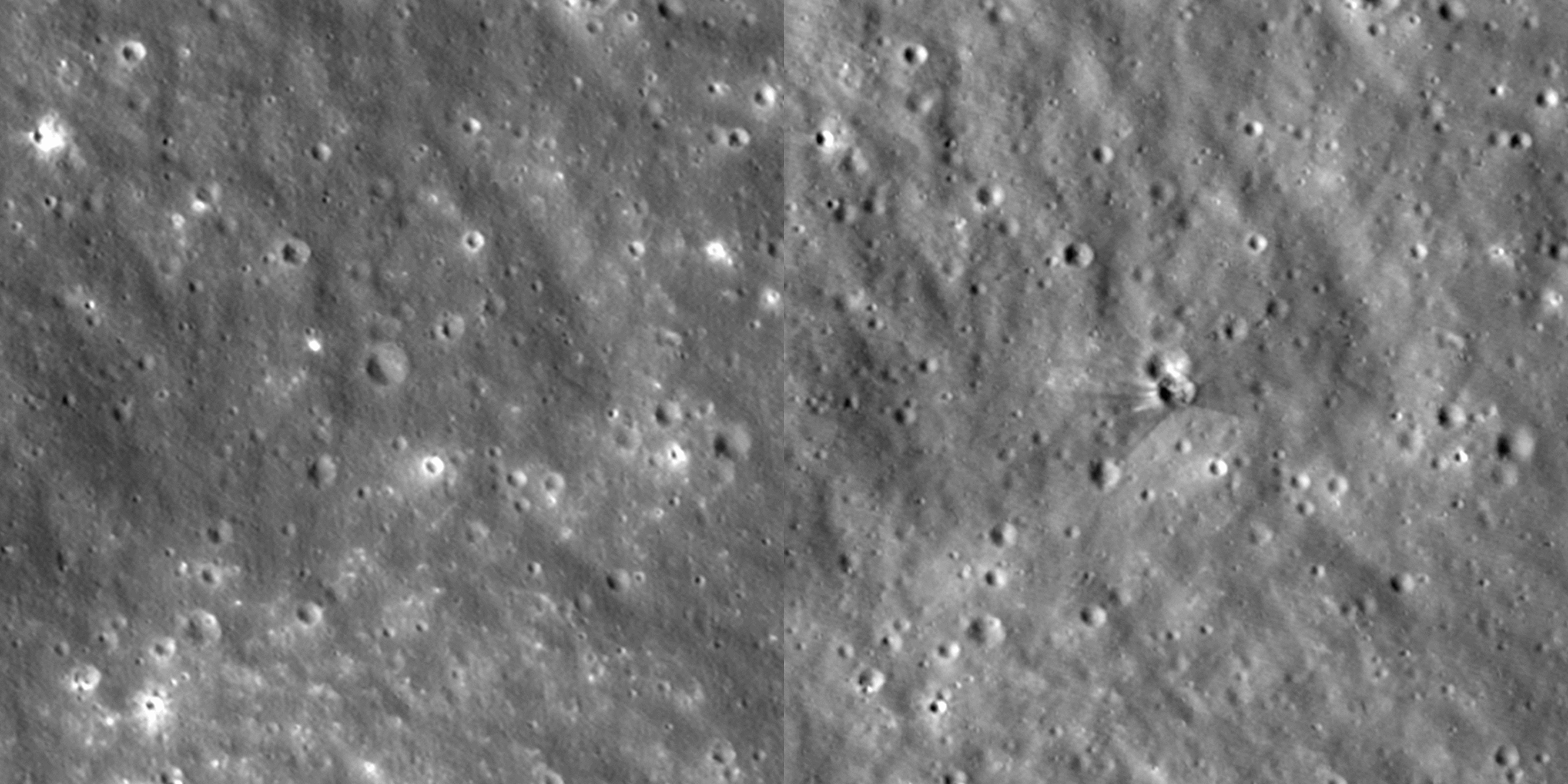
NASA’s super camera on its Lunar Reconnaissance Orbiter (LRO) passed over the crash site of a Falcon-9 rocket stage, snapping imagery six days after the impact. The spacecraft’s LROC Narrow Angle Camera took an image before and after the booster collision with the Moon.
On August 11th,the LROC system acquired the images, one every 117 minutes, the time it takes to orbit the Moon.
Ejecta pattern
The new crater has been found to be around 60 feet (18 meters) in diameter and appears to be less than 10 feet (3 meters) deep.
The distinctive V-shaped ejecta pattern on the south side of the crater is consistent with natural impactors hitting the Moon at low angles relative to the surface.

NASA’s Lunar Reconnaissance Orbiter (LRO).
Credit: NASA’s Goddard Space Flight Center Conceptual Image Lab
The sixth, and final, image in the LRO sequence was acquired with the largest slew angle (68°), presenting a view similar to what an astronaut would see looking out an Orion window toward the horizon.
Go to this before/after gif at:
https://lroc.im-ldi.com/ckeditor_assets/pictures/1610/content_03_f9_before_after_enalrge3x_blink.gif
For full details on the rocket body impact, go to Mark Robinson, lead of the LROC system at Intuitive Machines, at:
 Posted in Space News