 By
By  September 16th, 2026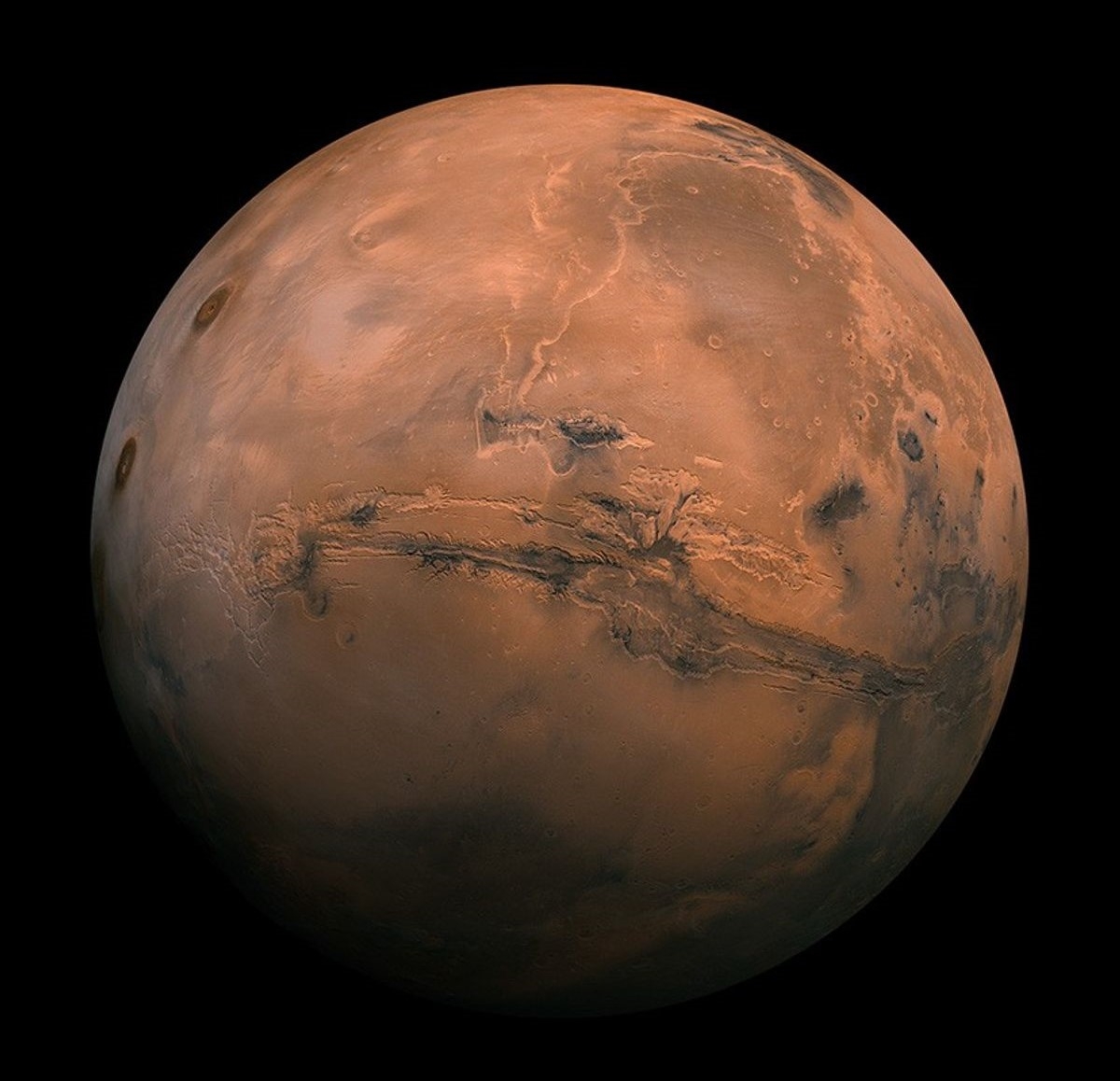
Image credit: NASA
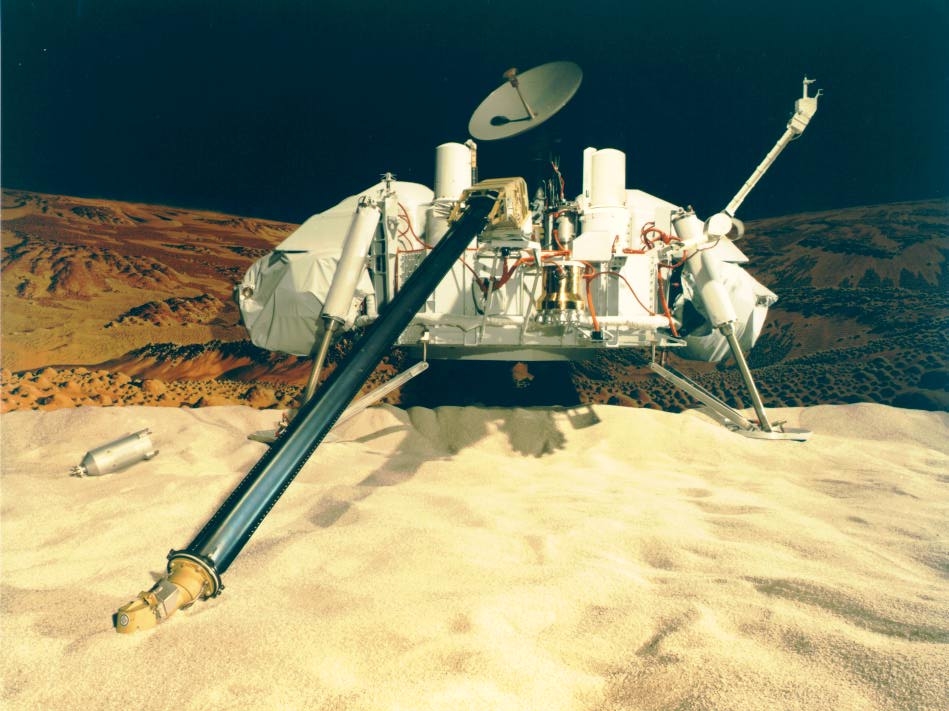
Last July, there were several events commemorating the 50th anniversary of the Viking missions to Mars. Back in 1976, twin spacecraft missions — each consisting of a lander and an orbiter – made their way to the Red Planet and into the history books.
The Viking 1 lander planted its legs on the terrain of Chryse Planitia on July 20, 1976, with the Viking 2 lander touching down months later at Utopia Planitia on September 3.
Search for life
A key duty for the lookalike landers involved scooping up soil samples of Mars and deposited those precious collectibles into onboard, specialized equipment designed to ask a central question: Is there life on Mars?
It is possible that the two robots actually radioed back a very clear comeback: “Can you repeat the question?’’
A reanalysis of the Viking results has recently been done. The observations suggest that Martian soil both oxidized organic nutrients and fixed carbon from CO and/or CO₂ gases—“a combination typical of a microbial community, whose experimental responses no known mineral chemistry has yet reproduced,” a research team reports.
Credit: NASA
Technical reanalysis
The detailed work was led by Jan Spacek, founder and CEO of Agnostic Life Finding Association, Inc. He presently develops life detection devices, from coronavirus to searching for life on Mars as well as within the clouds of Venus.
A preprint of a manuscript submitted to the journal Astrobiology was made available to Inside Outer Space.
The new research – “The case for extant life on Mars: A Technical Reanalysis of the Viking Carbon Assimilation–Pyrolytic Release Experiment” – focuses on that 1976 CAPyR investigation.
Changing interpretation
The paper explains that the CAPyR experiment was originally interpreted as a sign of martian biology. However, the CAPyR investigators themselves “ultimately judged a biological origin unlikely,” in part because the response appeared to be more thermally stable than expected for hypothetical martian biology.
Spacek, along with colleagues Clay Abraham and Steven Benner, point out that more recent reassessments of the Viking biology experiments have emphasized that perchlorate, discovered long after the Viking experiments were done, may change interpretation of certain Viking measurements that were originally suggested to show an absence of life, and possibly to indicate that the Martian soils were ‘self-sterilizing.’
Benner is author of the recently published book, Meet the Neighbors: Life on Mars and How to Find It. (Allen Lane: London, UK; 2026).

Credit: NASA/Ben Clark
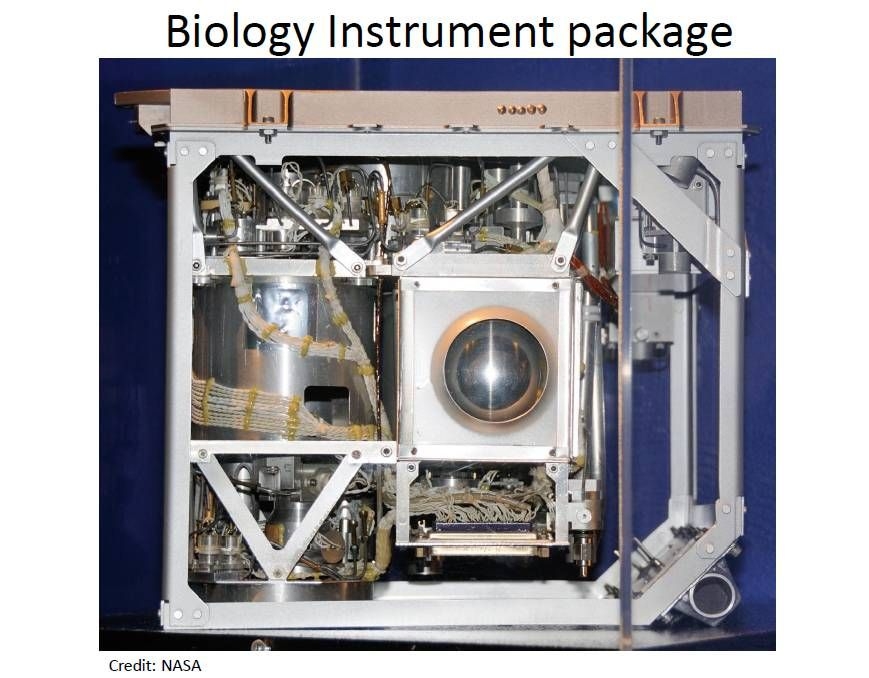
Image credit: Ben Clark
Mars chemistry, mineralogy
In presenting their case for a re-look at Viking data, their reanalysis “motivates experiments seeking to match the manifold of CAPyR results here on Earth, without an expensive flight to Mars.”
Additionally, they observe, “no mechanism has yet reproduced the principal Viking observations as a whole, and those that may have done so remain paradoxical from the perspective of chemical thermodynamics.”
Modern Mars chemistry and mineralogy, the research team explains, “weaken two premises that once favored a nonbiological interpretation of the CAPyR results.” This should motivate renewed consideration of the view that the CAPyR results “remain consistent with biology.”
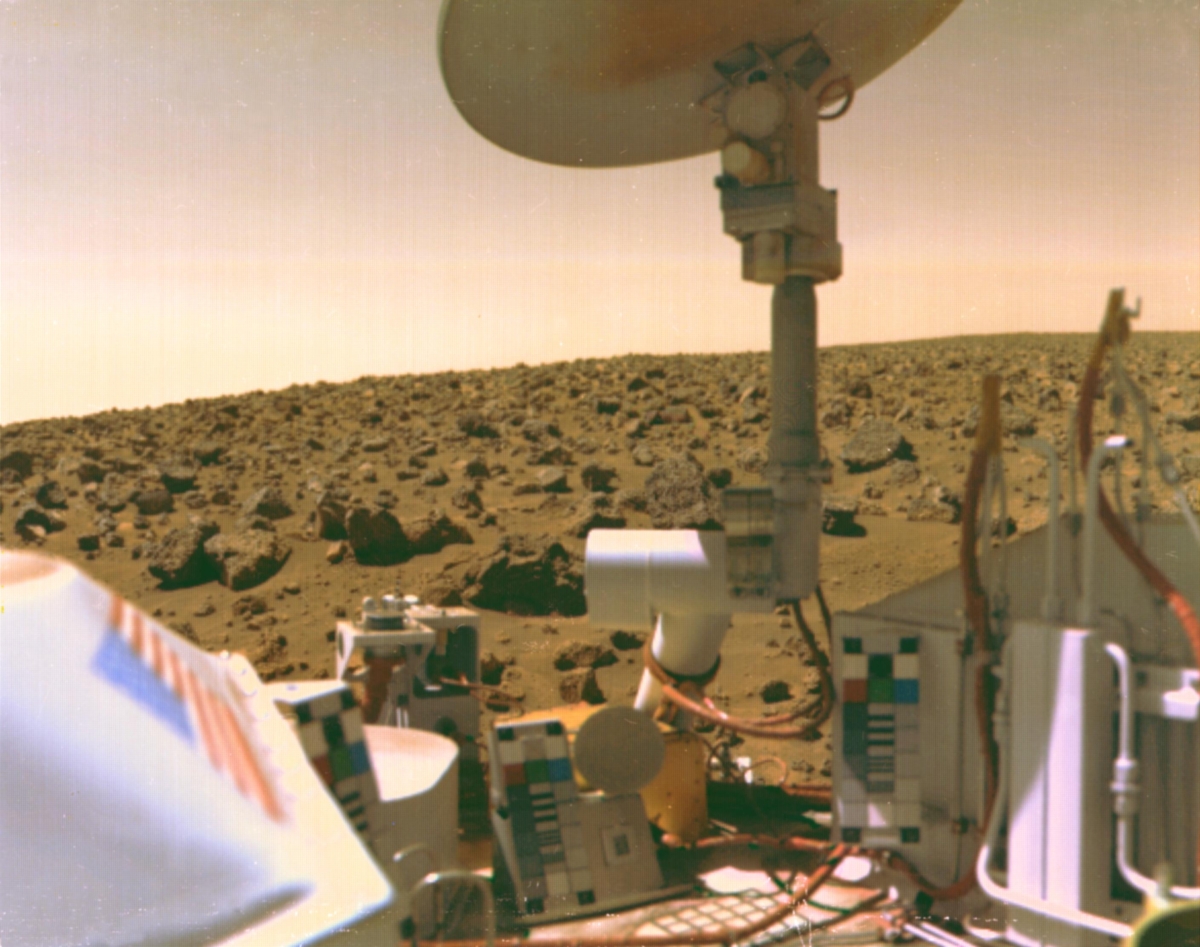
Image credit: NASA
Low-cost missions
Spacek, Abraham and Benner call for redirecting Mars exploration priorities back toward the direct search for extant life on Mars. This priority is also emphasized for the Martian subsurface.
Distributed, low-cost mission architectures provide one practical route for returning modern on-the-spot life-detection experiments to multiple Martian surface and shallow-subsurface sites on the Red Planet.
IMPRESS concept
To that end, Spacek and colleagues are championing a concept called the International Mars Prospecting Ride-Share System, or IMPRESS. The idea is featured on the cover of the September issue of Astrobiology.
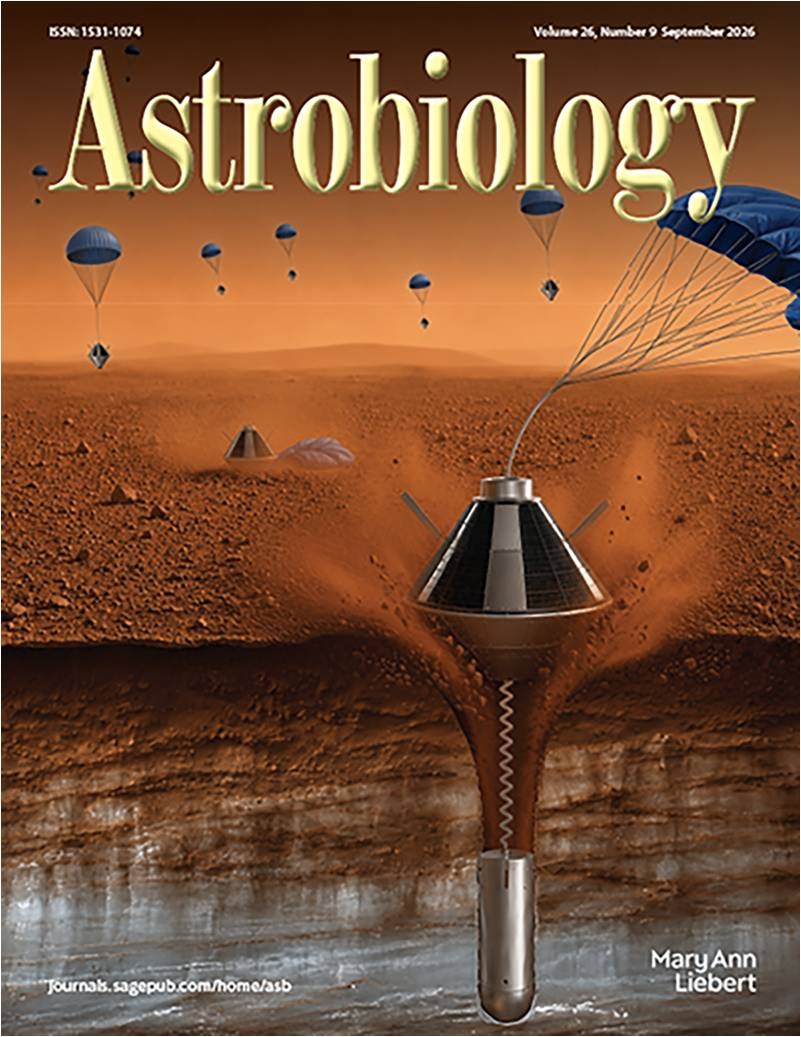
Image credit: Astrobiology
“IMPRESS intends to search for life on Mars before we send humans there and, ideally before [China’s] Tianwen-3 brings samples back,” Spacek states. “The penetrators are not limited to use in astrobiology. They can deliver a wide range of science payloads, prospect for resources, and assess risks before upcoming Mars missions.”
For more information on this innovative mission, go to:
Also, go to the preprint paper — “The case for extant life on Mars: A Technical Reanalysis of the Viking Carbon Assimilation–Pyrolytic Release Experiment” — at:
 Posted in Space News

