 By
By  October 4th, 2025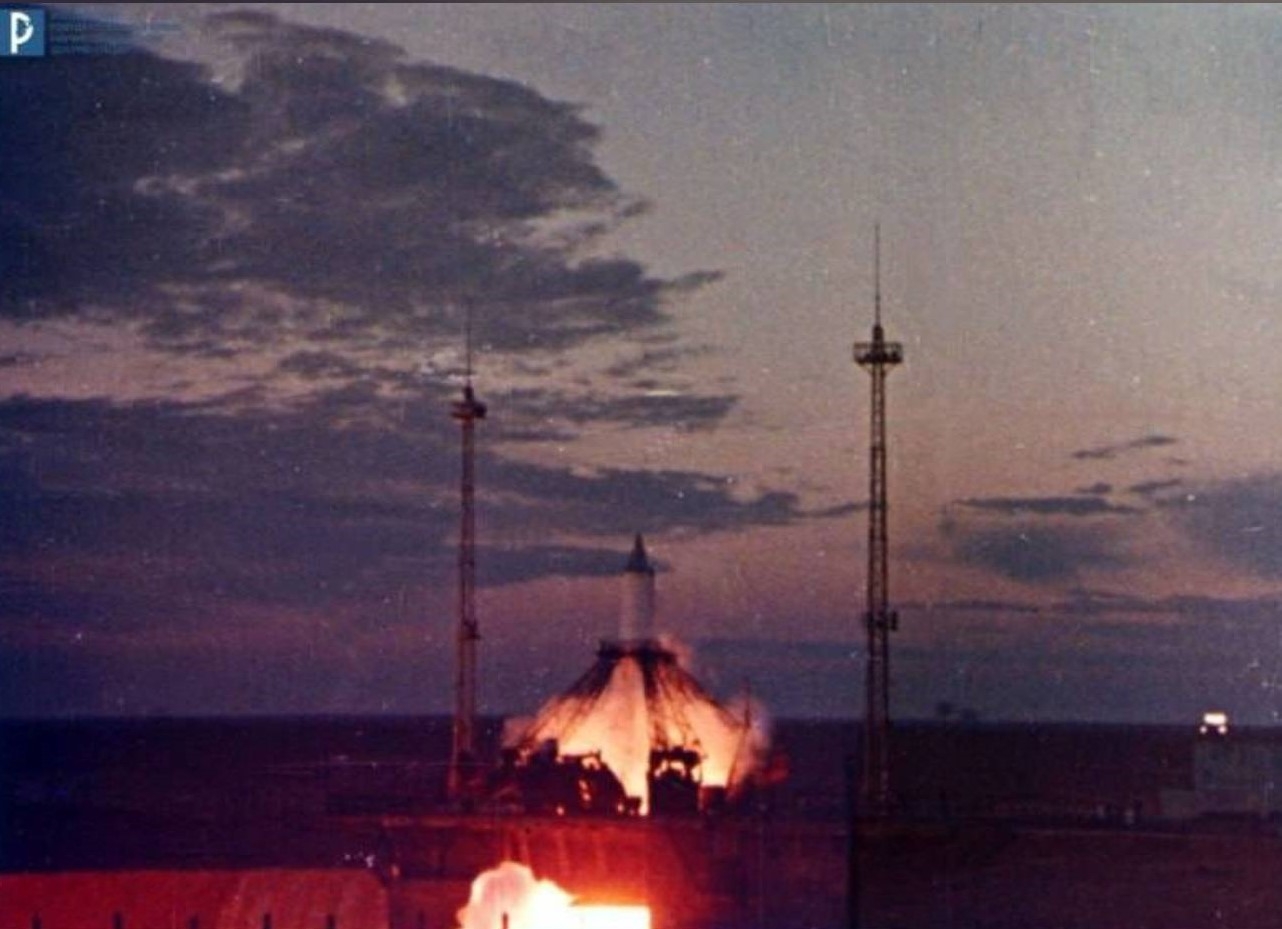
Launch of the R-7 rocket with the first artificial Earth satellite from the Tyuratam launch pad.
Image credit: Roscosmos/Russian State Archive of Scientific and Technical Documentation
The opening shot that kicked off the “Space Race.”
October 4, 1957, now 68 years ago today, the former Soviet Union’s R-7 rocket lifted off from the Tyuratam test site (now the Baikonur Cosmodrome), hurling into space the first artificial Earth satellite.
The R-7 Semyorka intercontinental ballistic missile was modified by Sergei Pavlovich Korolev, known as The Chief Designer. This version of the R-7 rocket to place the first satellite into orbit was designated 8K71PS No. M1-1PS.
Sealed aluminum sphere
Sputnik-1 was a 184-pound sealed aluminum sphere, about half a meter (58 cm) in diameter, with four antennas.
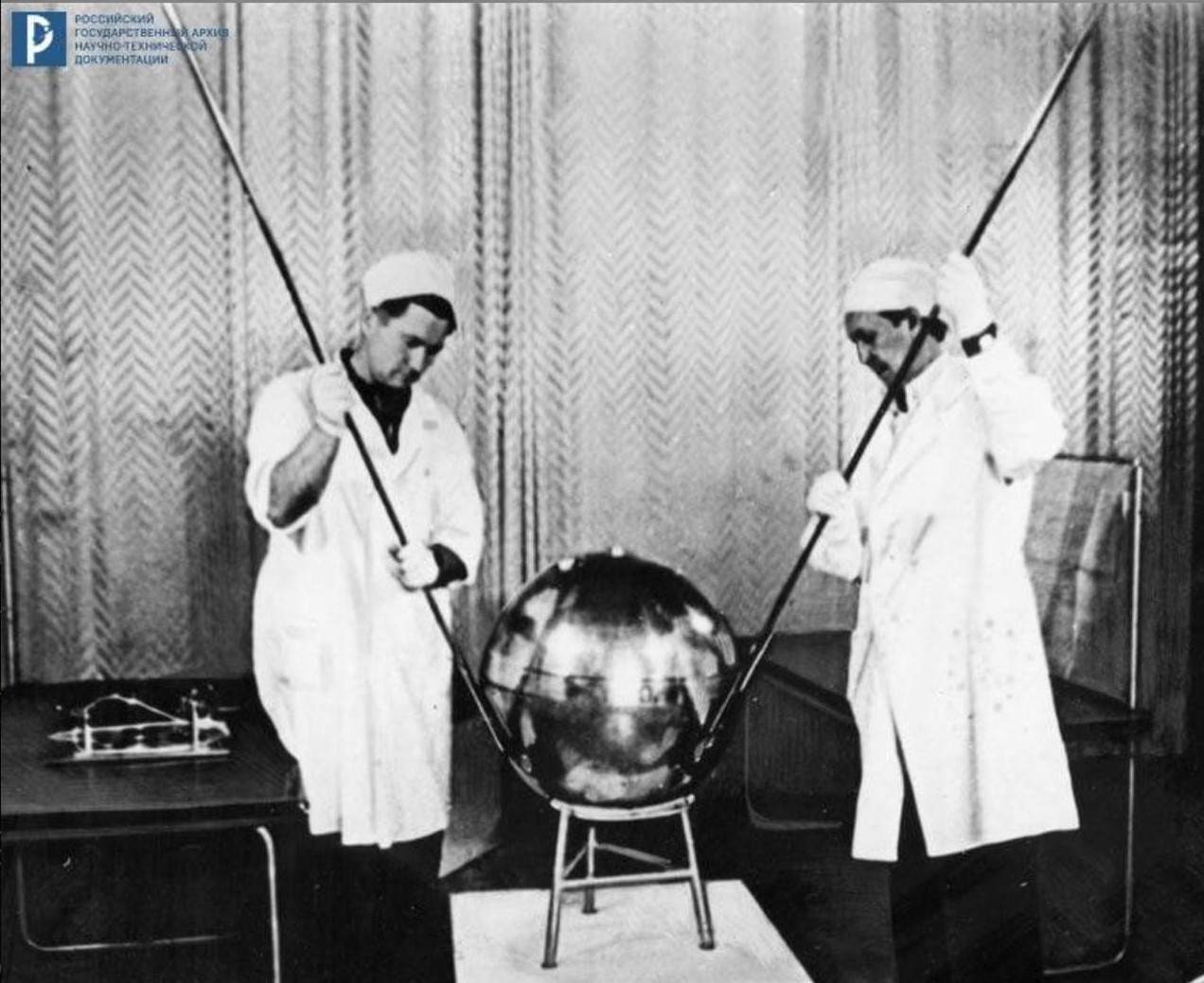
Pre-flight photo of the first artificial satellite with Soviet OKB-1 design bureau technicians Yu.D. Silaev and M.E. Kleymenov.
Image credit: Roscosmos/Russian State Archive of Scientific and Technical Documentation
Inside the satellite, the bare minimum: a radio station, thermal control system fan, temperature and pressure sensors, and an onboard cable network.
Beeps heard around the world
In 295 seconds after launch of the R-7 booster, Sputnik-1 and the second stage of the rocket were pushed into an elliptical orbit.
At 315 seconds after liftoff, the first satellite separated from the rocket stage.
The transmitters turned on and the whole world heard the now famous “beep-beep-beep” signals of Sputnik-1, transmissions that were the starting point of the Space Age.
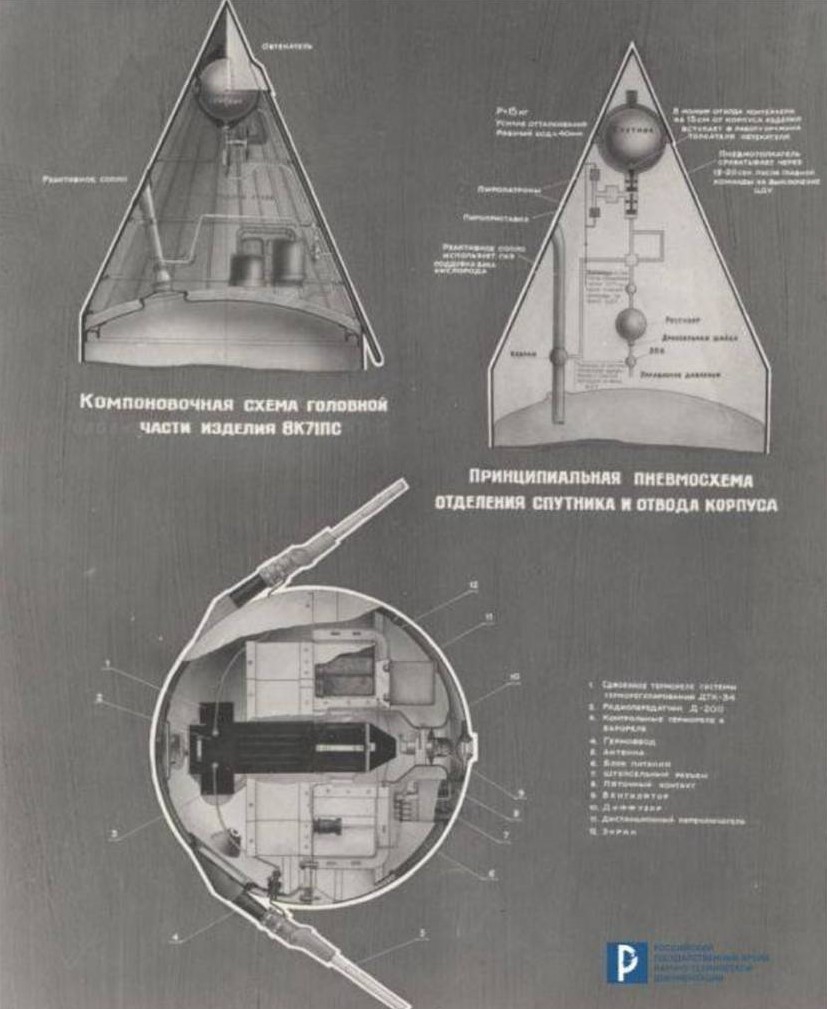
Pre-flight photo of the first artificial satellite with Soviet OKB-1 design bureau technicians Yu.D. Silaev and M.E. Kleymenov.
Image credit: Roscosmos/Russian State Archive of Scientific and Technical Documentation
Artificial star
Over the course of three months, the satellite completed 1,440 orbits around the Earth.
As noted in a Roscosmos posting, “due to its low reflectivity and small size, it was virtually impossible to see the satellite.”
What people saw in the sky as an artificial “star,” notes the Roscosmos posting, was the second stage of the rocket measuring 59-feet (18-meters) long that launched Sputnik-1 into orbit.
 Posted in Space News

