 By
By  October 1st, 2026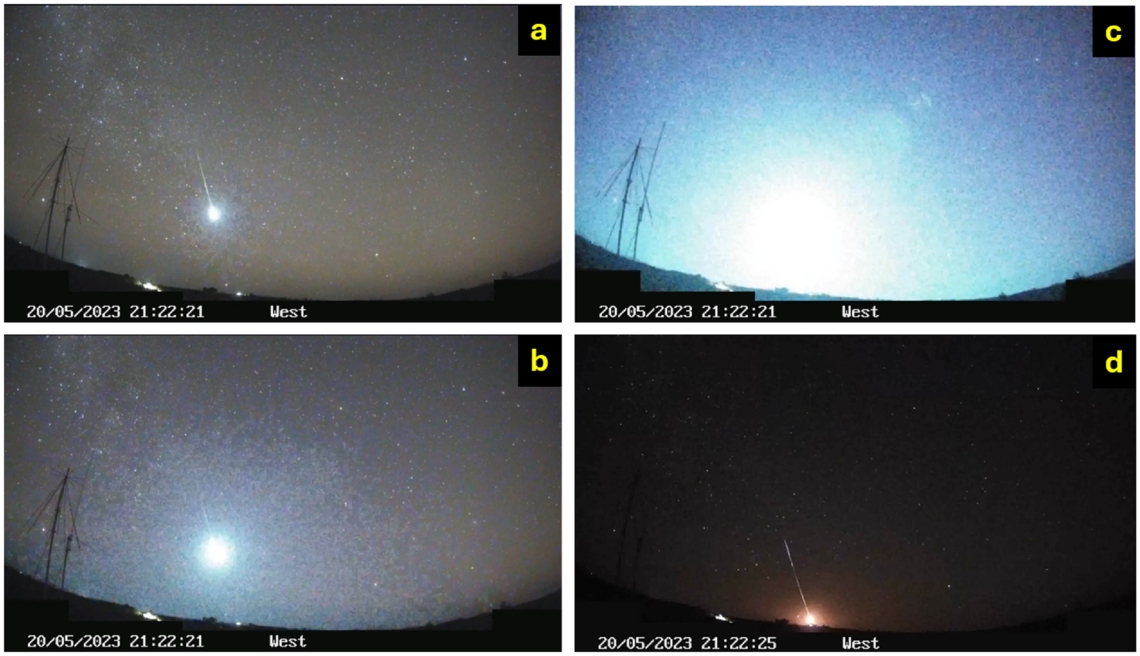
Ground-based optical observations of the Queensland superbolide.
Image credit: Elizabeth A. Silber et al
Back on May 20, 2023, an asteroid plowed into Earth’s atmosphere over northwest Queensland, Australia. It produced 1 of the 20 most energetic bolide events reported by NASA’s Center for Near-Earth Object Studies (CNEOS) since 1988. It also was the most energetic fireball observed over Australia since satellite reporting began in 1988.
The Queensland superbolide has undergone significant scrutiny in a new research paper published by the American Astronomical Society.
Catastrophic fragmentation
The 3.7 meter diameter asteroid entered Earth’s atmosphere over northwest Queensland, Australia, at and underwent catastrophic fragmentation at roughly 18 miles (29 kilometers) altitude.
The Queensland superbolide event provides an end-to-end observational benchmark for atmospheric entry models and planetary defense, reports the new research paper, led by Elizabeth Silber, a senior research and development physicist at Sandia National Laboratories in Albuquerque, New Mexico.
Silber and colleagues present a multimodal analysis that brings together CNEOS optical data, trajectory determination, infrasound detections at six International Monitoring System stations, seismic observations, as well as thermal infrared imagery obtained by the Himawari-9 geostationary satellite.
Energy released
This 2023 event yielded a brilliant fireball visible from distances exceeding 600 kilometers and was accompanied by pronounced sonic booms.
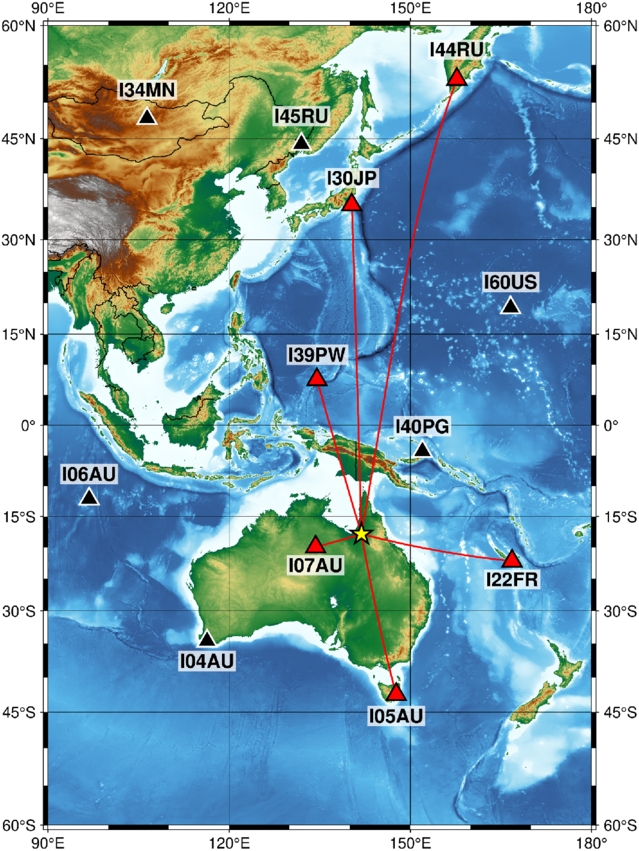
Contextual map showing the event (star) and the six IMS stations, which detected the fireball (red triangles). Other nearby IMS stations that did not have any detections are also shown (black triangles).
Image credit: Elizabeth A. Silber et al
US Government (USG) space-based sensors, reported through the National Aeronautics and Space Administration’s (NASA) Center for Near-Earth Object Studies (CNEOS), recorded the total radiated energy released by the bolide, roughly 7.1 kilotons TNT equivalent.
Infrasound observations independently confirmed a multikiloton source, with Silber and colleagues reporting the first nighttime detection and mass quantification of a bolide dust cloud from geostationary orbit. That cloud persisted for over one hour, the research team notes, and yielded a dust mass of 10.9–32.8 metric tons (14%–43% of the pre-atmospheric mass).
Lingering dust cloud
That thermal infrared imagery from the Japanese Himawari-9 geostationary weather satellite captured the evolution of a lingering dust cloud at the burst altitude.
“To our knowledge, this represents the first detection and mass quantification of a bolide dust cloud using nighttime thermal infrared observations from geostationary orbit, providing an independent constraint on the disrupted mass of the impacting body through a technique previously applied only to volcanic ash,” explain the scientists analyzing the event.
As recorded by USG sensors, the optical brightness profile reveals multiple and distinct luminosity peaks, indicative of episodic fragmentation during the bolide’s atmospheric plunge.
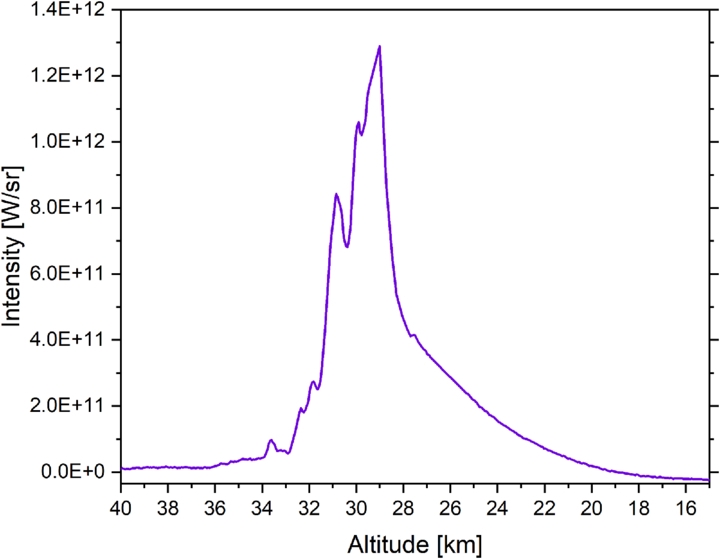
US Government sensor derived lightcurve as a function of altitude of the bolide event.
Image credit: Elizabeth A. Silber et al
The International Monitoring System stations are operated by the Comprehensive Nuclear-Test-Ban Treaty Organization (CTBTO) Preparatory Commission. It is a global network of 53 (of a planned 60) infrasound stations designed for illicit explosion monitoring.
Search and recovery attempt
Interestingly, the incident also involved a meteorite search and recovery attempt. A team was dispatched to search for meteorite fragments within the bounds of the fall site near Blackbull for 7 days, between June 19-26, 2023. The search group took one day to rest midweek due to high temperatures at the fall site, however, no meteorites were recovered.
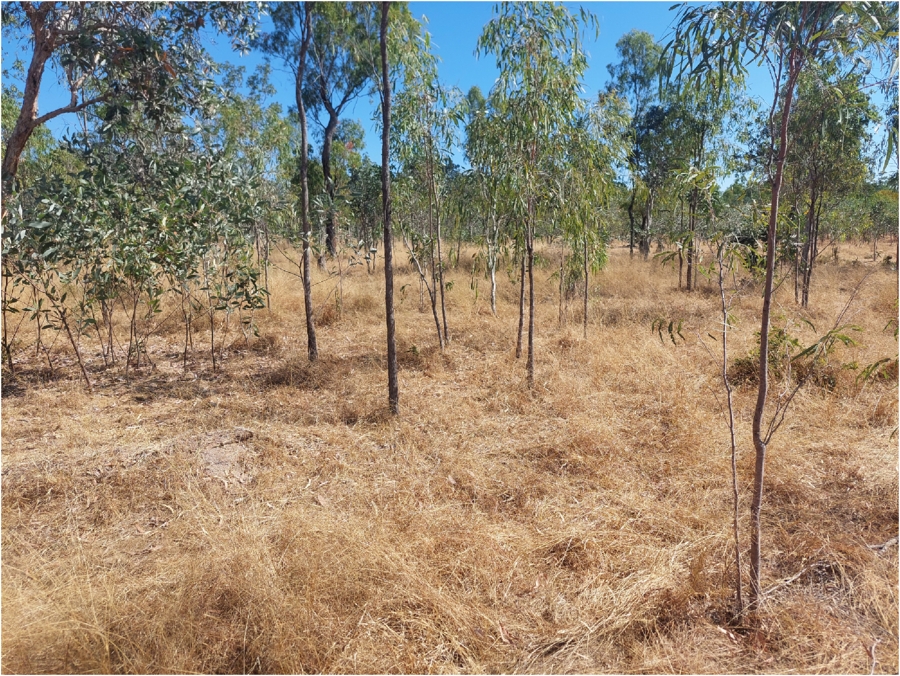
Photo showing the meteorite searching ground. Significant coverage of the ground by grasses and vegetation made searching for meteorite fragments extremely difficult.
Image credit: Elizabeth A. Silber et al
The small size of the predicted fragments, the heavily vegetated and the challenging and remote search terrain, including rugged terrain, dense vegetation, and limited accessibility within the predicted strewn field – all of these factors likely reduced the probability of successful recovery, the research paper indicates.
The Queensland superbolide is notable for the low altitude of its principal fragmentation and terminal disruption, with the research paper highlighting a number of other cross-discipline lessons learned that the event yielded.
For a look at this impressive, open access research paper – “The 2023 May 20 Queensland Superbolide: Multimodal Observations from Atmospheric Entry to Postdisruption Dust Cloud” – go to:
https://iopscience.iop.org/article/10.3847/1538-3881/ae9285/meta
 Posted in Space News

