 By
By  April 20th, 2026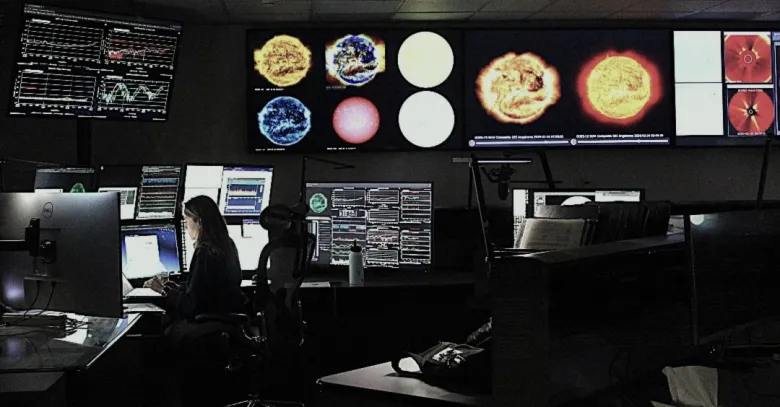
Image credit: Barbara David
BOULDER, Colorado – To better gauge our sun’s conniptions there is need to sharpen space weather forecasting skills, honed to better monitor the space environment and provide solar-terrestrial information. The requirement to do so is driven by solar outbursts that can impact satellite communications, GPS systems, and even electric power transmission here on Earth.
Gathering data about the sun’s output also played a major role during the 10-day voyage of the Artemis II mission, a 24/7 vigil to keep an eye on threatening solar radiation storms and used by NASA to assess the risk to the crew for health and radiation exposure considerations.
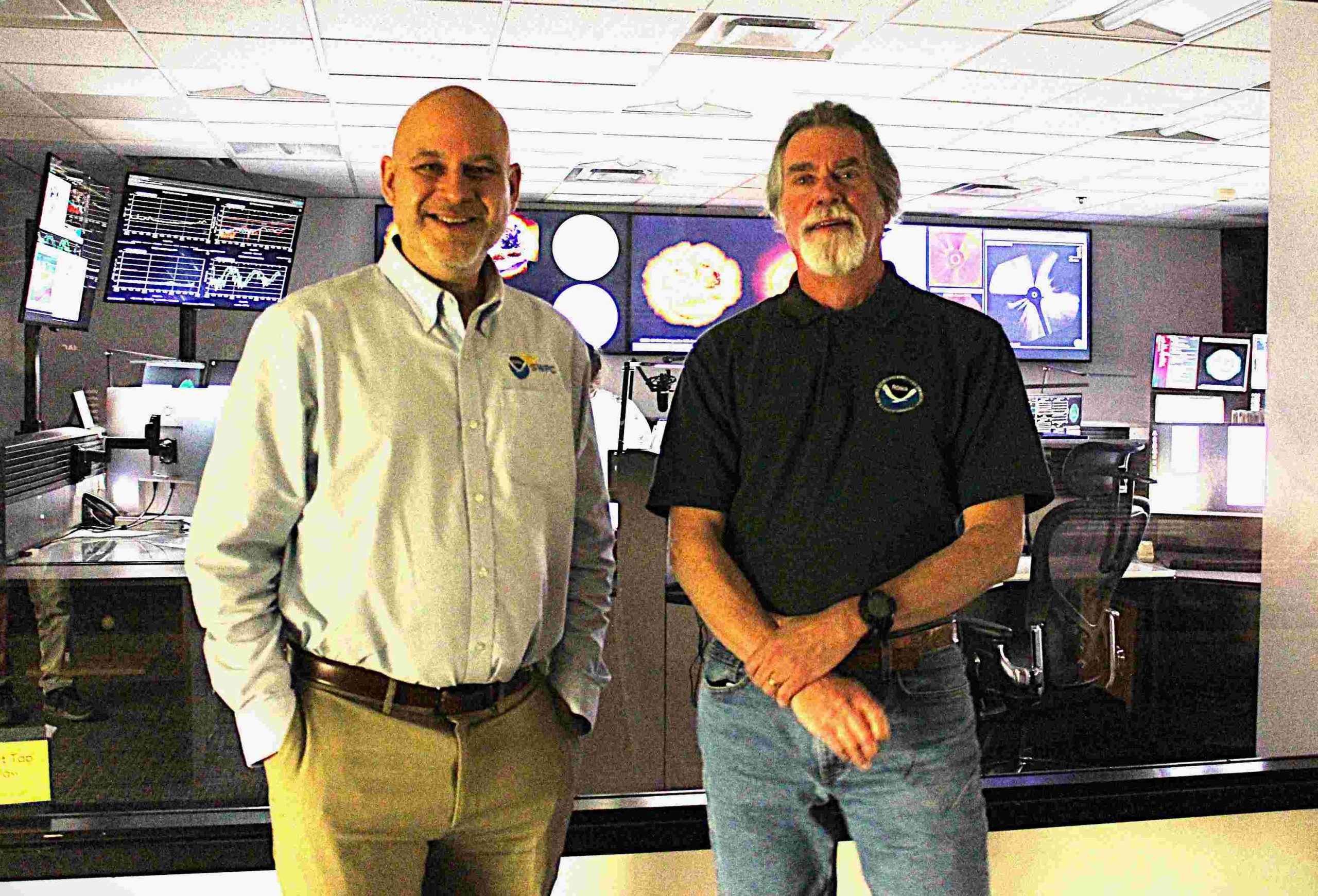
Clinton Wallace, Director of Space Weather Prediction Center (left) and Shawn Dahl, SWPC Service Coordinator.
Image credit: Barbara David
Here at the Space Weather Prediction Center (SWPC) — part of the National Oceanic and Atmospheric Administration — they are the official source of space weather alerts and warnings for the United States.
For more details, go to my new SpaceNews story and open in Ingognito mode — “How space weather forecasting keeps astronauts (and satellites) safe” — at:
How space weather forecasting keeps astronauts (and satellites) safe
Space weather during the week of April 10 – 16 as seen in this video from NASA’s Solar Dynamics Observatory (SDO) at:
https://x.com/i/status/2045895198832533647
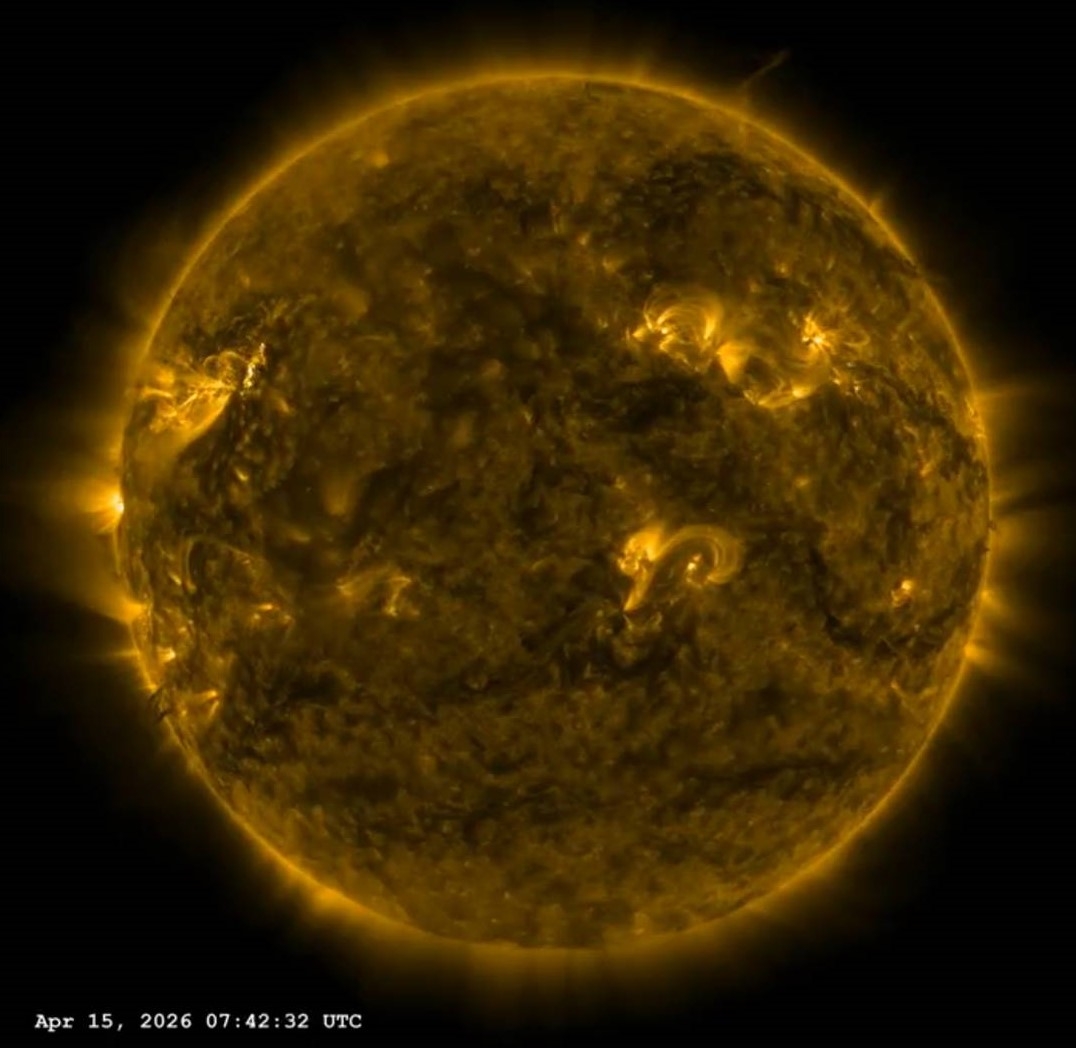
Image credit: NASA’s Solar Dynamics Observatory (SDO)
 Posted in Space News

