 By
By  September 1st, 2015
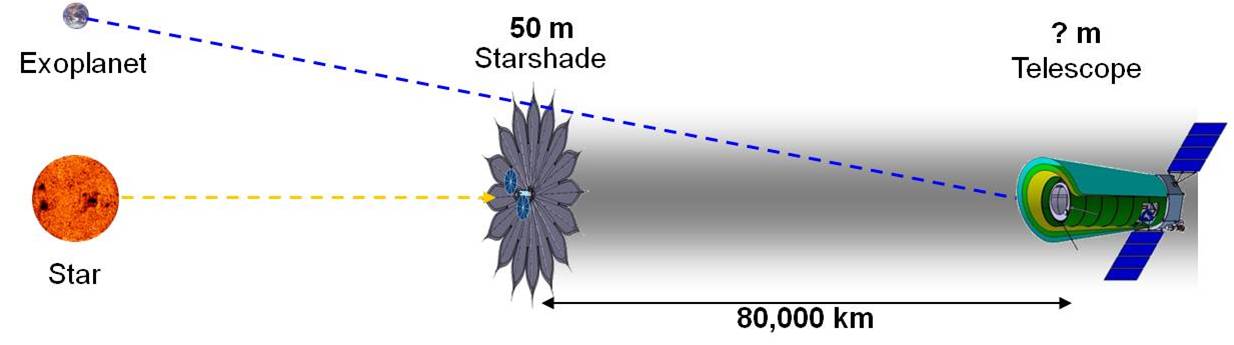
Credit: Northrop Grumman
Testing is on-going to develop an in-space starshade that can block the light from a primary star while allowing light from dimmer orbiting planets to be spotted by future space-based telescopes.
Along with desert tests here on Earth, the McMath-Pierce Solar Telescope at Kitt Peak National Observatory in Arizona has been used to model a starshade’s ability to eventually find and characterize rocky worlds, like Earth.
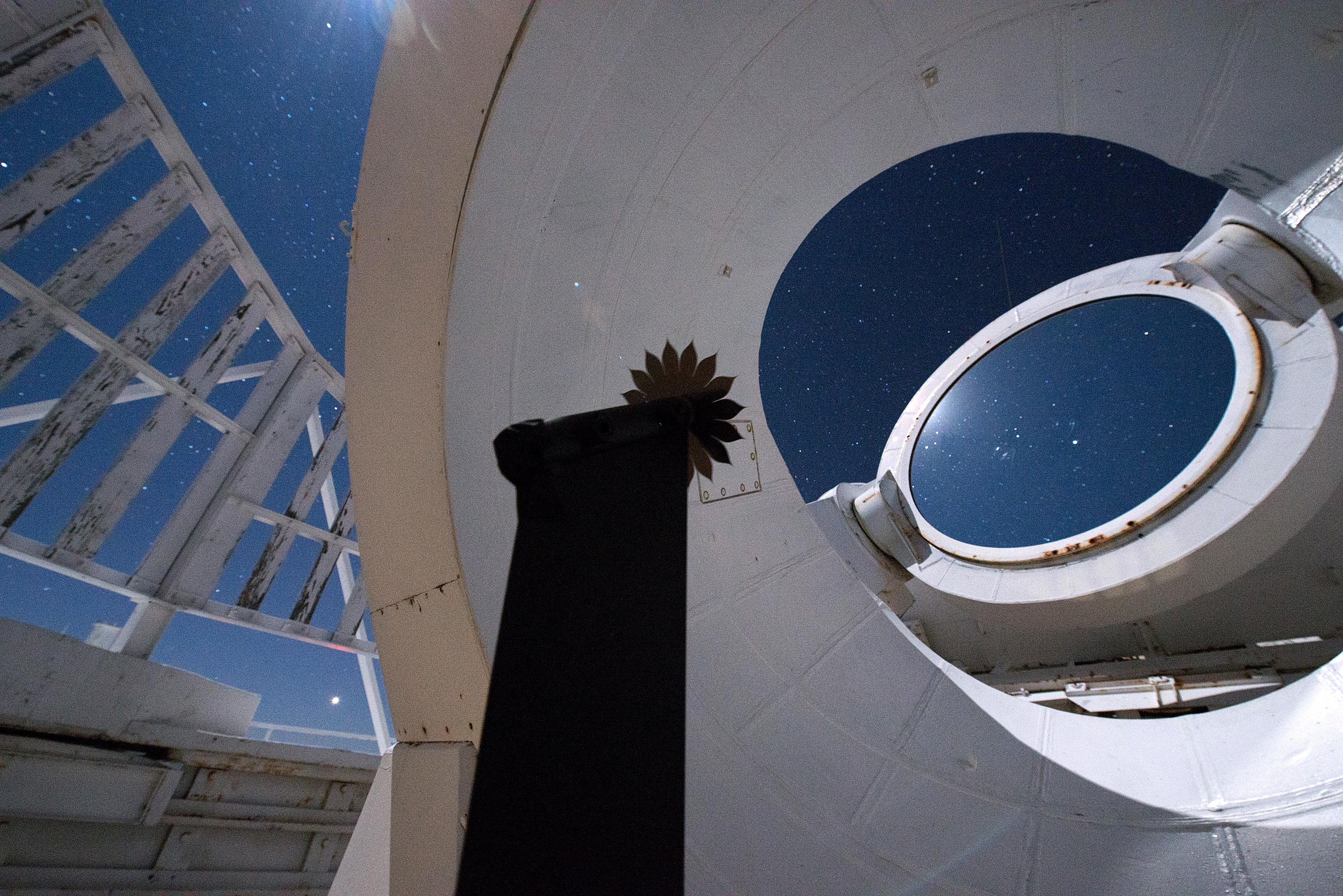
Technicians have made use of the McMath-Pierce Solar Telescope at Kitt Peak National Observatory in Arizona to assess and validate optical models of starshade designs.
Credit: Northrop Grumman/Robert Brown
A possible early use of a starshade may be tied to the Wide-Field Infrared Survey Telescope (WFIRST) – an orbiting telescope with a 2.4 meter primary mirror — the same size as the Hubble Space Telescope mirror – that was provided to NASA by the U.S. spy agency, the National Reconnaissance Office (NRO).
Check out my new Space.com story on this concept at:
How ‘Starshades’ Could Aid Search for Alien Life
http://www.space.com/30429-starshade-alien-life-search-wfirst-tech.html
 Posted in Space News

