 By
 November 26th, 2026
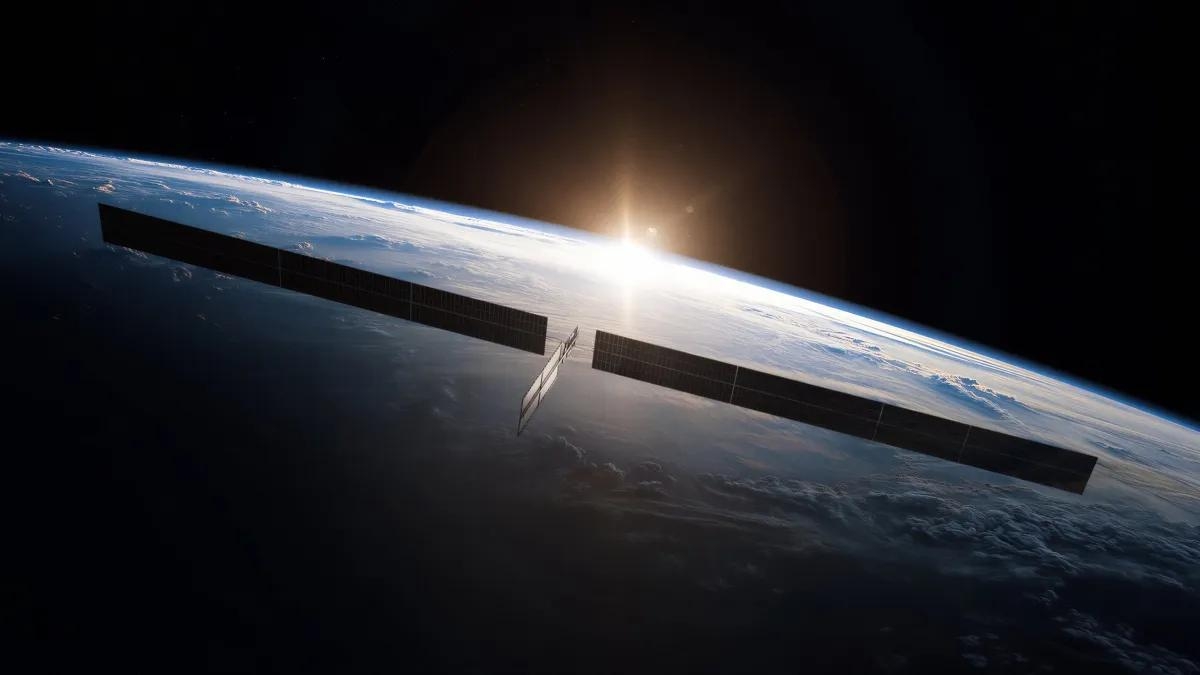
Concept artwork depicts Starmind orbital data center.
Image credit: SpaceX
The Federal Communications Commission granted the first authorization in U.S. history for a constellation of data centers in space. The FCC’s decision authorizes SpaceX to:
- Deploy at unprecedented scale: Establish the “Starmind” constellation of up to 1 million orbital data centers to help meet rapidly growing demand for super-intelligence computing.
- Maintain resilient command and control: Use radiofrequency links for backup and emergency telemetry, tracking, and command (TT&C) across the satellite system.
- Back up its optical network: Supplement optical inter-satellite links with radiofrequency communications in the 18.8–19.3 GHz downlink and 28.6–29.1 GHz uplink bands.
Meanwhile, the FCC is continuing to review additional orbital data center proposals “and intends to issue decisions on each expeditiously according to the agency’s regular procedures.”
Emergent technology
The SpaceX proposed Starmind constellation consists of one million non-geostationary satellite orbit satellites operating as orbital data centers in low-Earth orbit.
“We find that grant of this application will serve the public interest by permitting SpaceX to pioneer emergent technology that advances American leadership in space and artificial intelligence,” notes the FCC.
“The space economy continues to grow, and technologies once confined to the ground—like servicing, manufacturing, and now artificial intelligence—are proliferating in space. These emerging technologies require access to radiofrequency spectrum to support backup and emergency mission operations,” the FCC document explains.
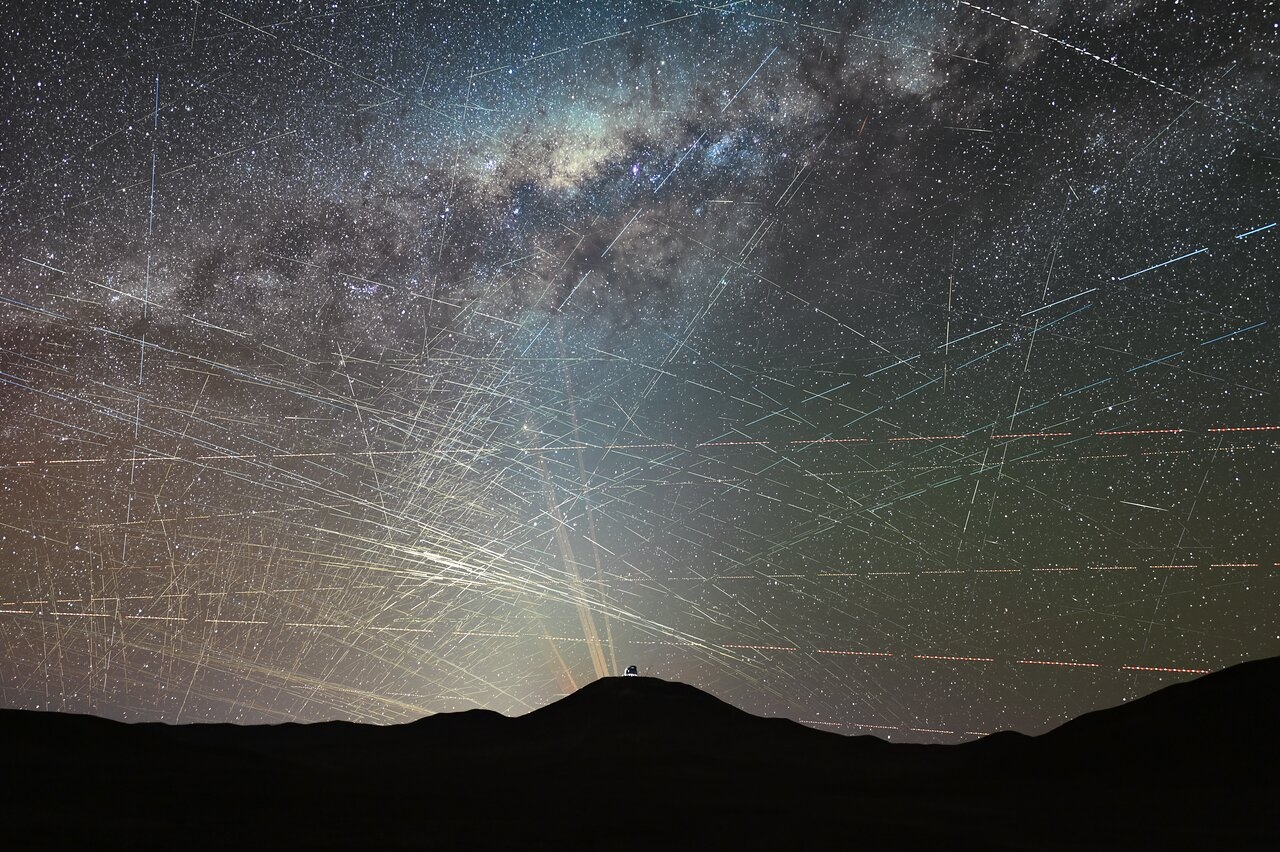
One hour of satellites over the northern Atacama Desert in Chile, an image produced in October 2025. Image credit: F. Kamphues, ESO/M. Kornmesser
Profound consequences
“As approved, this project would not only have profound consequences for astronomy, but also fundamentally alter the night sky for everyone on the planet,” responded Andreas Kaufer, Director General at the European Southern Observatory (ESO).
“We demonstrated these impacts in an extensive technical analysis, and raised them in a response to the US FCC, as did other organizations worldwide. This approval highlights the urgent need for international mechanisms capable of assessing activities whose impacts extend far beyond national borders and affect a global common good,” Kaufer said in an ESO statement.
Go to this FCC document at:
 Posted in Space News

