 By
By  May 24th, 2025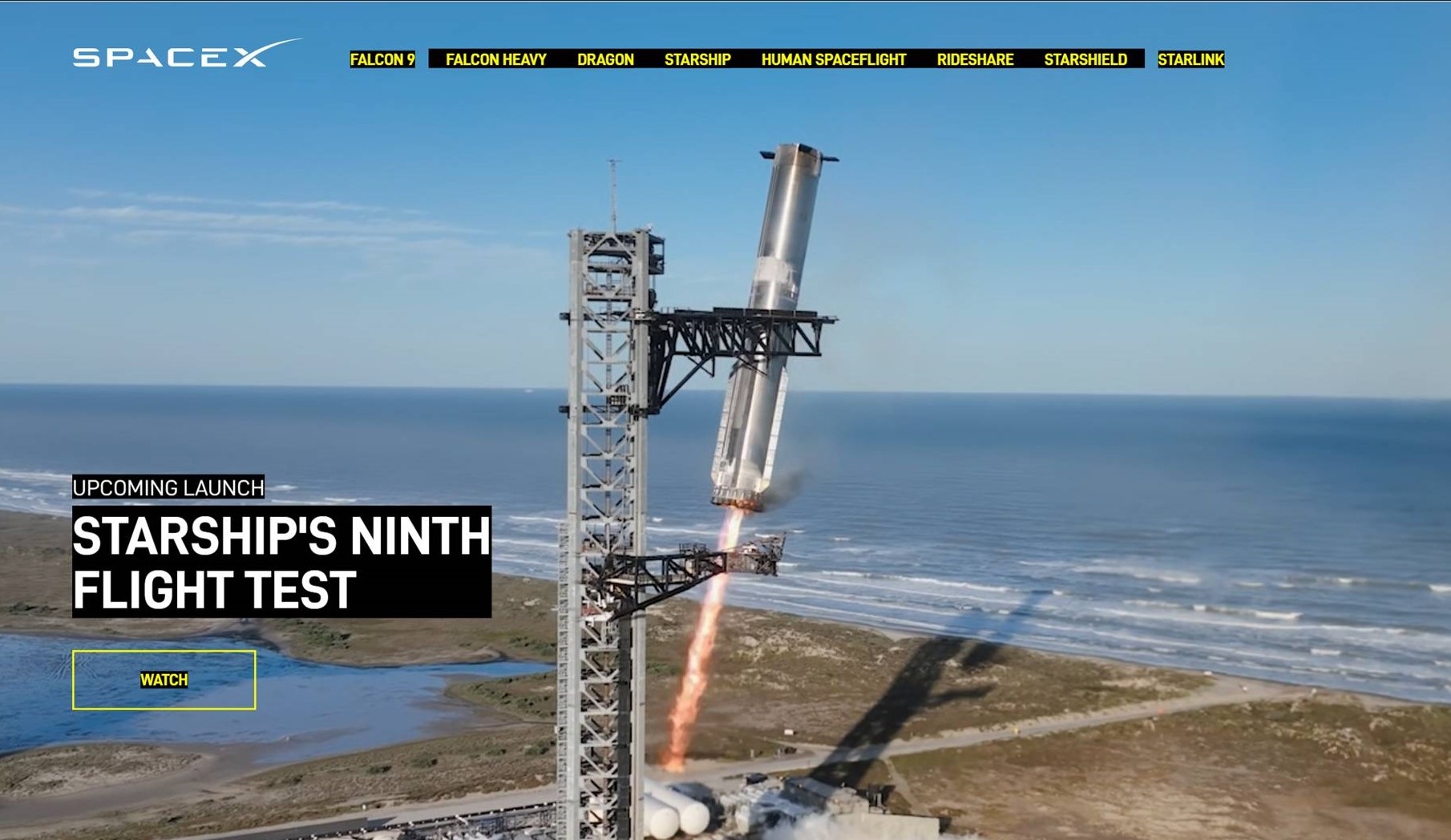
Image credit: SpaceX/Inside Outer Space screengrab
SpaceX is prepared to launch the ninth flight test of Super Heavy/Starship as soon as Tuesday, May 27. The launch window will open at 6:30 p.m. Central (Texas) Time.
“As is the case with all developmental testing, the schedule is dynamic and likely to change,” said SpaceX.
Meanwhile, SpaceX has provided a technical summary of the Starship flight 8 mishap investigation, with several hardware changes being made to increase reliability of flight 9’s mission.

Image credit: SpaceX
Here are things to watch for:
- The upcoming flight test marks the first launch of a flight-proven Super Heavy booster, which previously launched and returned on Starship’s seventh flight test.
- Super Heavy will fly a variety of experiments aimed at generating data to improve performance and reliability on future boosters.
- The Starship upper stage will repeat its suborbital trajectory and target objectives not reached on the previous two flight tests, including the first payload deployment from Starship and multiple reentry experiments geared towards returning the vehicle to the launch site for catch.

Image credit: FAA
Real-world performance data
- A large majority of the booster’s hardware will be flight-proven, including 29 of its 33 Raptor engines. Lessons learned from the first booster refurbishment and subsequent performance in flight will enable faster turnarounds of future reflights as progress is made towards vehicles requiring no hands-on maintenance between launches.
- The booster on this flight test is also attempting several flight experiments to gather real-world performance data on future flight profiles and off-nominal scenarios.
- To maximize the safety of launch infrastructure at Starbase, the Super Heavy booster will attempt these experiments while on a trajectory to an “offshore landing point in the Gulf of America and will not return to the launch site for catch.”
- Following stage separation, the booster will flip in a controlled direction before initiating its boostback burn. This will be achieved by blocking several of the vents on the vehicle’s hotstage adapter, causing the thrust from Starship’s engines to push the booster in a known direction.
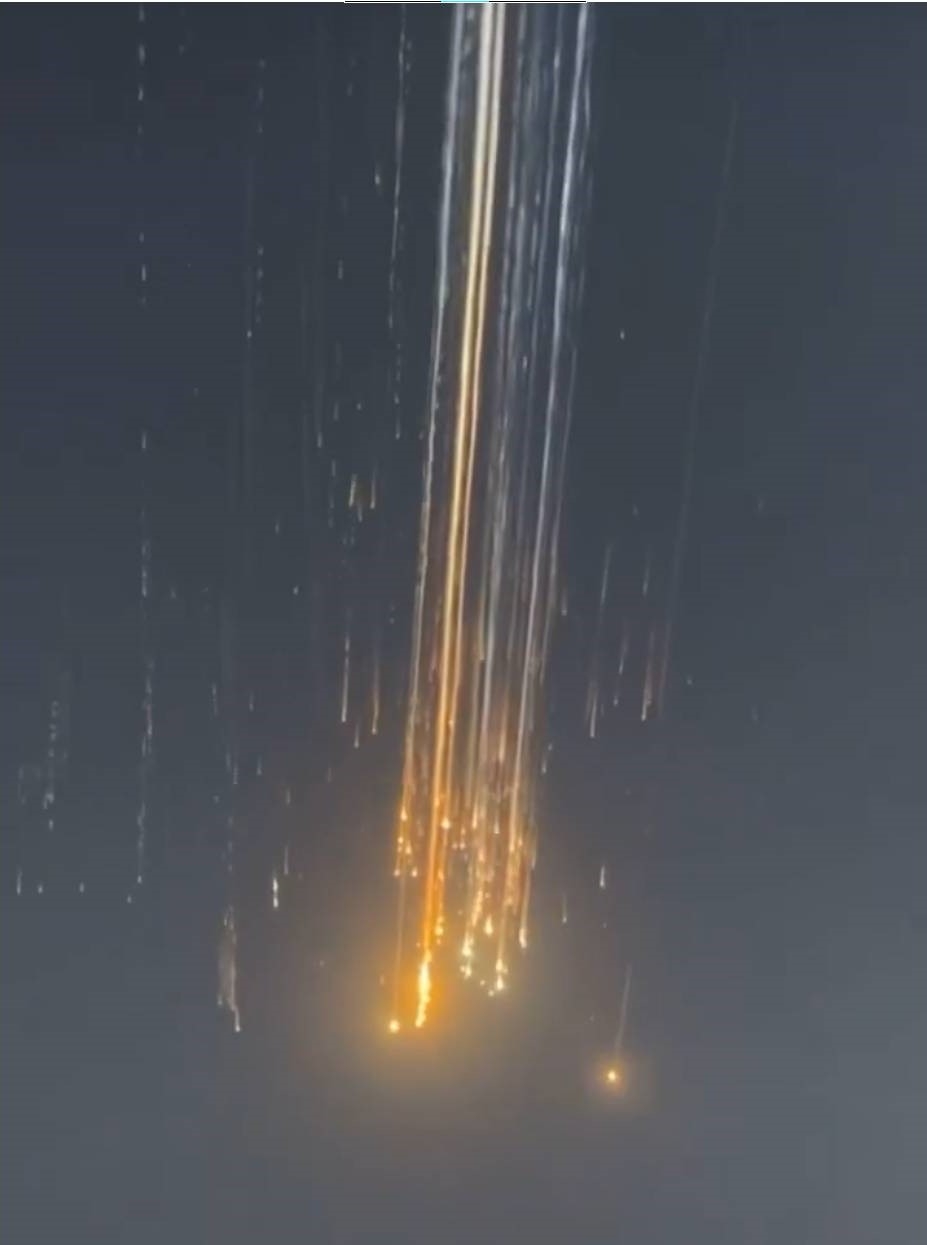
Starship 8 destructive ending.
Debris image credit: Wandy Rodriguez@JustFlyAndRock
Angle of attack
- After the conclusion of the boostback burn, the booster will attempt to fly at a higher angle of attack during its descent. By increasing the amount of atmospheric drag on the vehicle, a higher angle of attack can result in a lower descent speed which in turn requires less propellant for the initial landing burn.
- Finally, unique engine configurations will be demonstrated during the Super Heavy’s landing burn. One of the three center engines used for the final phase of landing will be intentionally disabled to gather data on the ability for a backup engine from the middle ring to complete a landing burn. The booster will then transition to only two center engines for the end of the landing burn, with shutdown occurring while still above the Gulf of America and the vehicle expected to make a hard splashdown.
In-space objectives
In the SpaceX posting, “the Starship upper stage will again target multiple in-space objectives, including the deployment of eight Starlink simulators, similar in size to next-generation Starlink satellites. The Starlink simulators will be on the same suborbital trajectory as Starship and are expected to demise upon entry. A relight of a single Raptor engine while in space is also planned.”
“A significant number of tiles have been removed from Starship to stress-test vulnerable areas across the vehicle during reentry. Multiple metallic tile options, including one with active cooling, will test alternative materials for protecting Starship during reentry,” the posting adds, also spotlighting that
the entire ship’s tile line also received a smoothed and tapered edge to address hot spots observed during reentry on Starship’s sixth flight test.

Starship reentry.
Image credit: SpaceX/Inside Outer Space screengrab
Developmental testing: unpredictable
“Starship’s reentry profile is designed to intentionally stress the structural limits of the upper stage’s rear flaps while at the point of maximum entry dynamic pressure.” On the sides of the vehicle, functional catch fittings are installed and will test the fittings’ thermal and structural performance.
Lastly, SpaceX reports that developmental testing by definition is unpredictable. “But by putting hardware in a flight environment as frequently as possible, we’re able to quickly learn and execute design changes as we seek to bring Starship online as a fully and rapidly reusable vehicle.”
To read the entire posting on this upcoming test flight, go to:
https://www.spacex.com/launches/mission/?missionId=starship-flight-9
 Posted in Space News

