 By
By  May 18th, 2026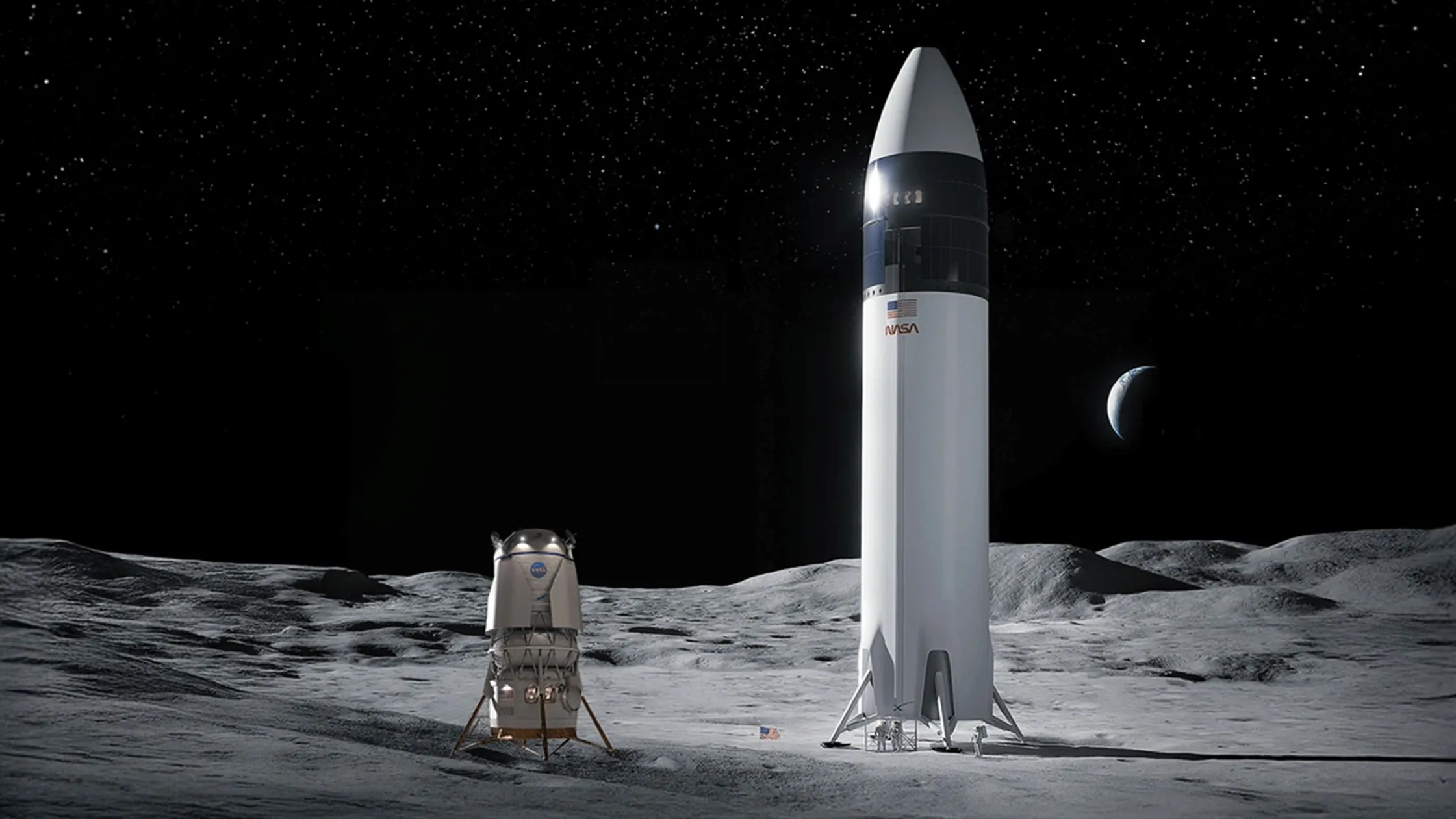
A composite image of Blue Origin’s Blue Moon lander (left) and SpaceX’s Starship lander (right) on the lunar surface.
Image credit: NASA OIG/Blue Origin/SpaceX
Since the inception of the Human Landing System (HLS) program in 2019, NASA has obligated nearly $7 billion to lander development.
It is projected that NASA will spend over $18 billion through fiscal year 2030.
SpaceX and Blue Origin will design, build, and own their landers, while NASA will purchase the landing services.
However, both providers utilize NASA expertise and resources, and the Agency maintains various degrees of insight into and oversight of lander development.
Gaps remain

Artwork depicts two Artemis astronauts planting an American flag at the lunar south pole.
Image credit: NASA/Daniel O’Neal
Auditors determined that the Agency’s acquisition approach had effectively controlled contract costs: SpaceX and Blue Origin contracts had increased by 6 percent and less than 1 percent, respectively.
But both companies have faced technical and integration hurdles that could affect costs and delivery timelines.
“Although the providers are tasked with meeting mission milestones and technical requirements, NASA is ultimately responsible for ensuring crew safety,” the NASA OIG reports.
“The Agency is taking proactive steps to mitigate and prevent hazards, but gaps remain in its testing posture and crew survival analyses. For one, NASA and SpaceX disagree on whether the company is meeting the manual control requirement that allows the crew to override automated systems during descent.
Go to a May 18 news item from the NASA OIG – “Examining the Commercial Lander Services Powering NASA’s Return to the Moon” – at:
Also, go to this video — To the Moon and Back: NASA’s Management of the Artemis Human Landing System Contracts — at:
https://www.youtube.com/watch?v=DpLsS_P4Tq4
 Posted in Space News

