 By
By  September 7th, 2016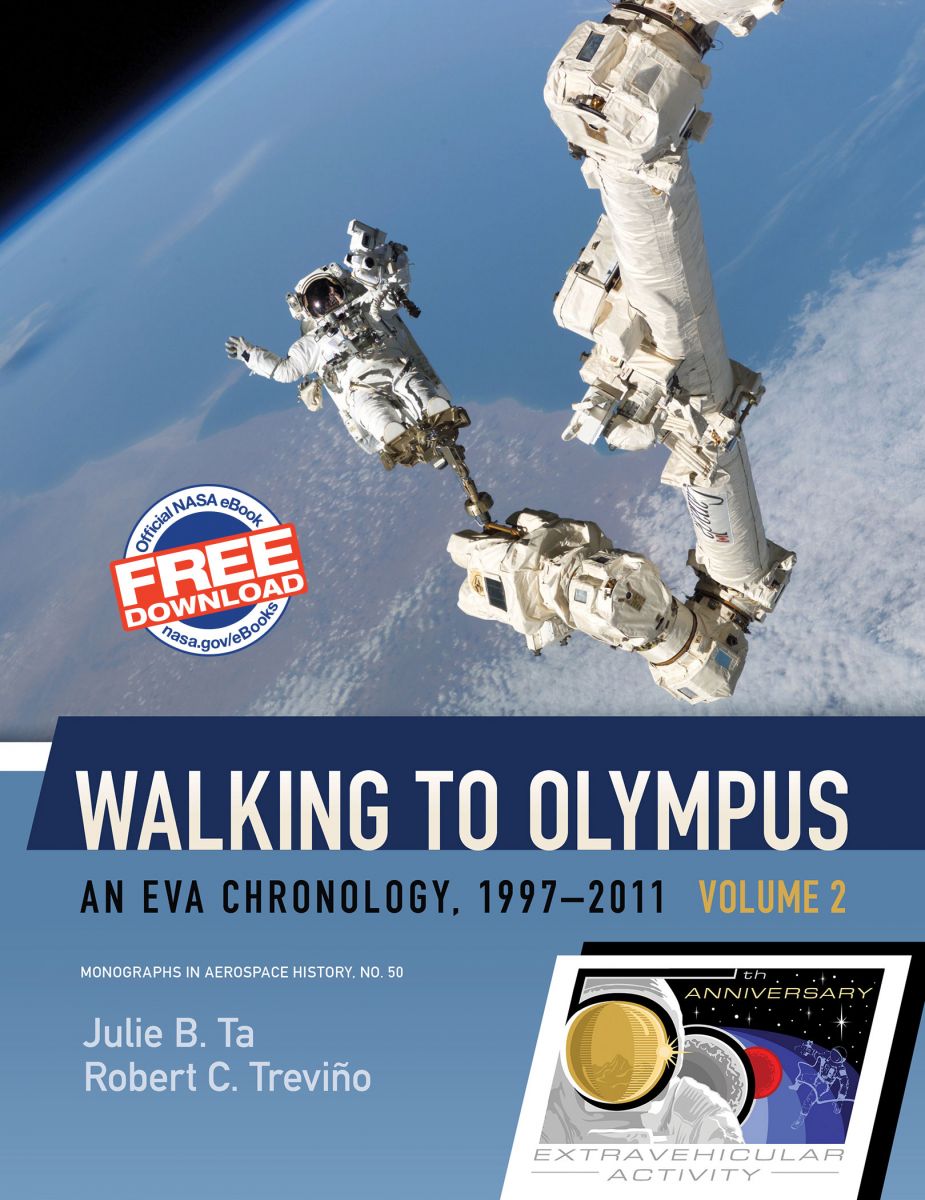
Credit: NASA
A new NASA history document is yours for the download – spotlighting the growth of spacewalking – known as extravehicular activity or EVA.
Walking to Olympus: An EVA Chronology, 1997–2011 Volume 2 has been written by Julie B. Ta and Robert C. Treviño.
Following the first volume of Walking to Olympus: An EVA Chronology, which recounted the period from the first spacewalks in 1965 to the end of the Shuttle-Mir program in 1997, this second volume of Walking to Olympus spans the period from 1997 to the end of the Space Shuttle Program in 2011.

Credit: NASA History Office
EVA community
The new work includes not only spacewalks performed by American and European astronauts and the Russian/Soviet cosmonauts, but also those of the newest members of the EVA community, the taikonauts of the People’s Republic of China.
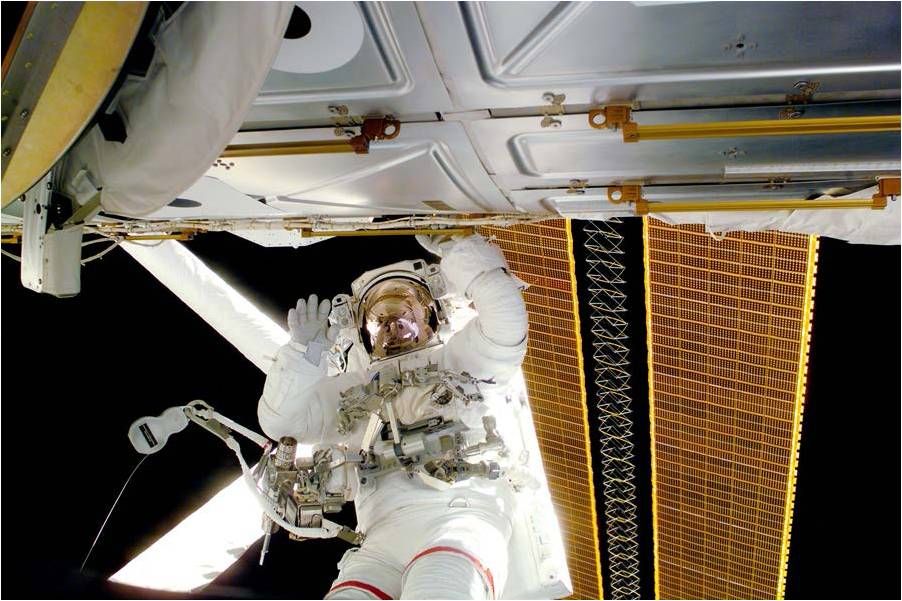
Several key events and themes from this period include the building of the ISS, the servicing of the Hubble Space Telescope, and the STS-107 Columbia accident.
The publication of this second EVA chronology follows two major anniversaries of significance to the spaceflight community: the 50th anniversary of the first EVA and the 25th anniversary of the Hubble Space Telescope.
Making the journey
The phrase “Walking to Olympus” is a symbolic expression of humans inevitably landing on Mars and exploring the planet, including Olympus Mons, the largest volcano in our solar system.
Credit: NASA
As noted in the foreword to the document:
“Human spaceflight is often considered the greatest challenge in space exploration and EVAs are at the crux of human spaceflight and exploration. While there are still many uncertainties about our eventual human voyages to Mars, there is still at least one certainty: we will need to be able to work successfully outside of the space vehicles and habitats to make that journey,” explains Dava Newman, Deputy Administrator of NASA.
To access this document, go to:
http://www.nasa.gov/sites/default/files/atoms/files/walking-to-olympus_tagged.pdf
 Posted in Space News

