 By
By  August 14th, 2026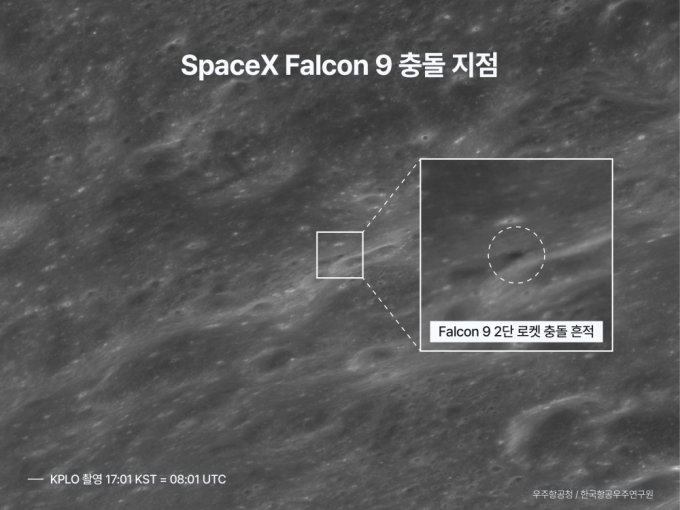
Image credit: Korea Aerospace Administration
The lunar dust and turf have settled after a multi-ton SpaceX upper stage slam-banged into terrain near Einstein Crater on August 5.
That impact site was imaged by South Korea’s Moon-orbiting Danuri spacecraft, as well as by NASA’s Lunar Reconnaissance Orbiter (LRO). Reportedly, a Chinese commercial space debris monitoring satellite tracked and recorded the Moon punch too.
Wandering through space for over a year, the leftover Falcon 9 upper stage augured into the Moon at 5,400 miles per hour, or 8,690 kilometers per hour.
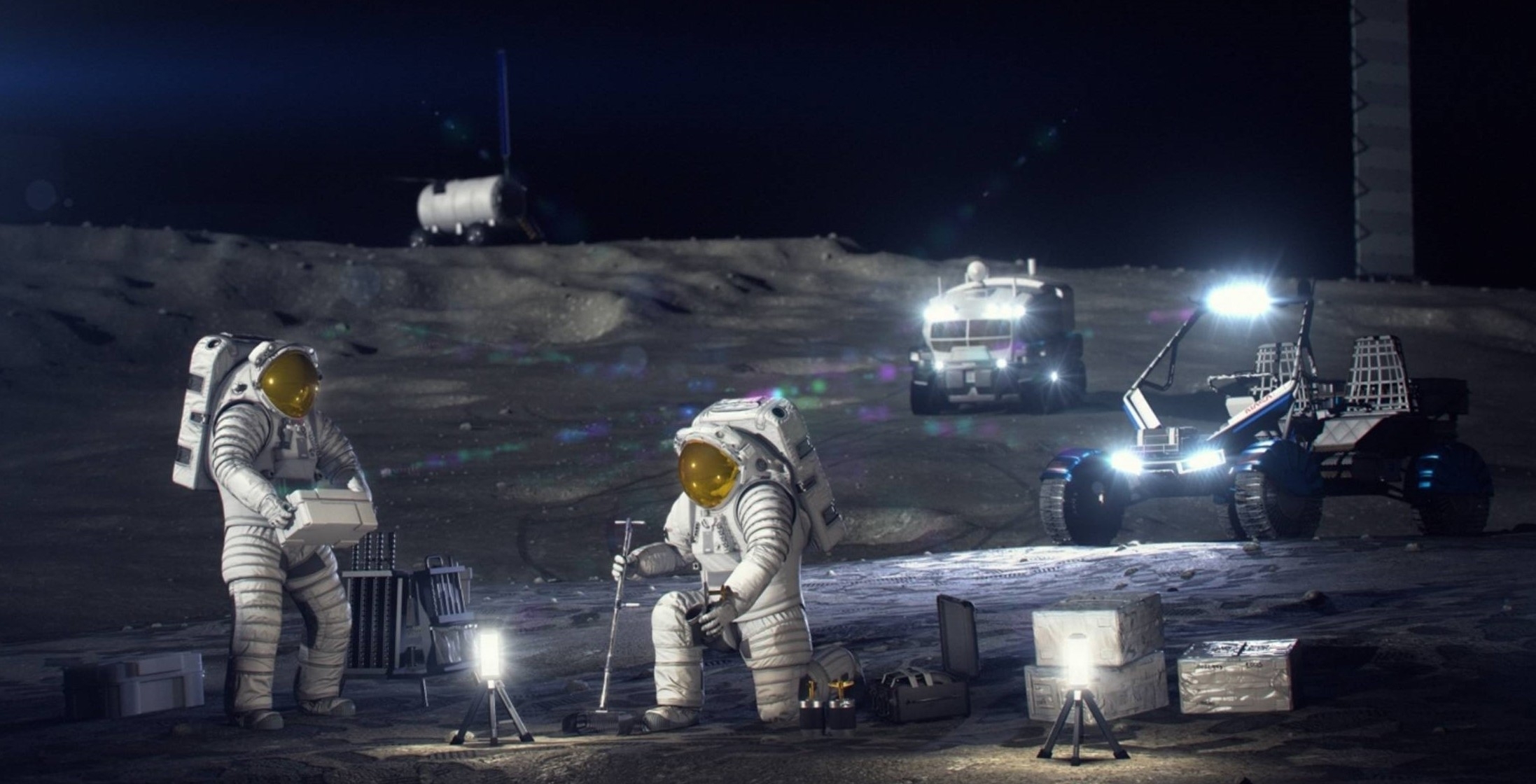
As human explorers visit the moon on a recurring basis, high-velocity impacts and the ejecta produced poses a hazard to surface habitats, solar arrays and working astronauts.
Image credit: NASA
Implications
While the Moon has reclaimed its serenity, the implications of the uncontrolled collision continue to reverberate.
“While this isn’t a major threat to isolated missions today,” contends one analyst, “as we establish permanent lunar infrastructure, high-velocity ejecta poses a genuine hazard to surface habitats, solar arrays and working astronauts.”
For more details, go to my new Space.com story – “SpaceX rocket’s Moon crash highlights ‘a tangible operational risk’ of lunar settlement” – at:
 Posted in Space News

