 By
By  March 5th, 2026
Image credit: ULA
The NASA Authorization Act of 2026 has been unanimously passed, legislation that authorizes a first permanent Moon base. The Act also rejects President Trump’s budget cuts of the space agency, and extends the International Space Station (ISS) while supporting future commercial space stations.
On March 4, S. 933, the NASA Transition Authorization Act of 2025 — as amended by the Cruz-Cantwell substitute – was green-lighted.
The bipartisan legislation authorizes $24.7 billion for Fiscal Year 2026, and $25.3 billion for Fiscal Year 2027 for NASA, a 2.5 percent increase over the previous year.

Image credit: NASA
Moon base
“This comprehensive bipartisan bill sets the stage for decades of continued U.S. leadership in outer space,” said Senator Maria Cantwell (D-Wash.), Ranking Member of the Committee.
“For the first time, it authorizes NASA to establish a permanent Moon base as part of sustained American presence on the lunar surface and defines a transition process to end operations on the ISS and shift to commercial space stations on the leading edge of a commercially-driven low Earth orbit economy,” Cantwell said in a statement.
The lunar base would be capable of long-duration habitation, as well as robotic and human-tended industrial operations to advance science, technology and strategic interests.

Image credit: White House
Rejects Trump cuts
“Our bill also rejects the President’s budget request that would have gutted NASA’s ability to accomplish its important aeronautics research and technology development missions in partnership with many companies in my home state,” Cantwell stated, “and saves fully functioning space and Earth science missions from the OMB [Office of Management and Budget] chopping block.”
Current law allows NASA to operate the ISS until 2030. This provision in the new bill extends this date to September 30, 2032 to enable a safe and successful transition.

Image credit: NASA
Crew Rescue Capabilities
“Once a commercial space station has demonstrated for a full year that it has the capabilities sufficient to support scientific research, technology development, national laboratory functions and commercial activities previously conducted aboard the ISS, NASA will be authorized to transfer operations to this station and initiate procedures to deorbit the ISS,” explains a committee statement.
The authorization act requires NASA to evaluate existing and potential crew rescue capabilities for the return of astronauts from orbit and from the Moon in emergency and non-emergency scenarios.
The capability will provide additional safety to astronauts and will allow missions to continue if a crewmember needs to return to Earth unexpectedly.

Image credit: NASA/Bill Ingalls
New space race
Ted Cruz, (R-Texas), Chairman of the Committee, issued a one pager focusing on the NASA Authorization Act of 2026, titled “Securing American Dominance in the New Space Race.
The lawmaker said the challenge is that America is in a space race with China.
“The United States is in an intensifying strategic space race with the People’s Republic of China, spanning Earth’s orbit, the Moon, and the broader expanse of deep space,” states Cruz. “Beijing is rapidly advancing its lunar ambitions, expanding its on-orbit capabilities, constructing supporting infrastructure beyond Earth, and promoting alternative governance frameworks such as the International Lunar Research Station [ILRS] – all with a clear objective,” he said.
- dominate the Moon
- control strategic terrain in space
- and write the rules of the 21st century
Congressional direction
“Space is not symbolic; it is strategic. Leadership in space underpins national security, economic strength, technological innovation, and global influence. If America hesitates, China will fill the void,” Cruz explains.
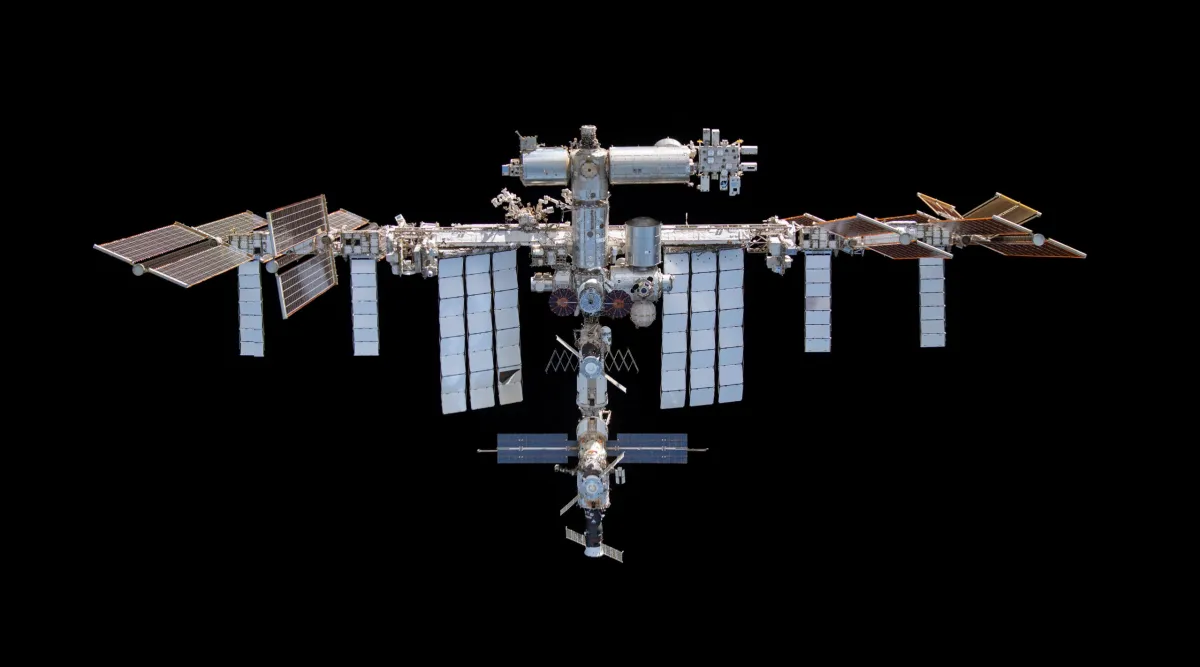
Image credit: NASA
Cruz states that NASA faces transition risks in low-Earth orbit (LEO), rising program costs, and supply chain vulnerabilities that could expose sensitive technology to foreign adversaries. “Without clear congressional direction, the United States risks losing momentum in lunar exploration, creating a gap in continuous American presence in orbit and weakening oversight of critical national programs,” he adds.
The solution
As highlighted by Cruz, the solution is the NASA Authorization Act of 2026.
- Directs NASA to establish a permanent Moon Base so we can get there before the Chinese.
- Requires NASA to begin soliciting for two commercial space stations immediately.
- Extends the International Space Station (ISS) to 2032 to avoid a gap in continuous human presence and capabilities in LEO, thus avoiding ceding leadership to China before commercial stations are ready.
- Reasserts American leadership in deep space by advancing the Artemis program as we prepare to return U.S. astronauts to the lunar surface for the first time since Apollo 17, paving the way for the next generation of commercial services beyond Earth’s orbit.
- Protects U.S. national security by prohibiting unauthorized cooperation with China, requiring disclosure of foreign financial ties in NASA contracting, and directing comprehensive supply chain risk reviews
- Strengthens oversight of cost estimates and procurement to protect federal taxpayers.
- Modernizes NASA’s workforce and public-private partnerships to ensure America maintains the world’s most advanced aerospace industrial base.

Image credit: NASA
Strategic high ground
As for why all this matters, the Cruz one-paper says “the nation that leads in space will shape the global economy, define international norms, and secure the ultimate strategic high ground. China understands this and is moving rapidly to claim it.”
The NASA Authorization Act of 2026 “ensures that America – not China – leads the next era of exploration. It strengthens the U.S. presence from low-Earth orbit into deep space, protects sensitive technologies from adversaries, restores accountability, and positions the United States to lead from the Moon to Mars,” Cruz concludes.
The one-paper issued by Cruz can be found at:
https://www.commerce.senate.gov/services/files/0505DF18-F8DC-42AB-BE14-8EC4C407FC13
 Posted in Space News

