 By
By  May 4th, 2017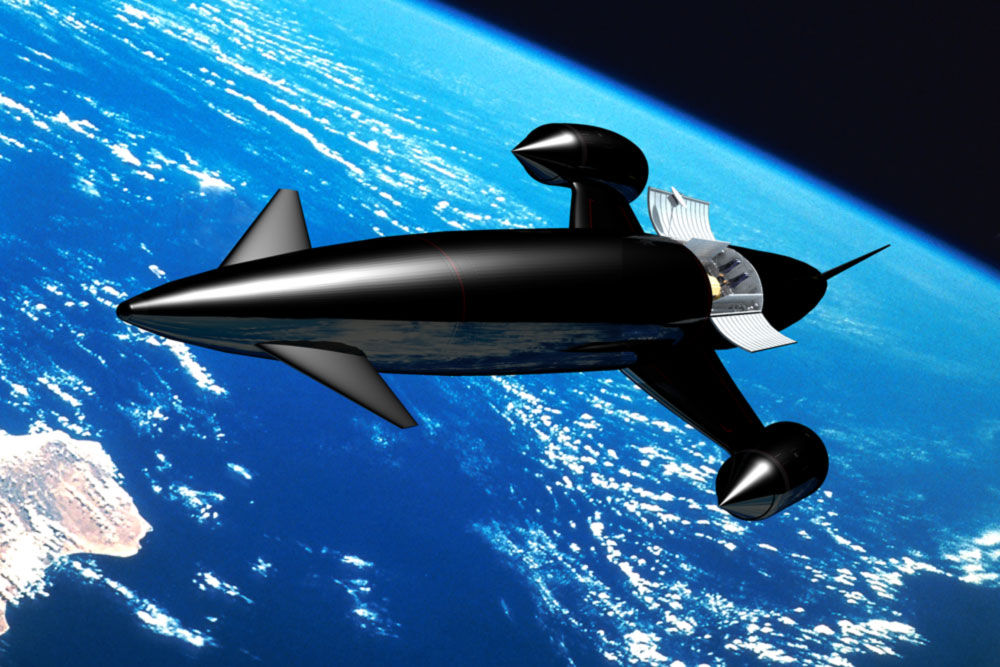
Artwork depicts Skylon space transportation.
Credit: Reaction Engines
The on-going revolution in access to Earth orbit is getting a boost by a new engine test facility.
The Synergistic Air-Breathing Rocket Engine (SABRE) project has been underway for many years, work undertaken by the UK firm, Reaction Engines Ltd.
Work began this week on building the UK’s latest rocket engine test facility, designed for firing the engine core of the SABRE propulsion system within three years.
Ground was broken on the new test facility at Westcott Venture Park in the UK, an historic site for rocket research over the past seven decades.
Test site
The new site will consist of a multipurpose propulsion test stand designed to accommodate various test engine configurations, an assembly building, workshops, offices and control room.
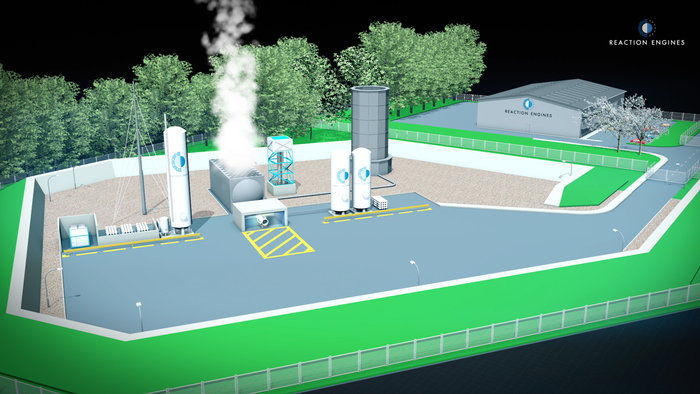
Ground was broken on the new test facility at Westcott Venture Park in the UK.
Credit: Reaction Engines
The location of workshops and other support facilities alongside the test stand will enable configuration changes to the engine to take place at the site, reducing the down time between testing phases and accelerating the engine’s development.
The big scoop
The promise of the SABRE propulsion system concept is to scoop up atmospheric air during the early part of its flight to orbit.
Doing so slashes the need for the vehicle to carry bulky onboard oxygen for this part of the ascent, before switching to rocket mode drawing on internal propellants for its final climb to space.
Single-stage-to-orbit
SABRE is a hybrid jet and rocket engine designed for a single-stage-to-orbit space plane. Incorporating innovative precooler technology able to chill superheated air in a fraction of a second, SABRE would use oxygen from the atmosphere until it reaches above Mach 5, after which it would shift to a closed-cycle rocket mode.
The concept paves the way for lighter and reusable spaceplanes able to fly from conventional runways.
Reaction Engines’ plan for SABRE is to power the over 275-foot long (84 meters) pilotless Skylon.
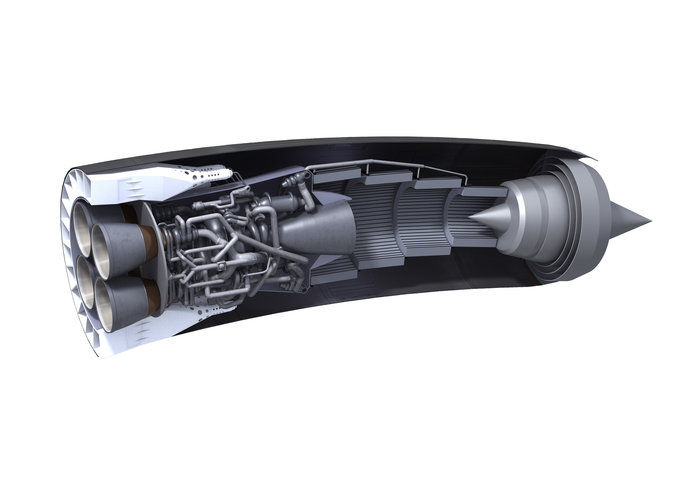
Synergistic Air-Breathing Rocket Engine (SABRE).
Credit: Reaction Engines
Cash flow
According to the European Space Agency, ESA has invested in SABRE, following a 2010 independent review of the engine’s viability, “opening the way” to UK government investment. Reaction Engines Ltd has subsequently received private investment from BAE Systems, focused on accelerating development.
Such engines have the potential to revolutionize space launches, powering vehicles that can take off and land like aircraft. Capable of airbreathing flight up to Mach 5 (five times the speed of sound) they could also lead to hypersonic air travel, according to an ESA press statement.
For more information on Reaction Engines Ltd. go to:
https://www.reactionengines.co.uk/
 Posted in Space News

