 By
By  August 27th, 2026
A bullish look at a future lunar economy predicts that the infrastructure, markets and strategic forces for returning to the Moon could generate up to $566 Billion in economic value through 2050.
The report has been assembled by Deloitte – an organization that tracks emerging technologies and markets, “ones that feel speculative today but may reshape industries tomorrow,” the group explains.
“Building the Lunar Economy: How a sustained presence on the Moon could transform life, industry, and infrastructure on Earth and beyond” takes a dedicated look at what a sustained lunar presence could create for companies around the globe.
Growth scenarios
The report’s bottom line is estimating that the lunar economy could potentially generate $343 billion in cumulative potential economic value through 2050 under a conservative growth scenario, and $566 billion under an accelerated growth scenario.
Deloitte’s analysis considers both the infrastructure required to enable lunar activity and the downstream markets that could emerge once that infrastructure exists.
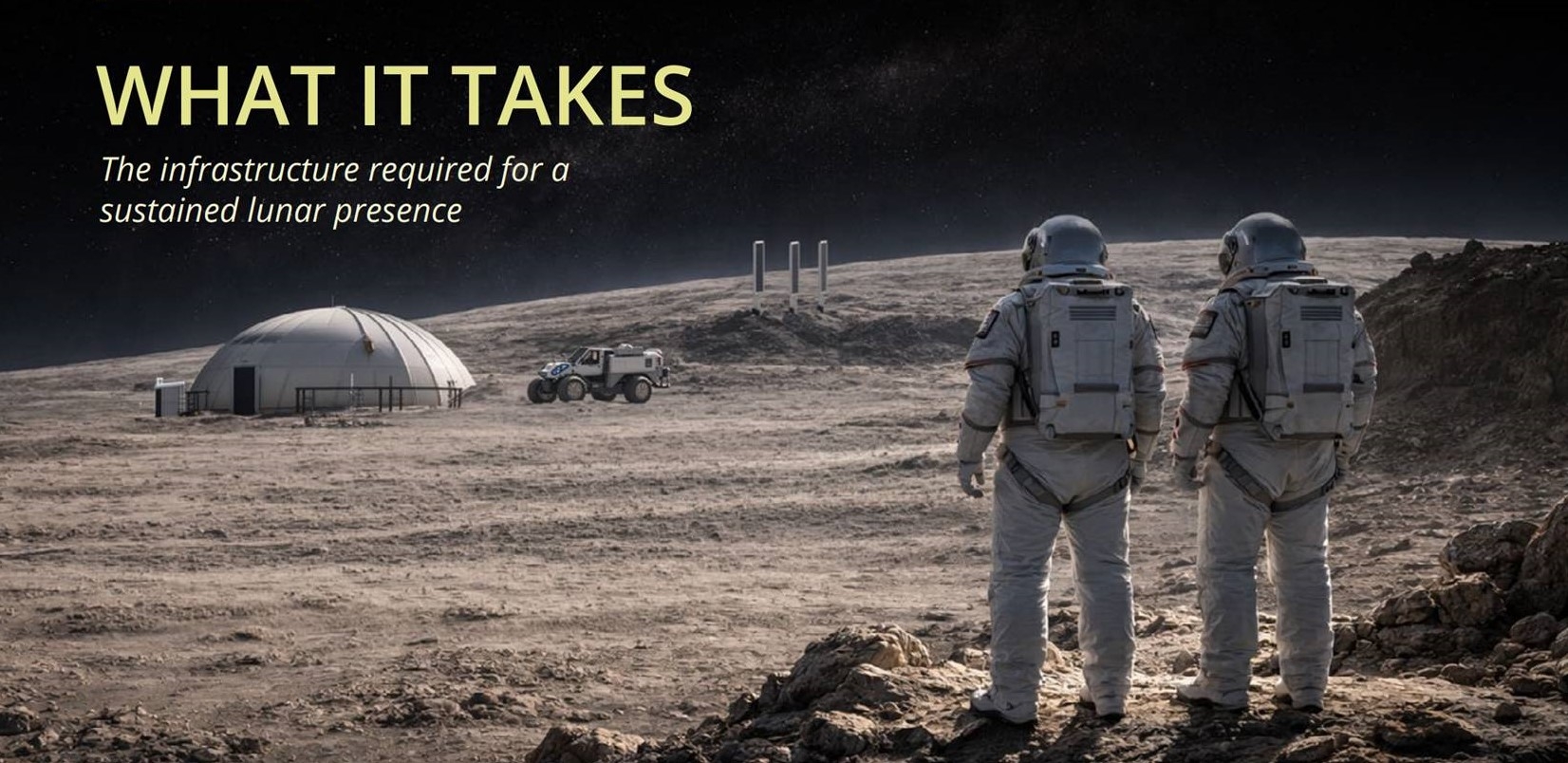
Image credit: Deloitte
“The debate is no longer whether humanity is going back to the Moon. It is what happens once we stay,” the report points out.
Downstream demand
The Deloitte appraisal, however, also cautions that a thriving lunar economy is not inevitable.
“Some markets, such as lunar data and national security services, may develop sooner because they do not require the full lunar economy to exist first. Others, such as lunar propellant, helium-3 extraction, and space-based compute may depend on infrastructure, technology, and downstream demand that are still emerging,” Deloitte adds.
Over the past year, Deloitte team members spoke with a wide swath of experts, from engineers, investors, economists, as well as government leaders “to understand what is actually being built and which opportunities are likeliest to matter.”
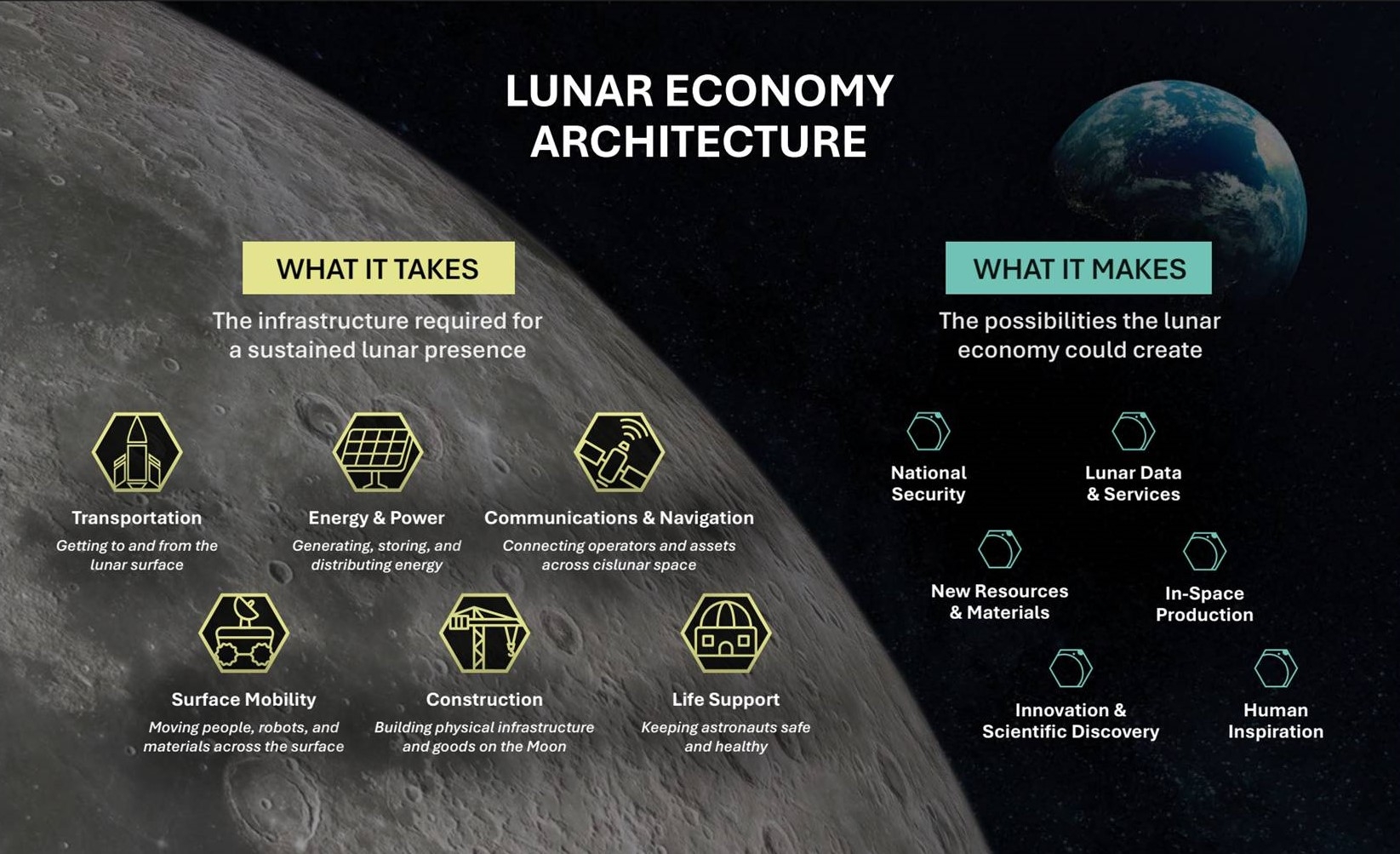
Image credit: Deloitte
Standards and norms
Falling launch costs, coupled with new public-private procurement models, the report states, are reshaping the economics of sustained lunar operations.
For governments, the infrastructure being funded today is setting the standards and norms that may govern lunar activity for decades. “The countries that build first may likely shape the rules,” the report suggests.
For space companies, the ones gaining traction are designing for multiple customers, building interoperable systems, and operating on commercial timelines. A competitive advantage in this market is compatibility, the report observes.
New possibilities
For industries beyond space, a thriving lunar economy is unlikely to be built by the space sector alone. It will likely draw on capabilities from across the broader economy, including advanced manufacturing, logistics, robotics, communications, energy, and materials, states the report.
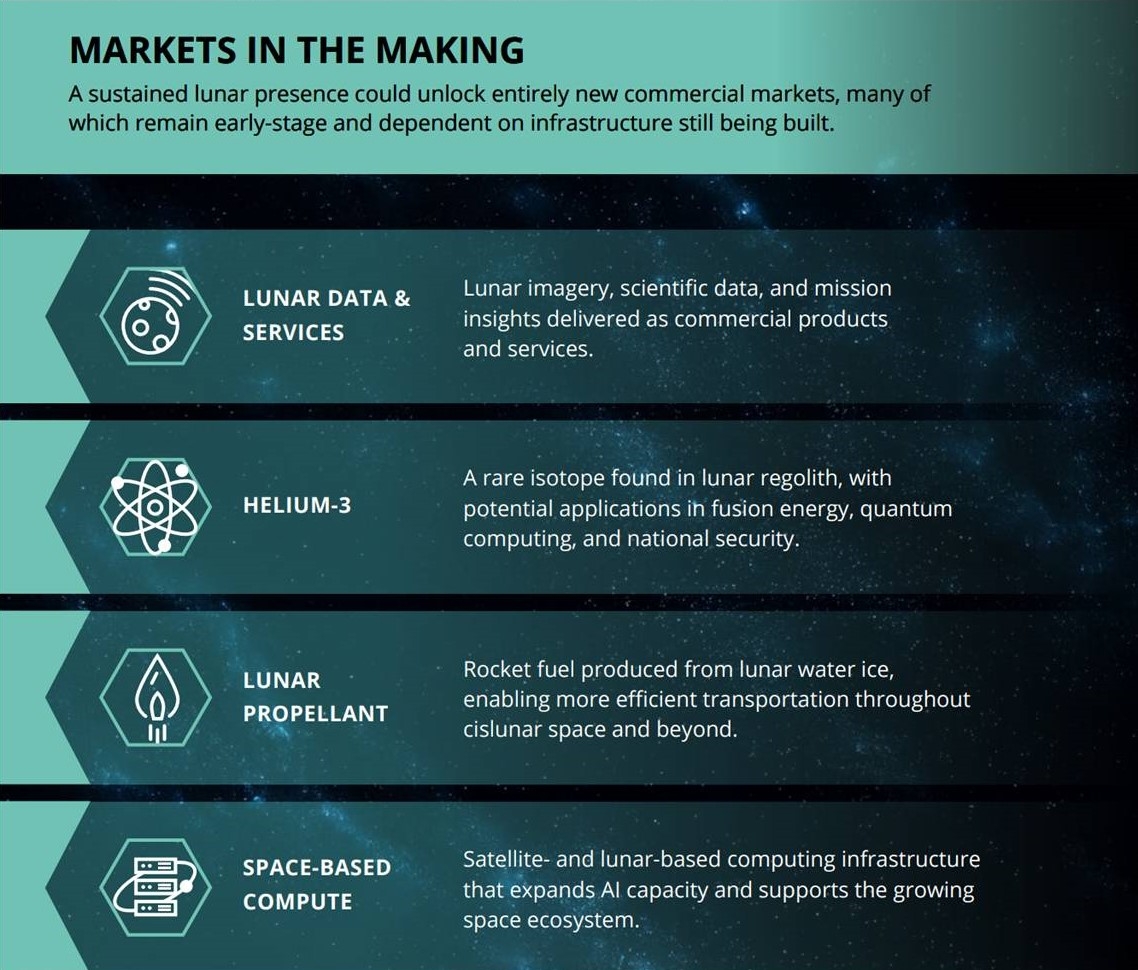
Image credit: Deloitte
“Some of the companies that contribute to the lunar economy may never even think of themselves as space companies, though they may be playing a critical role.”
The technologies developed for the Moon “may reshape industries on Earth, creating new innovations that inspire humanity to dream bigger,” the report states.
As of today what new possibilities may unfold in the next 50 years to come is a TBD.
“For the first time in more than half a century, we now have the opportunity to find out,” states the report.
To access this unique and exploratory report, go to:
Image credit: Deloitte
 Posted in Space News

