 By
By  July 29th, 2026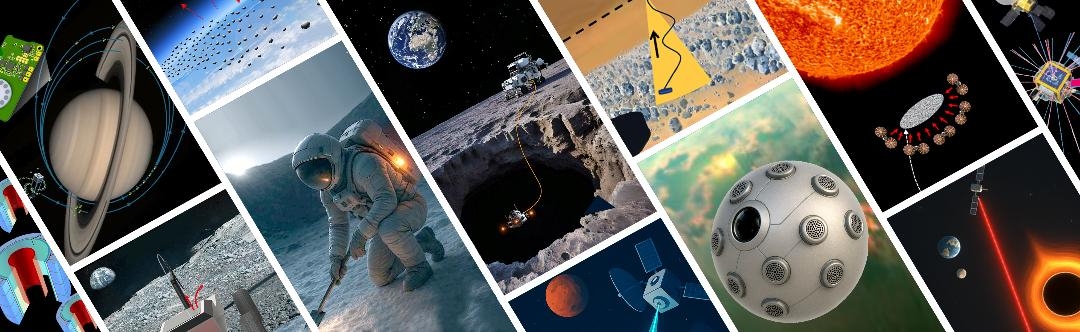
Image credit: NIAC
If you have a dim view of the future, take a look at a new batch of NASA Innovative Advanced Concepts (NIAC) program awards – all 18 of them
But heads up – one of the bright idea awardees is suggesting how best to dim the Sun using a controllable dust cloud to reduce solar insolation – the amount of solar radiation hitting a specific area over a defined time.
The idea comes from Saptarshi Bandyopadhyay of the NASA Jet Propulsion Laboratory. The “DimSun” proposal stems from earlier research that was focused on “geoengineering” and use of space-based solar radiation management.
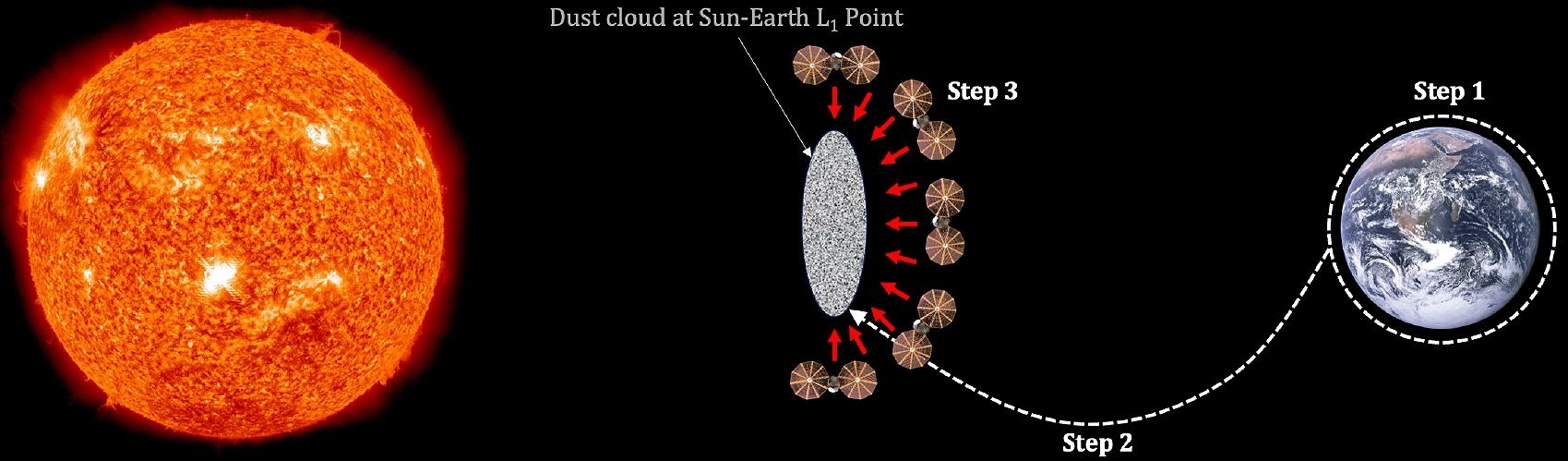
Image credit: Saptarshi Bandyopadhyay/NASA Jet Propulsion Laboratory
Along with DimSun, the selections for 2026 NIAC Phase 1 grants cover a wide swatch of ultra-novel ideas, from use of solar sails, subsurface moon exploration and sampling planetary rings to ways to chart alien continents and radioisotope-aided EVA’s in nighttime conditions.
Here’s the list
Combinatory Architecture offering Neomobility, on-Venus Adaptability, and Survivability (CANVAS)
Extended Astronaut Radioisotope-EVA in Nighttime and Deep-space Icy Landscapes (EARENDIL)

Graphic depiction of the Extended Astronaut Radioisotope-EVA in Nighttime and Deep-space Icy Landscapes (EARENDIL) concept.
Image credit: A.C. Charania
Transforming Submillimeter Space Interferometry with Photonic Technologies
Coilable Stacked Solar Sails for Very High delta-V Missions
Solid-state Propulsion for Autonomous Reconnaissance of Karst (SPARK)
Power-over-Fiber to Enable a Lunar Underground eXplorer (LUX)
Quantum Wind Lidar Applications for Planetary and Earth Science Missions
OBLIVIAN: Observing Black hole LIght Via Intensity cOrrelatioN (OBLIVIAN)
Plasmon-Enhanced Radioisotope Thermophotovoltaic (PRTPV) Power Generation for Interstellar Missions
Efficient variable Conductivity Lunar Insulator for Passive Surveyor Environmental Control (ECLIPSE)
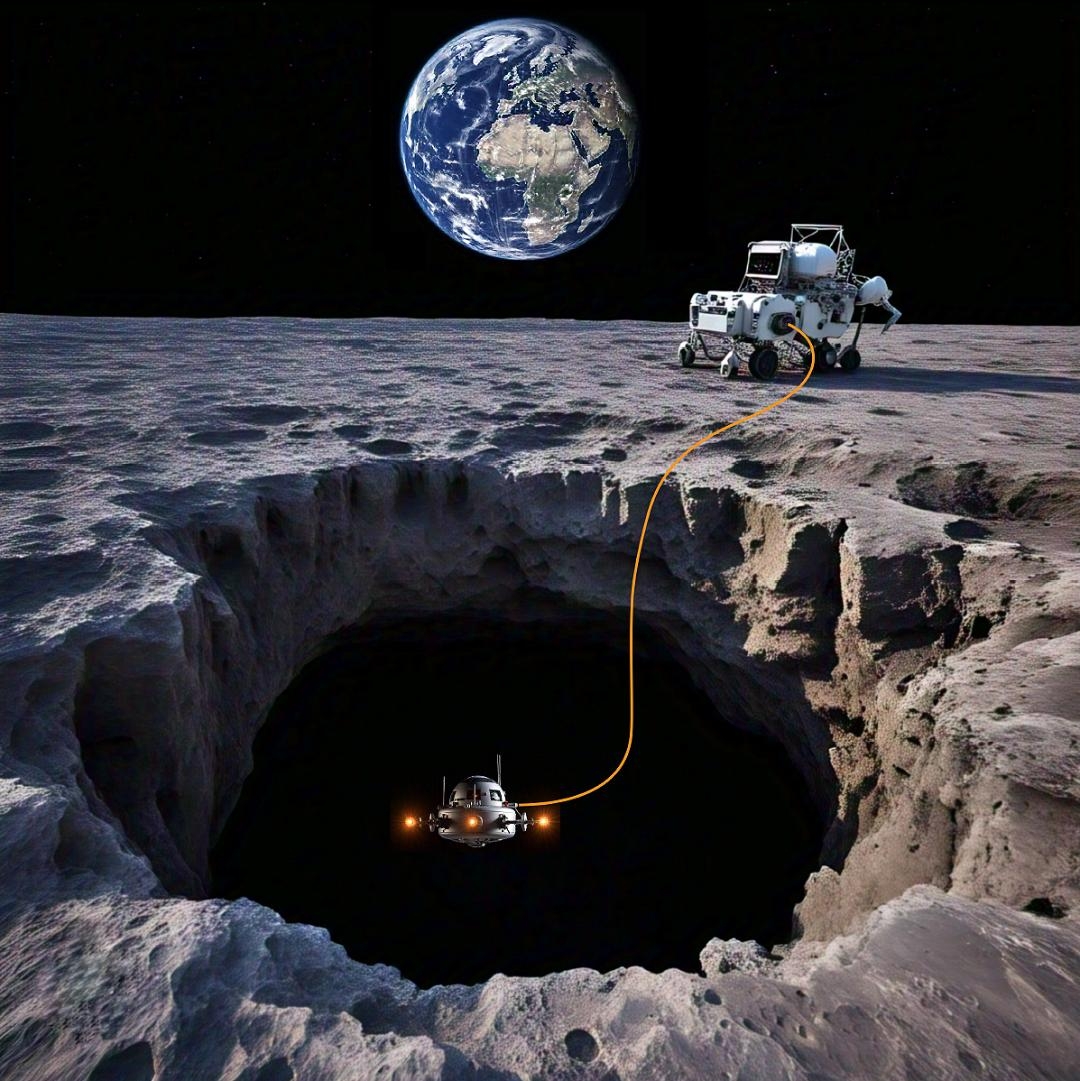
Graphic depiction of theLunar Underground eXplorer (LUX) mission concept.
Image credit: Gilly Elor/Stone Aerospace, Inc.
PRAXIS: Planetary Rings Autonomous EXploration with In-situ Sampling (PRAXIS)
Actively Steerable Femtosat Constellations for In-situ Exploration of Saturn’s Rings, Atmosphere, and Magnetosphere
Photophoretic Tracers for Near-Space Remote Sensing at 30-100 km Altitudes
Robotically Assembled Electromagnetic Metamaterials for Long-Range Space Situational Awareness
Interworld Slingshot Resource Surveys
Mapping Alien Continents: Achieving Optical VLBI for Exoplanet Imaging
Precision Astrometry Using Optically Independent Spacecraft for Gravitational Wave Detection
Early-stage concept development
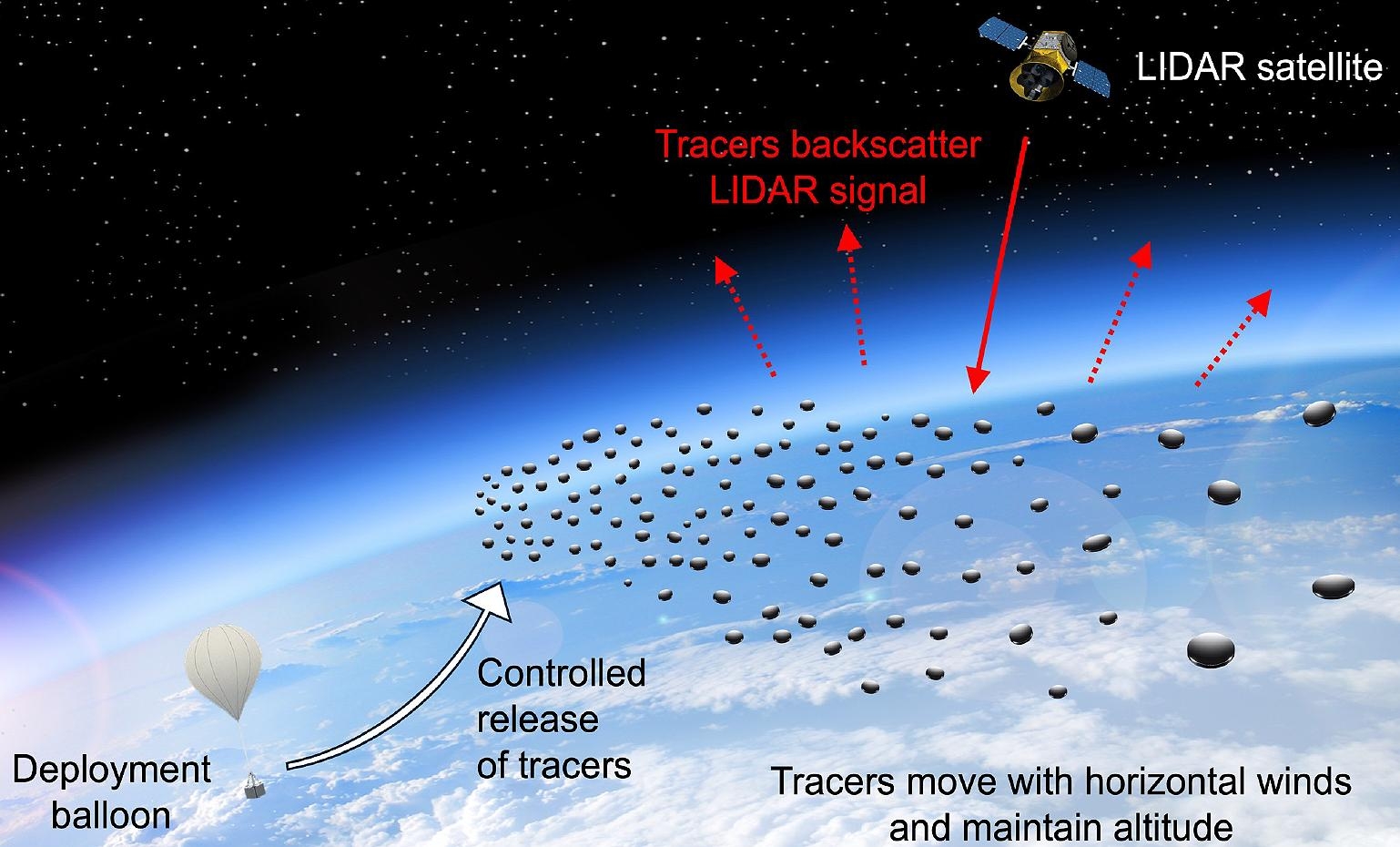
Graphic depiction of photophoretic tracers deployed from a stratospheric balloon and tracked by satellite-based lidar. Their trajectories are analyzed to determine atmospheric properties like wind speed, temperature, and pressure in real time at 30-100 km altitudes.
Image credit:Benjamin Schafer/Rarefied Technologies, Inc.
The 18 NIAC Phase I awards total $3.2 million.
Each award provides up to $175,000 for a nine-month initial investigation.
While the NIAC projects are about early-stage concept development and are not considered official NASA missions, how many of these ideas will stir the creative juices to become true renaissance reality?
To take in what’s on the agenda for the space future go to this NIAC website at:
https://www.nasa.gov/news-release/nasa-awards-2026-innovative-technology-concepts/
 Posted in Space News

