 By
By  October 4th, 2025
Image credit: Austrian Space Forum
This month, there’s a first of its kind Moon/Mars analog mission, one that involves five continents simultaneously.
Africa, America, Asia, Australia, and Europe are joining forces to emulate human presence on the Moon or Mars.
Over 200 scientists from 25 countries are involved in this unique analog undertaking.
Research collaboration
From October 13 to 26, seventeen habitats will enter into a collaboration of research and conduct numerous experiments.
Mission Coordination will be provided by the Austrian Space Forum in Vienna, Austria, a private space research institution.
For the first time, 17 institutions simulating Moon/Mars missions on five continents (Africa, America, Asia, Australia, and Europe) are joining forces to emulate the human presence on the Moon or Mars.
More than 200 scientists from 25 countries are involved.
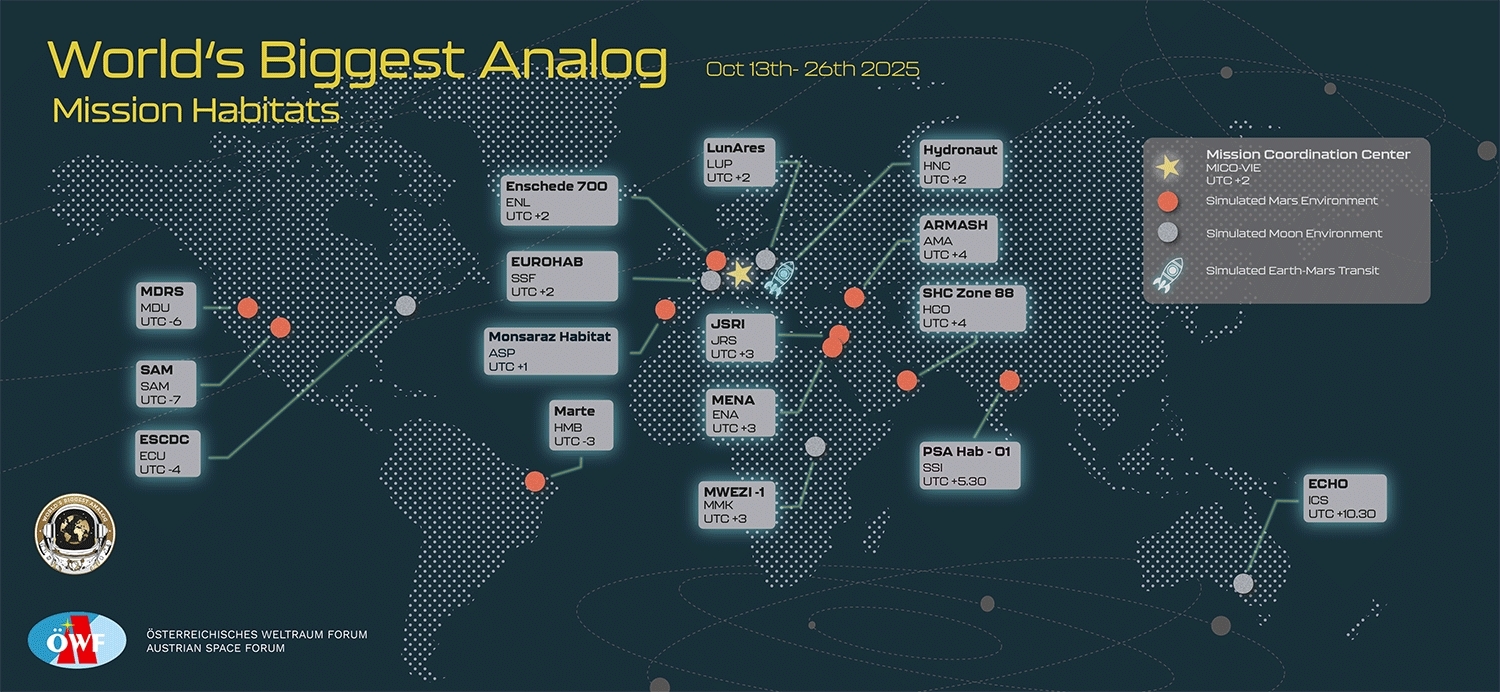
Image credit: Austrian Space Forum
Countries involved
Africa: Kenya
America: USA (3 institutions) and also Brazil
Asia: Armenia, India, Jordan (2 institutions), Oman and also Australia
Europe: Austria, France, Poland, Portugal, The Netherlands
Analog wish-list
The Austrian Space Forum will host the Mission Coordination Center in Vienna (MICO-VIE) to support the individual habitats with teams from operations, meteorology, remote science support and media.
What this analog undertaking wishes to achieve:
- Raise awareness about analogs.
- Gather information about existing missions and habitats, so that researchers, government agencies and others understand the fidelity and capabilities of each habitat as a research platform.
- Applying research standards makes the data collected more useful to space agencies and researchers.
- Provide a global research platform for the first time.
- Develop protocols and professionalize the industry.
- To assist up and coming habitats/missions, so more countries can be involved.
- To engage and collaborate as a community and push the boundaries of what we can achieve together.
- Open better communication lines between active players.
- Minimize duplicate research.
- Highlight the potential of the habitats and analog missions
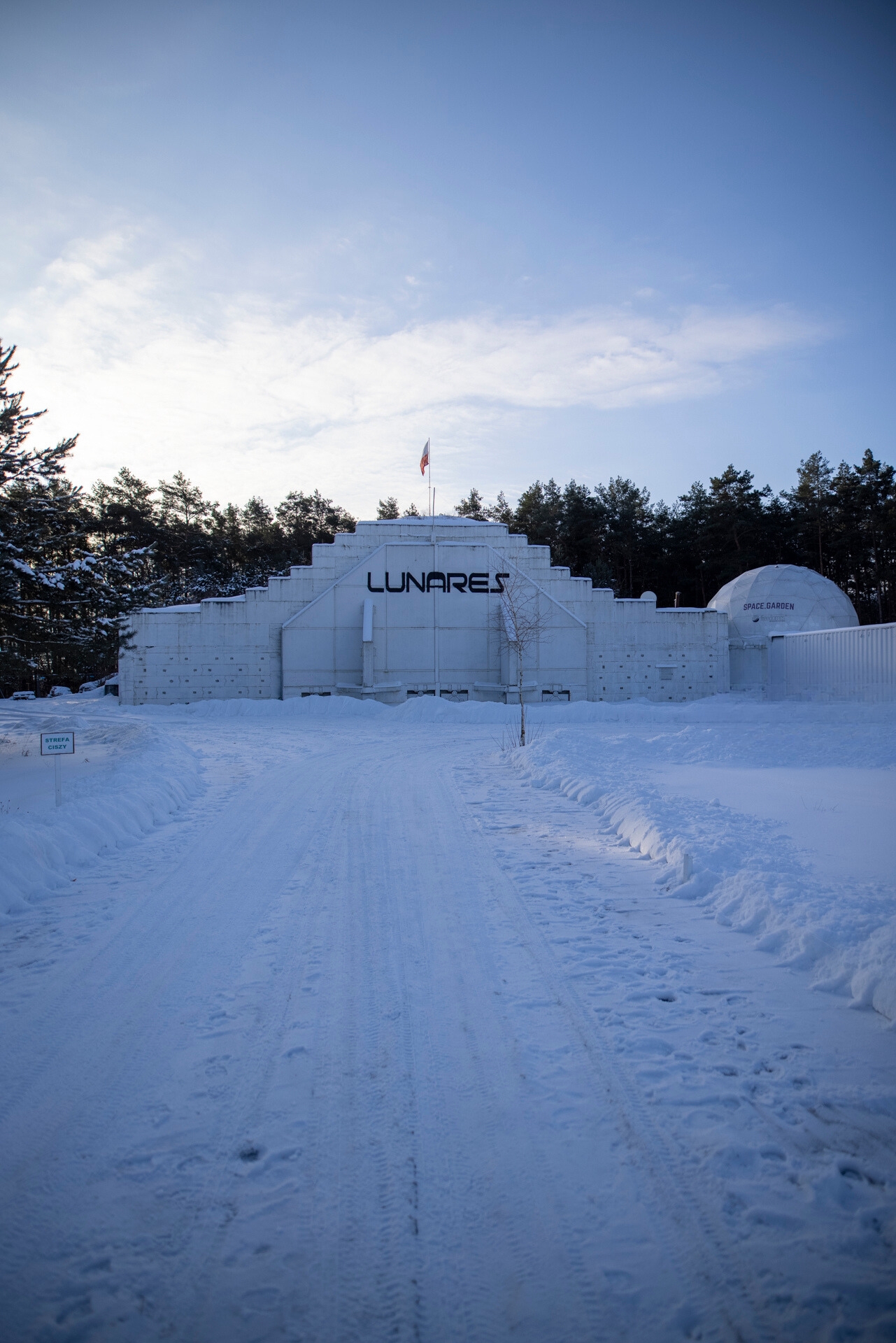
Image credit: LunAres Research Station
Mission scope
As for the scope of the venture through MICO-VIE in Vienna is real-time coordination across 12 time zones and parallel research on lunar and Martian analog conditions. International crews will test protocols for future space exploration.
There will so be simulated Mars communication delays between Earth and the Red Planet.
“This isn’t just research – it’s a proof of concept for how humanity will coordinate complex multi-location space operations,” state Austrian Space Forum officials.
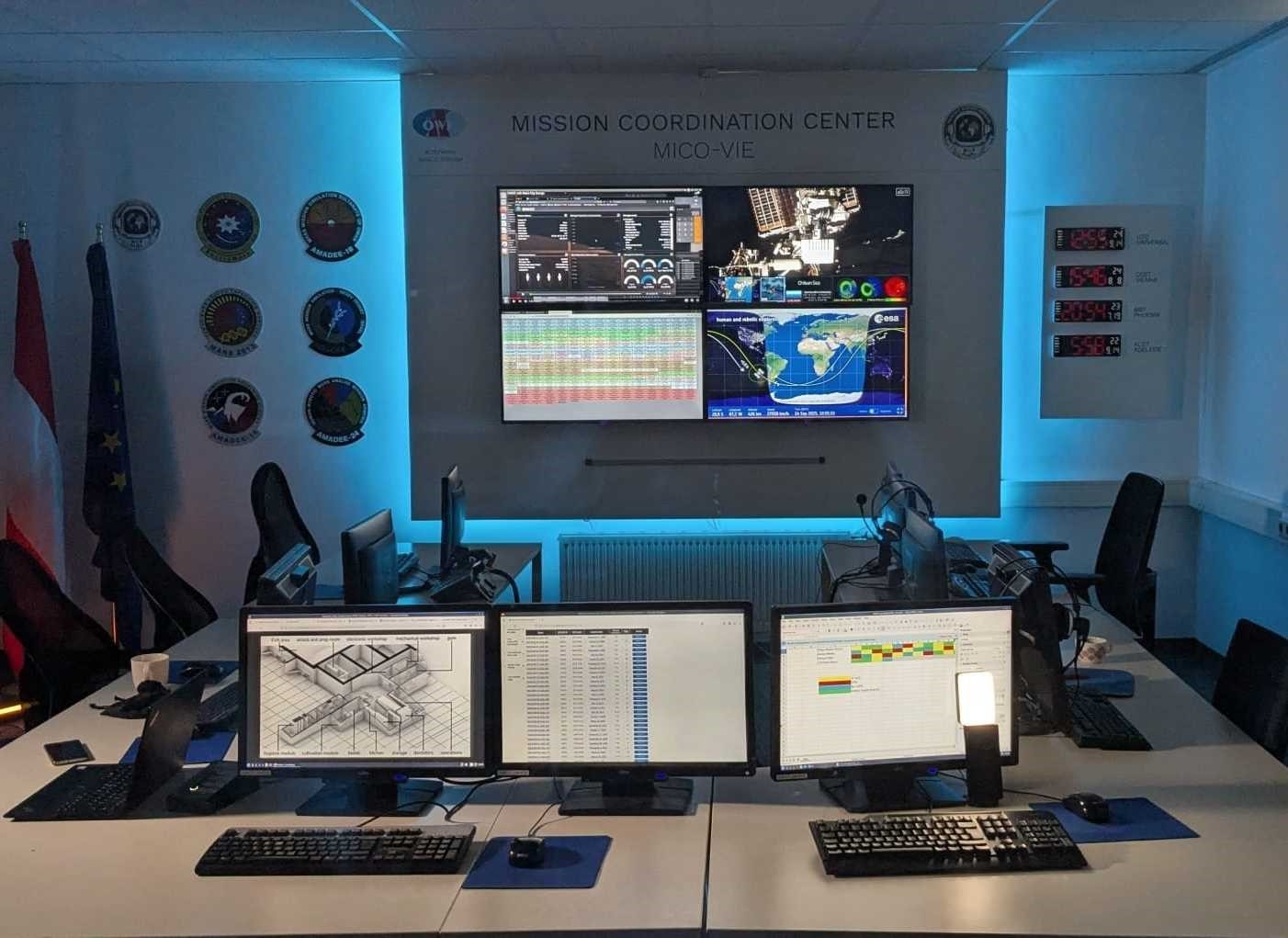
Image credit: Austrian Space Forum
 Posted in Space News

