 By
By  July 31st, 2026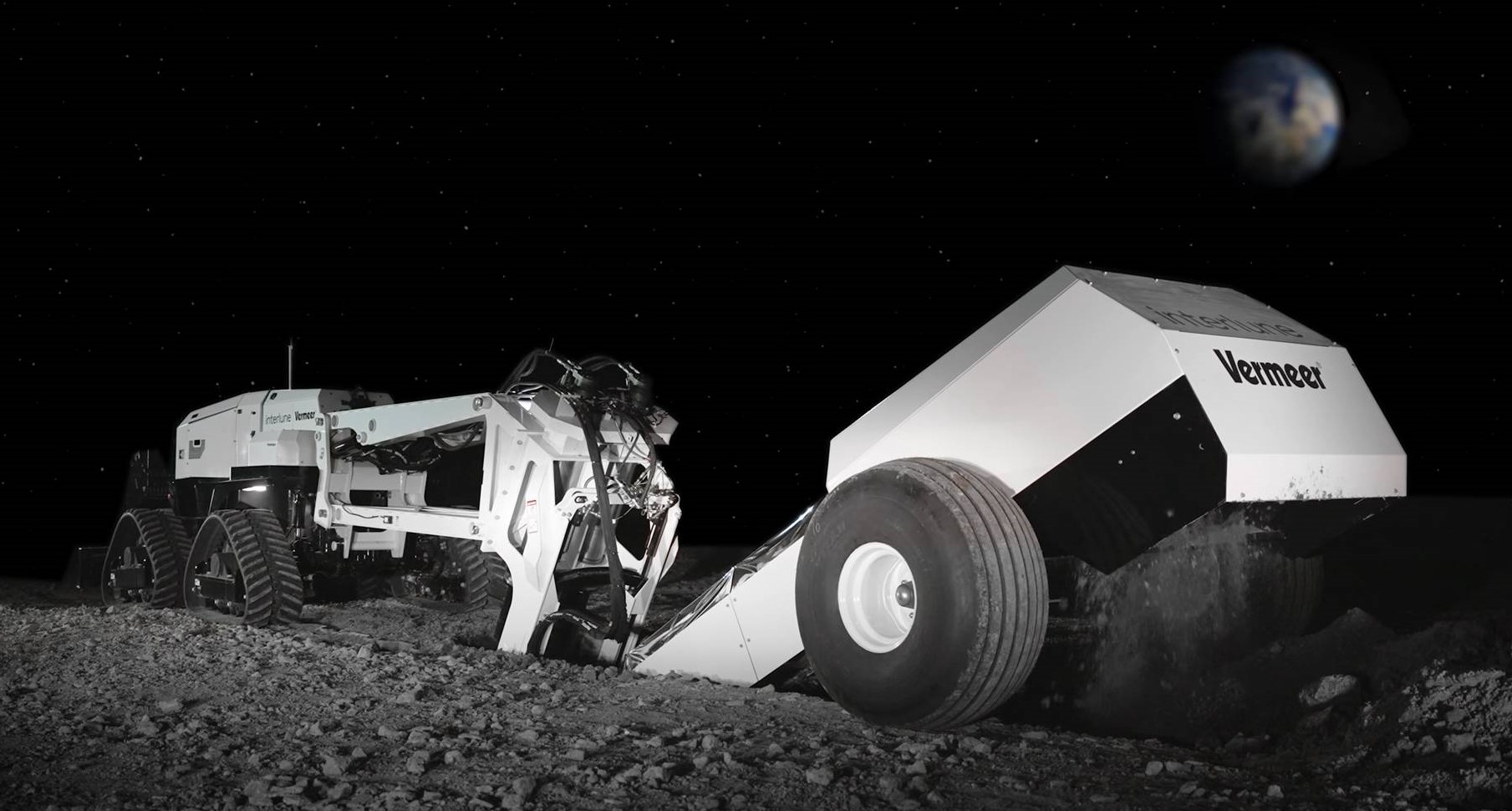
Image credit: Vermeer Corporation/Inside Outer Space screengrab
Dig this!
An expansion of a partnership is expected to help establish a Moon Base by delivering autonomous mobility and heavy-duty excavation tools for a permanent settlement on the lunar surface.
Interlune, a Seattle-based group, and the Vermeer Corporation of Pella, Iowa, have detailed the plan for development and delivery of subscale prototypes of lunar soil processing technology.
Develop, test, deliver
Interlune and Vermeer plan to develop, test, and deliver a mission-ready lunar site-preparation tool by 2028, aligning their efforts with NASA’s recently announced Moon Base program plan.
The Vermeer Corporation is a world-class (and soon to be, off-world) leader in industrial equipment manufacturing.
That preparation tool is to be developed and integrated with a lunar rover. It is to be trial-run first on Earth and then on the Moon “to validate its ability to prepare and stabilize the lunar surface for sustained operations,” states Interlune.

A full-scale prototype of the Interlune excavator developed in partnership with Vermeer in 2025. Testing as shown was done with auxiliary components.
Image credit: Interlune
Scalable systems
“By working with Vermeer, we are moving from developing prototypes to repeatable, scalable systems that will help build the Moon Base and enable the harvesting of lunar resources to power the future,” said Rob Meyerson, co-founder and CEO of Interlune.
The expanded collaboration between the two firms builds on a joint development agreement that led to the full-scale prototype of the Interlune excavator, which was unveiled in May 2025.
Helium-3 harvesting
Along with Moon Base work, central to Interlune’s mission is harvesting natural resources in space, starting with helium-3 and also including hydrogen, oxygen, metals, rare earth elements, and water.
Since its founding in 2021, Interlune has secured nearly $500 million in binding helium-3 purchase agreements from government and commercial customers.
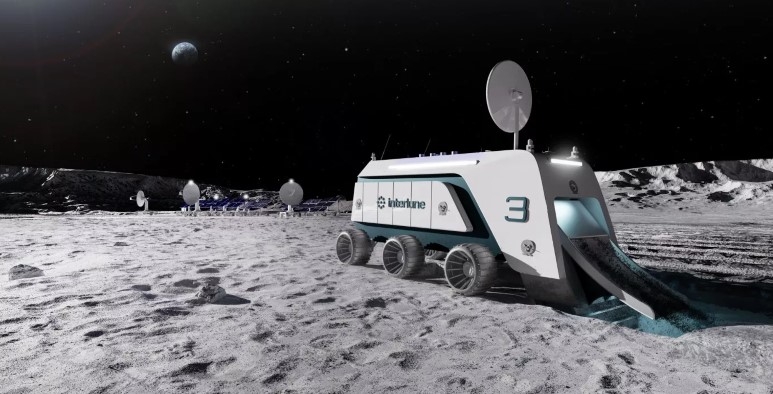
Artwork of harvester of hellium-3 on the Moon.
Image credit: Interlune
Interlune has also raised $23 million in venture capital and secured more than $18 million in non-dilutive U.S. government research funding.
Earlier this month, Interlune announced that its Cold Capture technology has demonstrated production of 99% pure helium-3 from Grade A helium. Cold Capture was developed with support from the U.S. Air Force and addresses immediate demand for helium-3 while validating core technology for harvesting on the Moon, Interlune explains.
Job site: the Moon
For its part, Vermeer brings to the table nearly 80 years of tackling complex civil engineering challenges on Earth.
“We are now ready to apply that expertise to the most demanding job site in history: the Moon,” says Jason Andringa, President and CEO of Vermeer Corporation, who also serves on the Interlune Advisory Board.
“We are fully committed to working with Interlune, NASA, and others to deliver the essential infrastructure required for the Moon Base,” Andringa adds.

Image credit: NASA
To view an informative Vermeer video – “Out of this world partnership: Vermeer x Interlune” – go to:
 Posted in Space News

