 By
By  July 30th, 2026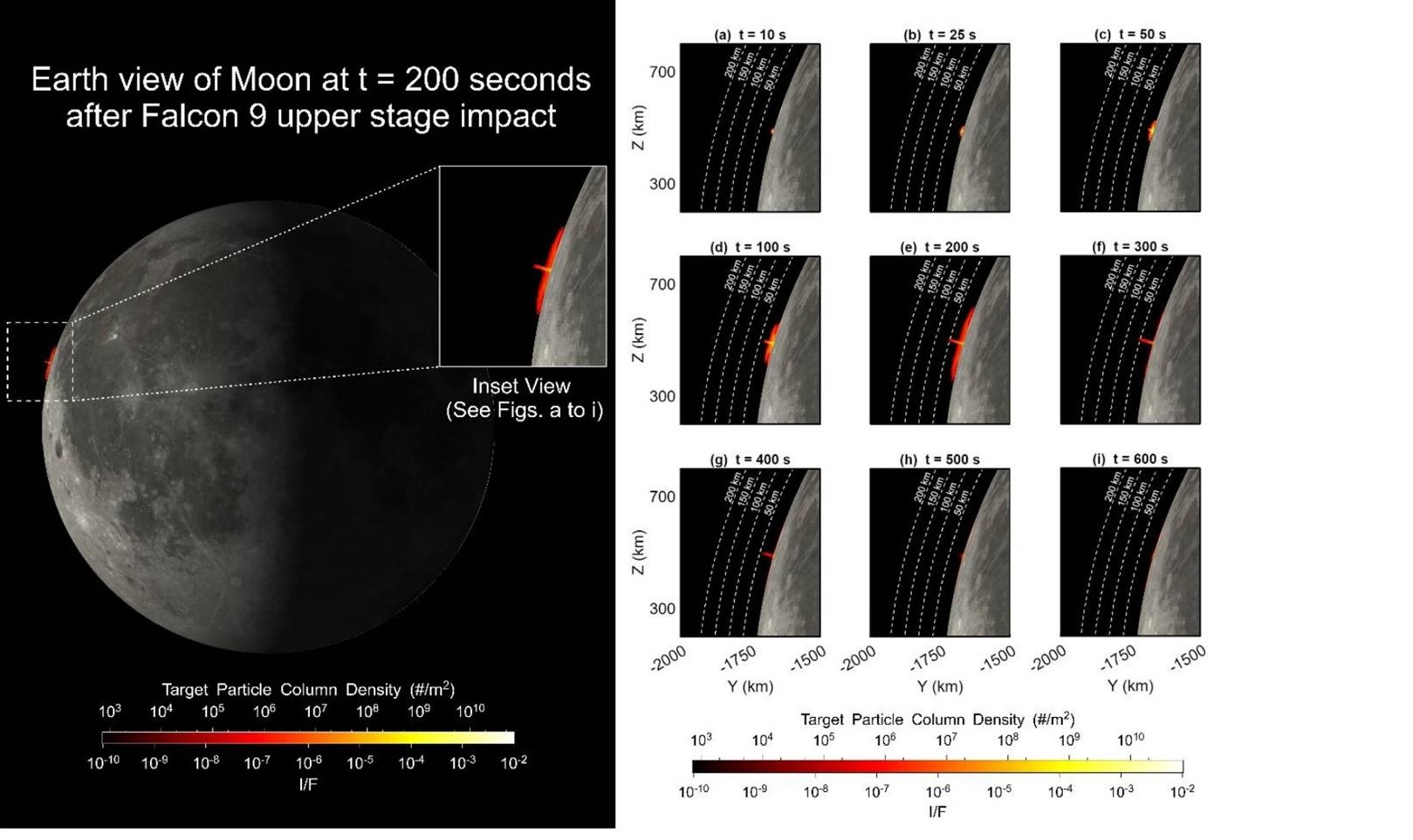
Time evolution of the target ejecta column density, rendered on the lunar surface
at the predicted impact site near Einstein crater.
Image credit: William Jo, et al.
Next week, Earth’s moon is due for a human-made, high-speed thumping of an identified flying object – a spent SpaceX Falcon 9 upper stage. The event is a literal “dust up” on the lunar landscape.
That Falcon 9 upper stage is a leftover from the launch that sent Firefly’s Blue Ghost-1 lander to the moon on Jan. 15, 2025. Also sent moonward on that flight was the Hakuto-R Mission 2, called Resilience, a robotic lunar lander developed by the Japanese company ispace.
Unknown, unknowns
This head-on collision on August 5 of the errant stage is expected to occur near Einstein/Bell Craters near the lunar limb. It may well be visible by ground and space-based assets. Indeed, putting aside all the unknown unknowns, and modeling uncertainties, some specialists suggest if you’ve got the time and observational prowess, it might be worth a look.
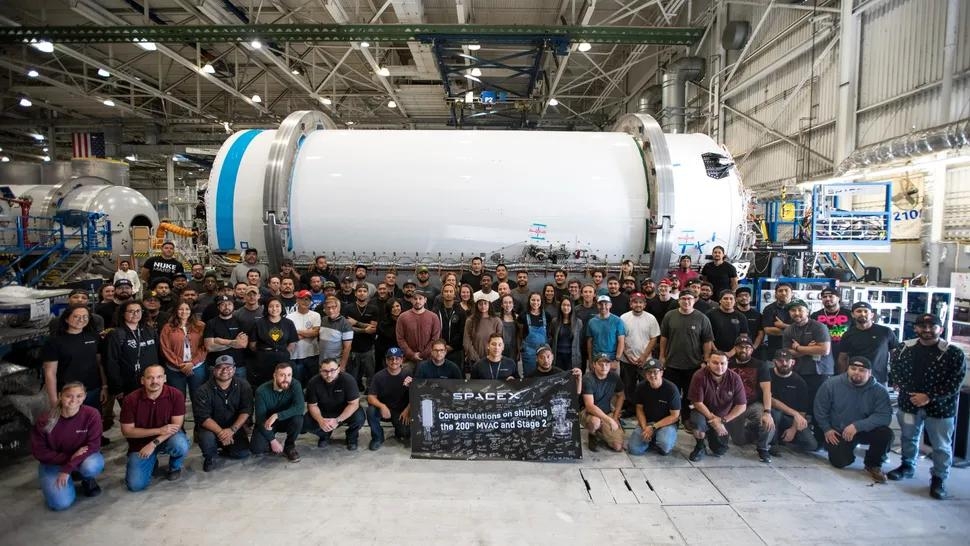
A big bruiser of a rocket stage. SpaceX photo of one of the company’s Falcon 9 second stages, taken in 2022. A similar second stage is expected to impact the moon in August 2026.
Image credit: SpaceX
According to a new study by an international team, their results found that moongazers with sufficiently sensitive telescopes will find that the resulting impact plume may briefly be bright enough to see against the dark sky near the moon’s edge.
For more details, go to my new Space.com story – “A SpaceX rocket will crash into the moon next week, and scientists aren’t sure what to expect” – at:
 Posted in Space News

