 By
By  July 4th, 2022
Credit: NASA/Institute of Biomedical Problems
The SIRIUS-21 space isolation experiment has been completed. Five members of the international crew (three men and two women) spent 240 days in conditions that simulate the work of a real space expedition on a lunar orbital station and the surface of the Moon.
The crew included Russian, American and Arab participants.
SIRIUS-21 has been underway at the Moscow-based Institute of Biomedical Problems (IBMP) of the Russian Academy of Sciences. SIRIUS is supported by the NASA Human Research Program.
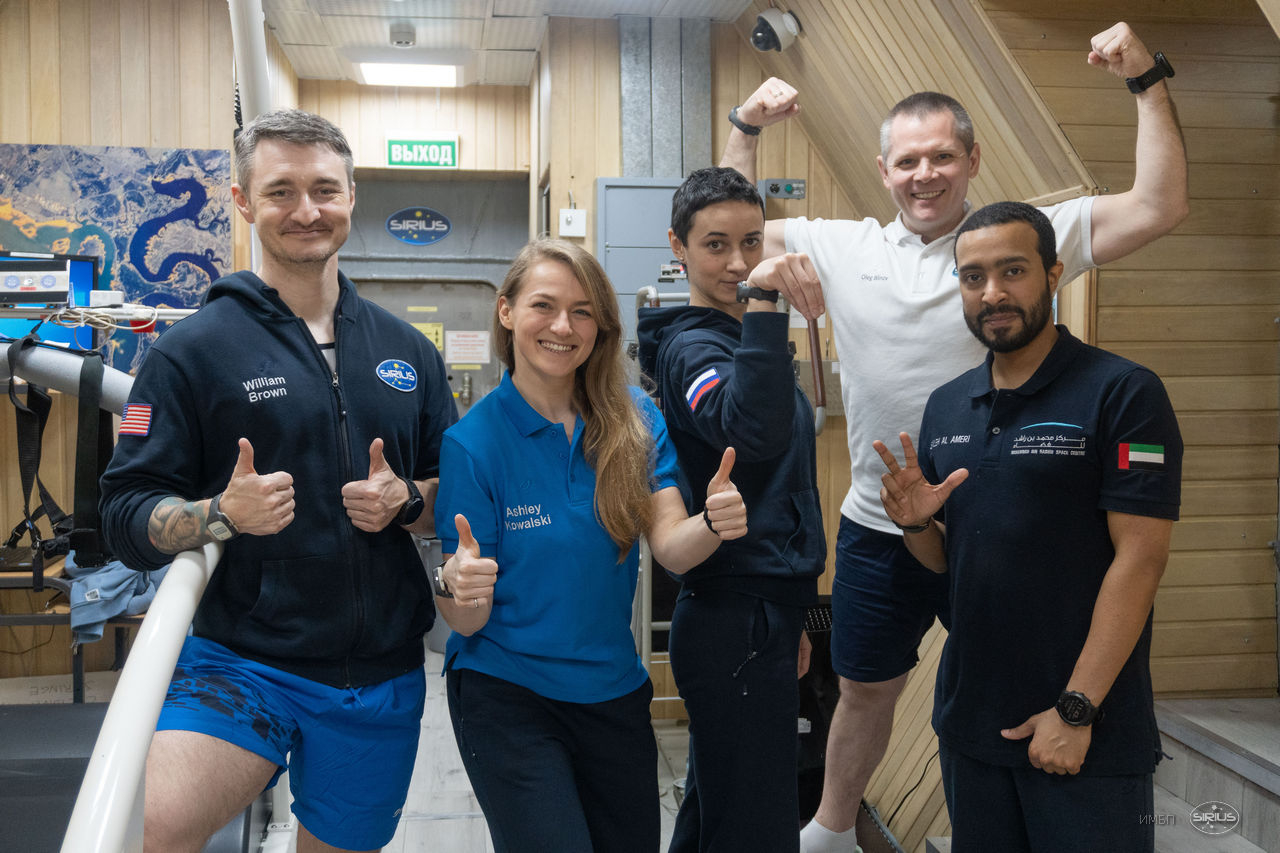
SIRIUS-21 crew members.
Credit: Institute of Biomedical Problems
The SIRIUS-21 lunar flight began on November 4, 2021. For eight months, the participants “entered near-Earth orbit” on the simulated interplanetary complex “flew to the orbit of the Moon” and several times “landed” on the Earth’s natural satellite and carried out moonwalks on the “lunar surface.” Various experiments were also carried out.
Crew members
Oleg BLINOV (Russia)
Ashley KOWALSKI (USA)
Victoria KIRICHENKO (Russia)
William BROWN (USA)
Saleh Omar AL AMERI (United Arab Emirates)
Problems faced
During the just completed experiment that mimicked a flight to the Moon, there were a number of problems expeditionary space crews faced, such as:
- sensory deprivation, monotony, limited social contacts, limited living space
- factors of autonomous interplanetary flight, including limiting the resources of the expedition and extravehicular activities on the planet’s surface
- professional activities of the crew (docking of transport ships, landing of the lunar module, control of robotic equipment)
- communication delay up to 5 minutes one way
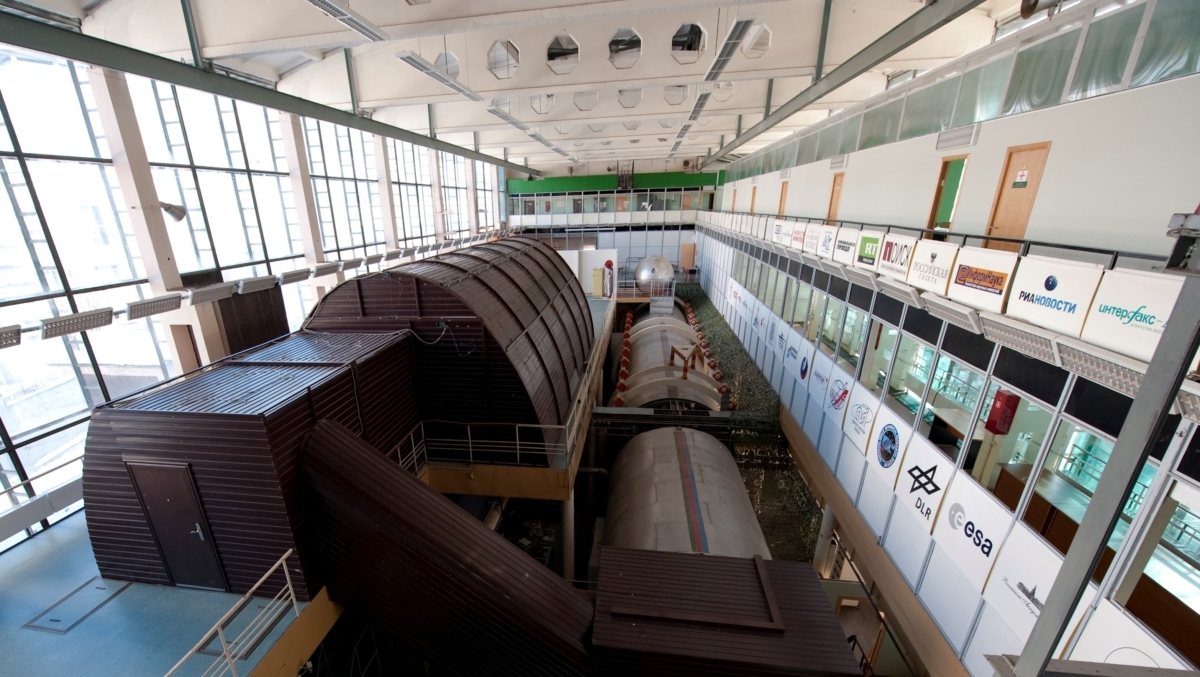
MARS 500 Session training in the IMBP module.
SIRIUS-2023
The international project SIRIUS (Scientific International Research In Unique Terrestrial Station) includes a series of isolation experiments. Experiments have already been carried out for 17 days in November 2017 and four months in 2018-2019. It is also planned to hold three annual programs, the first of which should start in the second half of 2023.
The selection of the crew for the annual isolation experiment SIRIUS-2023 will begin this fall, according to Oleg Orlov, Director of the Institute of Biomedical Problems.
“We will announce the recruitment of a new crew, I think, already in the fall. And, in fact, the selection of the crew did not stop. We have candidates who have confirmed their desire to participate in the annual experiment,” Orlov said.
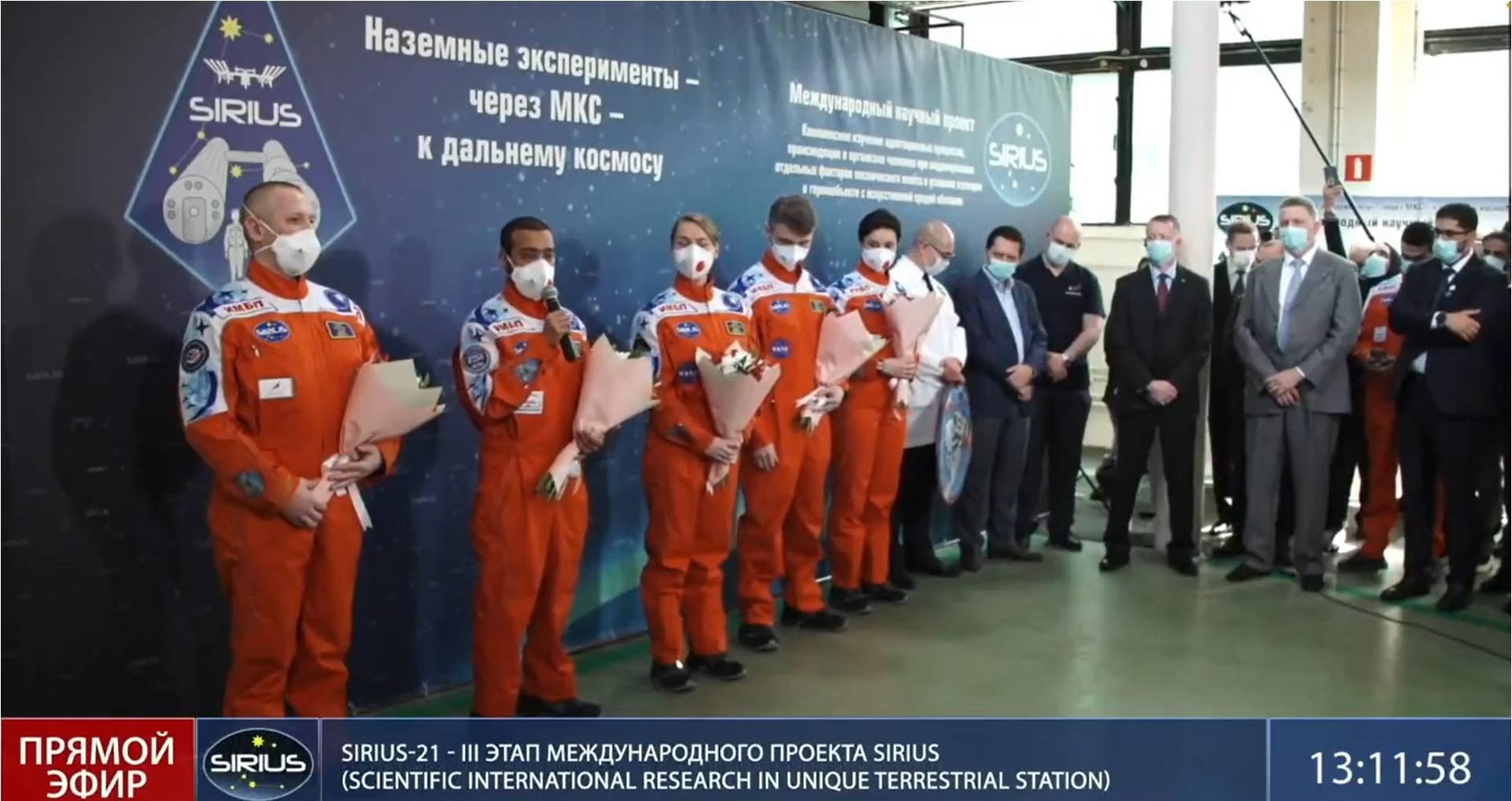
Credit: MBR Space Centre/Inside Outer Space screengrab
 Posted in Space News

