 By
By  December 12th, 2015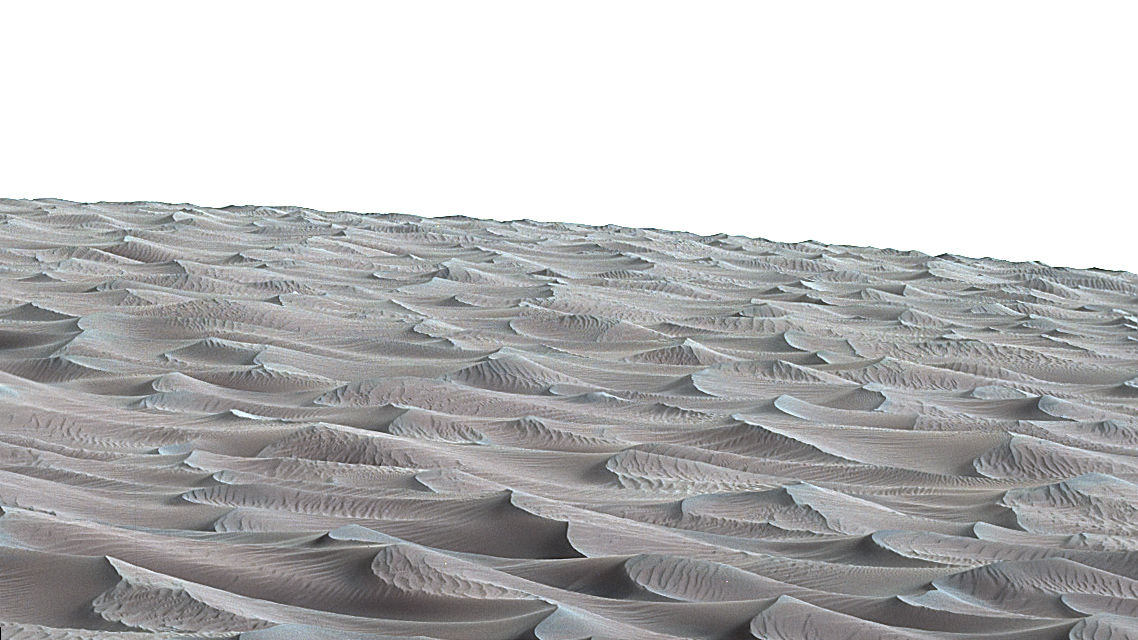
The rippled surface of the first Martian sand dune ever studied up close fills this Nov. 27, 2015 view of “High Dune” from the Mast Camera on NASA’s Curiosity rover. This site is part of the “Bagnold Dunes” field of active dark dunes along the northwestern flank of Mount Sharp.
Credit: NASA/JPL-Caltech/MSSS
The dune-inspecting Curiosity Mars rover is on a roll this weekend.
Scientists have scripted a weekend plan, making use of the robot’s tools to observe and study outcrop targets.
Curiosity has entered Sol 1191 with researchers planning to use the Mars Hand Lens Imager (MAHLI) to acquire images of “Elizabeth Ray” and “Pomona.”
According to Ken Herkenhoff of the USGS Astrogeology Science Center in Flagstaff, Arizona, Curiosity’s three-sol weekend plan is jam-packed with science duties.
As is always the case, carrying out planned rover activities are subject to change due to a variety of factors related to the Martian environment, communication relays and rover status.
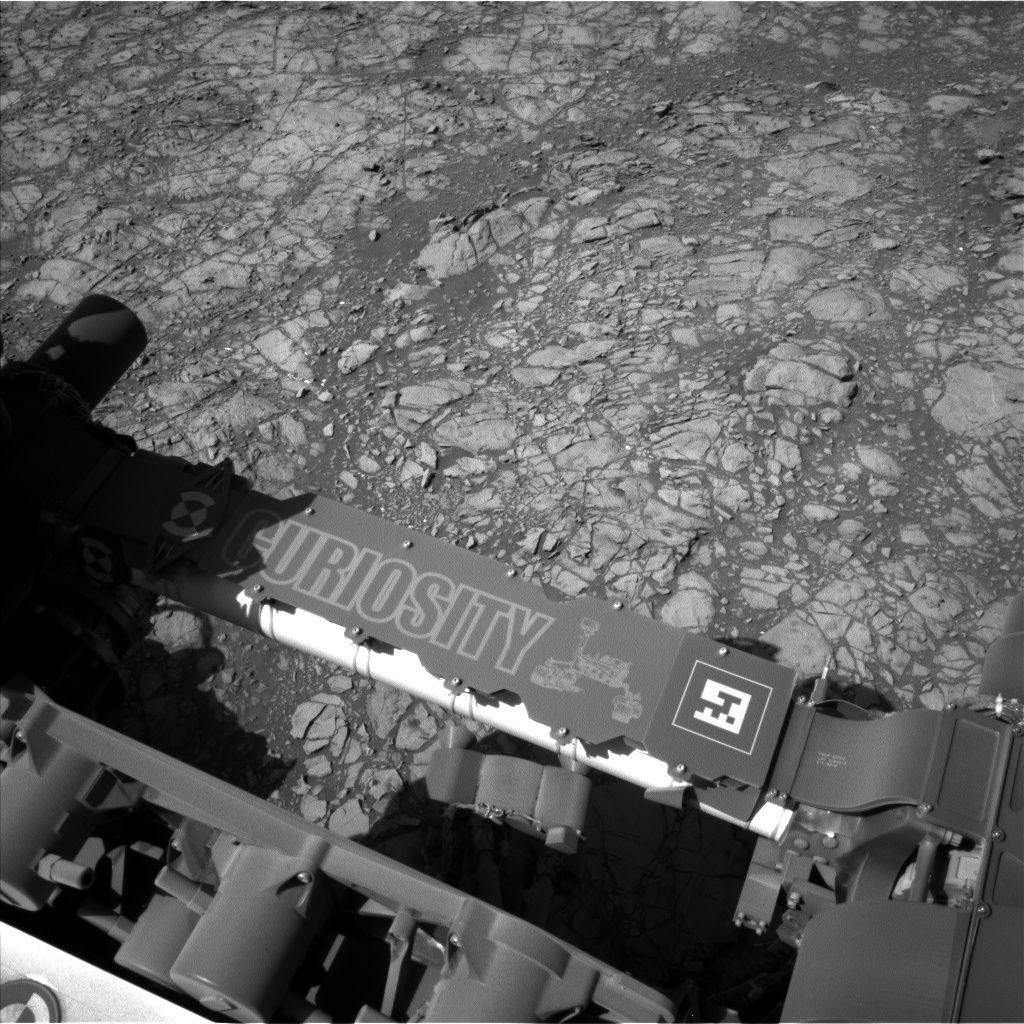
Navcam Left B image taken on Sol 1189, December 10, 2015.
Image Credit: NASA/JPL-Caltech
Morning clouds and dust devils
On tap is use of the Alpha Particle X-Ray Spectrometer (APXS) to be placed on Pomona. The rover’s Chemistry & Camera (ChemCam) and Mastcam are set to observe bedrock targets “Messum” and “Karoo,” Herkenhoff explains.
Early on Sol 1192, Mastcam will acquire another stereo mosaic of the Namib dune, Herkenhoff reports, taking advantage of morning light, and a single image of a ridge named “Paresis.”
Later that sol, the rover is slated to drive toward the southwest and acquire post-drive data. On Sol 1193, ChemCam will acquire calibration data and Navcam will search for clouds. Lastly, early on Sol 1194, the rover’s Navcam and Mastcam will search for morning clouds and dust devils, and measure the amount of dust in the atmosphere by imaging the Sun, Herkenhoff adds.
Dunes on the move
The Jet Propulsion Laboratory (JPL) Curiosity website has noted that Curiosity is using its wheels, as well as its science payload, to investigate sand that forms active dunes on Mars.
Curiosity has started up-close investigations of dark sand dunes up to two stories tall. The dunes are on the rover’s trek up the lower portion of a layered Martian mountain.
Observations from orbit of the “Bagnold Dunes” near Curiosity’s current exploration zone show that edges of individual dunes move as much as 3 feet (1 meter) per Earth year.
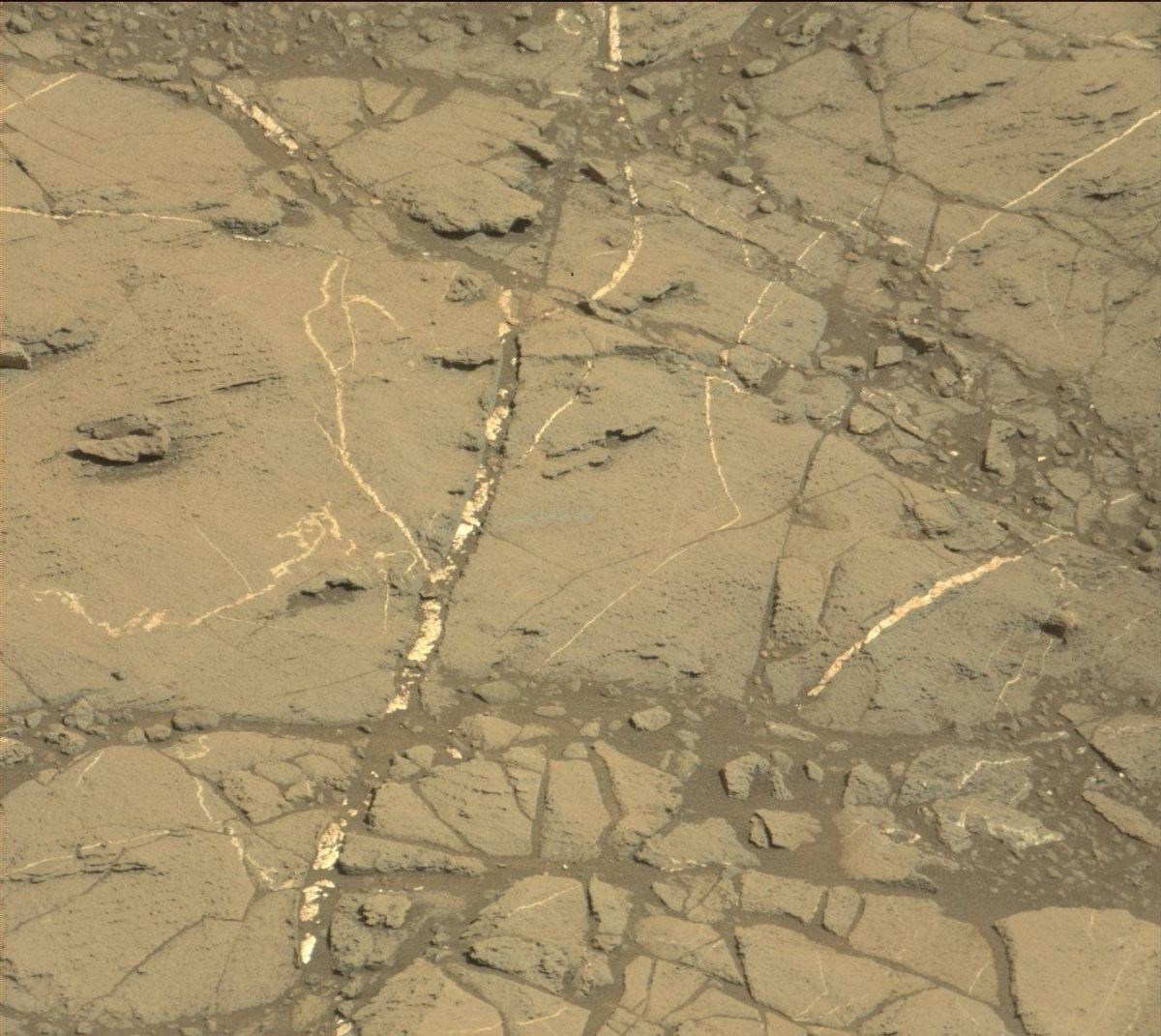
This image was taken by Curiosity’s Mastcam: Right camera on December 10, 2015, Sol 1189.
Credit: NASA/JPL-Caltech/MSSS
Curiosity has been exploring Mars since its landing in early August 2012.
The robot reached the base of Mount Sharp in 2014.
The main mission objective now is to examine successively higher layers of Mount Sharp.
 Posted in Space News

