 By
By  December 5th, 2015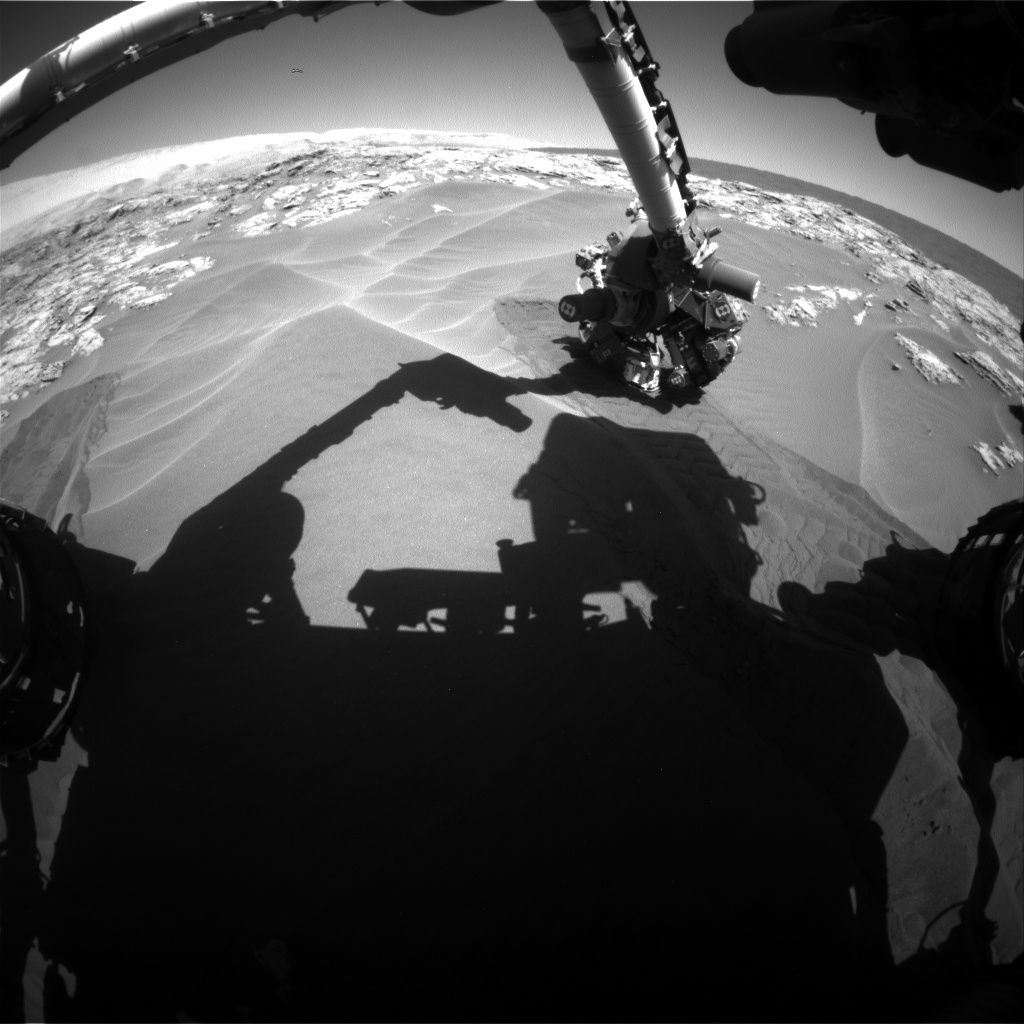
Curiosity Front Hazcam Right B image taken on Sol 1183, December 4, 2015.
Credit: NASA/JPL-Caltech
NASA’s Curiosity rover on Mars has been busy carrying out mobility testing, turning and backing out of Martian sand.
The robot documented its moves while taking multiple Hazcam images, then pausing to take Navcam and Mastcam images of the wheel tracks, reports Ken Herkenhoff of the USGS Astrogeology Science Center in Flagstaff, Arizona.
Images were taken to look for changes in a trench wall, and image the spots where the Alpha Particle X-Ray Spectrometer (APXS) was placed on the sand. APXS measures the abundance of chemical elements in rocks and soils.
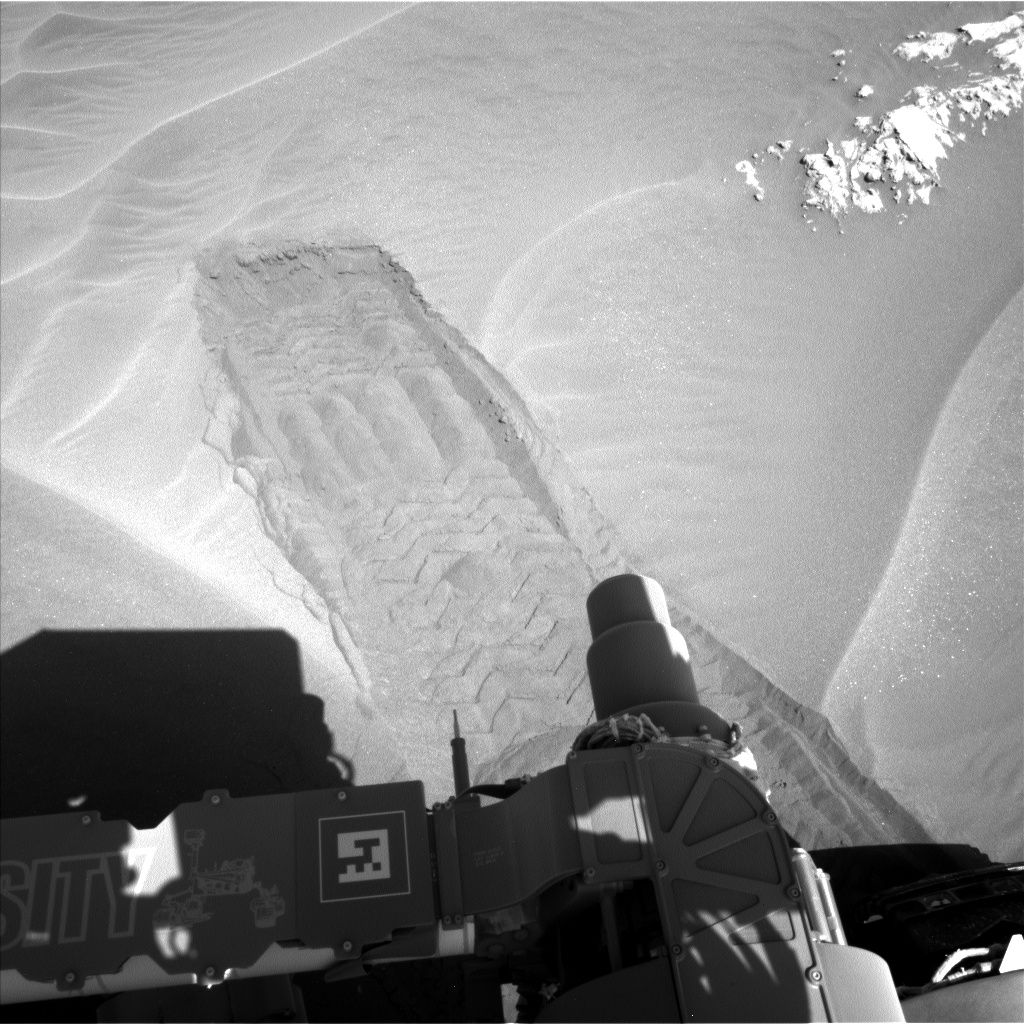
Curiosity Navcam Left B image taken on Sol 1183, December 4, 2015
Credit: NASA/JPL-Caltech
Dark dune sand
Rover operators were on task to drive the Mars machinery close enough to “High Dune” to allow contact science on the dark dune sand.
This weekend, the plan called for another drive of Curiosity.
Last week, the rover drove a little ways into a sand patch and then backed out, leaving trenches where the wheels were.
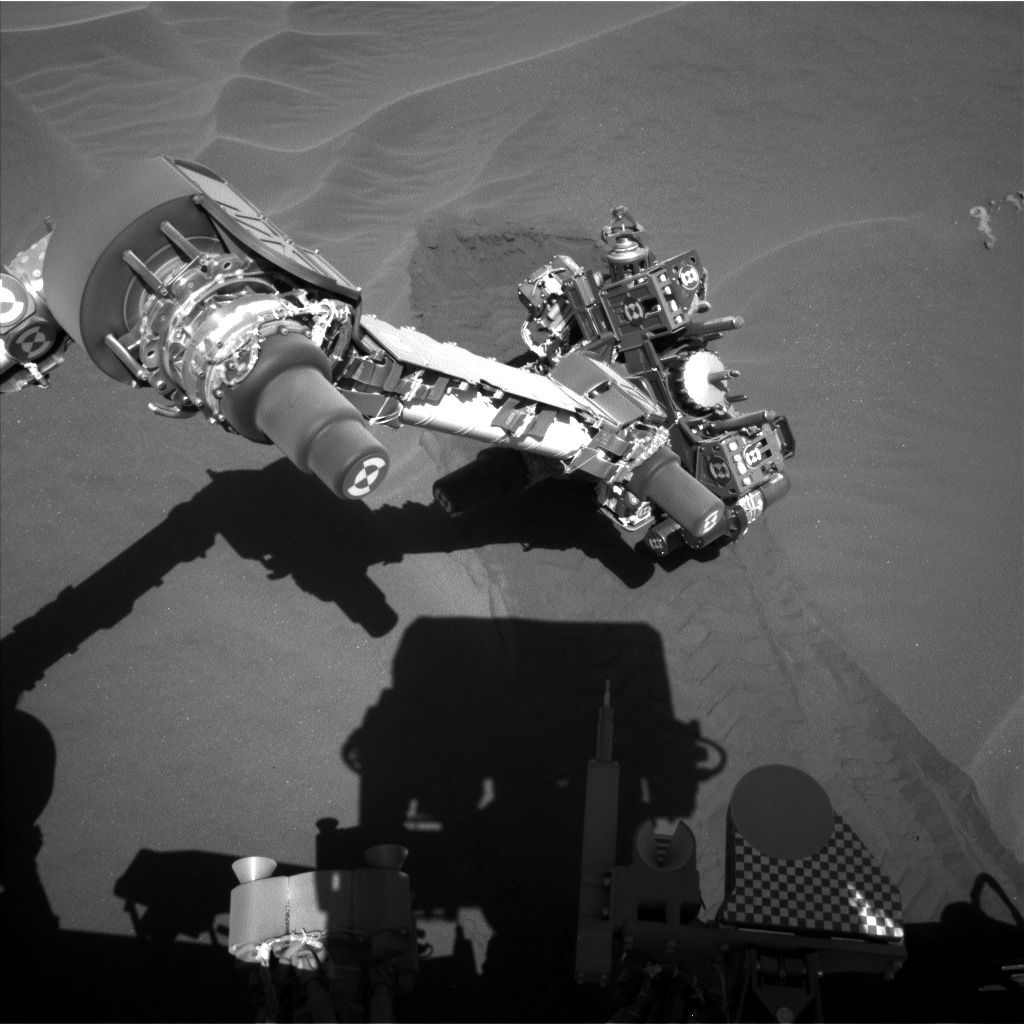
Curiosity Navcam Left B image taken on Sol 1181 December 2, 2015.
Credit: NASA/JPL-Caltech
Making trenches
“Yes, we’re disturbing some of the very photogenic sand ripples that we have been seeing, but it’s for a good cause,” reports Ryan Anderson, a planetary scientist at the USGS Astrogeology Science Center. “It teaches us more about how well we can drive in that sand, and by using the wheels to make trenches like this, we can get a better idea of the internal structure of the sand ripples,” he added.
Imaging undisturbed sand
Work last week involved contact science on the sand, with images taken by the robot’s Mars Hand Lens Imager (MAHLI) of the undisturbed sand, the walls of the wheel track, and the interior of the track, Anderson said.

NASA’s Mars rover Curiosity acquired this image using its Mars Hand Lens Imager (MAHLI), located on the turret at the end of the rover’s robotic arm, on December 3, 2015, Sol 1182 of the Mars Science Laboratory Mission.
Credit: NASA/JPL-Caltech/MSSS
Dates of planned rover activities are always subject to change due to a variety of factors related to the Martian environment, communication relays and rover status.
 Posted in Space News

