 By
By  December 8th, 2014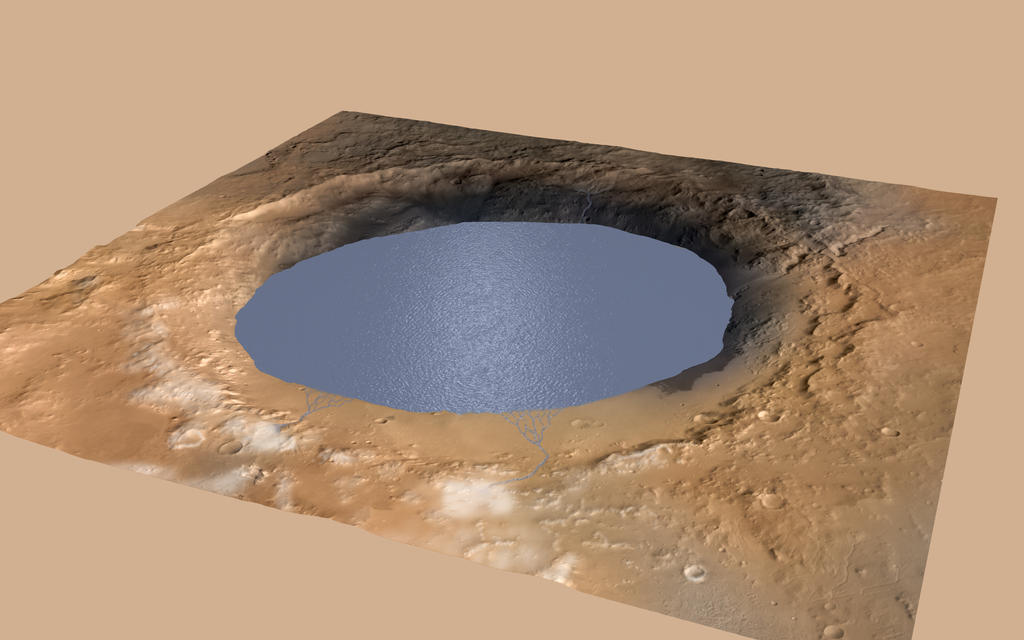
This simulation depicts a lake partially filling Mars’ Gale Crater, receiving runoff from snow melting on the crater’s rim. Evidence that NASA’s Curiosity rover has found of ancient streams, deltas and lakes suggests the crater held a lake such as this more than three billion years ago.
Image Credit: NASA/JPL-Caltech/ESA/DLR/FU Berlin/MSSS
NASA’s Curiosity Rover is chalking up “powerful new evidence” to how water helped shape the Martian landscape.
But the rumor mill is also flowing about a new finding that the robot has detected methane.
On-going observations by the robot indicate Mars’ Mount Sharp was built by sediments deposited in a large lake bed over tens of millions of years.
This interpretation of Curiosity’s finds in Gale Crater suggests ancient Mars maintained a climate that could have produced long-lasting lakes at many locations on the Red Planet.
That implies that there might have been enough time for things to get lively on Mars.
Spectrometer reading
According to informed sources, keep an eye on the December 15-19 American Geophysical Union’s annual gathering in San Francisco.
In particular, look for discussion of Mars Science Laboratory work using the tunable laser spectrometer. It is part of the Sample Analysis at Mars (SAM) Instrument Suite.

This picture shows a lab demonstration of the measurement chamber inside the Tunable Laser Spectrometer, an instrument that is part of the Sample Analysis at Mars investigation on NASA’s Curiosity rover.
Image credit: NASA/JPL-Caltech
Methane detection…who cares?
Whether the Martian atmosphere contains traces of the gas has been a question of high interest for years because methane could be a potential sign of life. But it also can be produced without biology.
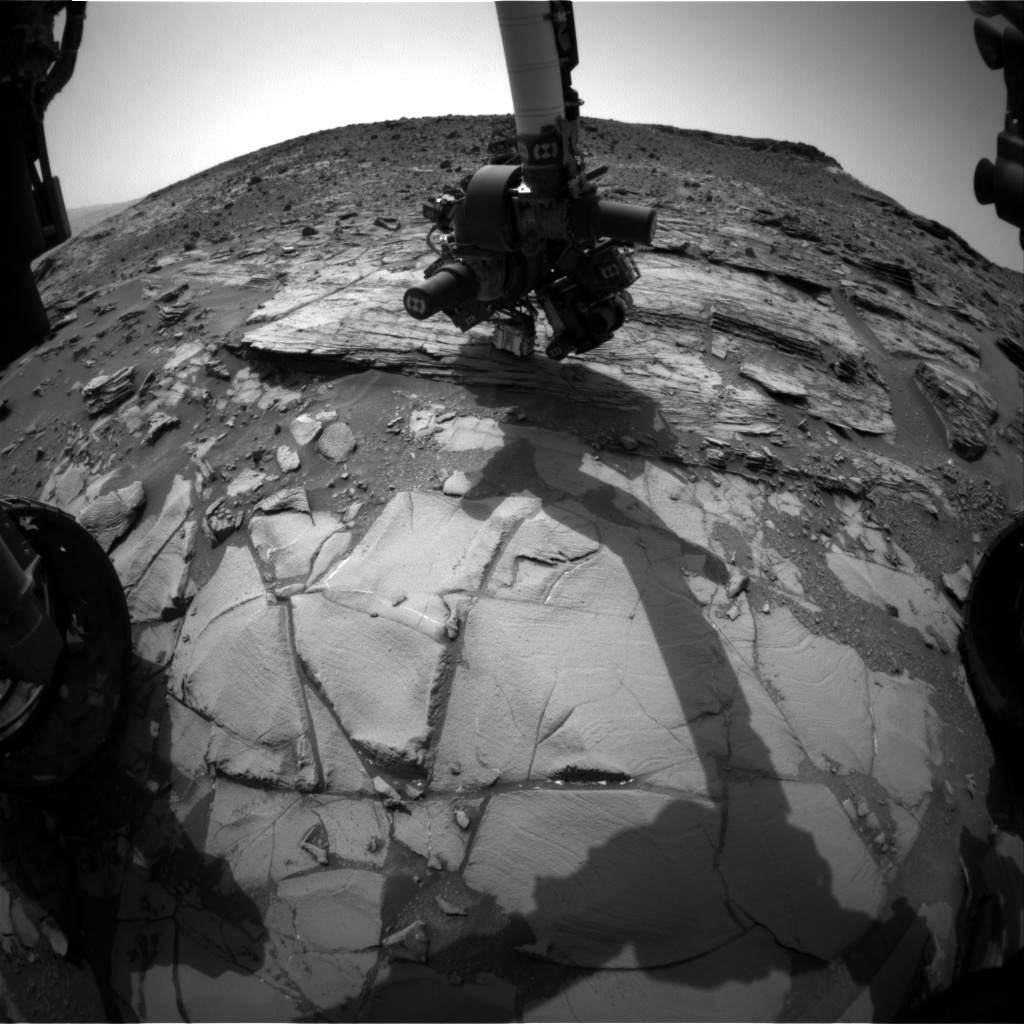
This image was taken by Front Hazcam: Left B (FHAZ_LEFT_B) onboard NASA’s Mars rover Curiosity on Sol 831 on December 7.
Image Credit: NASA/JPL-Caltech
Part per billion
If indeed methane – CH4 — is “sniffed out” by Curiosity, the key question is how much and does it vary?
Curiosity may be seeing small local increases in CH4.
“Meteorite in-fall brings organic material to Mars and this organic material breaks down and is oxidized mostly to carbon dioxide but some CH4 is released,” explained Chris McKay, a Marsologist at NASA’s Ames Research Center in California.
“Once produced on Mars the lifetime of the CH4 is 300 years against destruction by ultraviolet sunlight,” McKay told me last week. “So calculations suggest that meteoritic input and sunlight destruction balance and the result is a steady level of about one part per billion (ppb) CH4. Curiosity results are consistent with this as the constant background level of CH4 on Mars. This is hardly surprising and not too interesting for astrobiology,” he said.
Bottom line: Just how the methane on Mars story plays out at the AGU meeting, stay tuned regarding Curiosity’s tunable laser spectrometer!
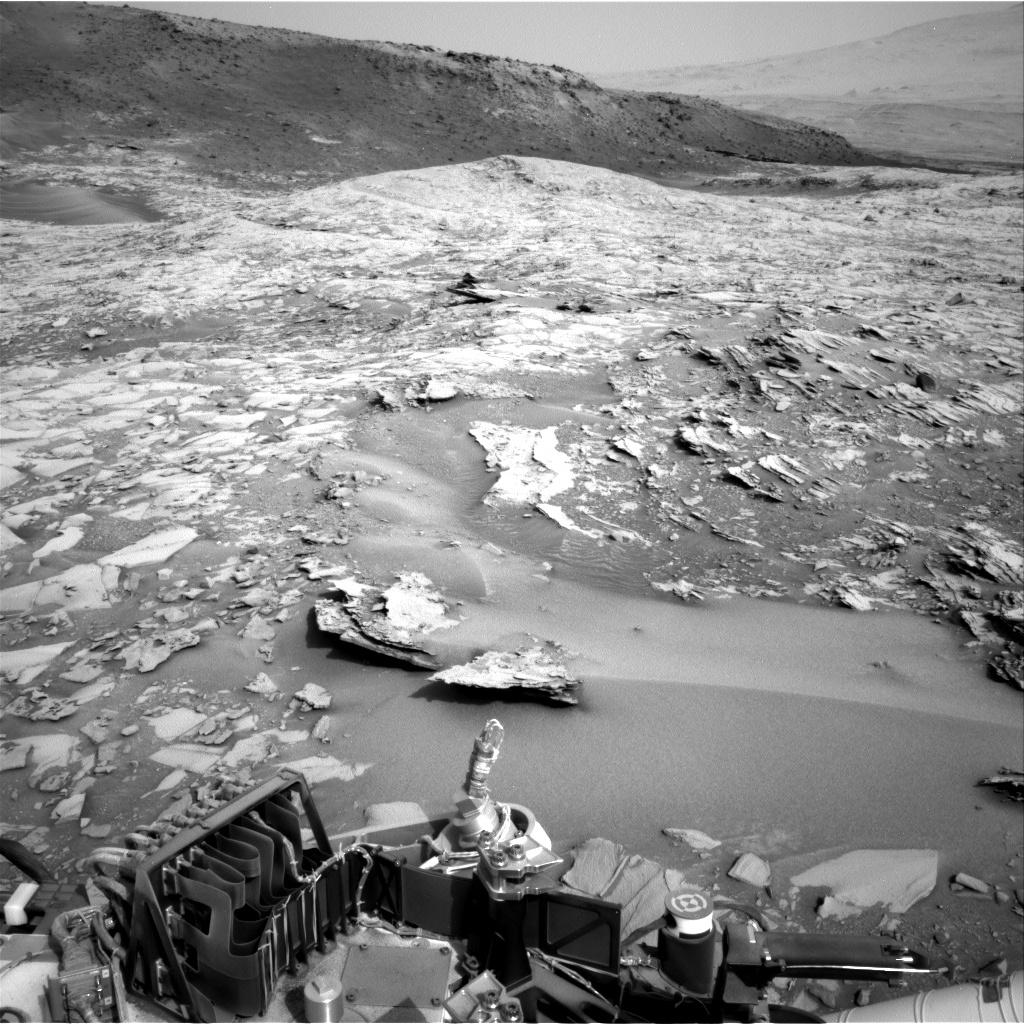
This image was taken by Navcam: Right B (NAV_RIGHT_B) onboard NASA’s Mars rover Curiosity on Sol 831 on December 8.
Image Credit: NASA/JPL-Caltech
 Posted in Space News


Stirring the pot, Leonard? 😉