 By
By  July 7th, 2021
Credit: Uplift Aerospace
A lunar concrete concoction is being appraised as a 21st century building material for use on the Moon.
Utah-based Uplift Aerospace is pioneering what it terms Luna-crete (TM), utilizing lunar regolith to help reduce the cost of construction on Earth’s celestial partner.
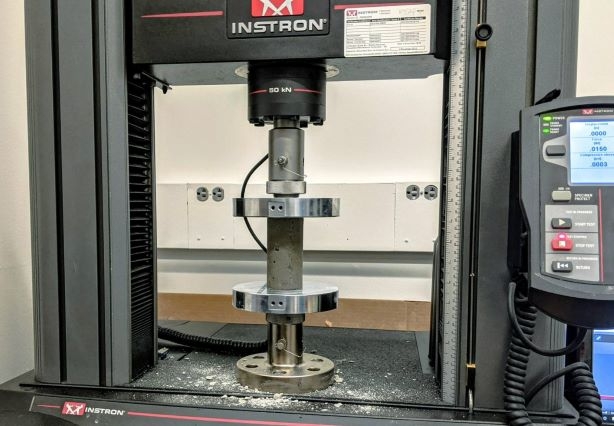
Testing Luna-crete (TM) prototypes for compressive strength.
Credit: Uplift Aerospace
Uplift has received a lunar stimulant — LHS-1 – fabricated by Exolith Lab, which the company used to develop and test its first Luna-crete prototypes. The group is specializing in the development of a mulitiplanetary economy, with one goal of casting sturdy concrete structures on the Moon.
South Pole simulant
Multiple countries, among them China, Russia, as well as the United States, have set their sights on the lunar South Pole. The draw of that location, such as Shackleton crater, is that large reservoirs of ice and other resources might be processed into water, air, and rocket fuel.
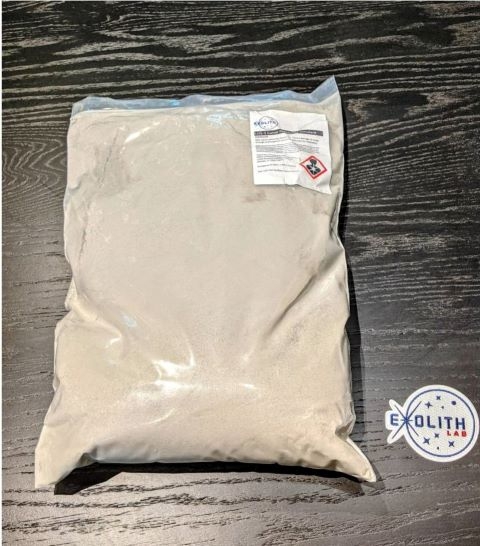
The Luna-crete (TM) prototypes were developed utilizing LHS-1 lunar regolith provided by Exolith Labs.
Credit: Uplift Aerospace

In this multi-temporal illumination map of the lunar south pole, Shackleton crater (19 km diameter) is in the center, the south pole is located approximately at 9 o’clock on its rim. The map was created from images from the camera aboard the Lunar Reconnaissance Orbiter.
Credits: NASA/GSFC/Arizona State University
As follow-up research, Uplift is receiving a South Pole lunar regolith simulant, SP-1, allowing the company and other University partners to better characterize South Pole lunar regolith to optimize a formulation for a durable lunar concrete.
To that end, Uplift awarded a four-month, $30,000 grant last May to Konstantin Sobolev, professor of civil & environmental engineering at the University of Wisconsin-Milwaukee.
Josh Hanes, Uplift Aerospace’s CEO, says that Sobolev’s research will help select the binder and production methods needed to produce lunar concrete suited for the topography and temperature swings of the lunar south pole.
High-fidelity, mineral-based simulant
Exolith Lab is situated in Orlando, Florida, largely funded by the Center for Lunar & Asteroid Surface Science (CLASS) at the University of Central Florida. Exolith Lab develops and produces a variety of Moon, Mars and asteroid regolith (soil) simulants.
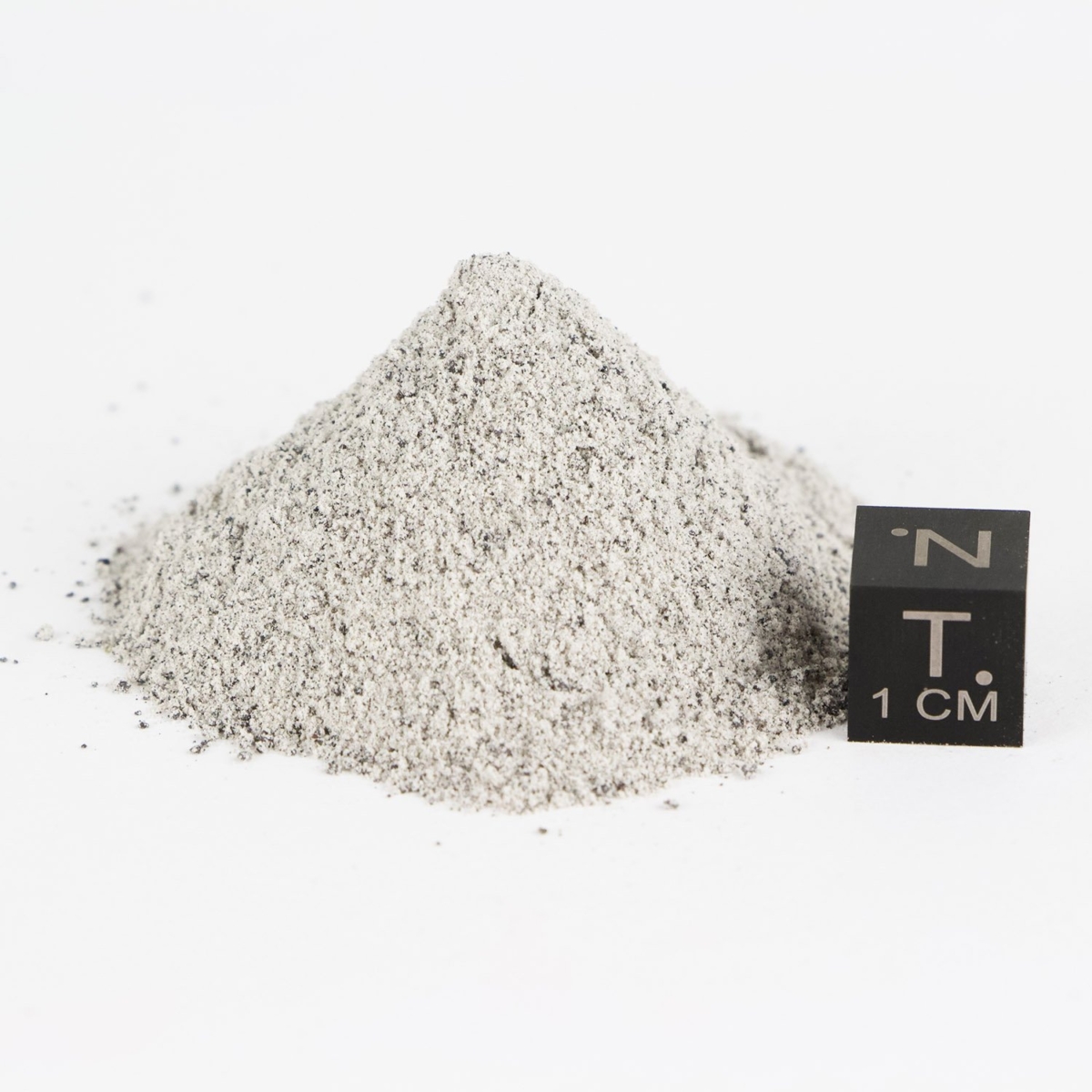
LHS-1: lunar highlands simulant
Credit: Exolith Lab
The LHS-1 lunar highlands simulant has been developed by the CLASS Exolith Lab. It is a high-fidelity, mineral-based simulant appropriate for a generic or average highlands location on the Moon. The simulant accurately captures the texture of lunar regolith by combining both mineral and rock fragments in accurate proportions.
For more information on Uplift Aerospace, go to:
https://www.upliftaerospace.com/
For more details regarding the Exolith Lab, go to:
 Posted in Space News

