 By
By  June 16th, 2023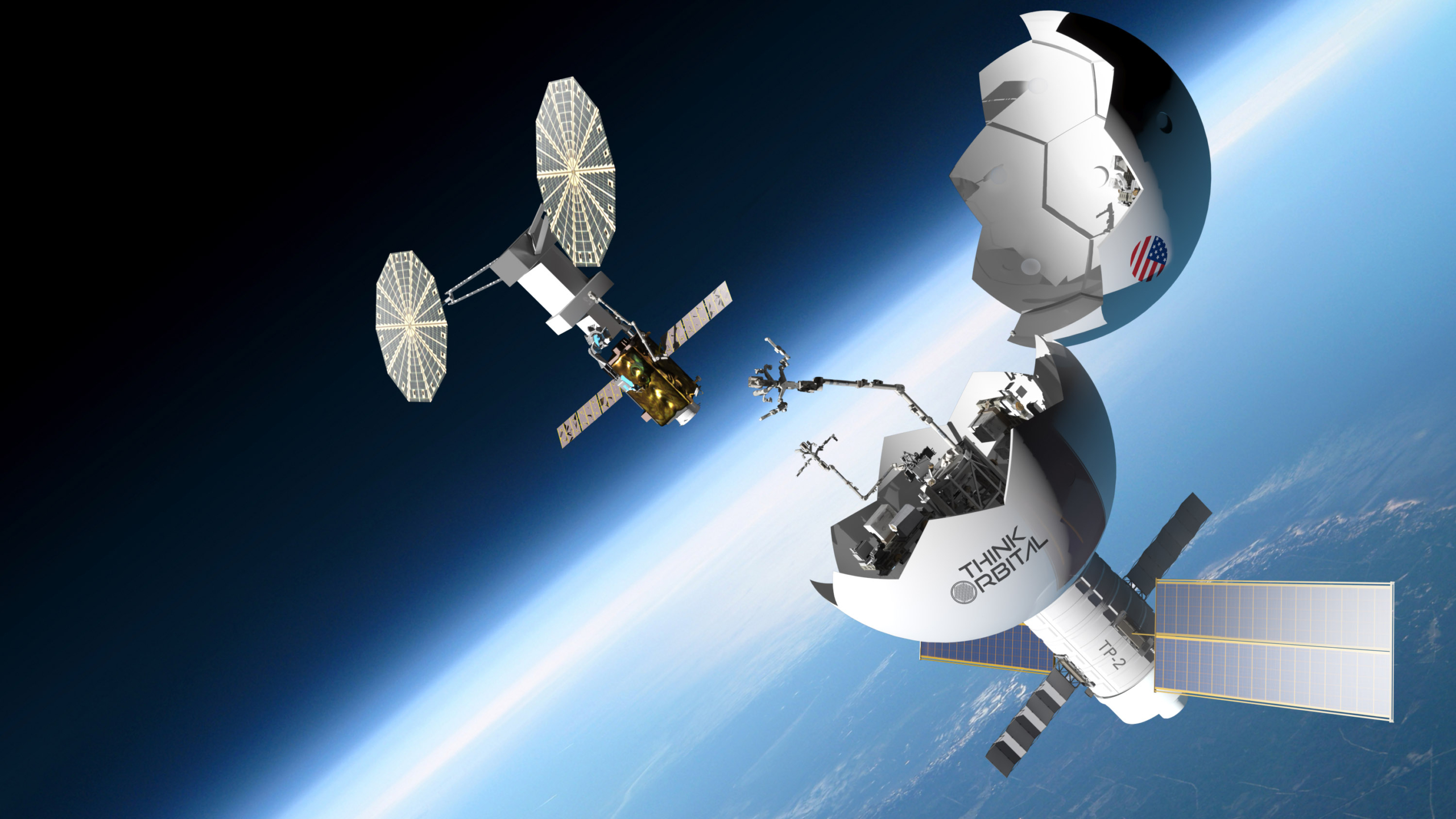
Image credit: ThinkOrbital
NASA is partnering with seven U.S. companies, viewed as a step to bolster a U.S. commercial low Earth orbit economy.
Through unfunded Space Act Agreements, the intent is for selected firms to leverage NASA expertise, but ultimately the space agency can be a customer for the capabilities honed by the selected firms. According to NASA, the new set of agreements can foster more competition for services and more providers for innovative space capabilities.
The LEO seven
The companies selected to collaborate with NASA under the Collaborations for Commercial Space Capabilities-2 are:
Blue Origin: Develop integrated commercial space transportation capability that ensures safe, affordable, and high-frequency US access to orbit for crew and other missions.
Northrop Grumman: Persistent Platform to provide autonomous and robotic capabilities for commercial science research and manufacturing capabilities in low Earth orbit.

Image credit: Sierra Space
Sierra Space: Developing the company’s commercial low Earth orbit ecosystem, including next-generation space transportation, in-space infrastructure, and expandable and tailorable space facilities providing a human presence in low Earth orbit.
SpaceX: Low Earth orbit architecture to provide a growing portfolio of technology with near-term Dragon evolution and concurrent Starship development. This architecture includes Starship as a transportation and in-space low-Earth orbit destination element supported by Super Heavy, Dragon, and Starlink, and constituent capabilities including crew and cargo transportation, communications, and operational and ground support.
Special Aerospace Services: An in-space servicing technology, propulsion, and robotic technology called the Autonomous Maneuvering Unit (AMU) and the Astronaut Assist-AMU for commercial in-space servicing and mobility applications intended for safer assembly of commercial low Earth orbit destinations, servicing, retrieval, and inspection of in-space systems.
ThinkOrbital: Development of ThinkPlatforms and CONTESA (Construction Technologies for Space Applications). ThinkPlatforms are self-assembling, single-launch, large-scale orbital platforms that facilitate a wide array of applications in low Earth orbit, including in-space research, manufacturing, and astronaut missions. CONTESA features welding, cutting, inspection, and additive manufacturing technologies, and aids in large-scale in-space fabrication.
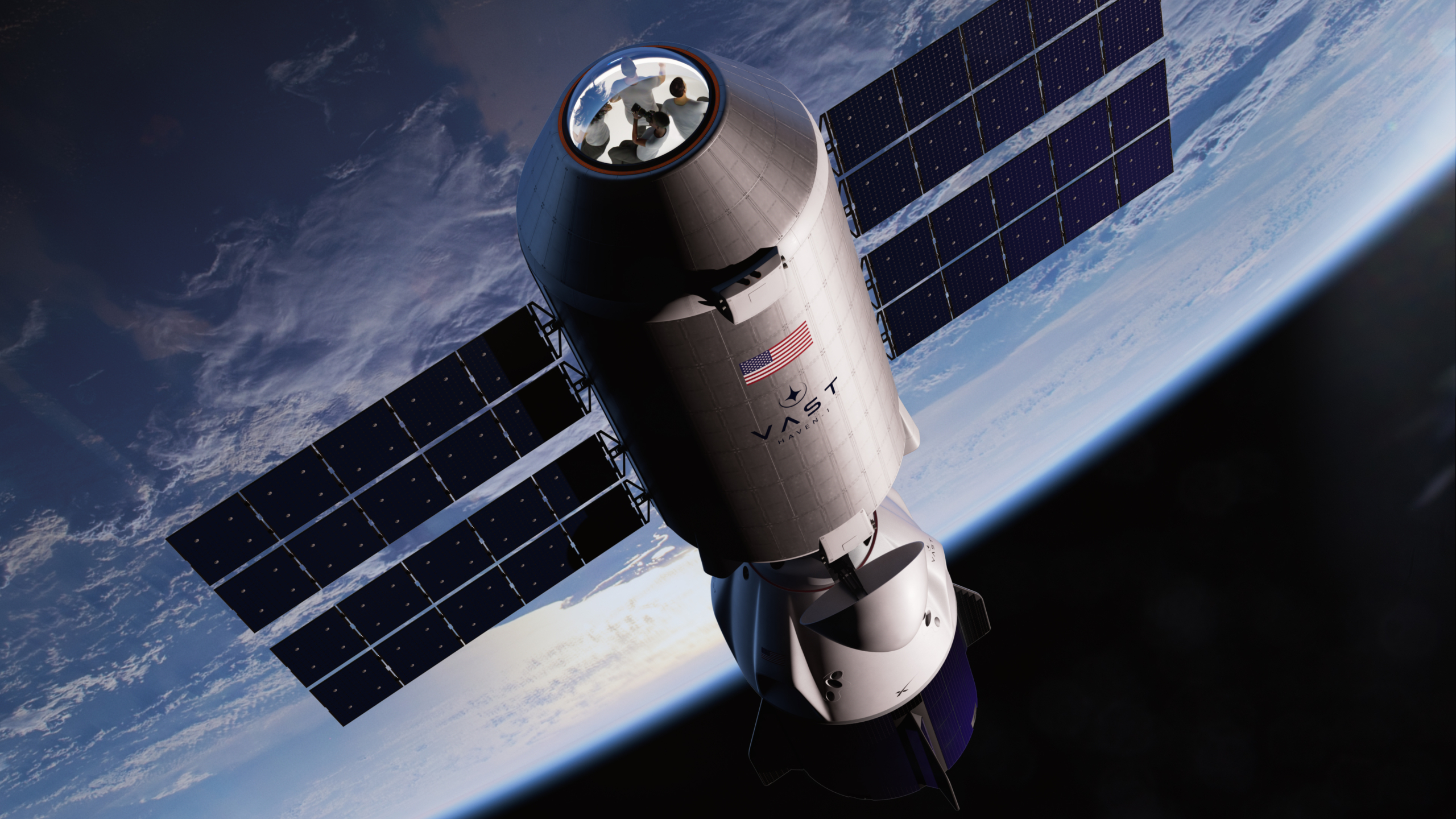
Image credit: Vast
Vast: Technologies and operations required for its microgravity and artificial gravity stations. This includes the Haven-1 commercial destination, which will provide a microgravity environment for crew, research, and in-space manufacturing, and the first crewed mission, called Vast-1, to the platform. Development activities for larger space station modules will also take place under the Space Act Agreement.
For more information about NASA initiatives and commercial space, visit:
 Posted in Space News

