 By
By  November 3rd, 2019
MINERVA-II2 rover successfully reached asteroid Ryugu.
Credit: JAXA
Japan’s Hayabusa2 continues to be an impressive asteroid mission.
The MINERVA-II2 rover was released from Hayabusa2 back on October 2, 2019.

MINERVA-II2 rover release from Hayabusa2 asteroid explorer.
Credit: JAXA/Tohoku University/Screengrab Inside Outer Space
Based on the optical observation results using a set of spacecraft-mounted cameras and radio signals from the deployed rover, the device reached the asteroid’s surface on October 3rd.
The rover orbited around asteroid Ryugu 1.25 times before landing on the space rock, reports Kazuya Yoshida, Professor and Director of the Space Robotics Lab at Tohoku University.
The rover was named ULULA (University-made Landing Unit for Locomotion on Asteroid) which is a Latin word meaning owl.
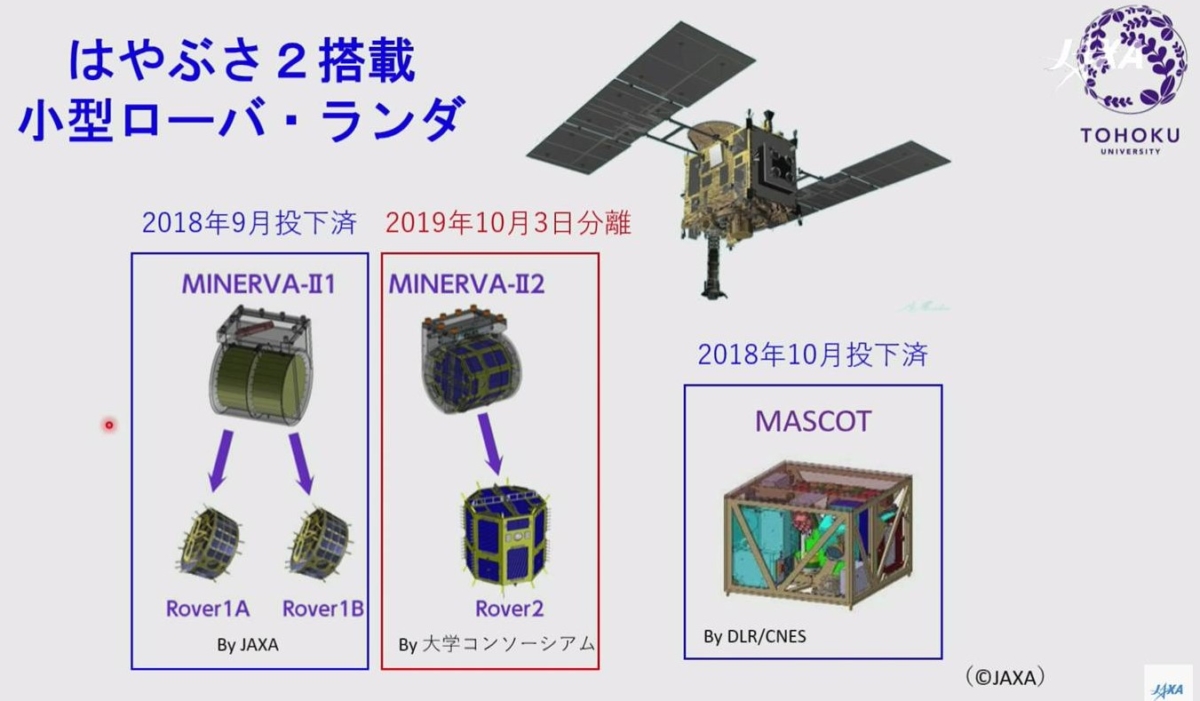
Hardware successfully deployed from Hayabusa2.
Credit: JAXA/Screengrab Inside Outer Space
Rover 1a and 1b were already named Hibou and Owl, Yoshida told Inside Outer Space.
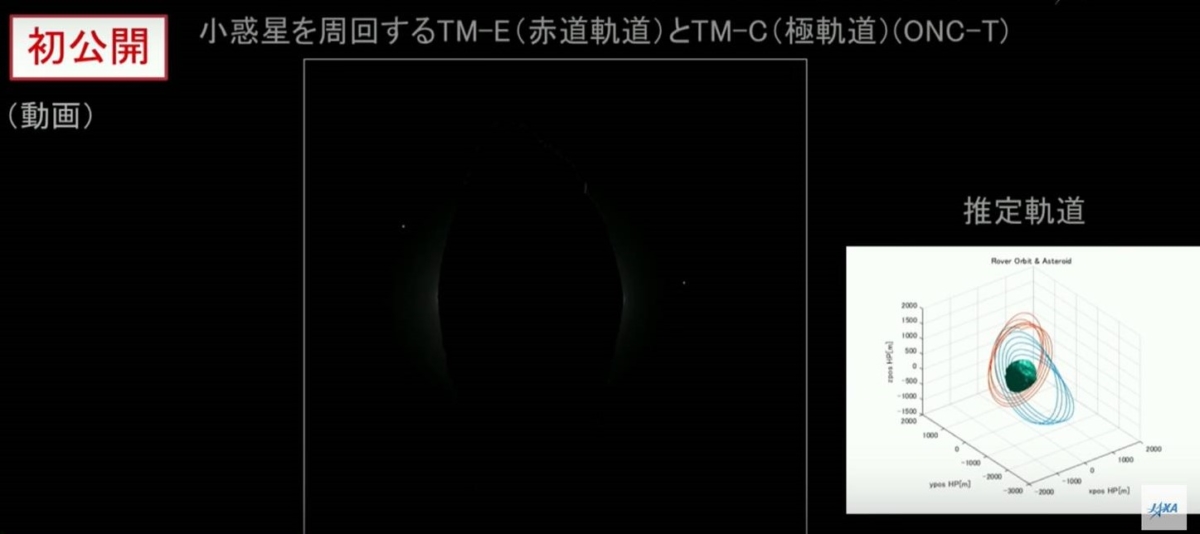
Credit: JAXA/Screengrab Inside Outer Space
Gravity field
Including the target makers, named Sputnik and Explorer, which were inserted into polar and equatorial orbits at the asteroid, “we obtained a good amount of data for the analysis of anomaly of the gravity field of Ryugu,” he said.
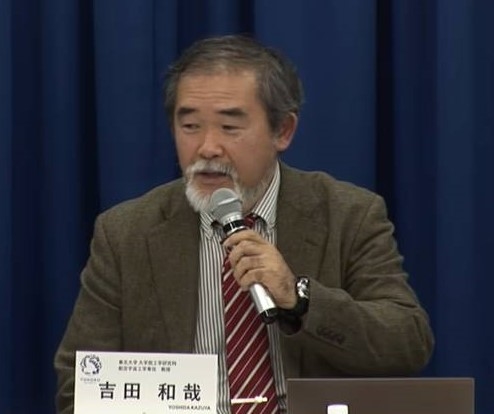
Kazuya Yoshida, Professor and Director of the Space Robotics Lab at Tohoku University. Credit: JAXA/Screengrab Inside Outer Space
On October 28, there was a Japan Aerospace Exploration Agency (JAXA) press conference in Tokyo to provide a quick summary of the target markers and the MINERVA-II2.
Spoken in Japanese, this press event can be seen here at:
https://www.youtube.com/watch?v=y1mzFMk3Tf0
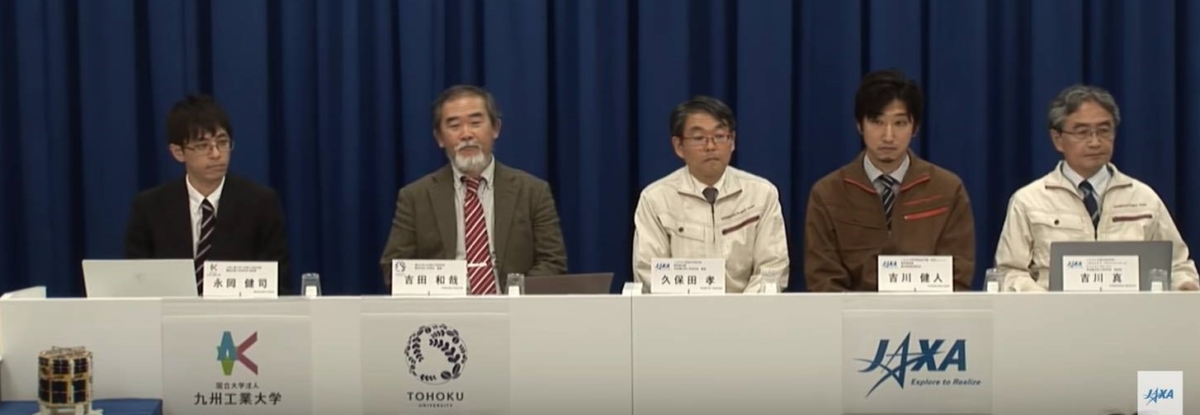
Press event details deployment of MINERVA-II2.
Credit: JAXA/Screengrab Inside Outer Space
Special thanks to professor Kazuya Yoshida for the updated information.
 Posted in Space News

