 By
By  November 11th, 2022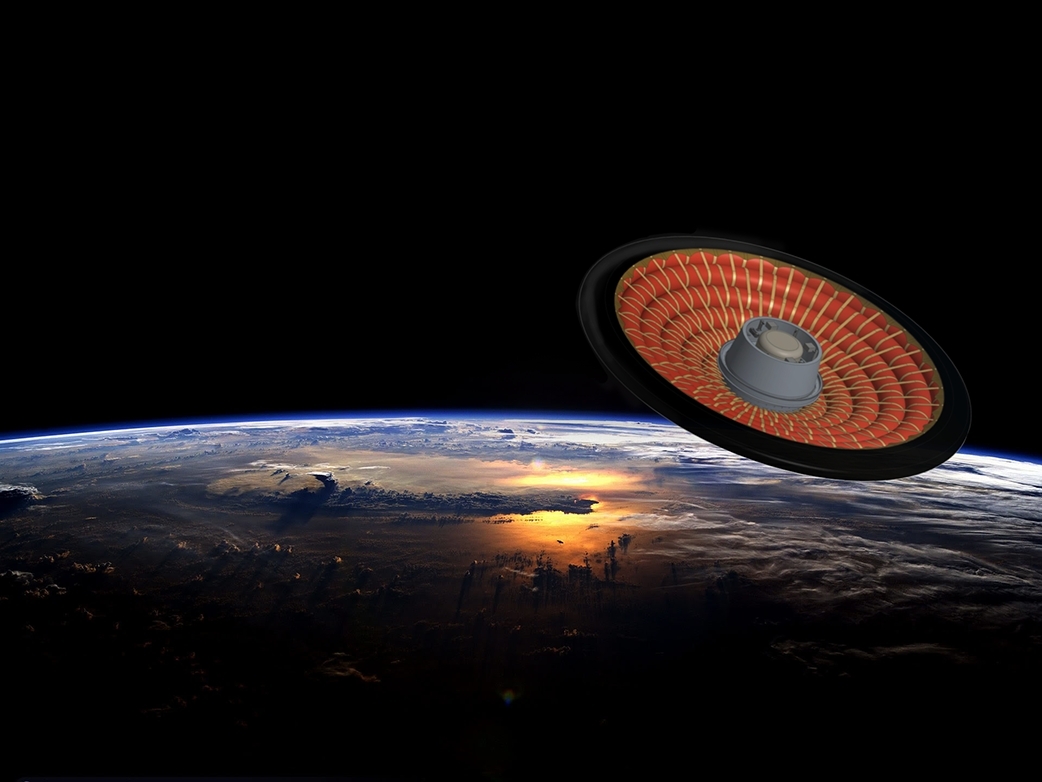
In-coming LOFTID dives toward Earth.
Artwork credit: NASA
NASA test engineers are evaluating how well an inflatable decelerator hurled to Earth from space weathered its high-flying test.
Flown November 10, NASA’s Low-Earth Orbit Flight Test of an Inflatable Decelerator, or LOFTID, is a type of heat shield for atmospheric re-entry.
This technology could be utilized for missions to Mars, Venus, Titan, as well as returning payloads to Earth.

Credit: NASA
Secondary payload
LOFTID got its day in space as a secondary payload, riding along with NOAA’s Joint Polar Satellite System-2 (JPSS-2). That NOAA spacecraft did experience a solar array unfurling issue – but is now fully deployed and the satellite is healthy and operating as expected.
This twosome was hurled spaceward by a United Launch Alliance Atlas V 401 rocket from Vandenberg Air Force Base in California.

Credit: NASA
Plucked from ocean waters
Team members successfully retrieved the LOFTID heat shield from the Pacific Ocean on Thursday morning, plucked from ocean waters and planted on board a recovery vessel. Splashdown was within an ellipse east of Honolulu.
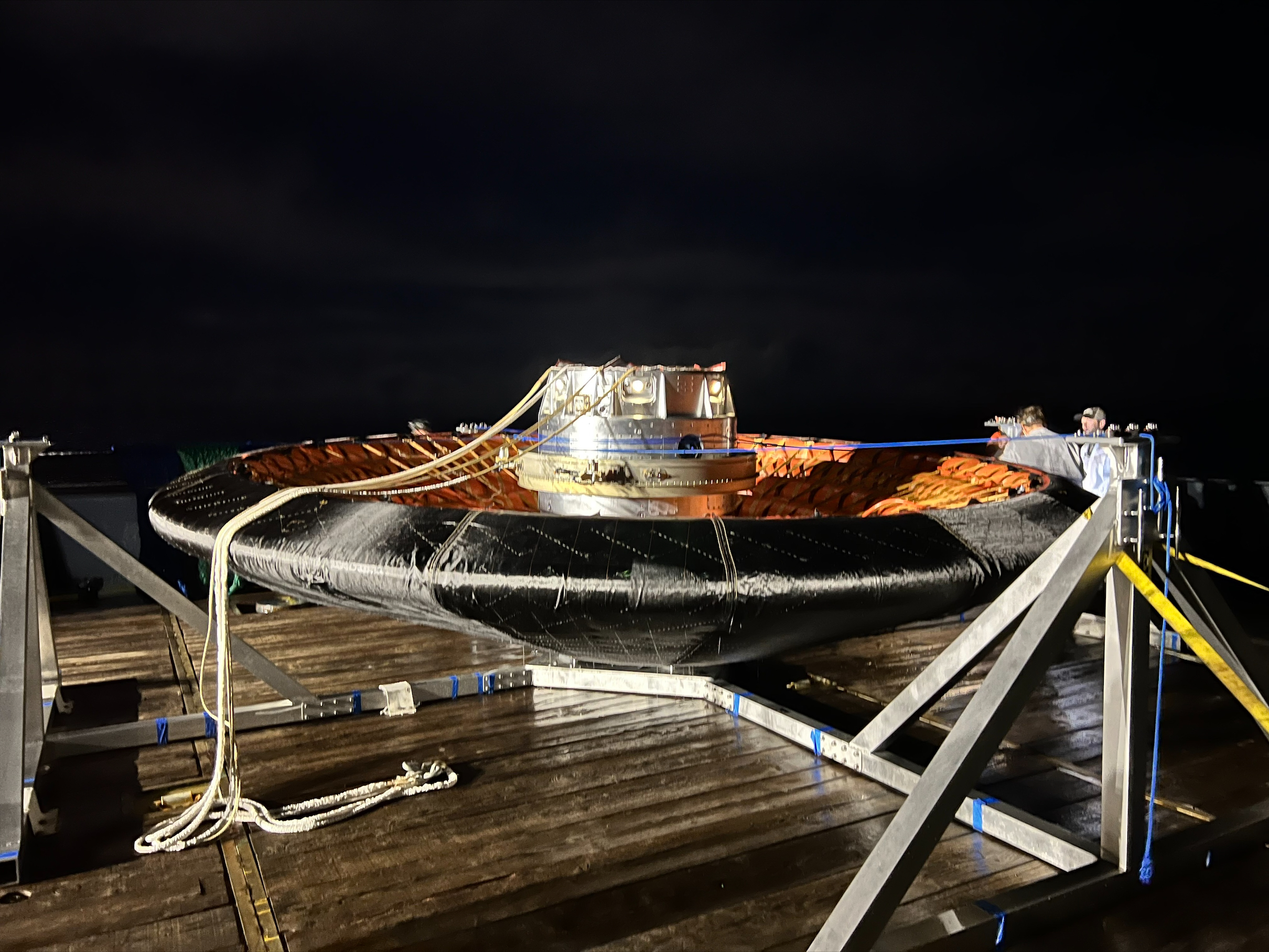
Onboard recovery vessel.
Credit: NASA
Also retrieved from the Pacific Ocean, LOFTID’s ejectable data that holds a backup copy of the data recorded during the heat shield’s plunge through Earth’s atmosphere. Another copy of the data is stored aboard the heat shield itself.

Technicians tend LOFTID in pre-launch photo.
Credit: NASA
The LOFTID project is managed and funded through NASA’s Technology Demonstration Missions program, part of the agency’s Space Technology Mission Directorate. The project is led by NASA Langley Research Center in Hampton, Virginia.
Novel technology
High above the Earth, LOFTID’s heat shield inflated, then re-entered Earth’s atmosphere, showcasing how this novel technology can assist payloads in slowing down and surviving the intense heat of re-entry.

Credit: NASA
For informative, pre-launch videos focused on LOFTID, go to:
 Posted in Space News

