 By
By  March 5th, 2020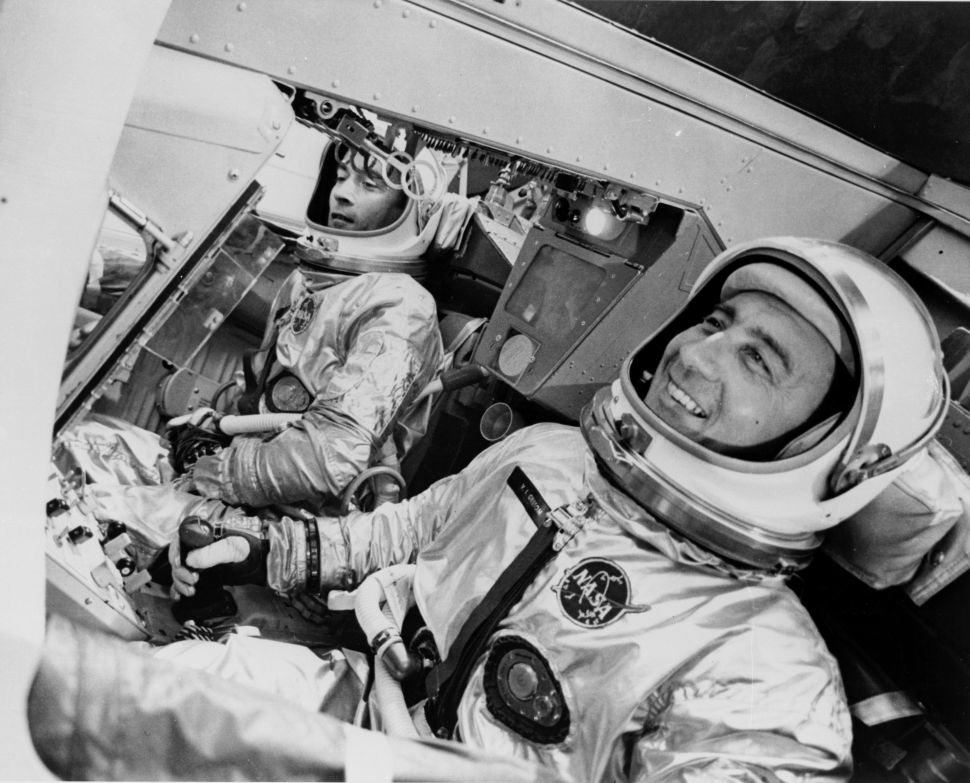
Gemini 3 crew, John Young (left) and Gus Grissom.
Credit: NASA/MSFC Archives
There is need for an experiential and multisensory approach in the design of future eating experiences in space.
Yes, space food has come a long way since astronaut John Young smuggled a corned-beef sandwich on board the Gemini 3 space mission in 1965.
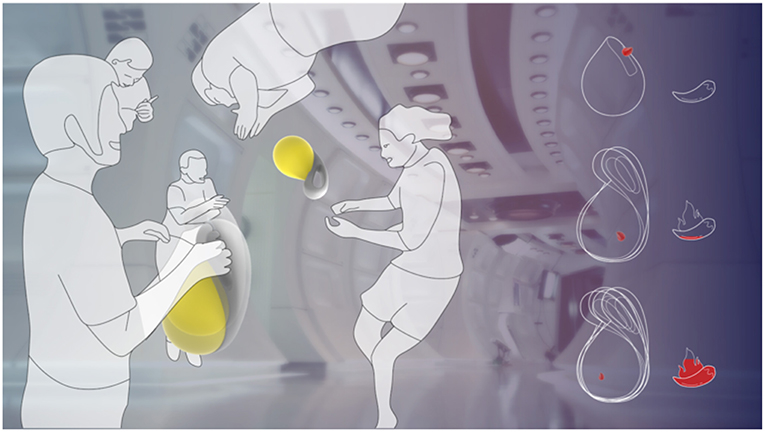
Passengers mixing spice bombs and ingredients by shaking and throwing the mixing pod in microgravity. The longer they shake the pod, the stronger the food tastes.
Credit:
Obrist, et al.
With a series of commercial space flights set to launch in the upcoming years, academics at the University of Sussex and BI Norwegian Business School have investigated how the latest tech innovations and understanding around taste could be applied to create novel eating experiences in space.
Touch, taste, and smell
Marianna Obrist is leading the work, a professor of Multisensory Experiences and Head of the Sussex Computer Human Interaction (SCHI ‘sky’) Lab at the University of Sussex in the United Kingdom. She is a leading expert exploring our understanding of human touch, taste, and smell experiences and how they can be augmented through interactive technologies.
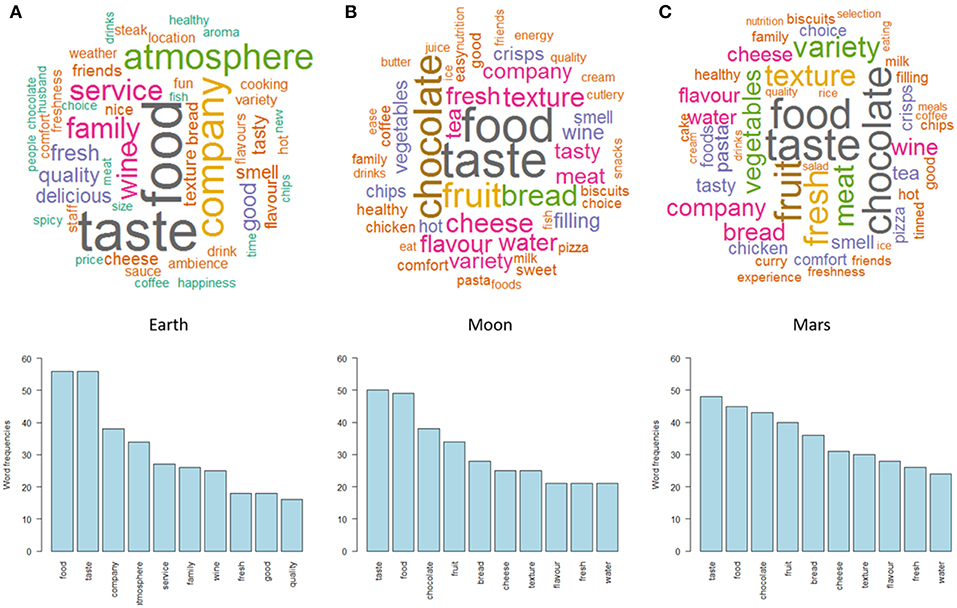
Credit: Obrist, et al.
Purpose of the research is to explore for the first time what technology could be used to serve up healthy, nutritious and tasty food for a new generation of space travelers, including tourists.
That food would be designed to combat the challenges of zero-gravity dining and extreme isolation. In addition 3-D printed food would be made to order from family recipes. Also, the research delves into virtual reality, music, visual projections, atmospheric light, temperature, and humidity to recreate distinctive multisensory Earth atmospheres.
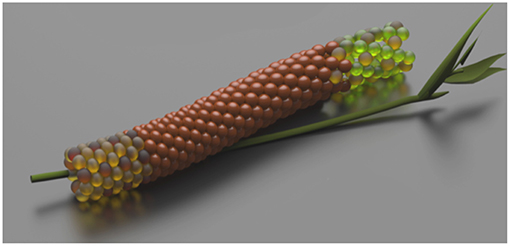
3D printed bar that includes three different courses in a single, eatable item.
Credit: Obrist, et al
Next gen astronauts and tourists
So put aside squeeze tubes, leave those illegal imports of corned-beef sandwiches at the launch pad, forget helpings of applesauce and high-calorie cubes of protein, fat and sugar and get ready for:
Spice Bomb Mixing – An “emotional” cleanser combating the diminished flavor perception in space caused by stuffiness in the nose. Solid spices and ingredients are not commonly used in space food because of the risk of them floating away. But the team proposes a mixing pod which would dissolve into the food – injecting a meal with flavor and texture.
Flavor Journey 3D Printer – An astronaut or tourist could order a flavor profile from family, friends, or chefs which would be recreated through a food printer within the spacecraft. Potentially an astronaut could enjoy a “bar” that integrates several courses in one print.
Earth Memory Bites – Small bites that contain distinct flavors representing different regions, cultures, or specific experiences and then embedded in a specific dining environment through projection mapping and VR for a shared dining experience with friends and family. Music, visual projections, atmospheric light, temperature, and humidity could all be used to recreate distinctive Earth atmospheres.
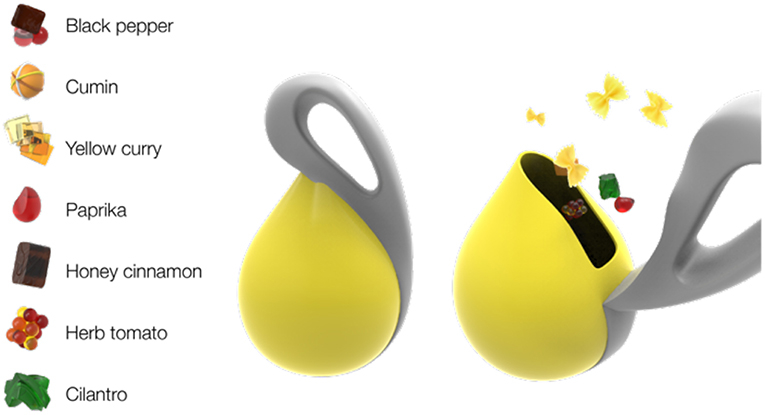
Adding spice bomb modules into the mixing pod.
Credit: Obrist, et al.
Hypothetical journeys
In a research paper, Obrist and her colleagues used two hypothetical journeys, one to the Moon and one to Mars, accounting for long- and short-term space flights, to inspire the general public’s imagination about eating in space.
“Designing human-food interactions in space is not a trivial task,” Obrist explains in a University of Sussex statement. “Before astronauts eat in space, they need to undergo dedicated training on Earth, and multiple challenges associated with nutrition, production, conservation, and transportation, among others, have to be considered.”
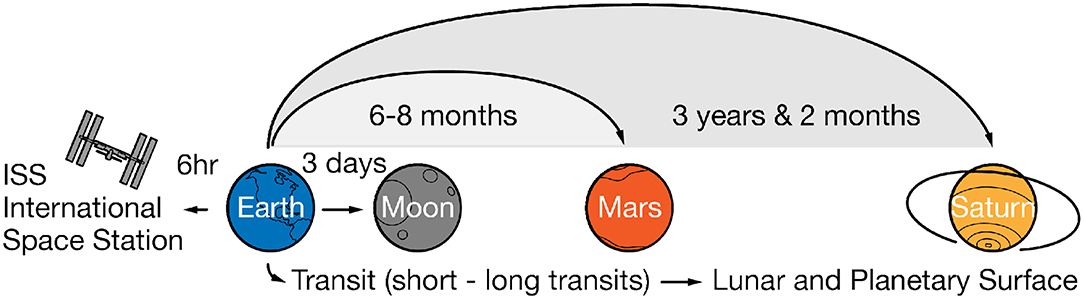
Design opportunities beyond the International Space Station (ISS), accounting for transit flights (short- and long-spaceflights to the Moon and Mars) and ultimately human settlements on lunar and planetary surfaces.
Credit: Obrist, et al.
Given the increasing possibilities of short and long-term space travel to the Moon and Mars, Obrist adds, “it is essential not only to design nutritious foods but also to make eating an enjoyable experience. To date most research on space food design has emphasized the functional and nutritional aspects of food. There have been no systematic studies that focus on the human experience of eating in space.”
To read the work — “Space Food Experiences: Designing Passenger’s Eating Experiences for Future Space Travel Scenarios” — published in the journal, Frontiers in Computer Science– go to:
https://www.frontiersin.org/articles/10.3389/fcomp.2019.00003/full
 Posted in Space News

