 By
 November 6th, 2026
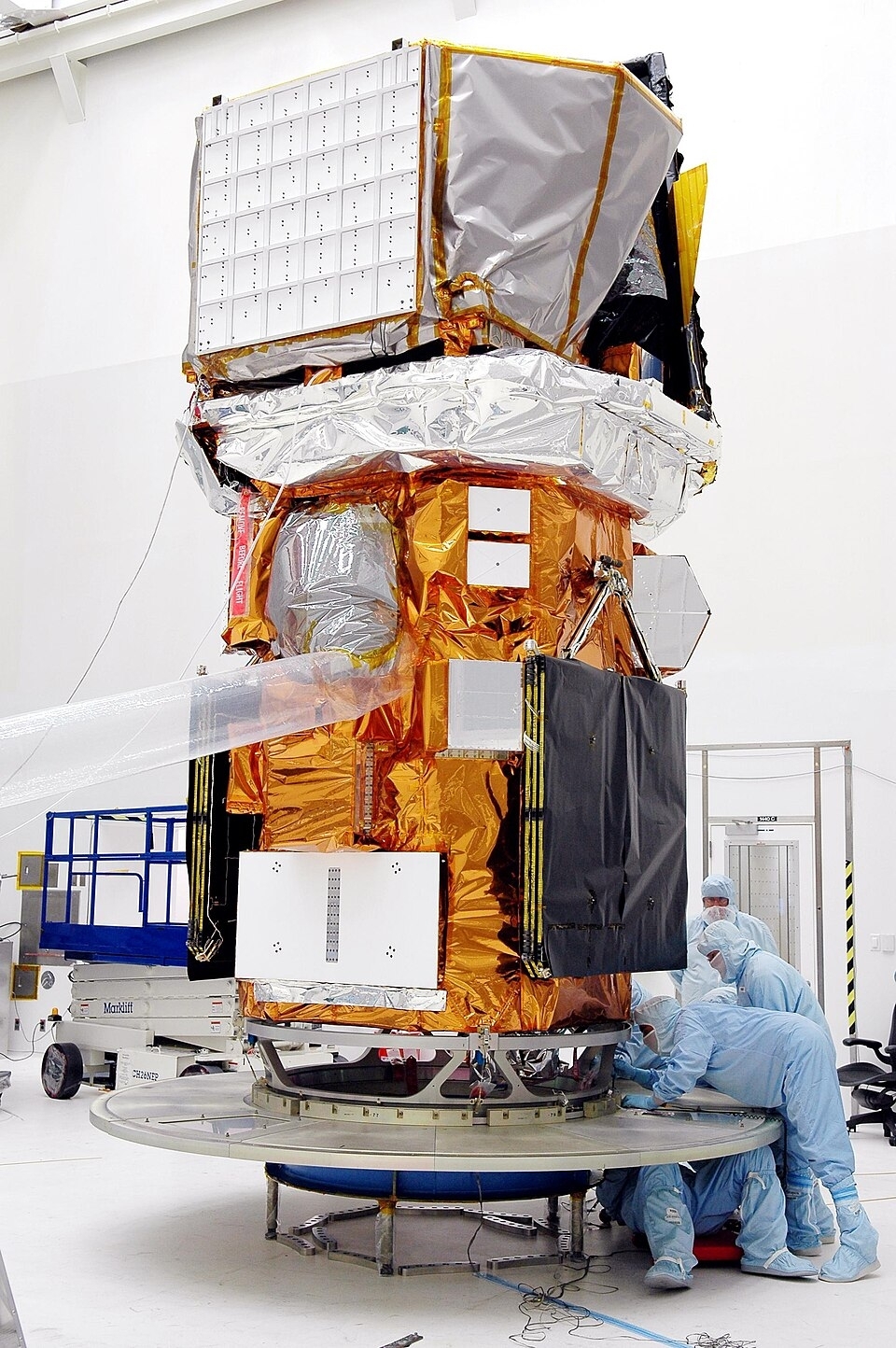
Pre-launch photo of Swift observatory.
Image credit: NASA/GSFC
Since its launch in 2004, and after two decades of watching space for gamma-ray bursts, NASA’s Swift Observatory reentered into Earth’s atmosphere on November 4.
Various tracking groups, such as The Aerospace Corporation’s Center for Orbital and Reentry Debris Studies (CORDS), relying of U.S. Space Force tracking data, pegged the spacecraft’s uncontrolled demise.
Weighing some 3,200 pounds, Swift was and about the size of small car.
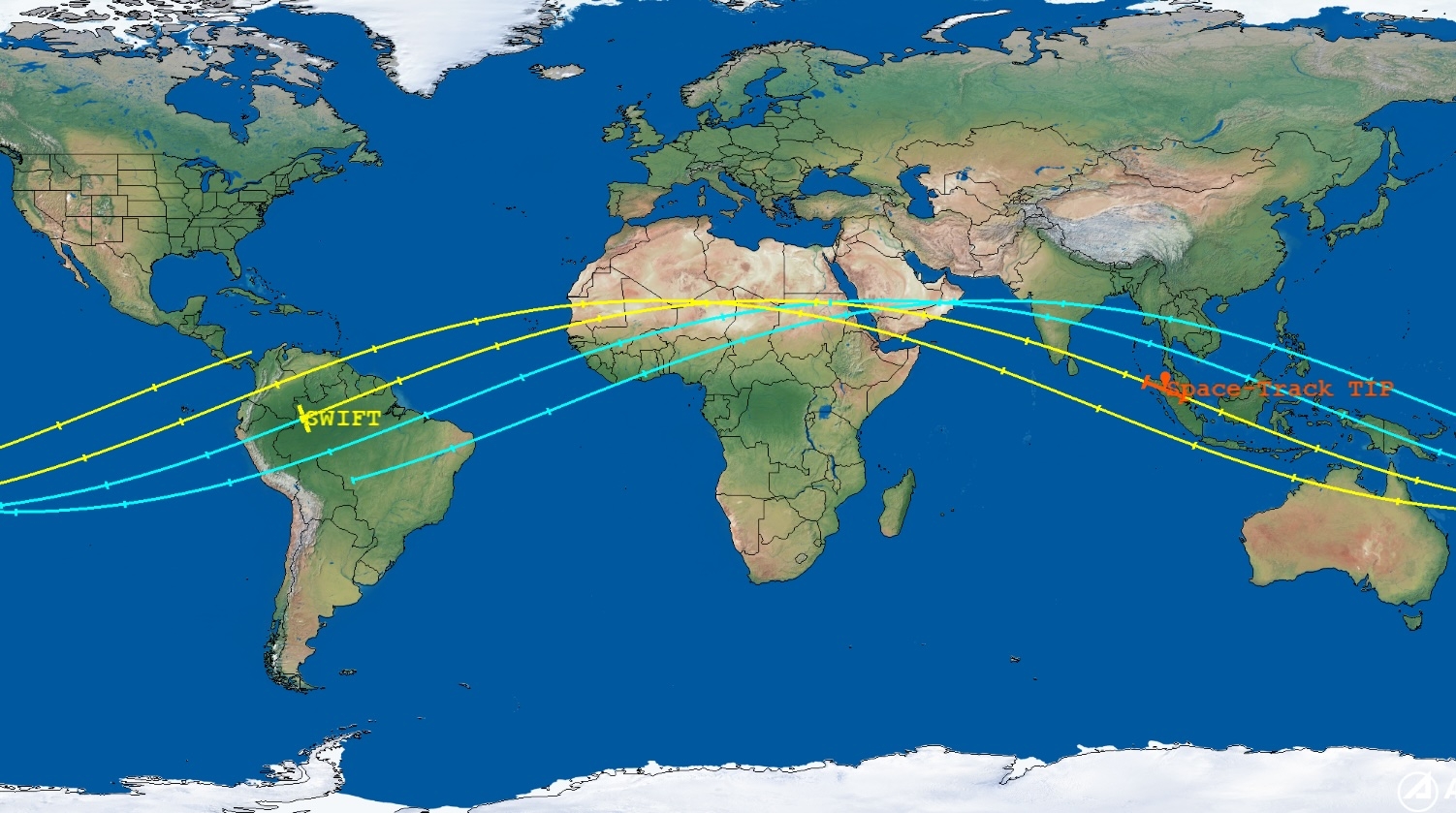
Image credit: CORDS
Prior to its destructive end, there was a last-minute, NASA-sponsored commercial effort to boost Swift, intended to extend its lifespan.
However, that effort did not succeed.
“From the beginning, this was a high-risk, high-reward mission,” NASA Astrophysics Division director Shawn Domagal-Goldman said, and the spacecraft began to more rapidly descend over the last few days.
“The reentry of something like the Swift observatory always brings a lot of attention to topics like space debris and on-orbit operations,” said Marlon Serge, Executive Director of CORDS.
Swift leftovers?
It was not immediately clear regarding whether or not Swift leftovers might have fell on land.
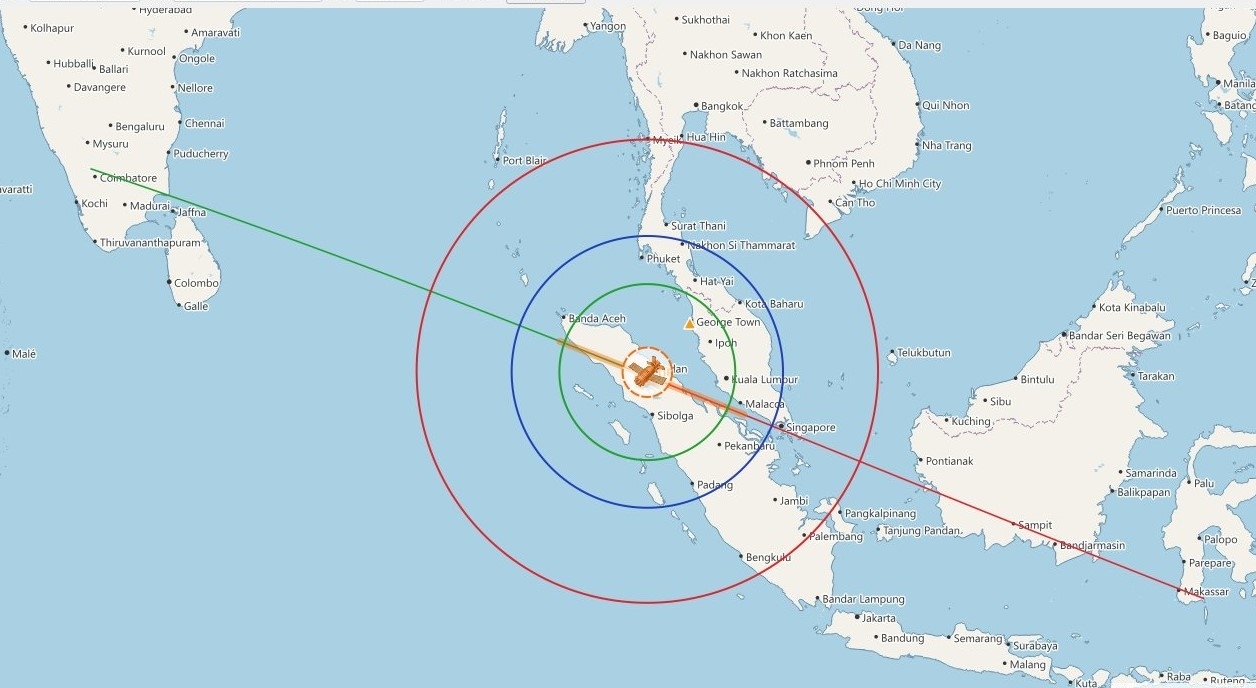
Image credit: LastOrbit by Mohammad Shawkat Odeh, Director, International Astronomical Center (IAC)
Swift likely fell apart sufficiently upon reentry to not pose a ground casualty hazard. However, the internal workings of the observatory’s X-ray and optical telescope might have survived.
Swift’s body is aluminum, wiring and electronics, which would melt away early in the reentry process. What reaches Earth is usually small, dense and heat-resistant, such as titanium, steel and glass.
“The most likely survivors are its six heavy reaction wheels, the spinning flywheels it used to aim itself, along with tougher telescope parts such as lenses and mirrors,” points out Dean Sladen, a quality manager and aerospace engineer at the U.K. precision-components supplier Accu Components at: https://www.accu-components.com
Flight path
“Swift entered the atmosphere over North Sumatra, Indonesia, but as it fell, burning up and breaking apart, it continued along its flight path,” Sladen told Inside Outer Space.
“Researchers tracking the re-entry at Indonesia’s National Research and Innovation Agency (BRIN) say the debris headed south-east, meaning any pieces that survived are likely to have come down around the Karimata Strait and Borneo,” Sladen added. “So it’s possible some reached land, but as far as I’m aware, there have been no confirmed reports yet.
Sladen’s advice to anyone coming across something that could be debris from any satellite, not just Swift, is not to move or touch it. “These parts could have sharp edges or even contain hazardous materials. Instead, photograph it, note the location and report it to the local authorities.”

The Neil Gehrels Swift Observatory was hurled into orbit back in November of 2004. Over the years, it carried out its duties of studying gamma-ray bursts, the most powerful explosions in the universe, and other cosmic objects and events.
Image credit: NASA/GSFC
Long-term solution
One added point about uncontrolled reentry of space hardware is possible risk to aircraft and ships within drop zones of space junk.
“For aircraft, helicopters, ships and other vehicles, the chance of being hit by debris is very small. However, the consequences for anything in the air could be catastrophic,” said Sladen. “We’ve already seen countries close their airspace as a precaution.
For example, in November 2022, Spain and France closed parts of their airspace as a falling Chinese Long March 5B rocket stage crossed southern Europe, before it eventually splashed down in the Pacific Ocean.
“With more satellites coming down and air traffic growing, situations like this may become more common, but closing airspace is a highly disruptive measure. The better long-term solution is designing satellites so they can be brought down in a controlled way, which removes a large part of the risk,” Sladen concluded.
Videos
Internet posted videos of the Swift reentry — shared by Hazari Ahmad, a member of the International Astronomical Center from Brunei — can be viewed at the following links:
https://www.instagram.com/reels/DfUrJfjnA4V/
https://www.facebook.com/share/r/1A9dpZFN2P/?mibextid=wwXIfr
 Posted in Space News

