 By
By  August 13th, 2026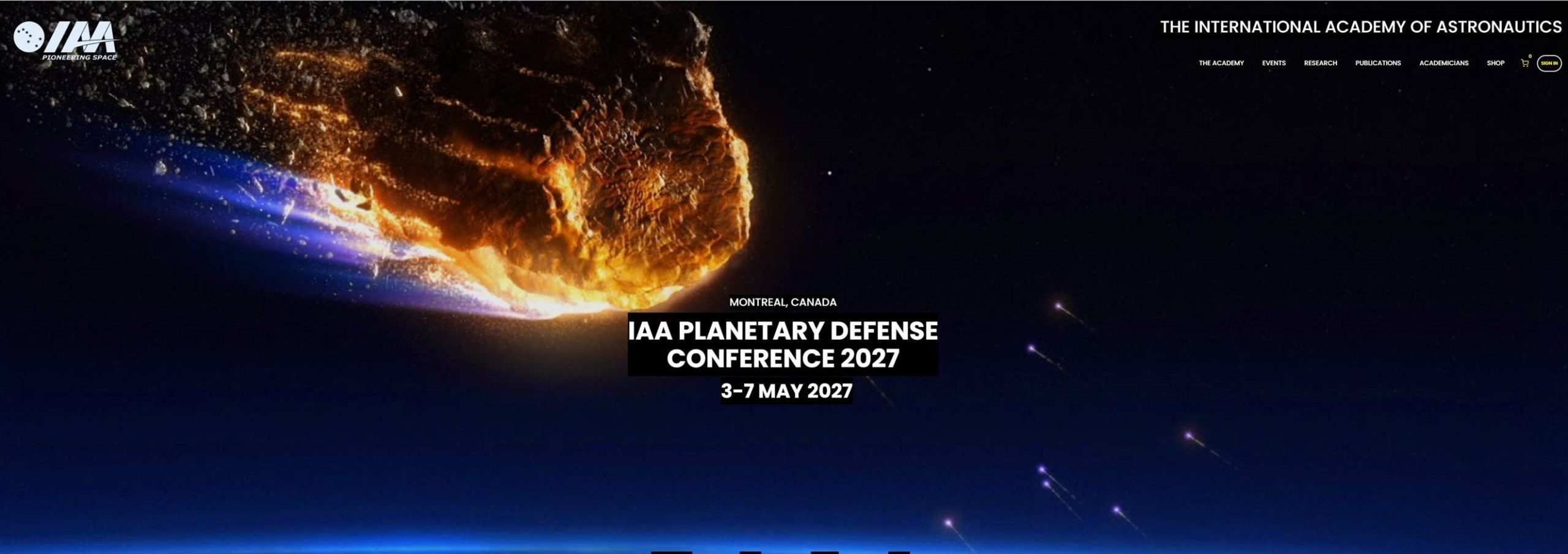
Image credit: IAA/PDC2027
A hypothetical asteroid impact scenario is in play prior to a major gathering of planetary defense specialists next year.
The International Academy of Astronautics (IAA) is an independent non-governmental organization recognized by the United Nations. IAA is hosting the Planetary Defense Conference 2027.
Impact date
Date of the hypothetical potential impact on Earth is pegged at July 10, 2038.
The impact probability is tagged as 19 percent as calculated by NASA’s JPL Center for Near-Earth Object Studies (CNEOS), the European Space Agency’s (ESA) Near-Earth Objects Coordination Center (NEOCC), and the NEO Dynamic Site (NEODyS) – an Italian service.
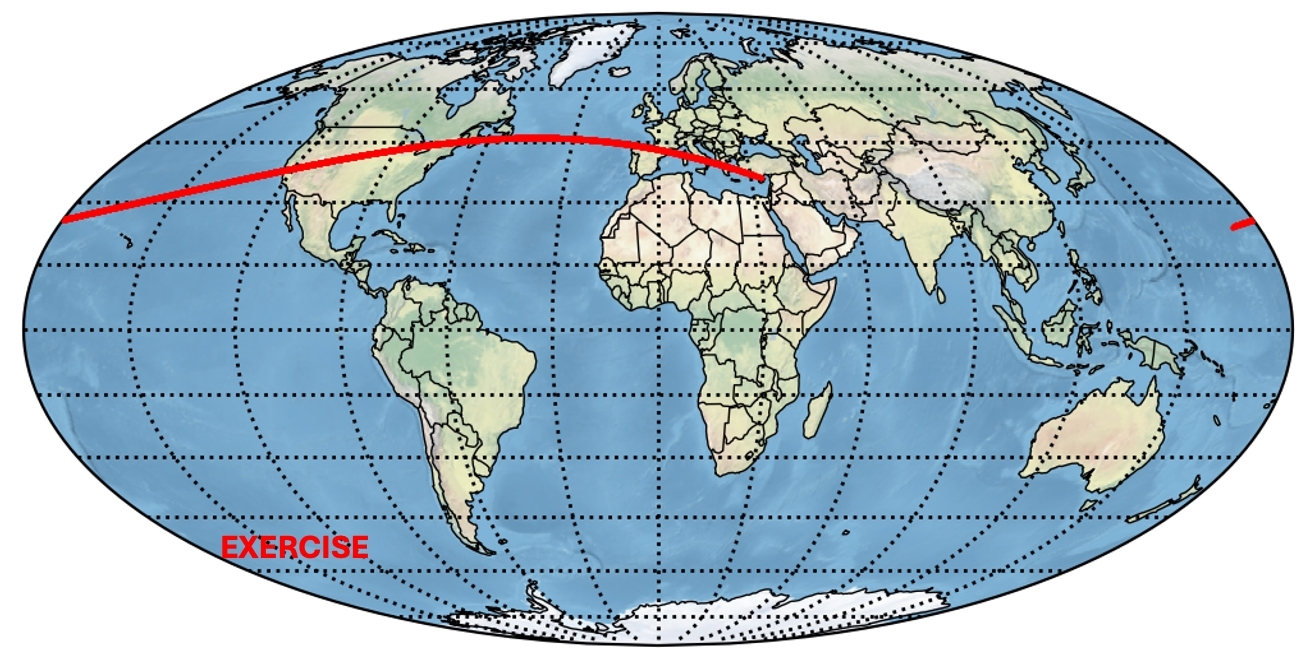
Risk corridor on Earth for PDC2027 exercise.
Image credit: IAA/PDC2027
Expected damage level
In this scenario, the impact risk corridor stretches across the Pacific Ocean, United States of America, Canada, the Atlantic Ocean, Spain, France, Italy, Greece, Turkey, and the Mediterranean Sea.
The theoretical asteroid size is projected as most likely in the range 260-280 feet (80–85 meters) in diameter, but potentially in the range 250-300 feet (75–90 meters) in diameter.
The assigned “expected damage level if impact occurs” is local to regional blast damage from a large airburst, ranging from window breakage to potential structure collapse.
Detections
As outlined in the hypothetical case of space rock hits Earth, the asteroid was detected in images taken by the NSF-DOE Vera C. Rubin Observatory in Chile. The archival detections were then reported to the Minor Planet Center.
These detections extended the span of time covered by the observations and dramatically improved the orbital predictions for 2038. As a result, the impact probability rose to 16%. The higher impact probably led to planning for the James Webb Space Telescope (JWST) to observe the asteroid.
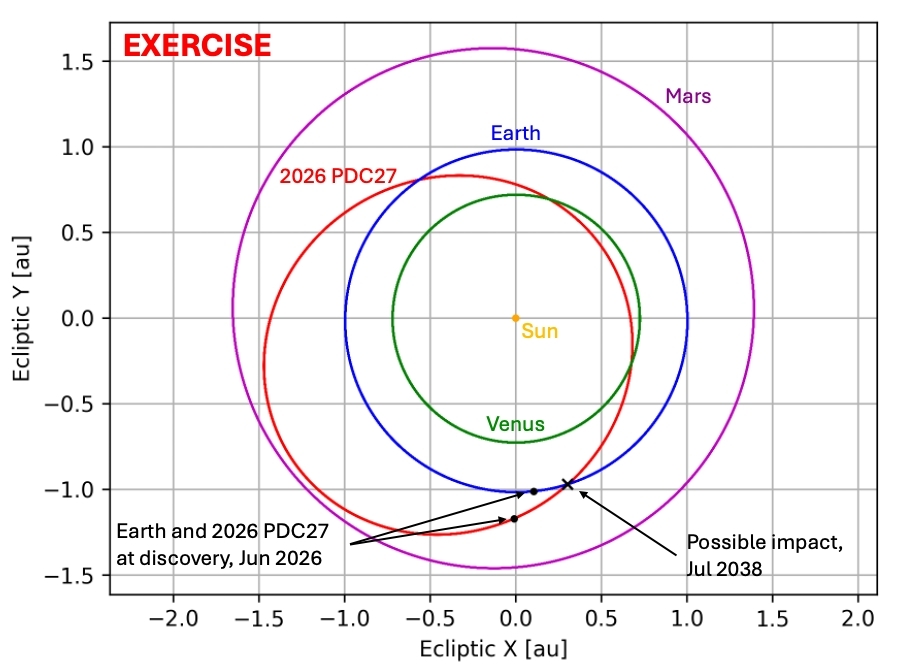
Image credit: IAA/PDC2027
International warning network
Subsequently, the International Asteroid Warning Network (IAWN) issued a formal notification regarding the potential Earth impact because the probability of impact passed the 1% notification threshold established by IAWN.
In the make-believe situation, IAWN issued a second notification because of the end of the discovery apparition and the updated information on the impact probability and the asteroid’s physical properties.
The IAWN notification explained that, after the asteroid became observable again, additional observations were expected to reduce the uncertainty in its orbit, thereby shrinking the predicted uncertainty region in 2038.
Hypothetical situation
“If Earth remained within the shrinking region, the impact probability was expected to increase; if the region moved completely off Earth, the impact probability would fall to zero,” according to the hypothetical situation.
Meeting organizers are encouraging prospective authors to consider basing their forthcoming Planetary Defense Conference 2027 abstracts on elements of the hypothetical scenario that are relevant to their areas of research.
For details on next year’s conference, go to:
The hypothetical asteroid impact scenario is now available online at:
https://cneos.jpl.nasa.gov/pd/cs/pdc27/
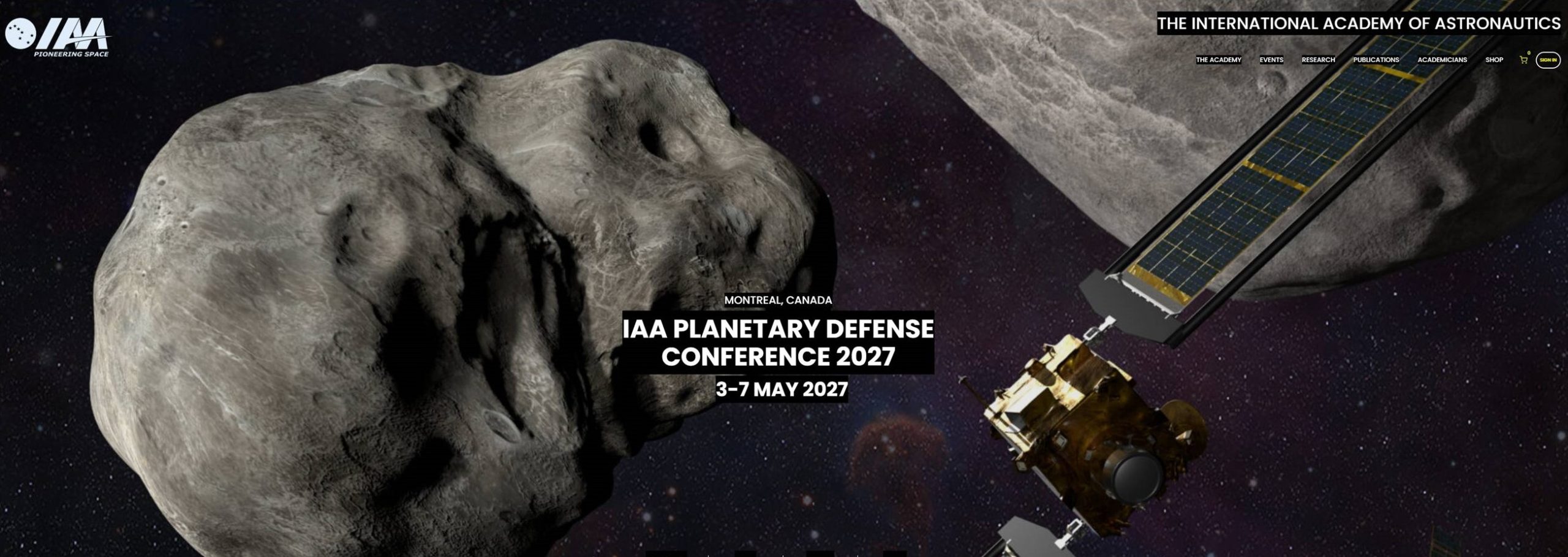
Image credit: IAA/PDC2027
 Posted in Space News

