 By
By  September 17th, 2026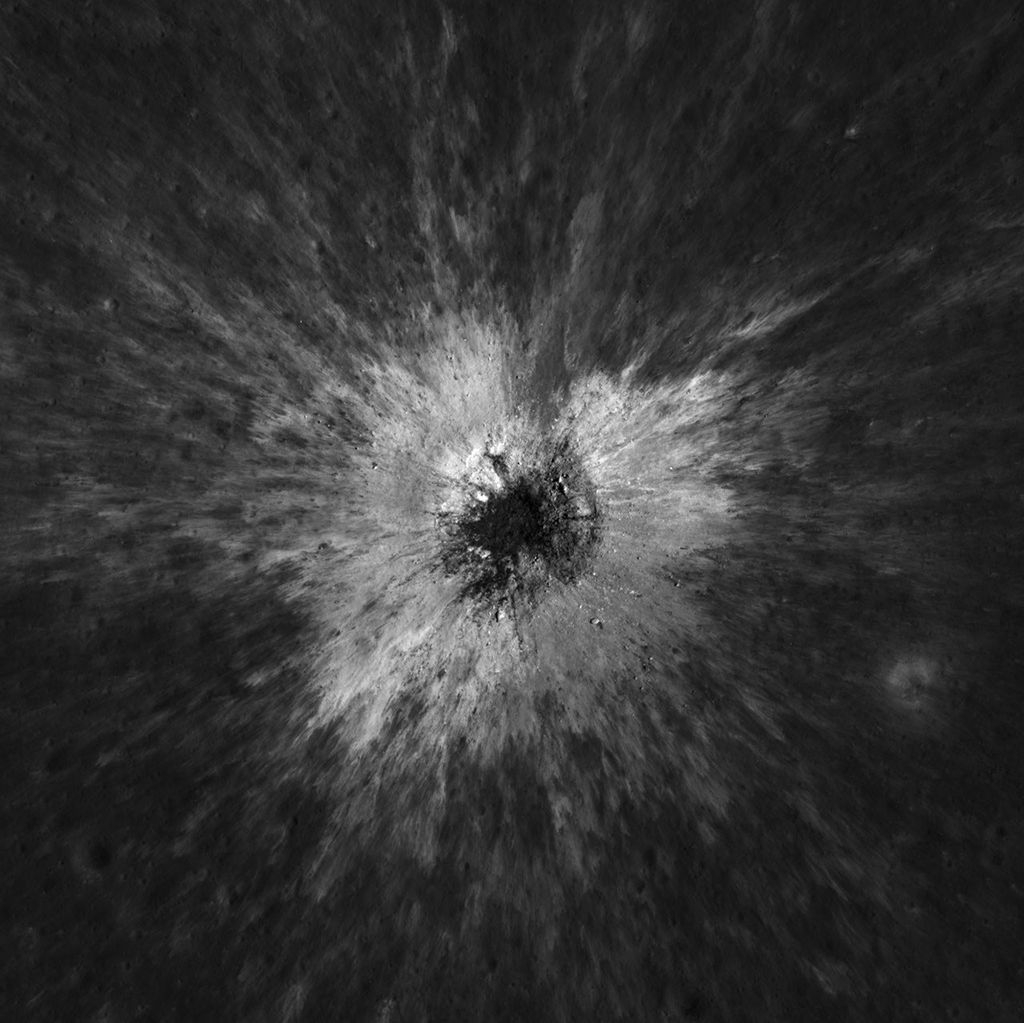
Newly found and named as McGetchin crater. Found in late 2025 by NASA’s Lunar Reconnaissance Orbiter (LRO) Narrow-Angle Camera (NAC). After crater was first spotted, LRO’s Wide-Angle Camera zoomed in on the feature.
Image credit: NASA Goddard Space Flight Center (GSFC)/Intuitive Machines
Moon Base inhabitants take note of a newly discovered crater formed on the lunar surface, the largest, ever found in the solar system.
As noted by NASA, the crater has officially been named McGetchin after pioneering lunar scientist Tom McGetchin.
This crater formed on the Moon’s eastern edge sometime between April 11 and May 22, 2024, after a comet or asteroid the size of a three- to six-story building hit the surface.
The wallop of an impact developed a crater, 728 feet wide, the length of two football fields and is over 140 feet deep.

NASA’s Lunar Reconnaissance Orbiter (LRO).
Credit: NASA’s Goddard Space Flight Center Conceptual Image Lab
Catching his eye
The impactor was spotted by Robert Wagner, a scientist with NASA’s Lunar Reconnaissance Orbiter (LRO). What caught his eye was an unusually large bright spot circled by a dark halo.
For more than 17 years, LRO has been circling the Moon and using its seven instruments to map the topography, surface composition, temperature, and radiation environment there.
According to NASA, researchers estimate that an impact of this magnitude happens on the Moon about once in a century or even longer.
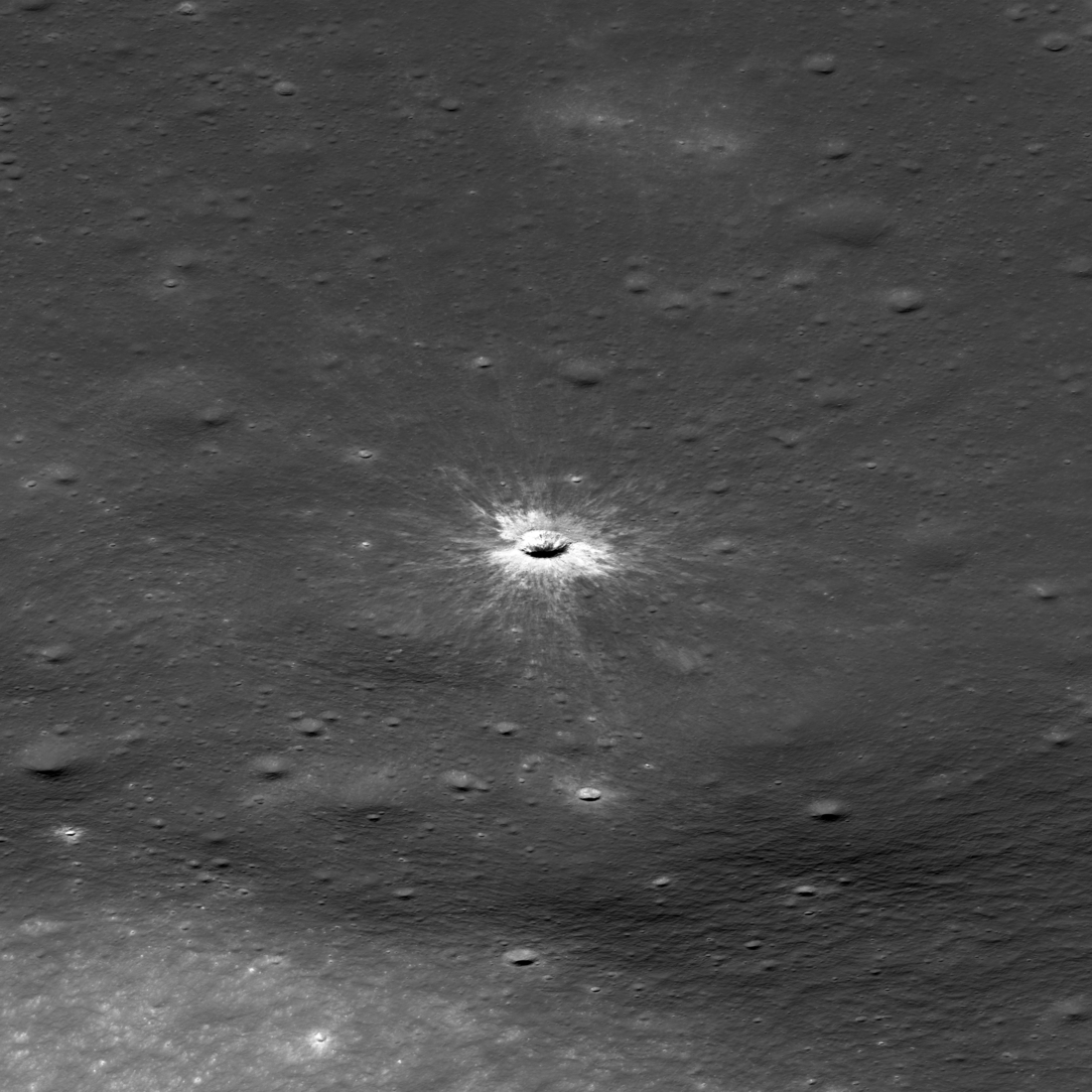
LRO rolled 51° to the east allowing LROC to capture this dramatic oblique view of McGetchin crater, incidence angle 68°.
Image credit: NASA/GSFC/Intuitive Machines
 Posted in Space News

