 By
By  August 6th, 2015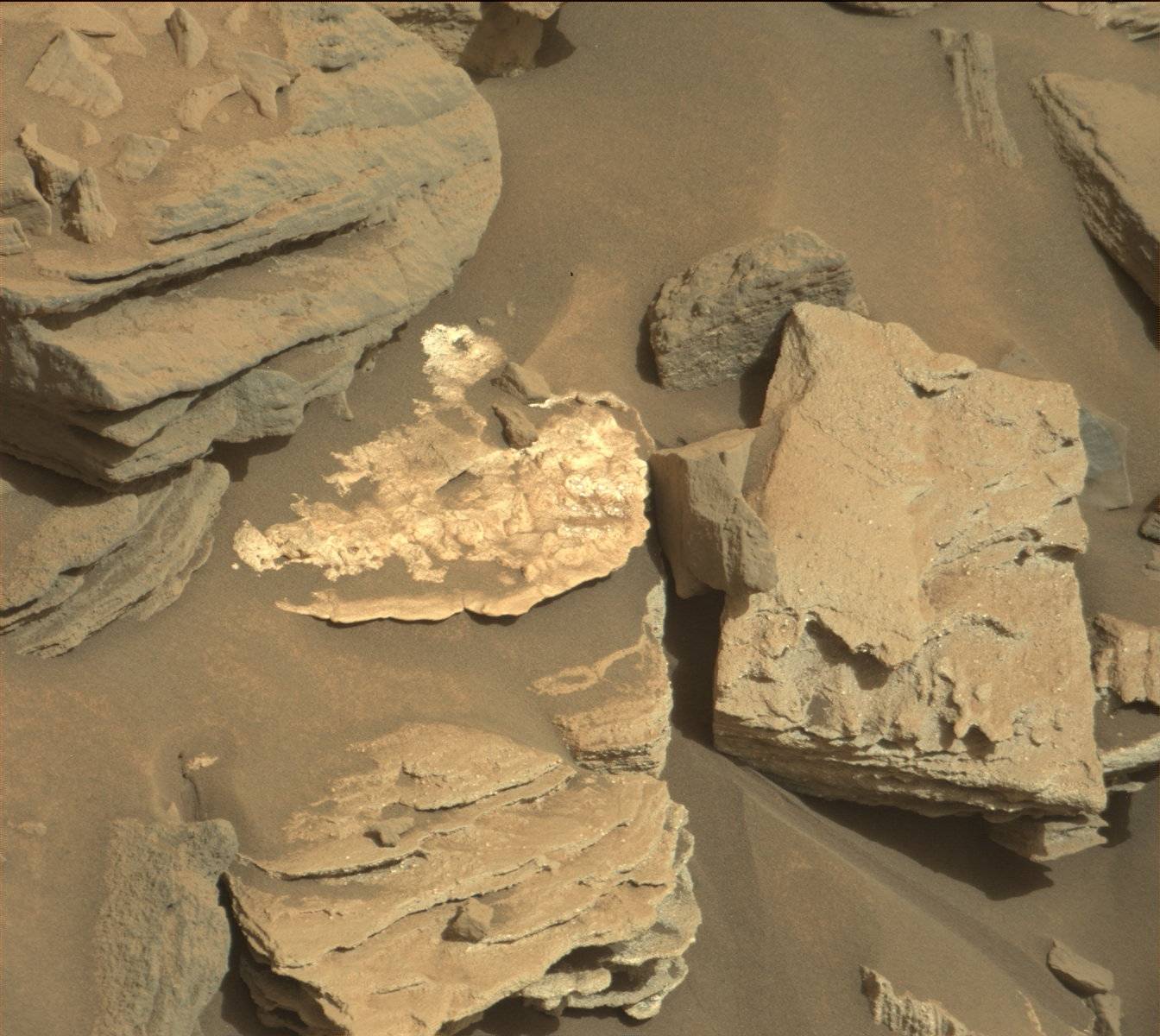
Mastcam Right image on Sol 1064 on August 4, 2015.
Credit: NASA/JPL-Caltech/MSSS
NASA’s Curiosity Mars rover has reached its third anniversary of landing in Gale crater.
“It’s been a great three years, full of a number of important science discoveries,” observes Lauren Edgar, a research geologist at the USGS Astrogeology Science Center in Flagstaff, Arizona and a member of the Mars Science Lab’s science team.
Edgar said that to celebrate the rover’s start of its 4th year on Mars, Curiosity is driving away from the Lion outcrop, and back toward the Missoula outcrop.
“I feel like Curiosity has really grown up in these past couple of years, and she’s acting like a true field geologist – quickly interpreting key science data, and revisiting sites that will improve our understanding of the geologic history here,” Edgar explained in a website posting.
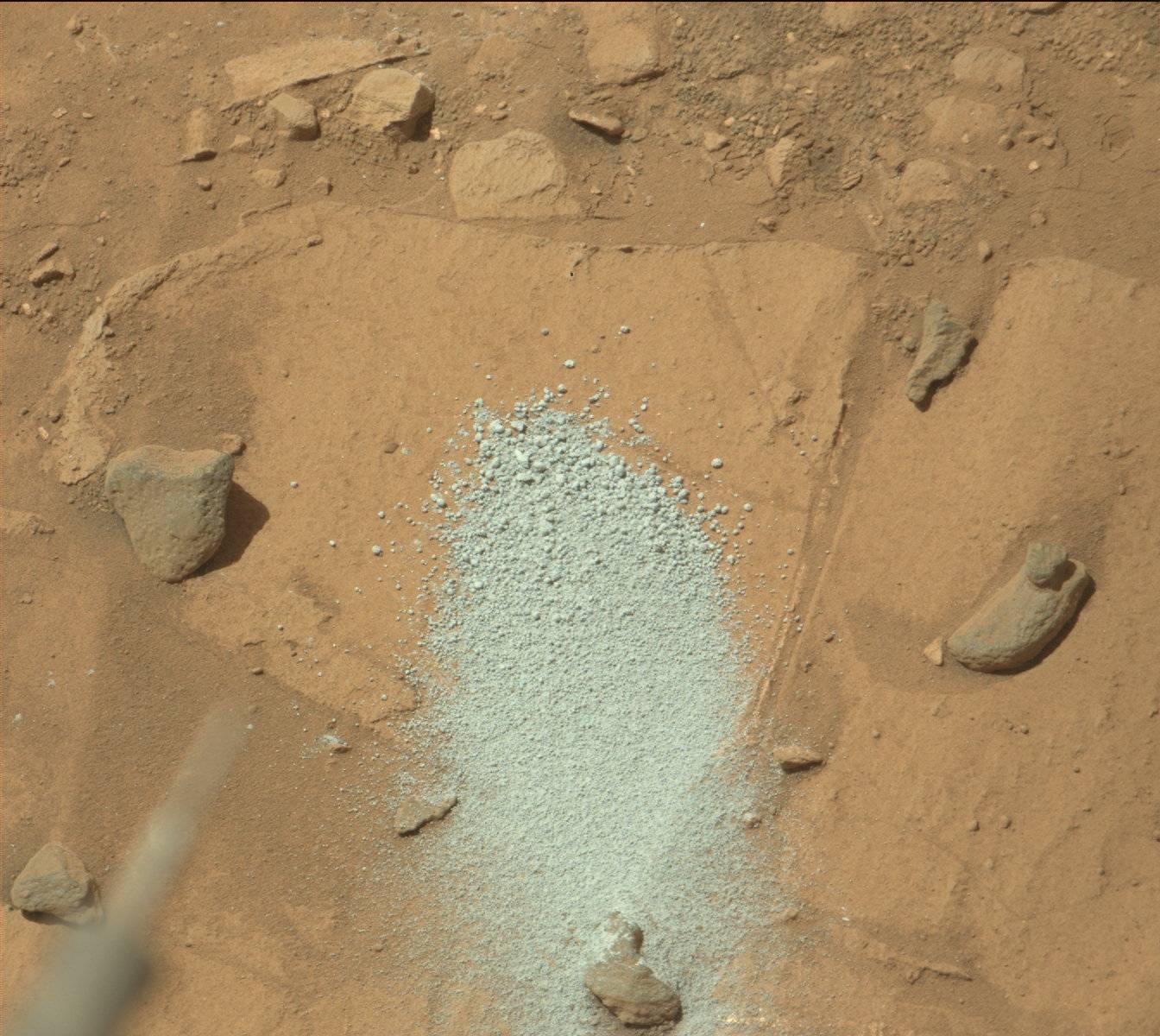
Mastcam Right image on Sol 1064 on August 4, 2015.
Credit: NASA/JPL-Caltech/MSSS
Dump pile
The plan called for Curiosity to make a couple of final observations at Lion before driving away and acquire ChemCam and Mastcam images of the target “Moiese” to look for chemical variations across the outcrop.
Time has been taken to acquire images of a “pre-sieve” dump pile. Pre-sieve refers to the sample material that didn’t make it through the sieve, in other words, the larger size fraction.
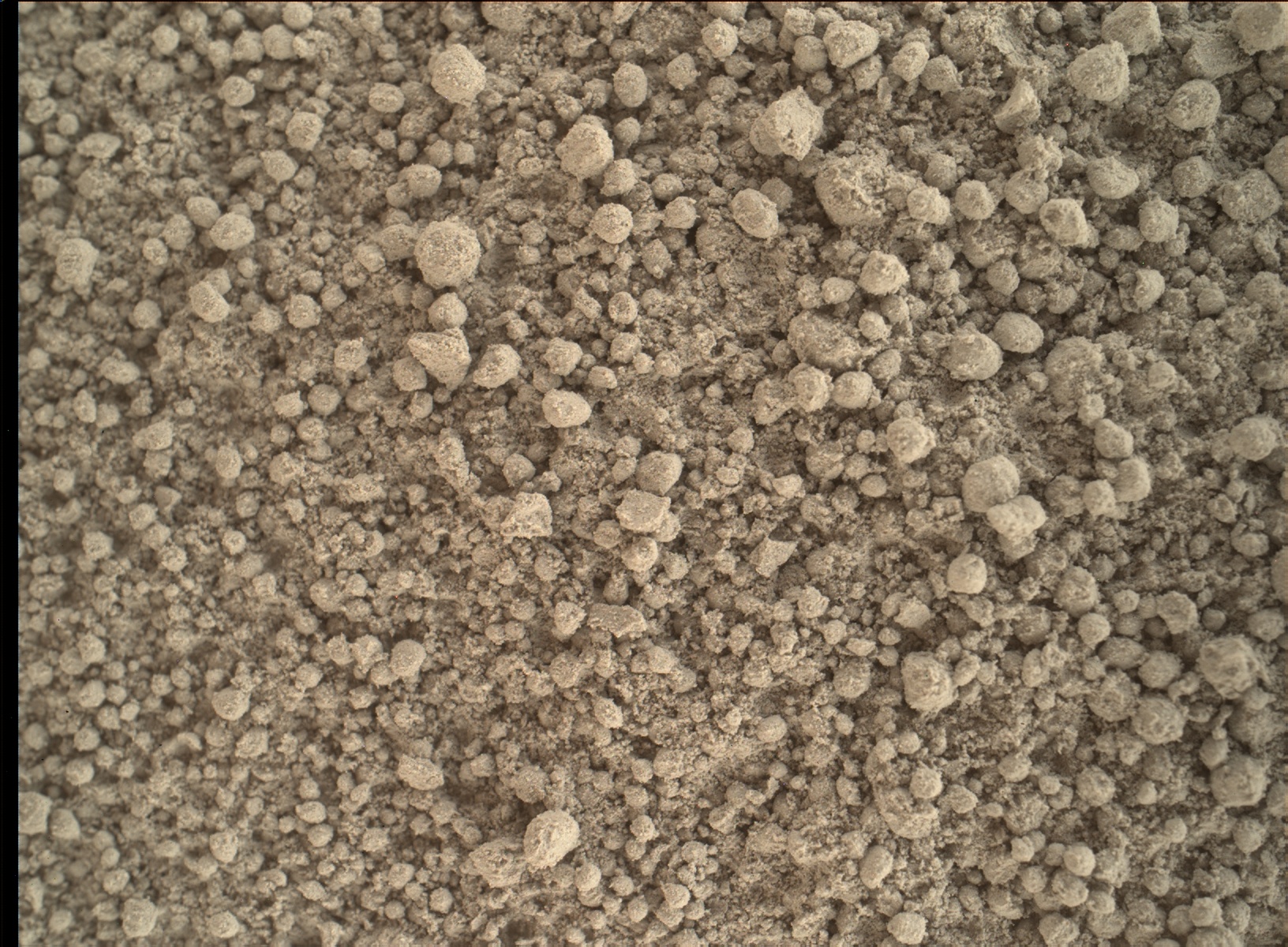
Image from Curiosity’s Mars Hand Lens Imager (MAHLI), located on the turret at the end of the rover’s robotic arm, taken on August 5, 2015, Sol 1065.
Credit: NASA/JPL-Caltech/MSSS
“By dumping it on the ground we can see what the larger size particles look like and whether they have a composition that varies from that of the full mix of particle sizes,” Edgar adds.
 Posted in Space News

