 By
By  March 5th, 2016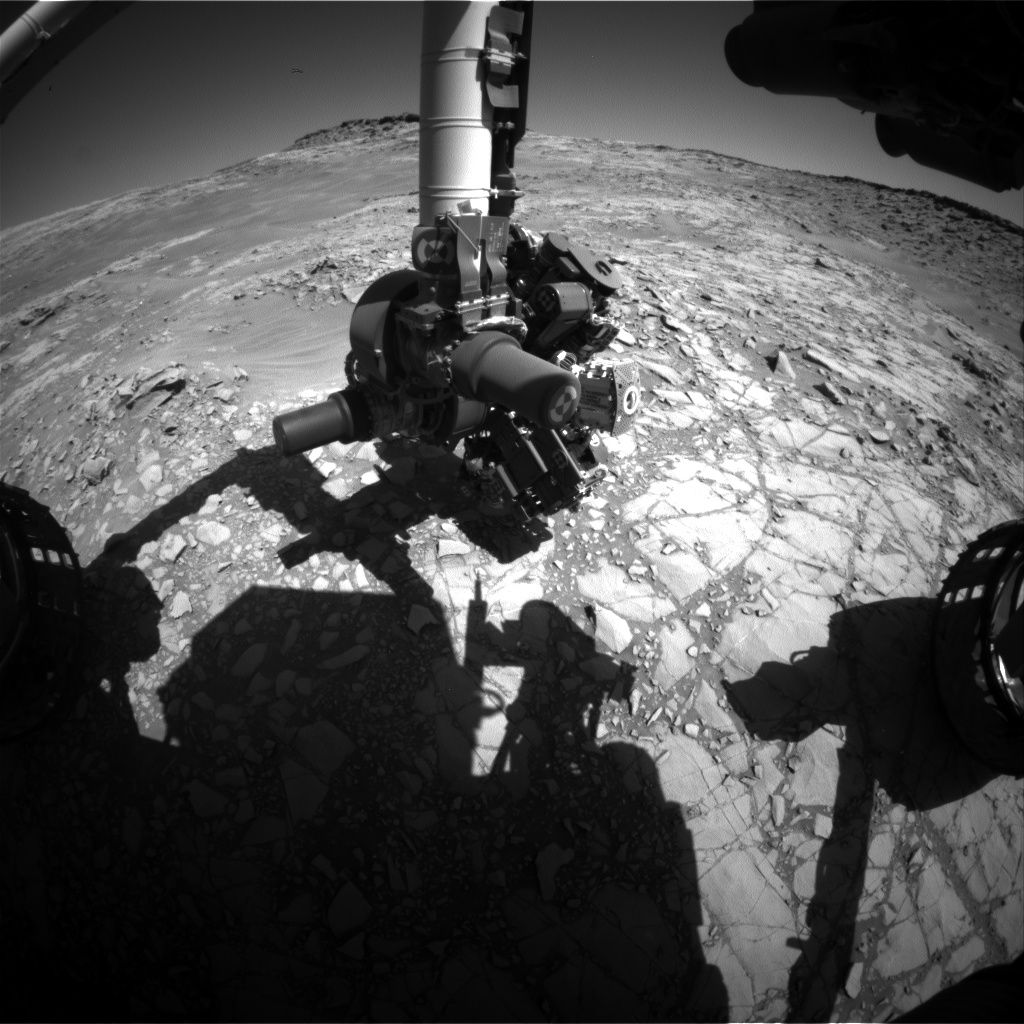
Curiosity’s Front Hazcam Right B image taken on Sol 1272, March 5, 2016.
Credit: NASA/JPL-Caltech
NASA’s Curiosity Mars rover is now in Sol 1273, with the weekend plan calling for driving up to the Naukluft Plateau.
On Sol 1273, the rover’s Mastcam is to acquire a multispectral image of the contact between the Murray and Stimson geologic units, explains Ken Herkenhoff of the USGS Astrogeology Science Center in Flagstaff, Arizona.
“This set of images, taken using all of the Mastcam filters, will be acquired just after noon, when the illumination of the contact should be better than in previous images,” Herkenhoff notes.
Also on tap is use of Curiosity’s Chemistry & Camera (ChemCam) instrument, along with the rover’s Mastcam to observe bedrock targets “Kleinberg” and “Tumas 2” and then acquire a stereo mosaic of a low ridge southwest of the rover.
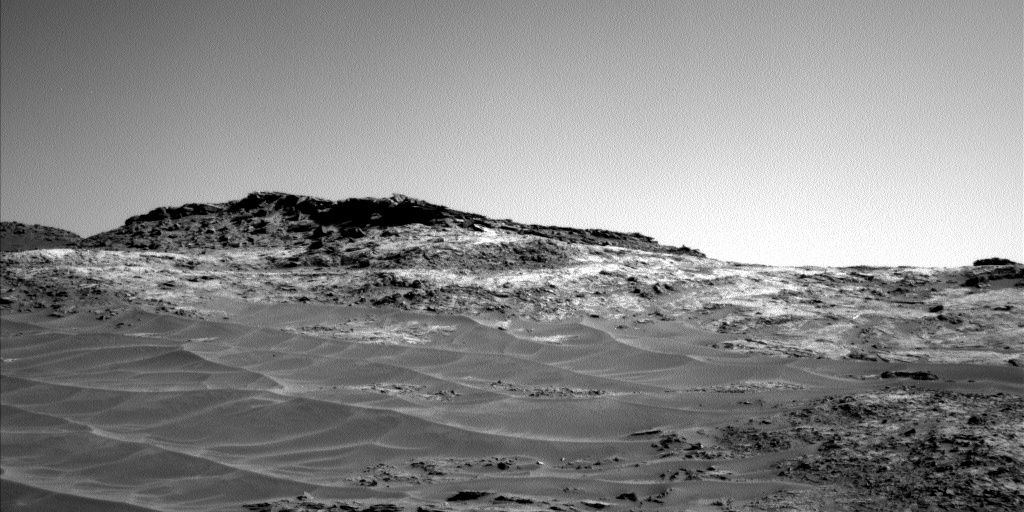
Curiosity Navcam Left image taken on Sol 1271, March 4, 2016.
Credit: NASA/JPL-Caltech
Bedrock target
Herkenhoff adds that the Mars Hand Lens Imager (MAHLI) is slated to take images of a bedrock target named “Schwarzrand” before the dust removal tool brushes it off.
The MAHLI will then acquire a full suite of images of the brushed spot and of Kleinberg before the Alpha Particle X-Ray Spectrometer (APXS) is placed on Kleinberg to collect data. Then the APXS will be moved over to Schwarzrand data collection.
“The Sol 1274 plan starts with a drive toward the plateau to the southwest of the vehicle, followed by imaging needed to plan contact science in the new location,” Herkenhoff reports. Post-drive images of the likely drive direction, he adds, will also be acquired, “in case we decide not to do contact science on Monday.”
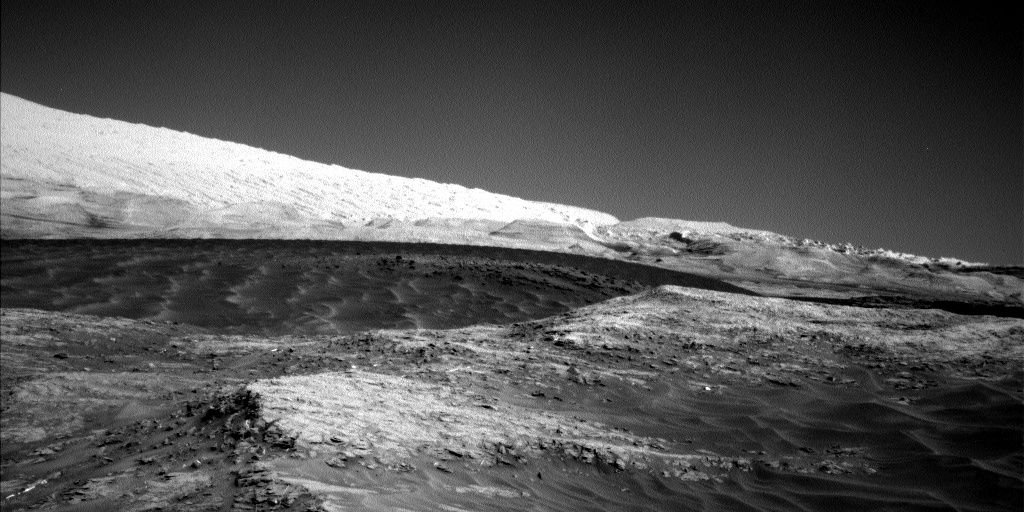
Curiosity’s Navcam Left B image taken on Sol 1271, March 4, 2016.
Credit: NASA/JPL-Caltech
These over the weekend planned rover activities are subject to change due to a variety of factors related to the Martian environment, communication relays and rover status.
 Posted in Space News


All this effort to study catastrophic impact sediments. What a waste of that wonderful piece of equipment. I predict they’ll find more tantalizing hints of an ancient Earth-like Mars, but a clear picture will NEVER emerge, because they simply have the wrong paradigm.