 By
By  February 10th, 2016
Curiosity Sol 1248 image taken by the robot’s Mastcam Left camera on February 9, 2016.
Credit: NASA/JPL-Caltech/MSSS
NASA’s Curiosity Mars rover is now in Sol 1249.
Mars researcher, Ken Herkenhoff of the USGS Astrogeology Science Center in Flagstaff explains that the rover has traversed roughly 8 miles (12 kilometers) since landing in August 2012, and another drive is planned for Sol 1249.
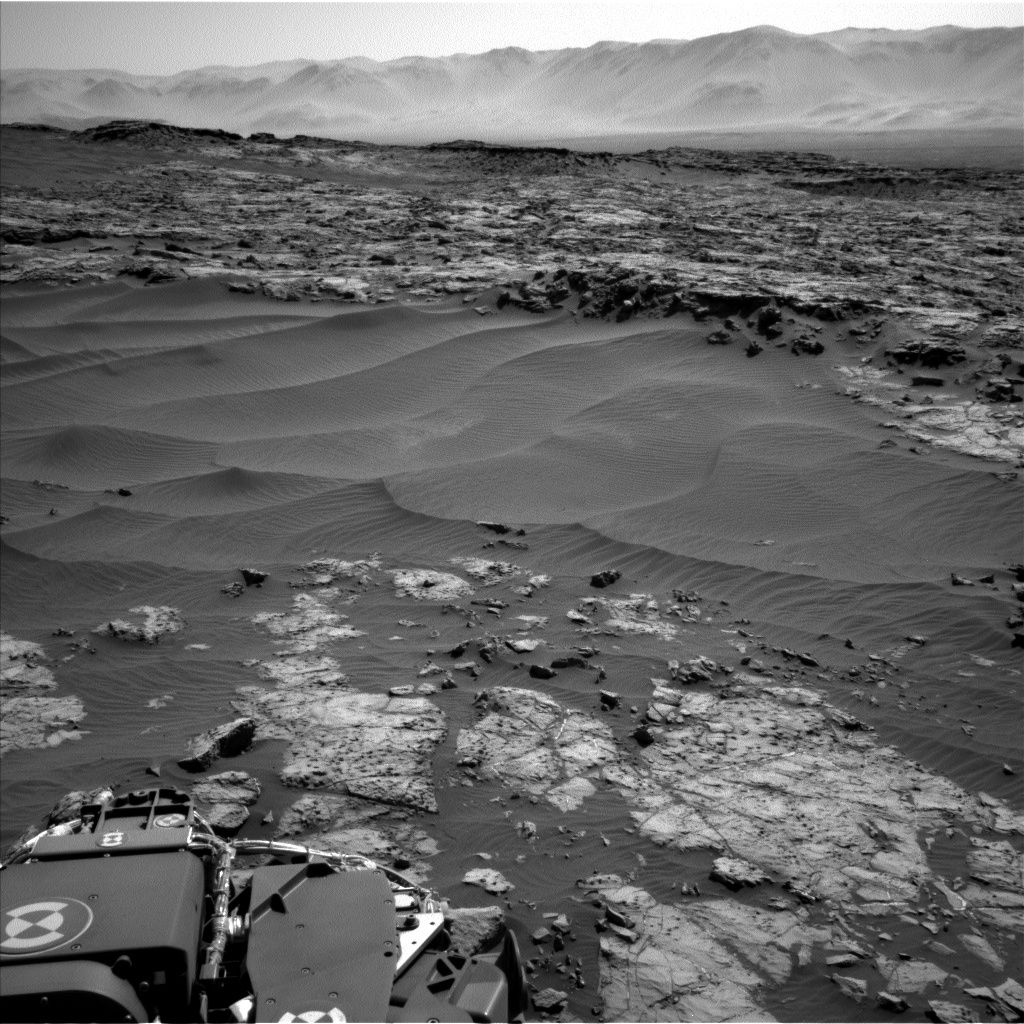
Curiosity Navcam Left B image taken on Sol 1249, February 10, 2016.
Credit: NASA/JPL-Caltech
“The tactical planning team decided to forgo targeted remote science observations before the drive to allow more time for driving,” Herkenhoff adds. “The goal is to get the vehicle to a location that will allow the remaining dune sample to be dumped and examined in detail this weekend, and this will require more drive time than originally planned.”
Planned rover activities are subject to change due to a variety of factors related to the Martian environment, communication relays and rover status.
Curiosity was designed to assess whether Mars ever had an environment able to support small life forms called microbes. In other words, its mission is to determine the planet’s “habitability.”
Dude of the dune
The nuclear powered robot’s dune-investigation campaign is adding to appreciating how wind moves and sorts grains of sand, in an environment with less gravity and much less atmosphere than well-studied dune fields on Earth.

Nuclear power system is shown in this Curiosity Navcam Right B image, taken on Sol 1249, February 10, 2016
Credit: NASA/JPL-Caltech
Curiosity has not caught a sand slide in action.
However, the rover’s images of the Namib Dune slip face show where such slides have occurred recently. These dunes likely are most active in Mars’ southern summer, rather than in the current late-fall season.
 Posted in Space News


There is an Eminem joke hidden here somewhere. If not a joke, at least a wise-acre comment.