 By
By  March 4th, 2018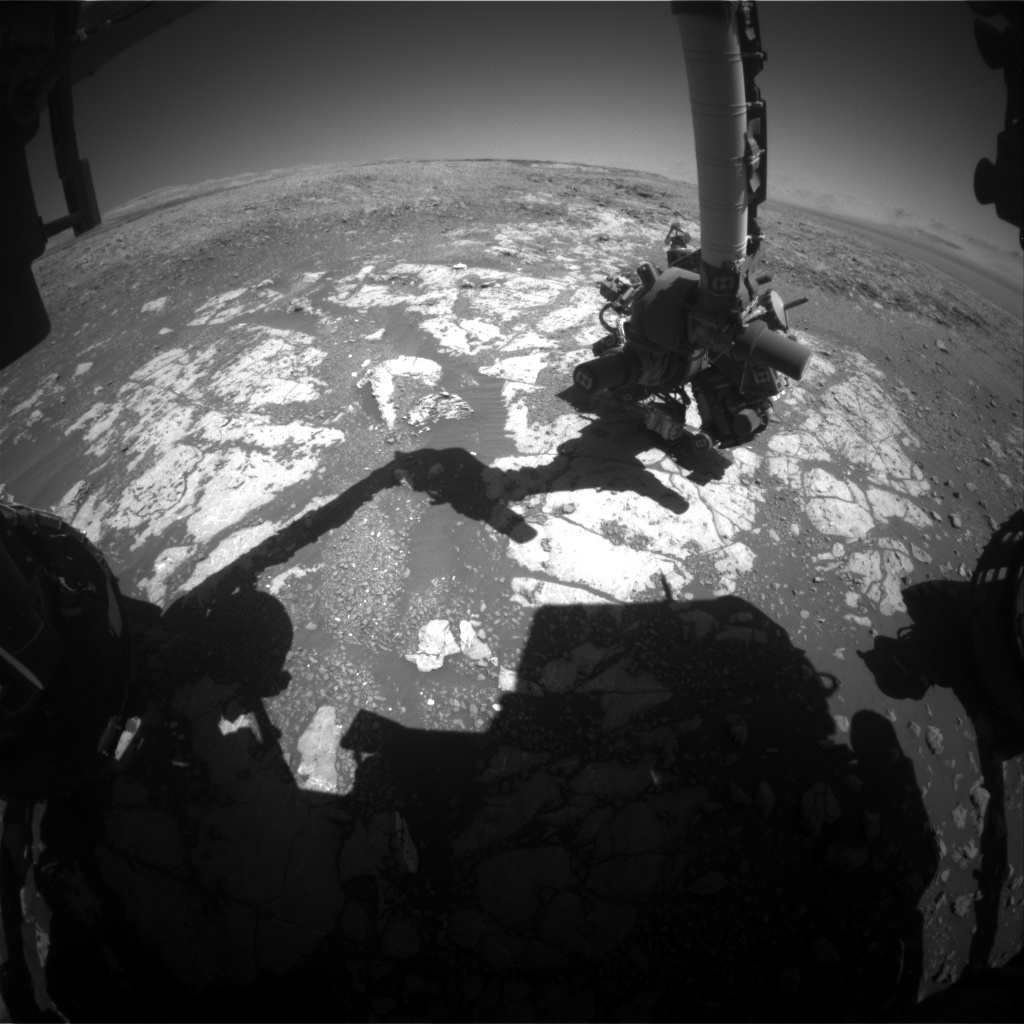
Curiosity Front Hazcam Left B image taken on Sol 1980, March 2, 2018.
Credit: NASA/JPL-Caltech
NASA’s Curiosity Mars rover is now carrying out Sol 1982 science duties.
The Red Planet robot is getting back in gear in terms of reactivating drilling operations reports Ken Herkenhoff, a planetary geologist at the USGS in Flagstaff, Arizona.
Feed-extended drilling
“All of the data returned for the second drill target, called “Lake Orcadie 2,” support the decision to attempt to acquire sample at that location using ‘feed-extended’ drilling,” Herkenhoff notes. “So the weekend plan is focused on drilling, which is planned for the second sol (1982).”
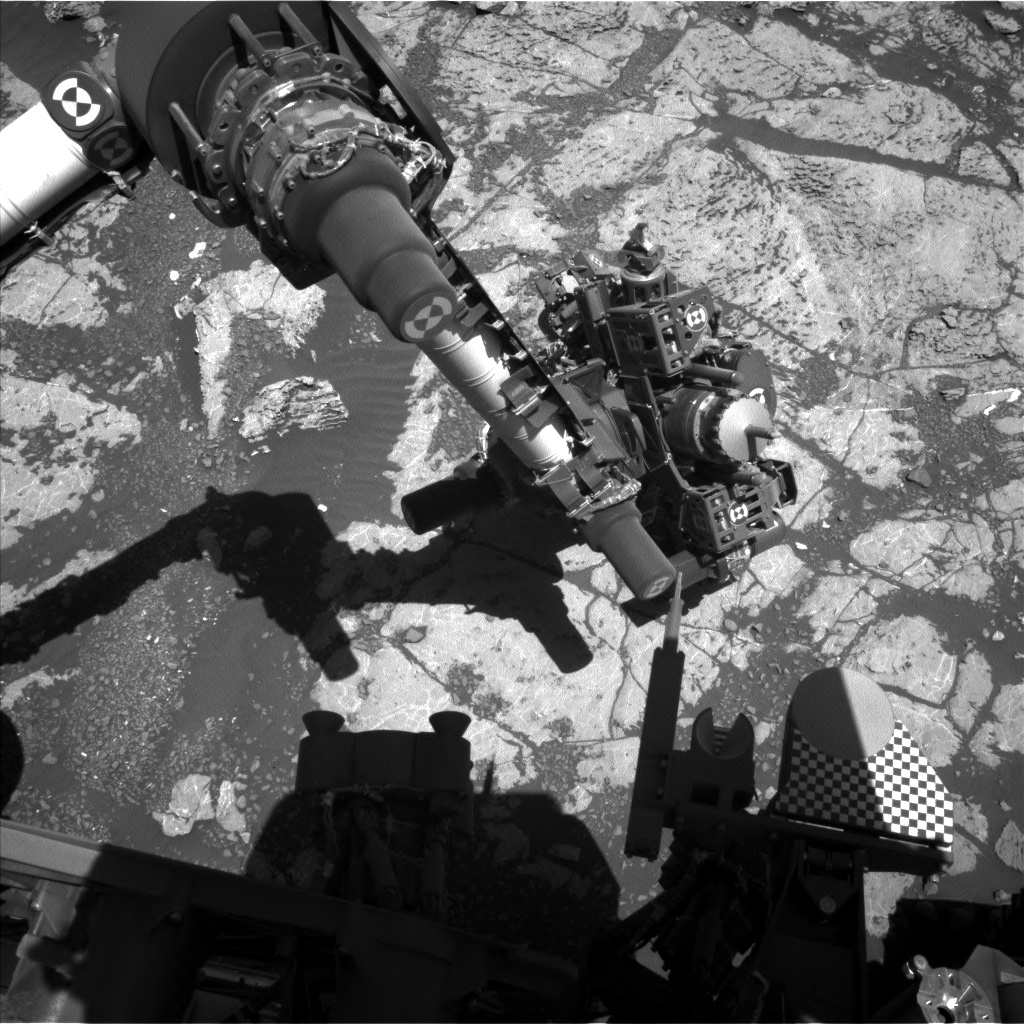
Curiosity Navcam Left B photo taken on Sol 1980, March 2, 2018.
Credit: NASA/JPL-Caltech
But first, on Sol 1981, the rover’s Chemistry and Camera (ChemCam) and Right Mastcam were to observe a potential location for dropping sample in the future as well as observe targets named “Ben Nevis” and “Moray.”
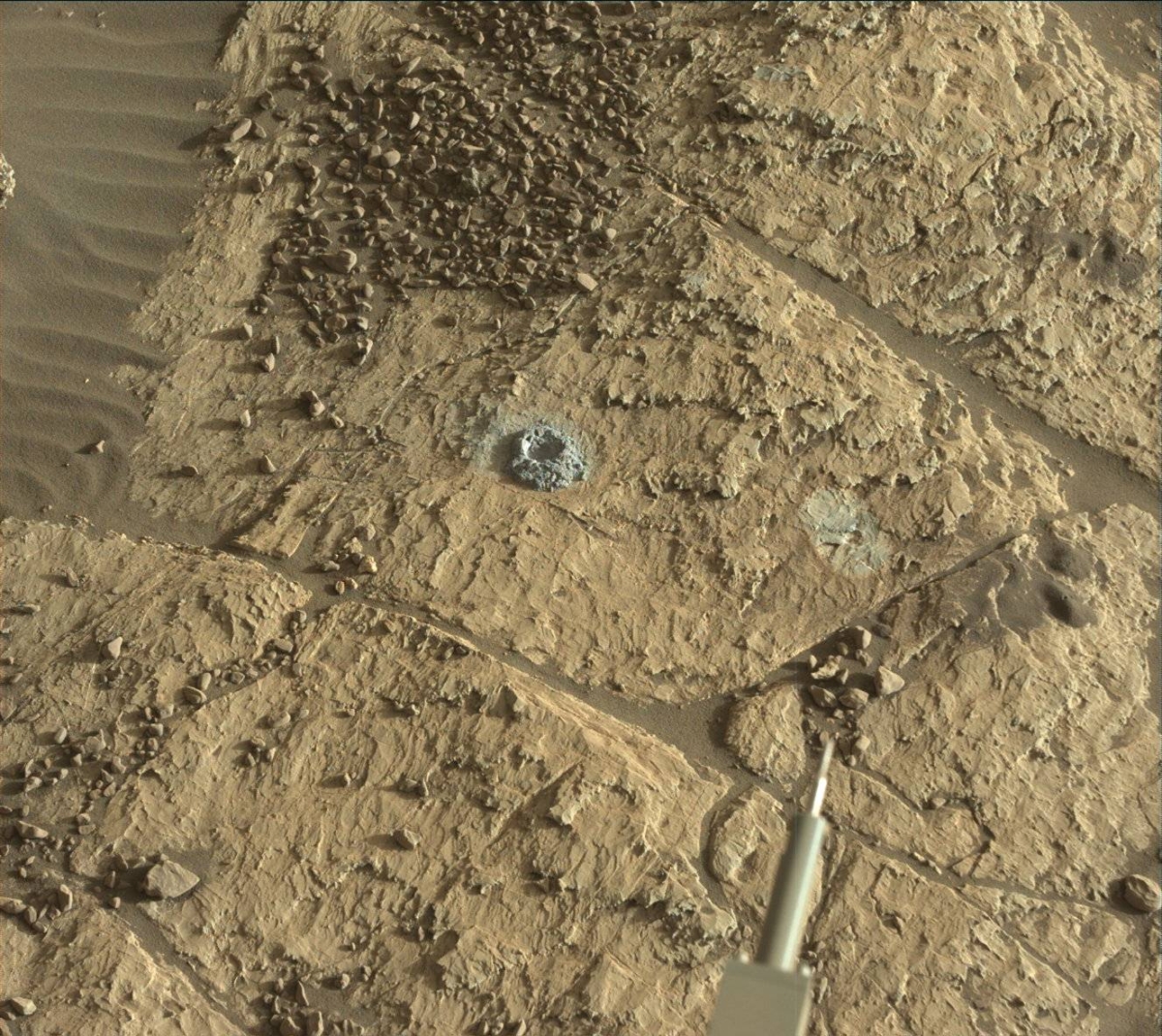
Curiosity Mastcam Left image acquired on Sol 1979, March 1, 2018.
Credit: NASA/JPL-Caltech/MSSS
Alluvial fan mosaics
“Mastcam will then measure dust in the atmosphere and Navcam will search for dust devils. Later that afternoon, Right Mastcam will look for changes in the sieved and unsieved Ogunquit Beach dump piles,” Herkenhoff adds, and the ChemCam Remote Micro-Imager (RMI) and Right Mastcam will acquire mosaics of the alluvial fan near the north rim of Gale Crater.
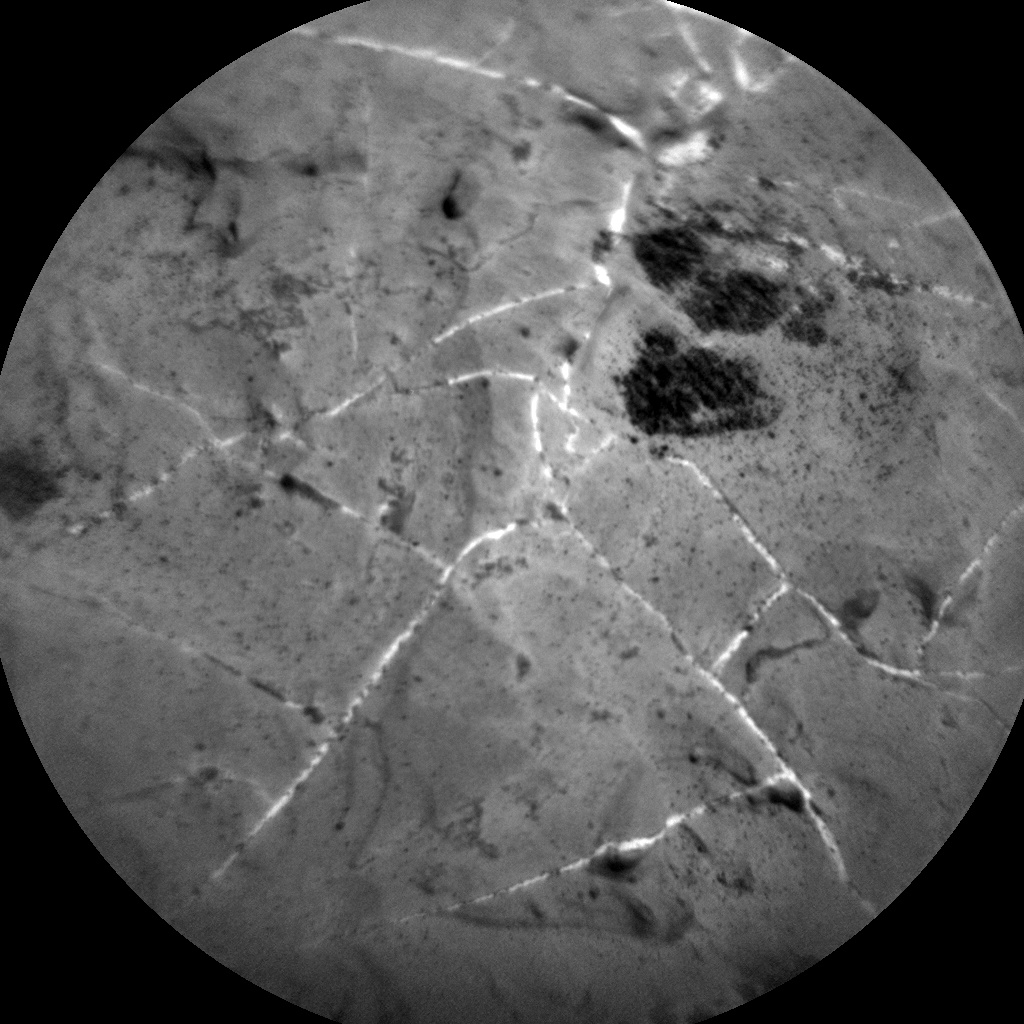
Curiosity ChemCam Remote Micro-Imager photo taken on Sol 1981, March 3, 2018.
Credit: NASA/JPL-Caltech/LANL
Argon measurement
Overnight, the robot’s Alpha Particle X-Ray Spectrometer (APXS) will integrate on air rather than surface materials to measure the amount of argon in the atmosphere, which is known to vary seasonally, based on older Mars Exploration Rover (MER) APXS data.
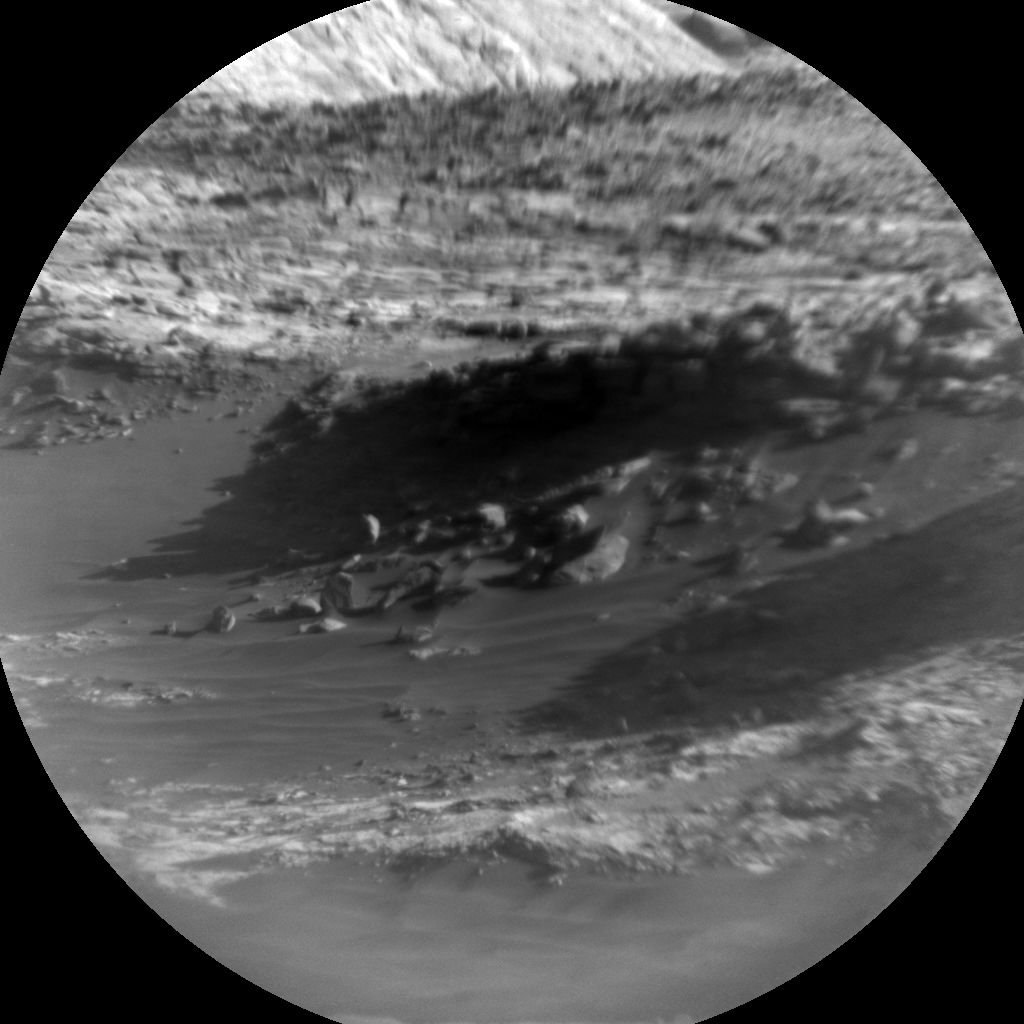
Curiosity ChemCam Remote Micro-Imager photo taken on Sol 1981, March 3, 2018.
Credit: NASA/JPL-Caltech/LANL
The feed-extended drilling dominates the Sol 1982 plan, with only Rover Environmental Monitoring Station (REMS) and Dynamic Albedo of Neutrons (DAN) activities running in parallel.
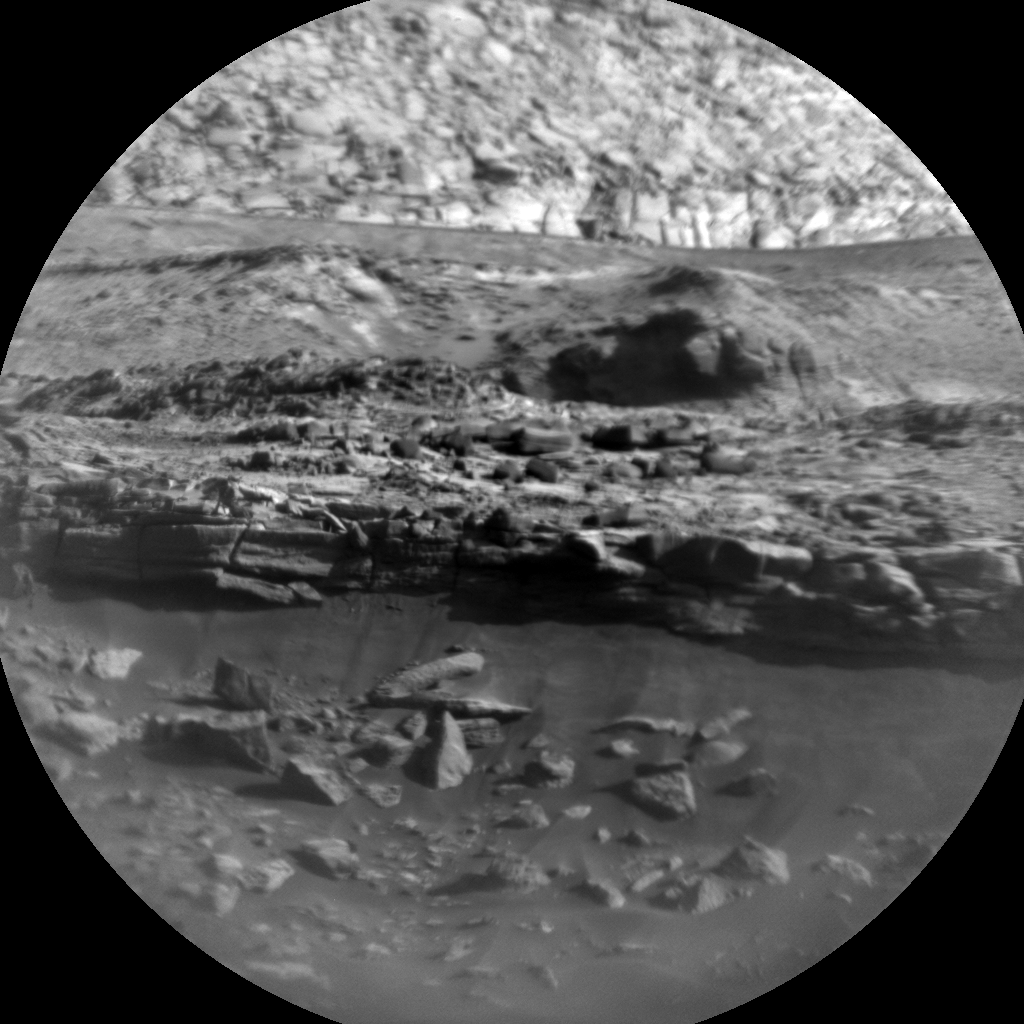
Curiosity ChemCam Remote Micro-Imager photo taken on Sol 1981, March 3, 2018.
Credit: NASA/JPL-Caltech/LANL
“The drill will be retracted from the hole, and Mastcam will take pictures of the hole and the drill bit on Sol 1983. Then the rover will sleep in preparation for more work on Monday,” Herkenhoff points out. “Of course we are all hoping that the drilling goes well…we’re looking forward to studying the drill hole and sample!”
Troubleshooting
After more than a year without the use of the Curiosity Mars rover’s drill, engineers have devised a workaround and tested it for the first time on the Red Planet. More testing of the drill method is planned for the future. The new drill method produced a hole on February 26 in a target named Lake Orcadie. The hole marks the first operation of the rover’s drill since a motor problem began acting up more than a year ago.
For an informative video on Curiosity’s workaround drill method, go to:
 Posted in Space News

