 By
By  January 16th, 2018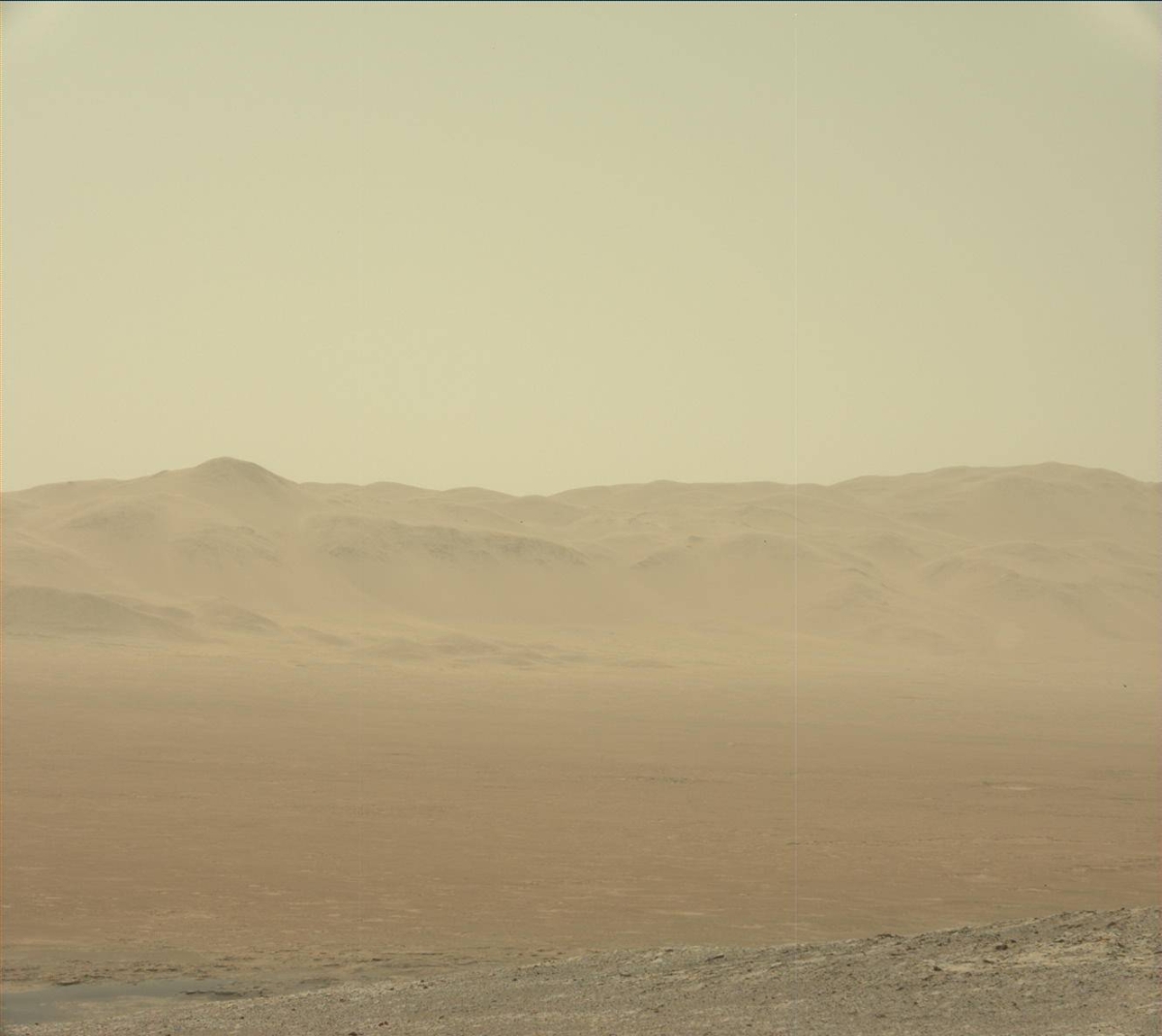
Curiosity Mastcam Left photo acquired on Sol 1933, January 13, 2018.
Credit: NASA/JPL-Caltech/MSSS
NASA’s Curiosity Mars rover is now in Sol 1936 and investigating location “e” – an informal site name but one that is stirring up excitement within the rover’s science team.
That’s the word from Christopher Edwards, a planetary geologist from Northern Arizona University in Flagstaff.

Curiosity Front Hazcam Right B image acquired on Sol 1935. January 15, 2018.
Credit: NASA/JPL-Caltech
Geologic story
“The first thing the science team on shift did was decide to stay at the current location rather than drive away,” Edwards notes. “This was primarily driven by the large suite of excellent science targets available in the workspace. These targets continue to help constrain the geologic story of the Vera Rubin Ridge.”
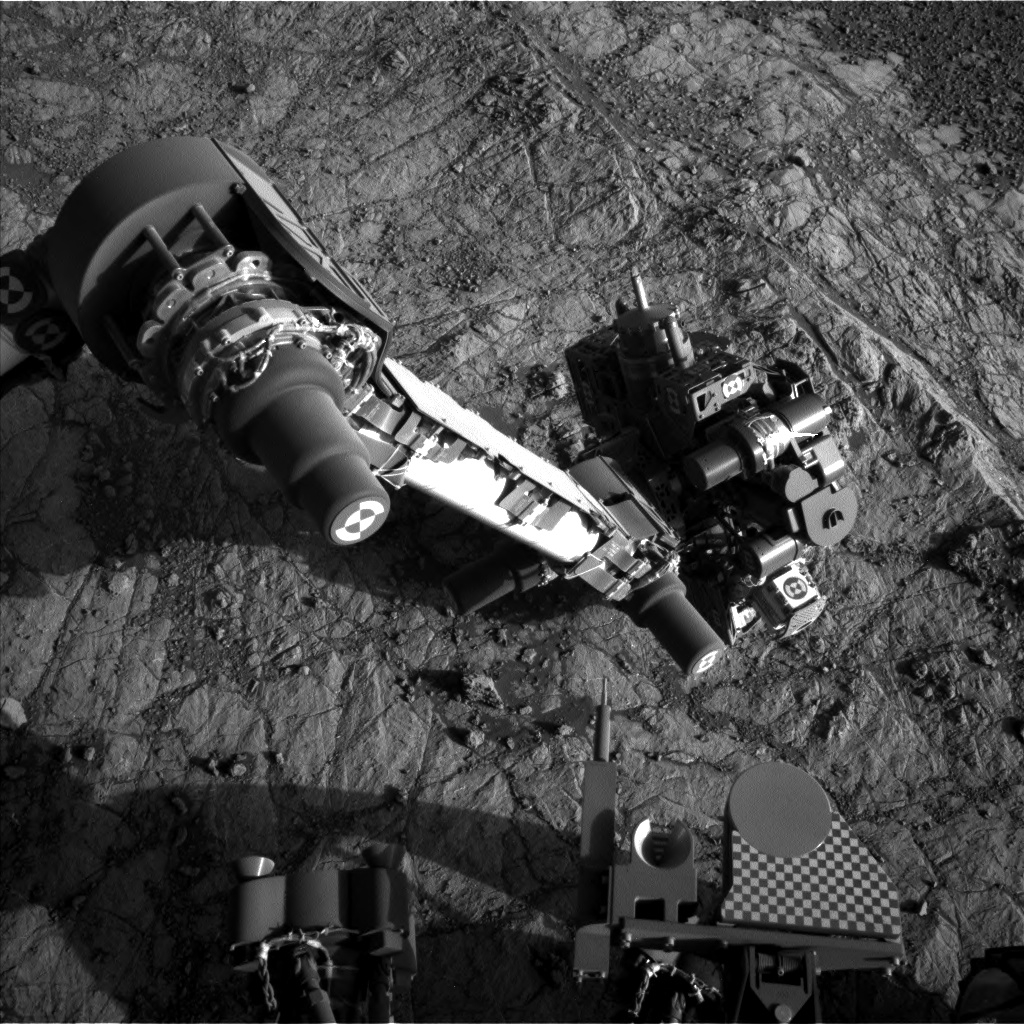
Curiosity Navcam Left B image acquired on Sol 1935, January 15, 2018.
Credit: NASA/JPL-Caltech
Two arm targets for Alpha Particle X-Ray Spectrometer (APXS) integrations were quickly chosen by the science team and handed off to the rover planners for assessment: “Ross of Mull” and “Mcleans Nose.”
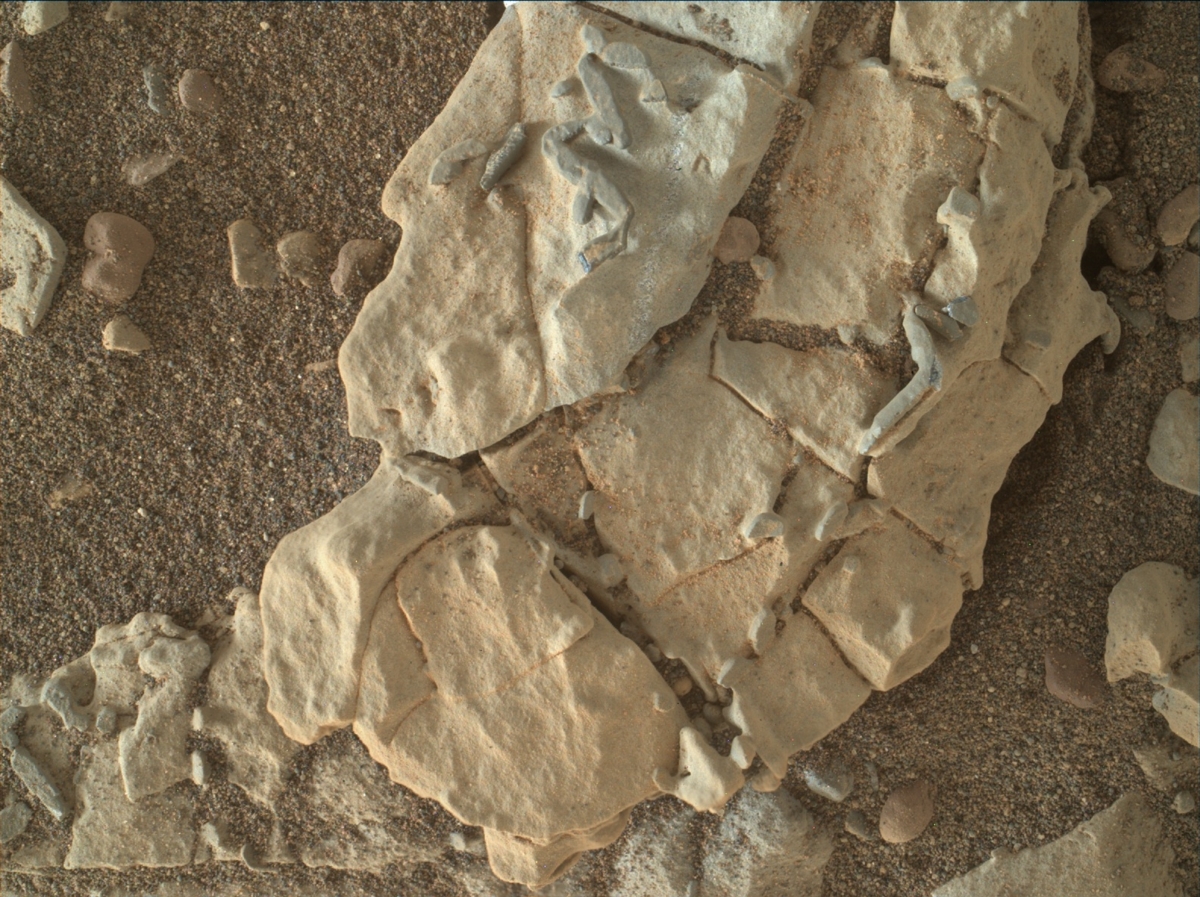
“Sticks” and stones! Using an onboard focusing process, the Mars Hand Lens Imager (MAHLI) aboard NASA’s Mars rover Curiosity created this product by merging two to eight images previously taken by the MAHLI, located on the turret at the end of the rover’s robotic arm.
MAHLI imagery of the unusual features taken back on Sol 1923 January 2, 2018.
Credit: NASA/JPL-Caltech/MSSS
Elongated, raised, linear features
Ross of Mull is a grayer bedrock area with nodular material nearby, while Mcleans Nose is a prominent gray toned resistant feature.
Edwards says that Chemistry and Camera (ChemCam) data was acquired of a suite of targets, “including those that had the elongate[d], raised, linear features known by the team as “sticks”, as well as the two APXS targets.”
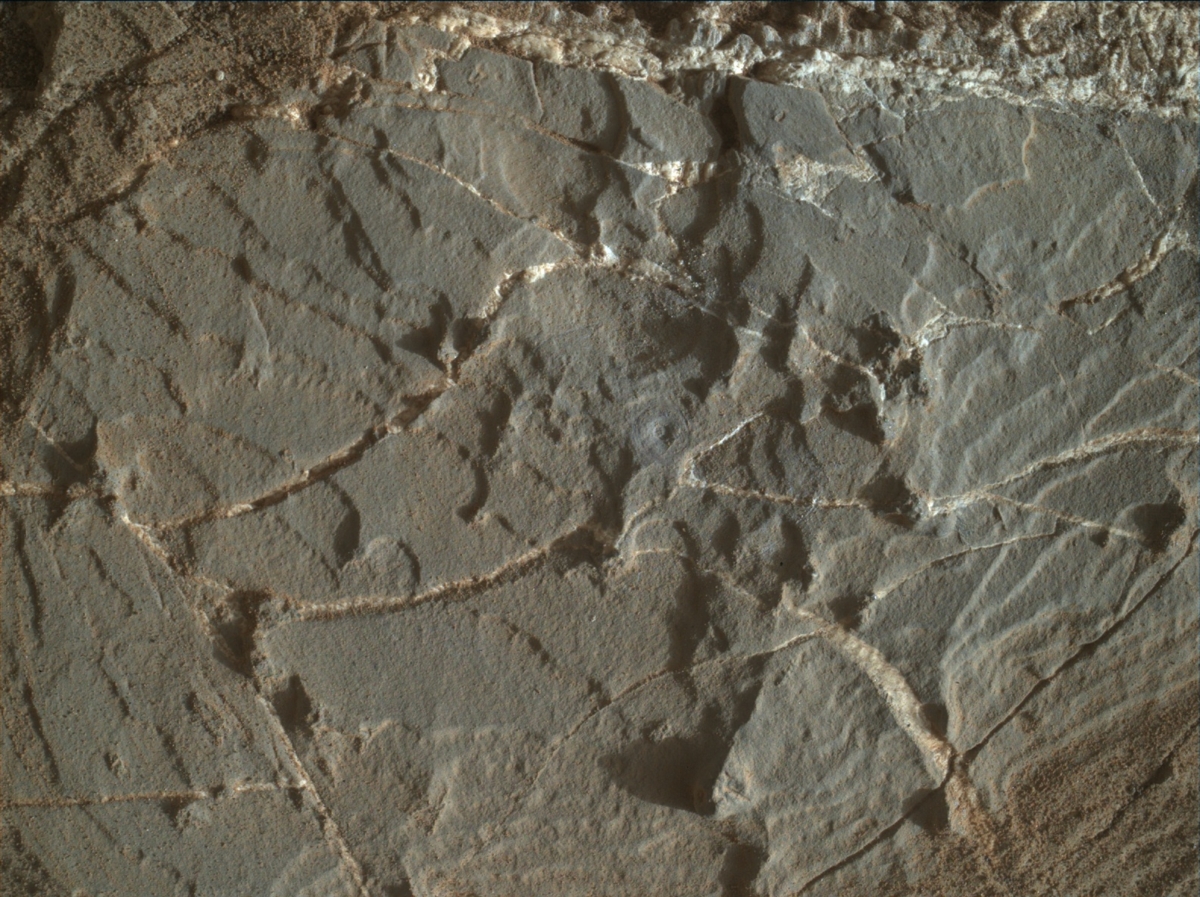
Using an onboard focusing process, the Mars Hand Lens Imager (MAHLI) aboard NASA’s Mars rover Curiosity created this product by merging two to eight images previously taken by the MAHLI, located on the turret at the end of the rover’s robotic arm.
MAHLI imagery from Sol 1935 January 16, 2018.
Credit: NASA/JPL-Caltech/MSSS
Workspace photos
Documentation imaging of these targets, Edwards adds, including multispectral imaging to characterize the visible/near-infrared spectral properties of the site, will happen over the course of the plan.
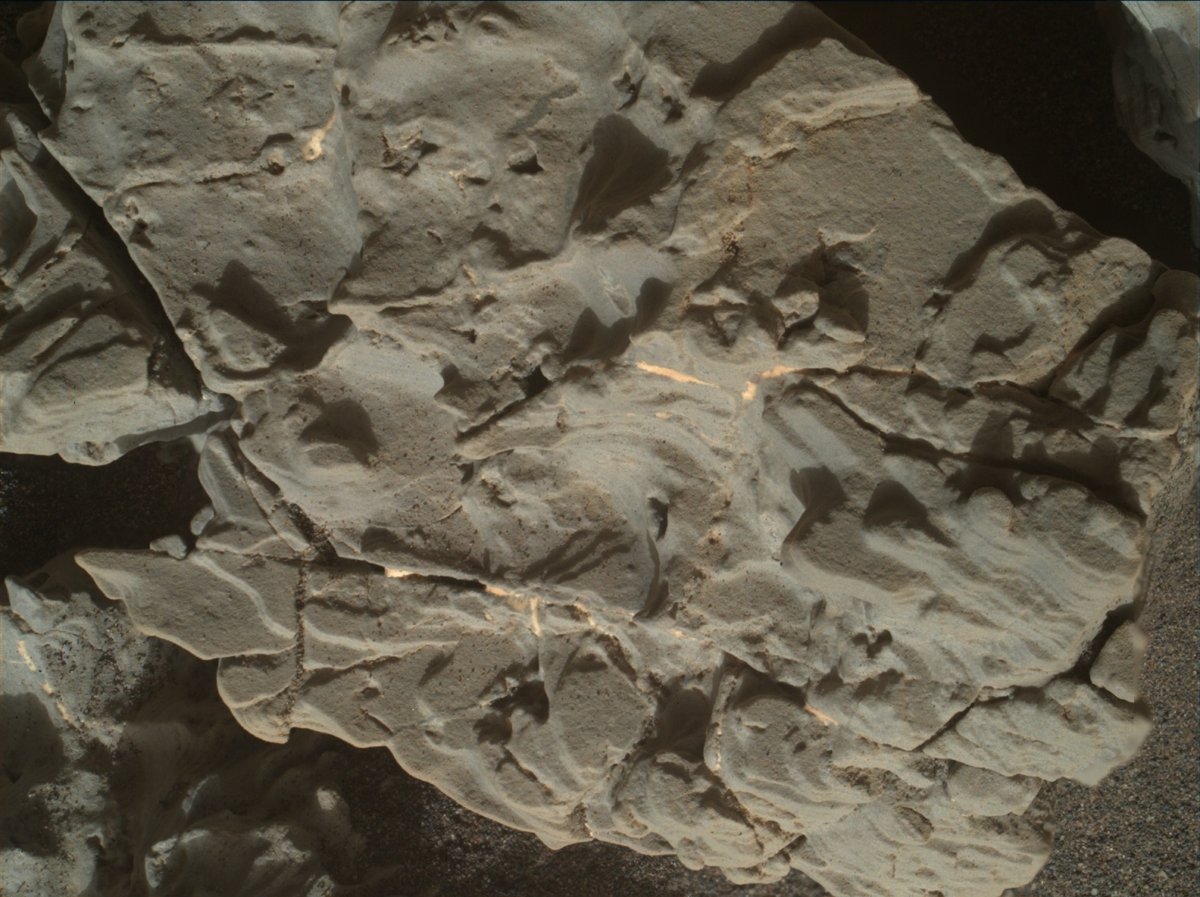
Using an onboard focusing process, the Mars Hand Lens Imager (MAHLI) aboard NASA’s Mars rover Curiosity created this product by merging two to eight images previously taken by the MAHLI, located on the turret at the end of the rover’s robotic arm.
MAHLI imagery from Sol 1935 January 16, 2018.
Credit: NASA/JPL-Caltech/MSSS
Use of the robot’s Mars Hand Lens Imager (MAHLI) imaging of the workspace will continue and is likely to produce stunning images, Edwards concludes. “Mars continues to provide Curiosity with some fabulous rocks for investigation!”
 Posted in Space News

