 By
By  November 12th, 2021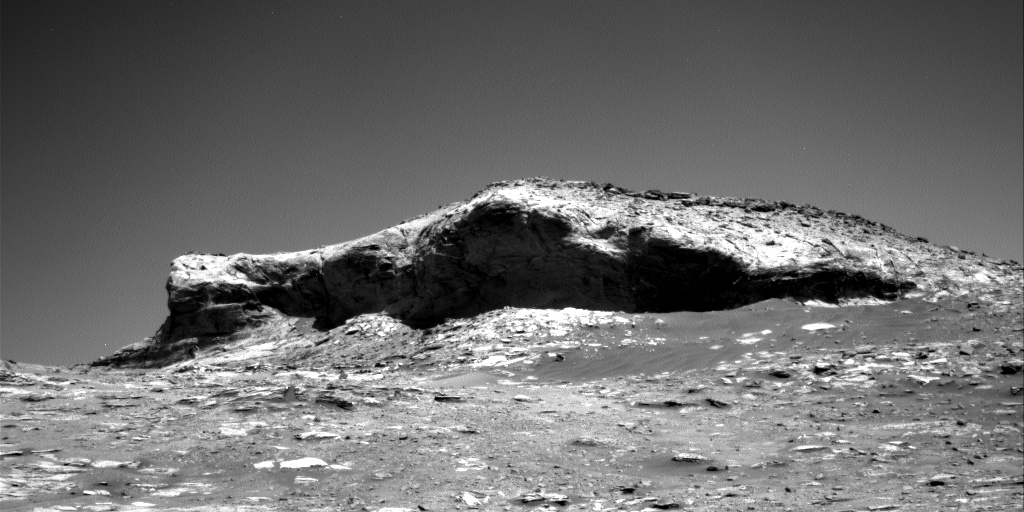
Curiosity Right B Navigation Camera image taken on Sol 3293, November 10, 2021.
Credit: NASA/JPL-Caltech
NASA’s Curiosity Mars rover at Gale Crater is now performing Sol 3295 duties.
The robot is continuing its drill campaign at the Zechstein site reports Mariah Baker, a planetary geologist at the Center for Earth & Planetary Studies at the Smithsonian National Air & Space Museum in Washington, D.C.
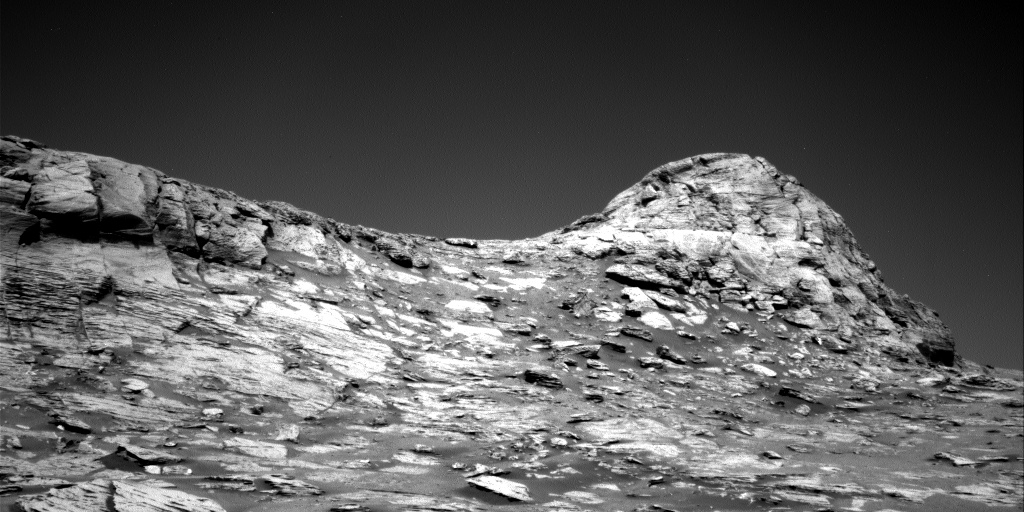
Curiosity Right B Navigation Camera image taken on Sol 3293, November 10, 2021.
Credit: NASA/JPL-Caltech
“Even though the original plan already included two hefty science blocks, the rover still had extra energy to spare! In order to take advantage of this excess energy, the team added yet another science block to the plan and strategically positioned it to occur in the morning around 8 AM local Martian time,” Baker explains.
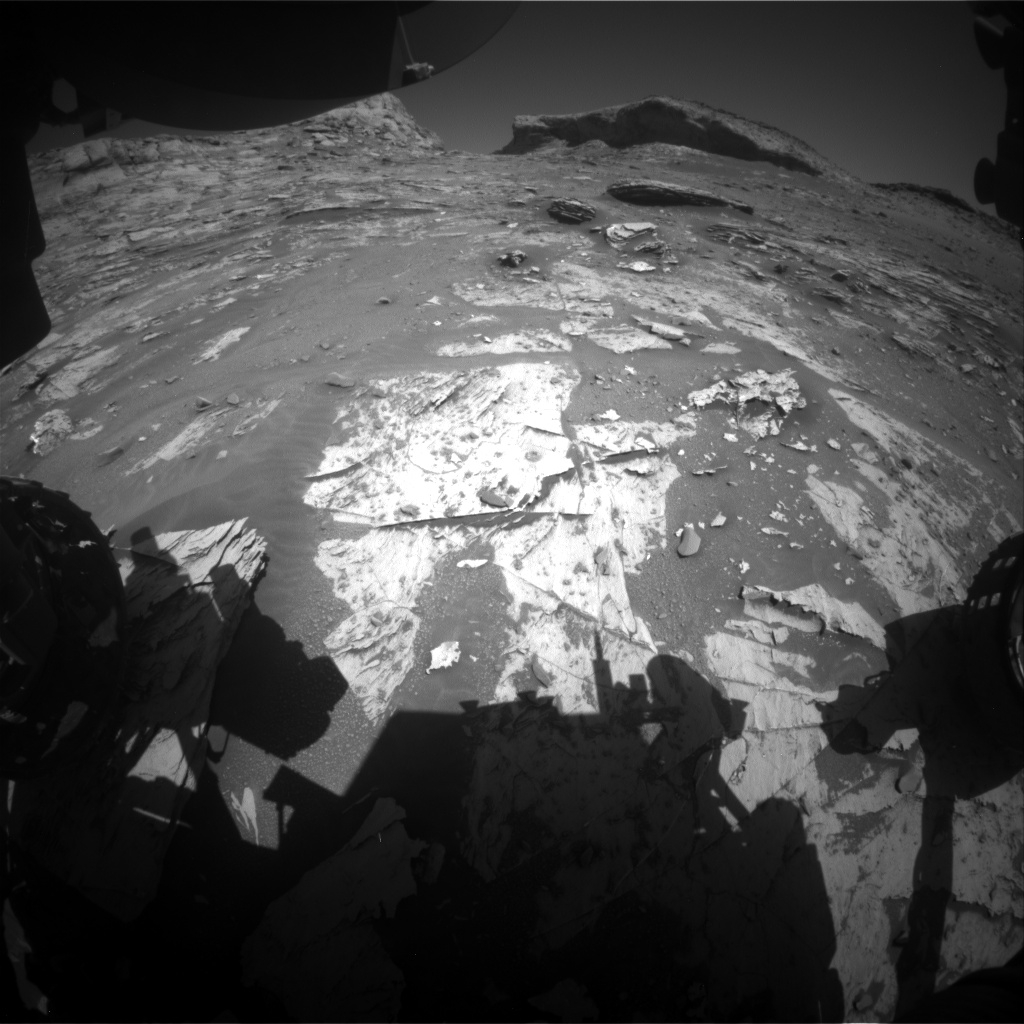
Curiosity Front Hazard Avoidance Camera Left B image acquired on Sol 3293, November 11, 2021.
Credit: NASA/JPL-Caltech
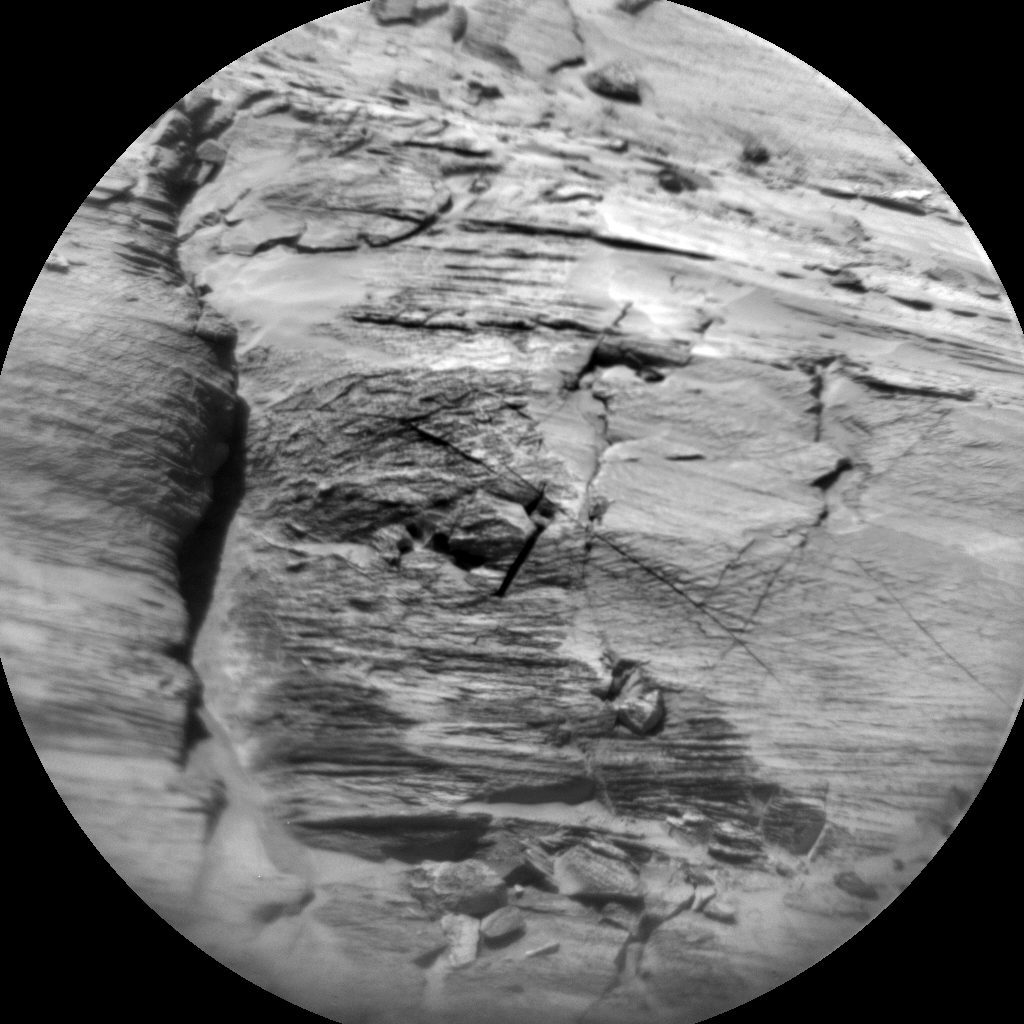
Curiosity Chemistry & Camera (ChemCam) Remote Micro-Imager (RMI) photo acquired on Sol 3294, November 10, 2021.
Credit: NASA/JPL-Caltech/LANL
Better illumination
While science blocks typically occur during the middle of the day, this early morning time was desirable because it would provide better illumination for acquiring a Chemistry and Camera (ChemCam) Remote Micro-Imager (RMI) image of a complex rock outcrop nearby.
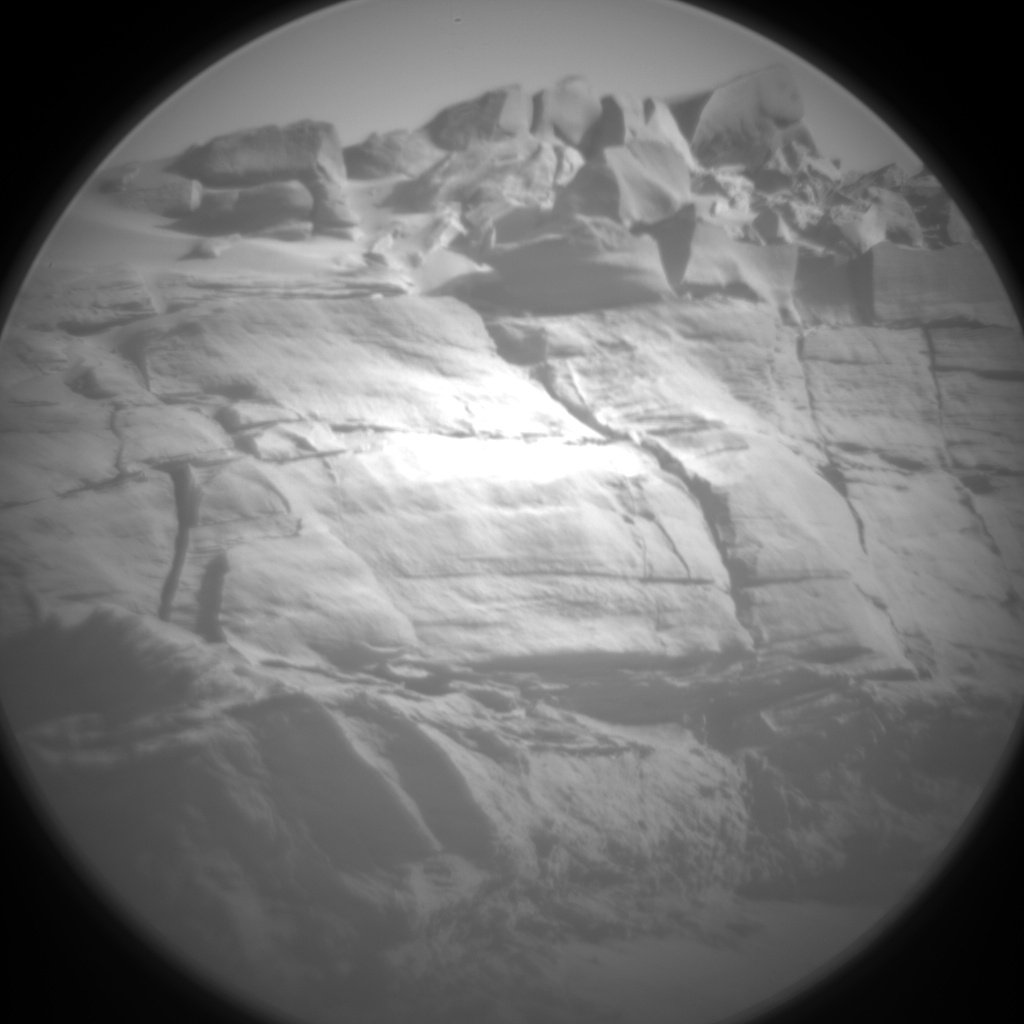
Curiosity Chemistry & Camera (ChemCam) RMI photo acquired on Sol 3294, November 11, 2021.
Credit: NASA/JPL-Caltech/LANL
“Plus, the additional heating needed to operate instruments during the cold morning hours would use up more of the rover’s spare energy,” Baker adds. “In other words, this new morning block was beneficial for both science and operations—a win win!”
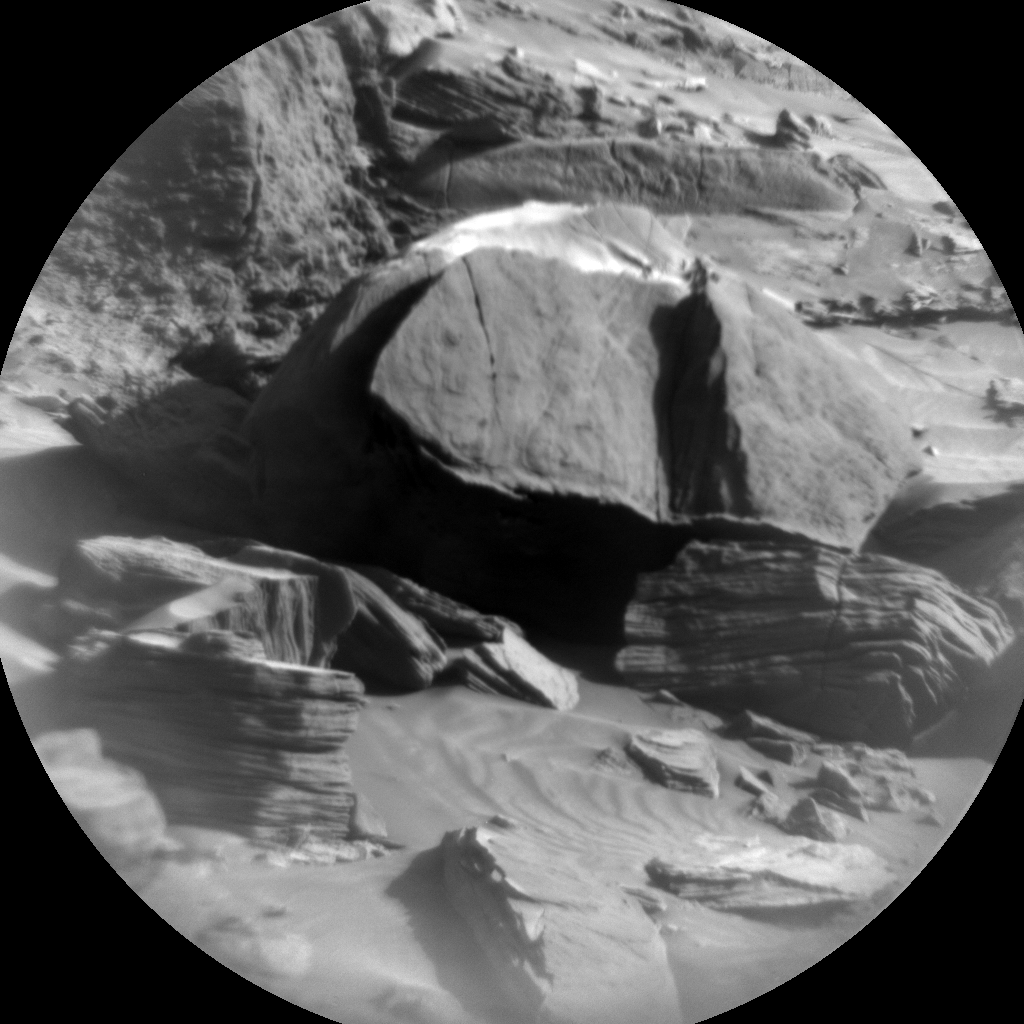
Curiosity Chemistry & Camera (ChemCam) Remote Micro-Imager (RMI) photo acquired on Sol 3294, November 11, 2021.
Credit: NASA/JPL-Caltech/LANL
Filled to the brim
The other two science blocks in the plan were also filled to the brim with activities: two Mastcam mosaics were planned on local bedrock including target “Hare Stone,” and a third Mastcam mosaic will provide stereo coverage of a curved sand ripple that can be seen from orbit.

Curiosity Mast Camera imagery taken on Sol 3292, November 9, 2021.
Credit: NASA/JPL-Caltech/MSSS
A ChemCam Passive observation was slated to collect supplementary data on a pebble that was studied previously using the ChemCam Laser Induced Breakdown Spectroscopy (LIBS) capability.
Additional ChemCam LIBS measurements and associated Mastcam documentation images were to be acquired on bedrock targets “Tong Saltings” and “Stack of Handa.”

Curiosity Chemistry & Camera RMI photo shows laser strikes in new drill hole. Taken on Sol 3292, November 9, 2021.
Credit: NASA/JPL-Caltech/LANL
Weekend of science
“A third Mastcam documentation image of the Zechstein drill hole will be used to monitor wind-driven changes in the drill tailings,” Baker reports.
“The rover will also collect a set of environmental Navcam observations including dust devil, suprahorizon, and zenith movies, as well as a line-of-sight image for studying atmospheric dust levels,” Baker concludes. “Even with all the activities planned over the next two sols, the rover is projected to have enough energy entering the plan on Friday for another full weekend of science!”
 Posted in Space News

