 By
By  August 19th, 2022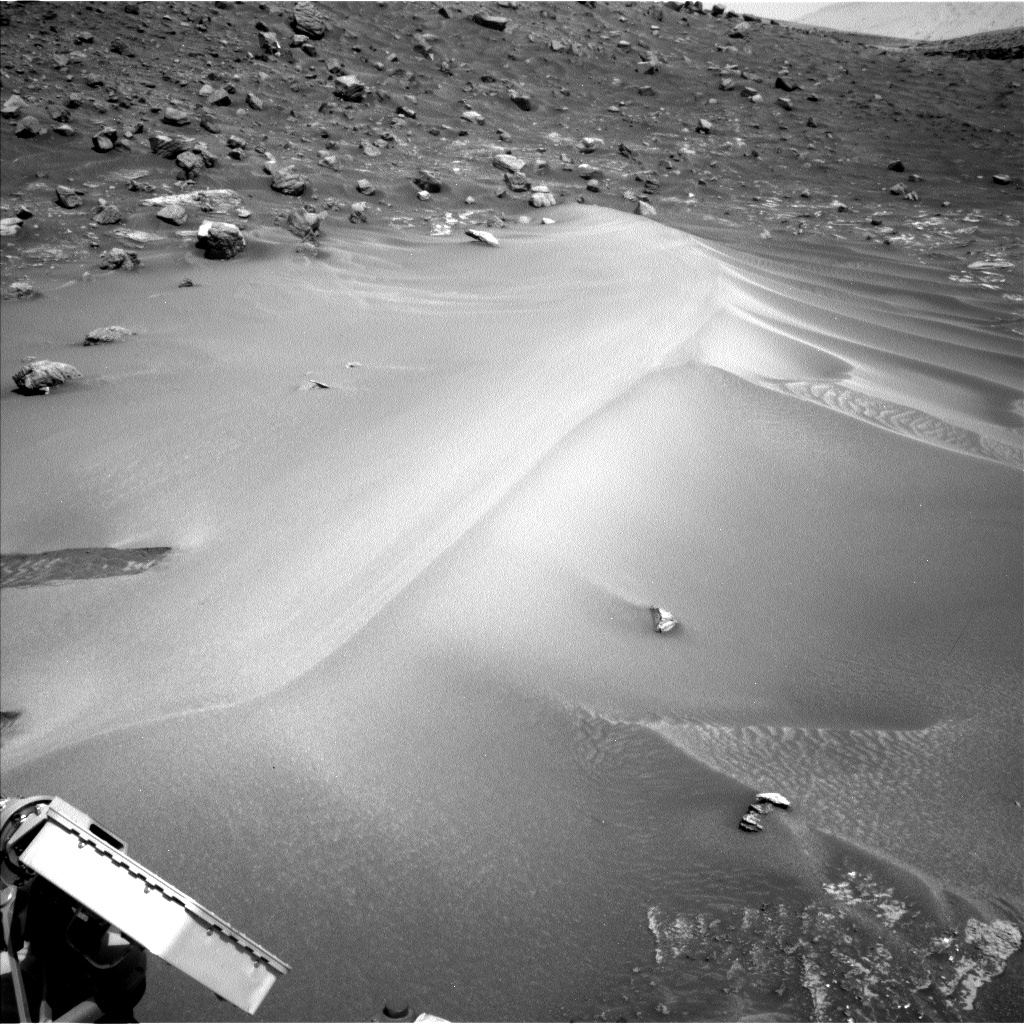
Curiosity Left B Navigation Camera image taken on Sol 3567, August 19, 2022.
Credit: NASA/JPL-Caltech
The “road” through Paraitepuy pass continues to challenge the intrepid Curiosity rover, reports Abigail Fraeman, a planetary geologist at NASA’s Jet Propulsion Laboratory
“We attempted to cross another large sand ripple (formally called a transverse aeolian ridge, or TAR),” in a recent plan.
However, Curiosity had automatically stopped the drive when the rover’s wheels slipped more than expected right before they reached the crest of the TAR, Fraeman adds.
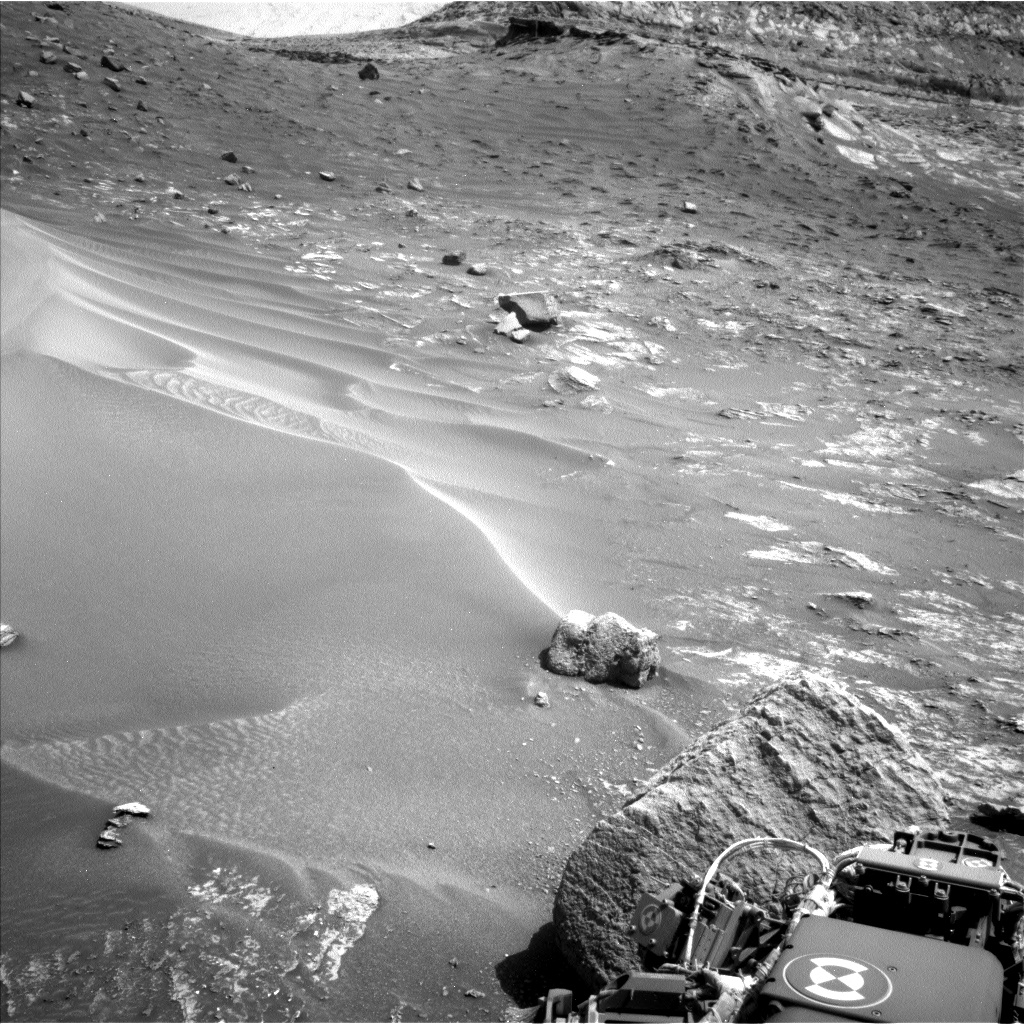
Curiosity Left B Navigation Camera image taken on Sol 3567, August 19, 2022.
Credit: NASA/JPL-Caltech
Unintended stops
“While unintended stops like this are frustrating, it’s comforting to know the rover is so capable of keeping itself safe,” Fraeman explains. Stopping the drive early is definitely better than trying to plow through and potentially embed the wheels deep into the sand!
A new plan called for the robot to back out and try again.
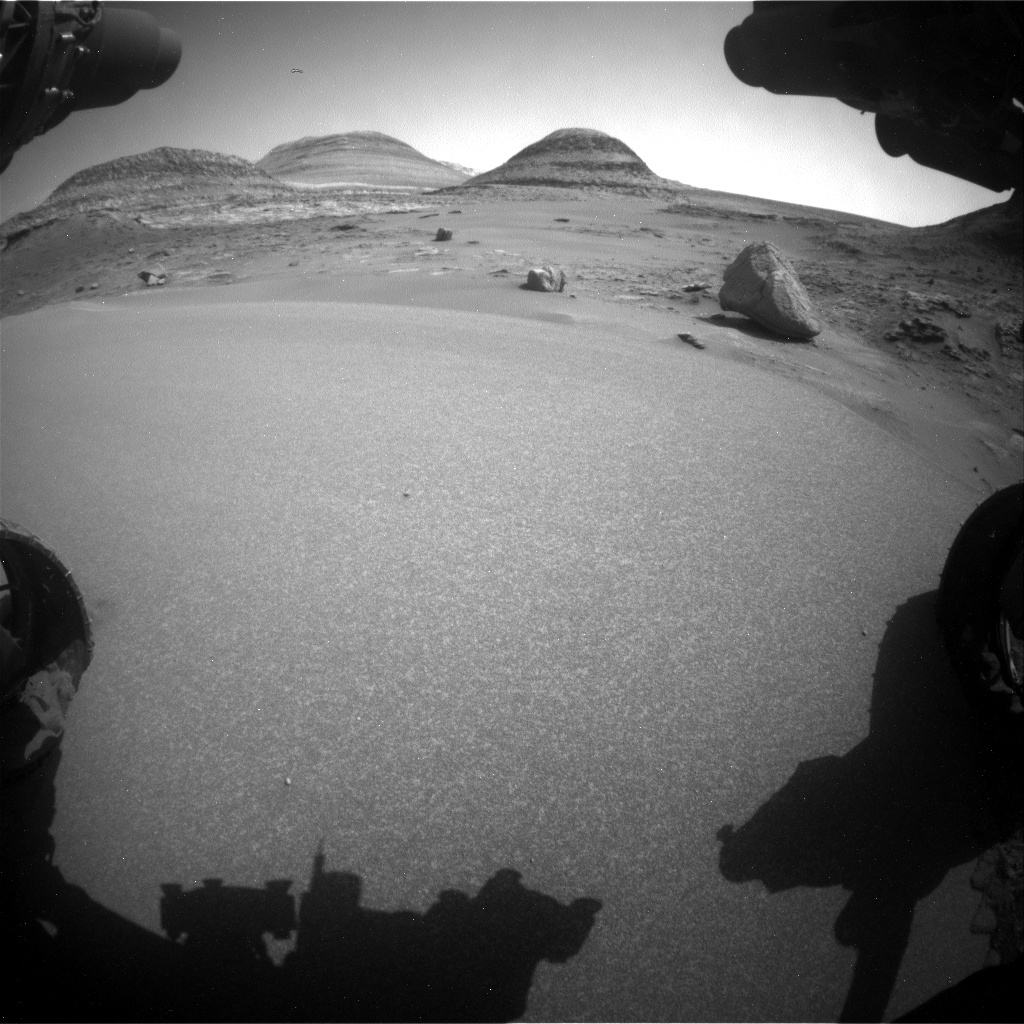
A large rock is another obstacle Curiosity will encounter right after crossing sand. Image taken by Front Hazard Avoidance Camera on Sol 3565 (August 17, 2022
Credit: NASA/JPL-Caltech
“Rather than crossing the TAR in the same place, we’re going to try crossing a few feet to the side, where the sand is shallower and therefore should be easier to cross,” Fraeman reports. “Unfortunately, there’s another obstacle we’ll encounter right after we cross at this new location, a large rock.”
Safe path
In order to navigate this tricky terrain, we’re planning to stop the drive after we cross the TAR but right before we reach the rock, just to make sure the rover is positioned exactly where we want and so that we’ll be in the best position to plan a safe path around,” Fraeman adds. “Paraitepuy pass is certainly testing our rover drivers, but I have complete confidence we’ll make it through soon!”
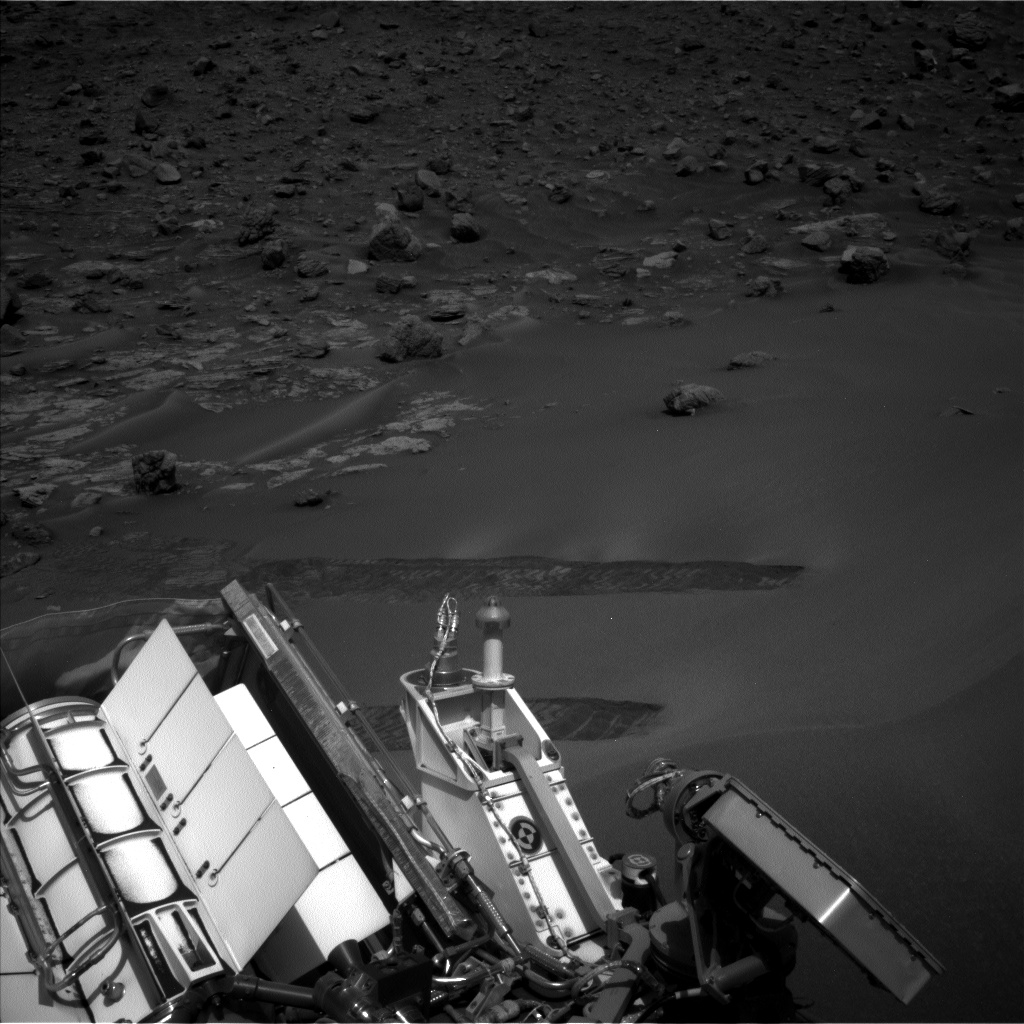
Curiosity Left B Navigation Camera image taken on Sol 3567, August 19, 2022.
Credit: NASA/JPL-Caltech
Since Curiosity stopped while trying to cross the TAR, researchers were greeted with another sand-filled workspace.
A newly scripted plan called for contact science with the Mars Hand Lens Imager (MAHLI) and the Alpha Particle X-Ray Spectrometer (APXS) on a single target, “Yupukari,” that’s along the crest of the bedform.
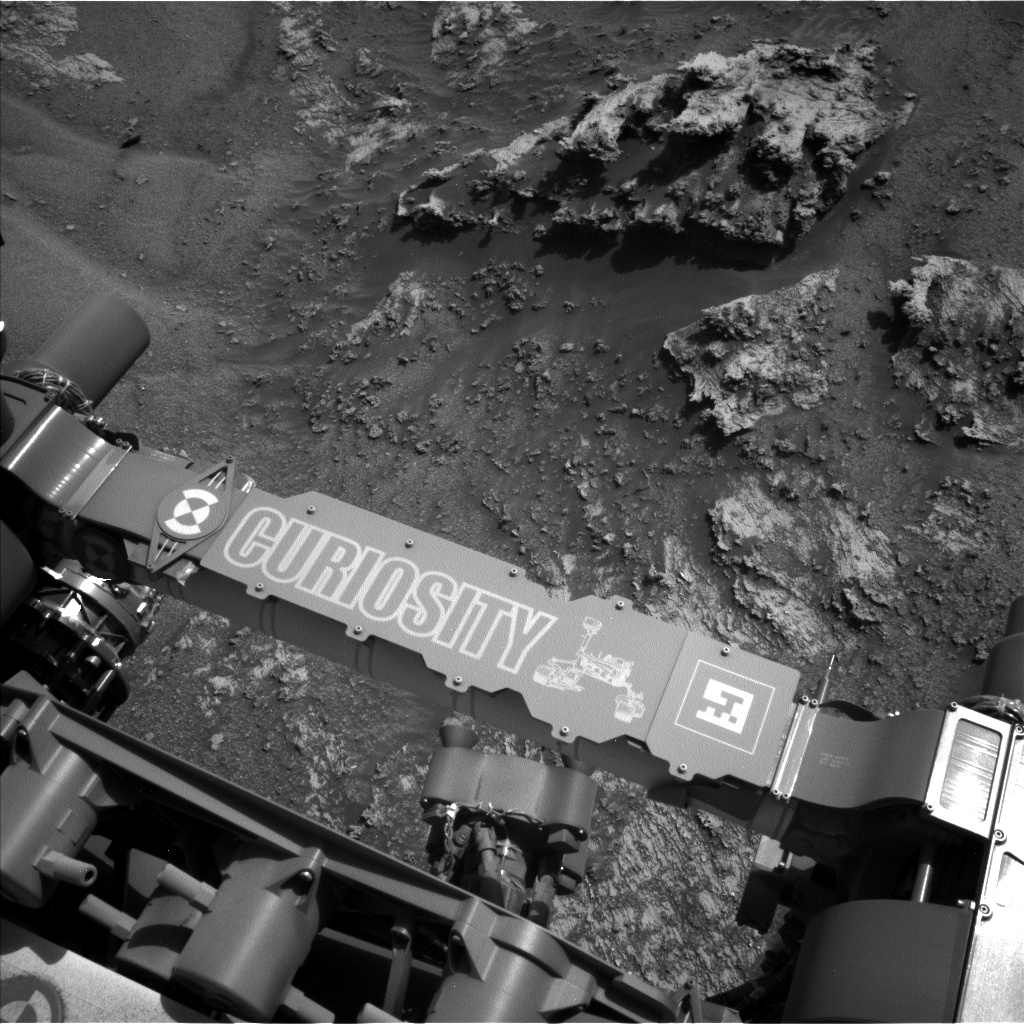
Curiosity Left B Navigation Camera image taken on Sol 3567, August 19, 2022.
Credit: NASA/JPL-Caltech
Float rock
That plan also slated the taking of remote sensing data, with a Chemistry and Camera (ChemCam) Laser Induced Breakdown Spectroscopy (LIBS) observation of targets “Makarapan,” a rock near the rover’s back wheel, and “Uaipan,” a different area along the crest of the TAR.
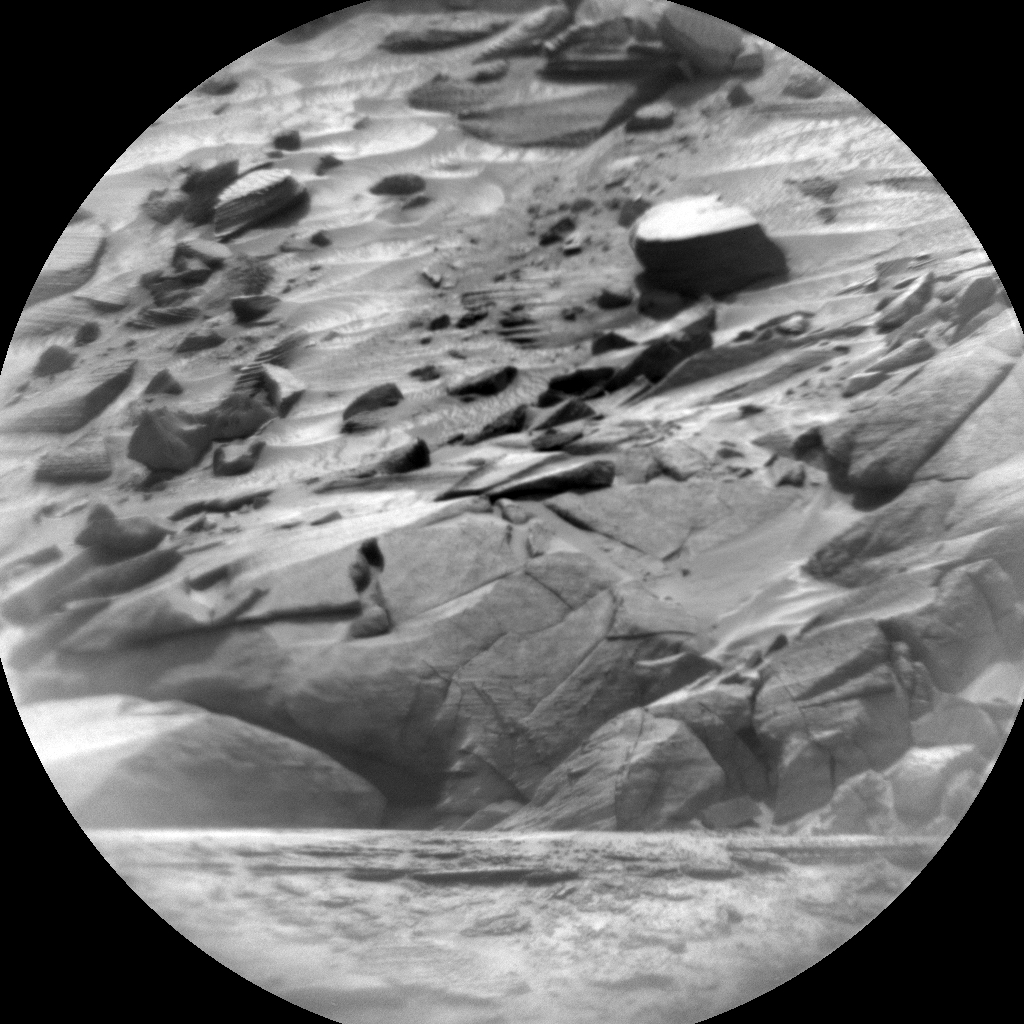
Curiosity Chemistry & Camera (ChemCam) Remote Micro-Imager (RMI) photo acquired on Sol 3567, August 19, 2022.
Credit: NASA/JPL-Caltech/LANL
Another long distance Remote Micro-Imager (RMI) mosaic will be taken of the mysterious marker band unit, and Mastcam observations of some bedrock behind the rover named “Maturuca,” a float rock in the sand named “Los Viejitos,” another distant rock named “Salgado,” and the rock the rover needs to drive around on Friday, named “Rera.”
“We’ll also capture additional imaging of the ‘Bolivar’ butte that we have been driving around for the last few sols. Environmental science observations will round out the plan,” Fraeman concludes.
 Posted in Space News

