 By
By  May 17th, 2019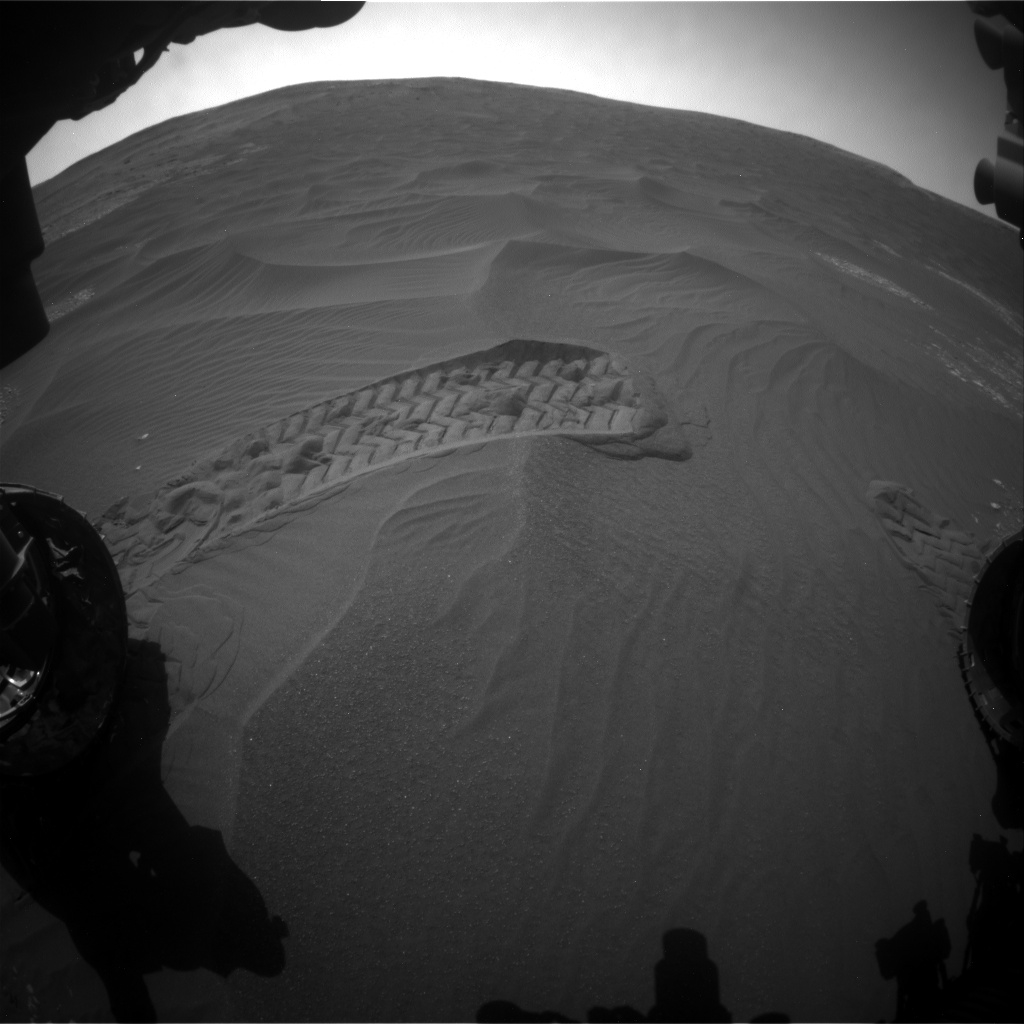
Curiosity Front Hazcam Left B image taken on Sol 2408, May 16, 2019.
Credit: NASA/JPL-Caltech
NASA’s Curiosity Mars rover is now performing Sol 2409 duties.
Now that the robot is back on the road following a drill campaign at Kilmarie, a quick “touch-and-go” activity was planned to characterize the local bedrock, explains Mark Salvatore, a planetary geologist at the University of Michigan in Dearborn.
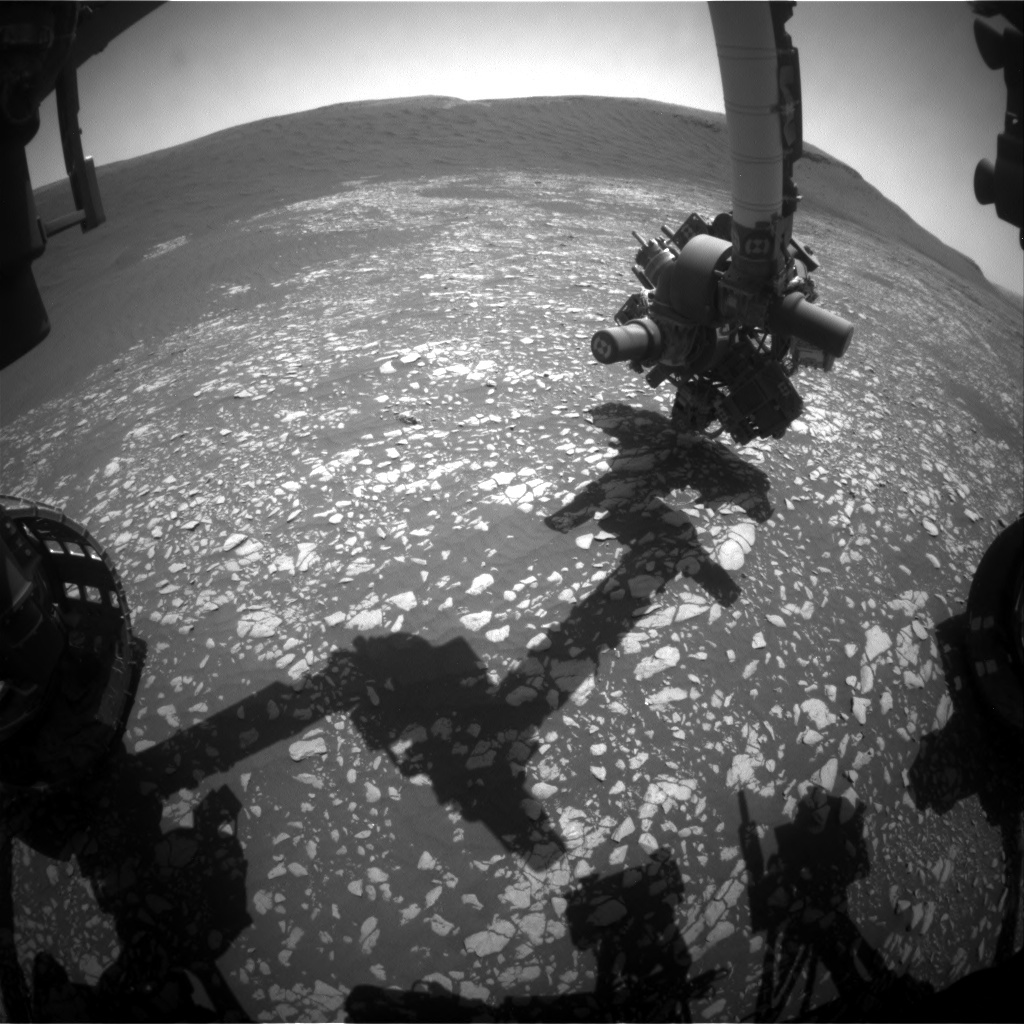
Curiosity Front Hazcam Left B image taken on Sol 2408, May 16, 2019.
Credit: NASA/JPL-Caltech
Ripple field
Curiosity recently drove a short 10 feet (3 meters) to the north towards a large ripple field named “Rigg,” which is where the “go” portion of “touch-and-go” took place.
Before then, however, Curiosity extended her arm and analyzed a patch of bedrock with the Alpha Particle X-ray Spectrometer (APXS) and then zapped bedrock off to the starboard side of the rover using the Chemistry and Camera (ChemCam) Laser Induced Breakdown Spectrometer (LIBS) instrument, Salvatore reports.
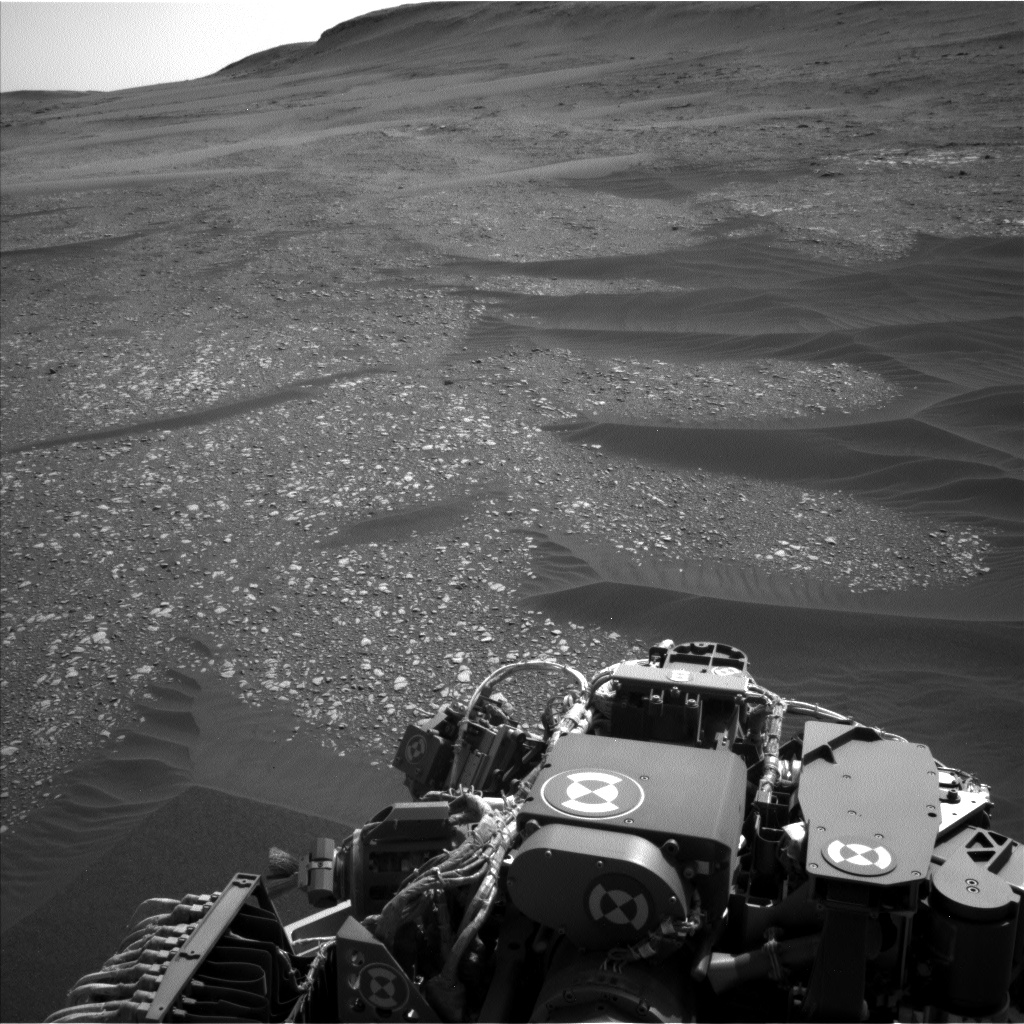
Curiosity Navcam Left B Sol 2408 May 16, 2019
Credit: NASA/JPL-Caltech
Well-planned dance
“She’ll then proceed with a well-planned dance that will dip one of Curiosity’s wheels into the nearby sand ripples, scuffing the surface and creating a small trench, and then orient herself in a position that will be better suited to study both the disturbed and undisturbed portions of the ripples,” Salvatore adds.
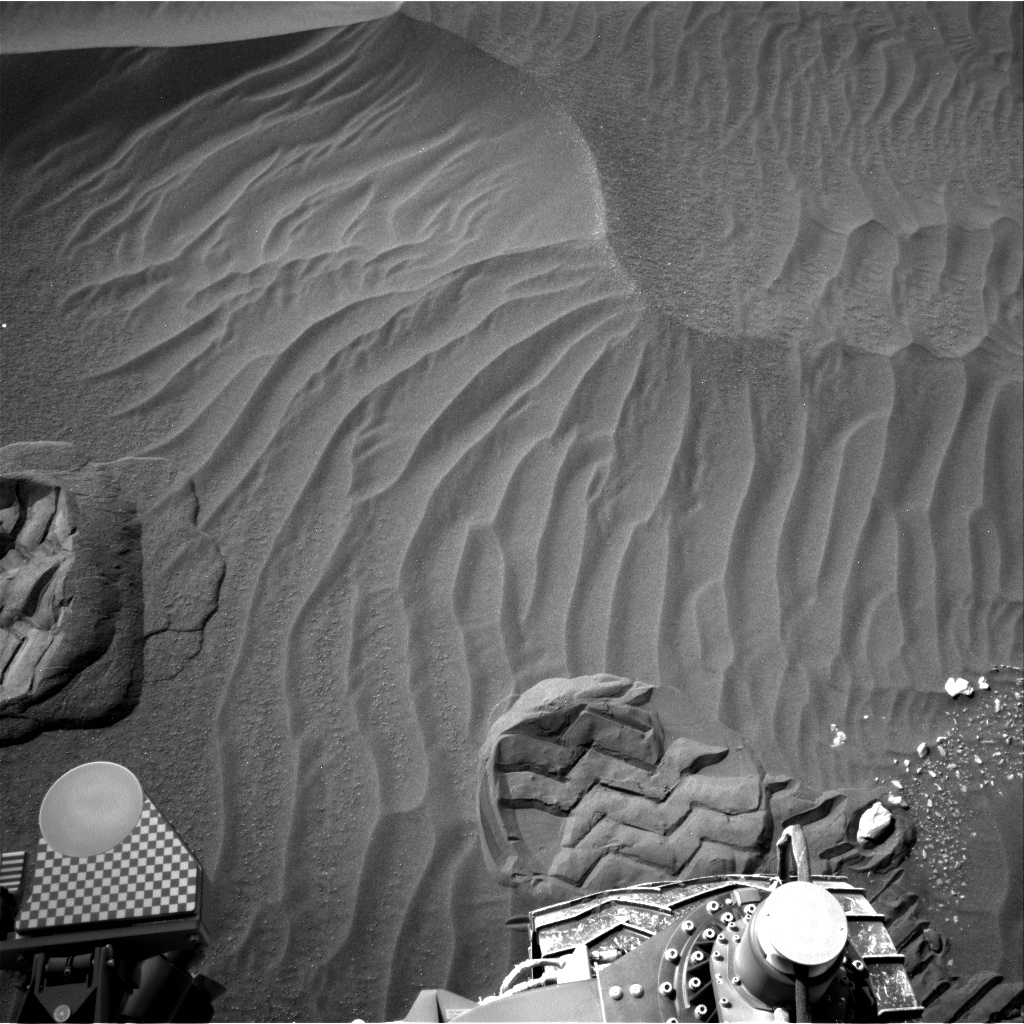
Curiosity Navcam Right B image acquired on Sol 2408, May 16, 2019.
Credit: NASA/JPL-Caltech
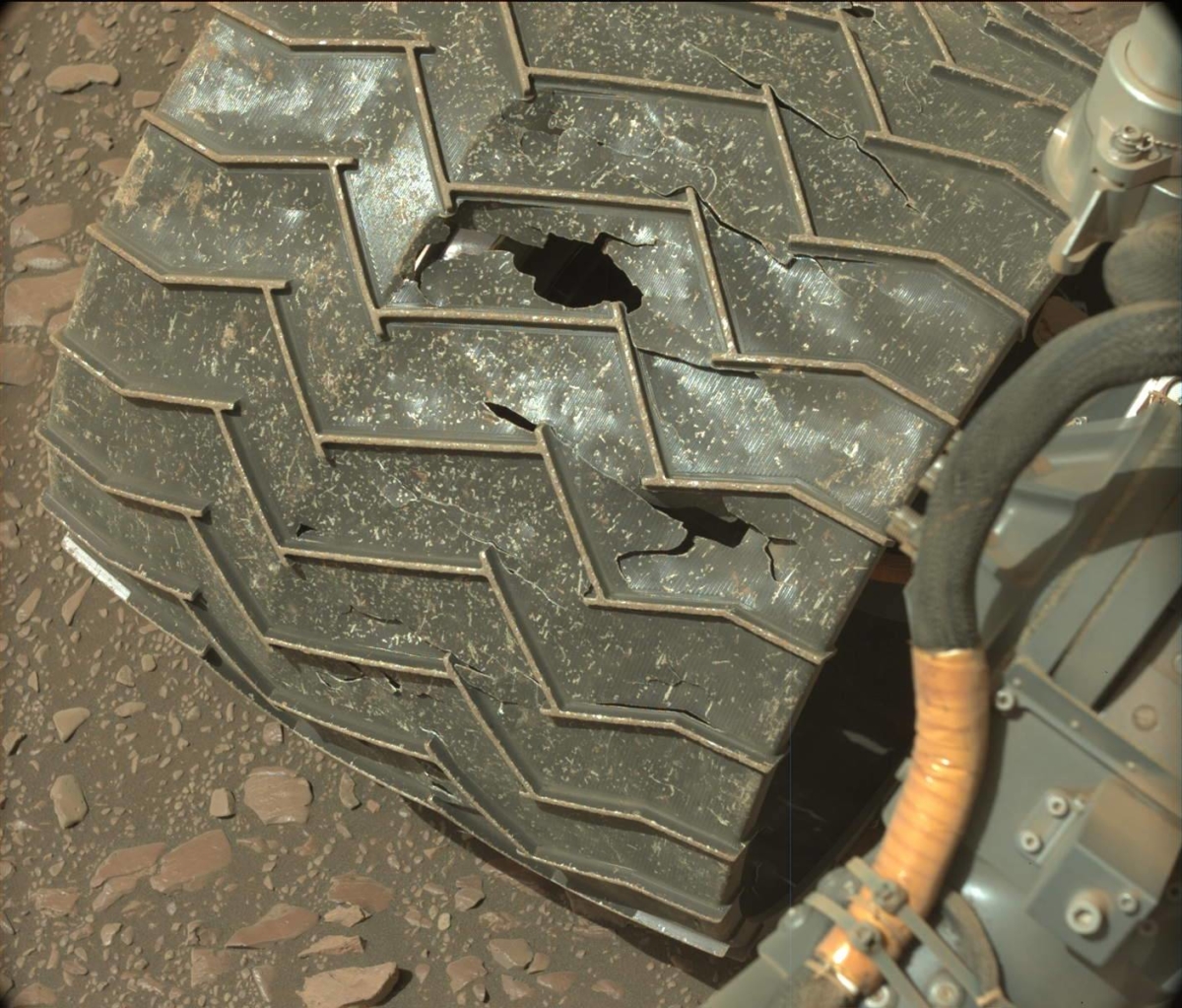
Wheel watch 2019. Curiosity Mastcam Left photo taken on Sol 2407, May 15, 2019.
Credit: NASA/JPL-Caltech/MSSS
The next few days will be dedicated to studying these ripples, Salvatore points out, before Curiosity planners have the rover investigate more of the clay-bearing materials of the Glen Torridon region to the south and east of Vera Rubin ridge.
 Posted in Space News

