 By
By  August 13th, 2016
Curiosity Mastcam Left image taken on Sol 1428, August 12, 2016.
Credit: NASA/JPL-Caltech/MSSS
NASA’s Curiosity rover is now in Sol 1429 of its operations, recently completing a drive of over 148 feet (45 meters). The robot has wheeled closer to the Murray Buttes, reports Ken Herkenhoff at the USGS Astrogeology Science Center in Flagstaff, Arizona.
The weekend plan calls for Chemistry & Camera (ChemCam) target shooting.
“The primary constraint on planning,” Herkenhoff adds, “ended up being power…we tried to fit more into the plan than the rover’s batteries could support! But we were still able to include a lot of good activities into the plan, starting with a dust devil search, dust opacity measurements, and Mastcam stereo mosaics of the Murray Buttes on Sol 1429.”
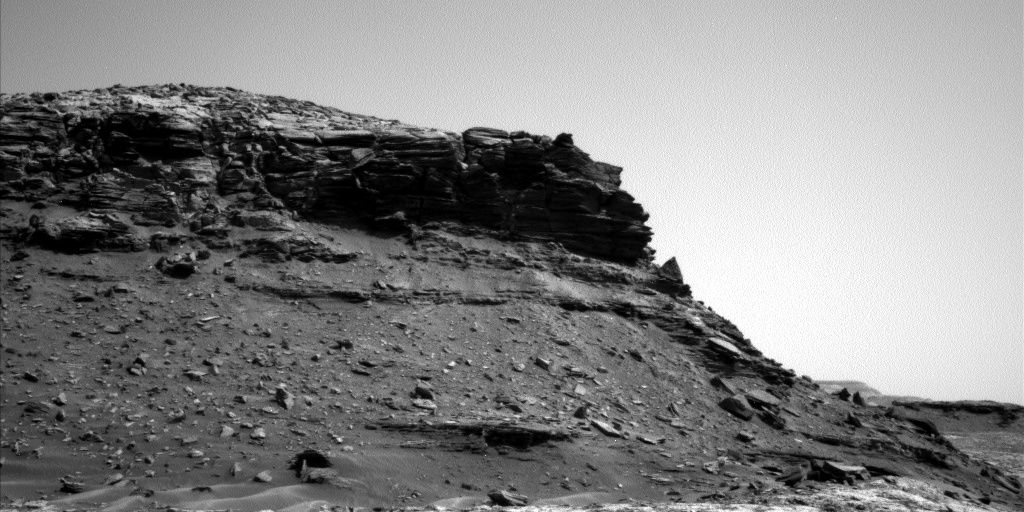
Curiosity Navcam Left B image taken on Sol 1428, August 12, 2016.
Credit: NASA/JPL-Caltech
ChemCam targets
Curiosity’s ChemCam is to acquire Laser Induced Breakdown Spectrometer (LIBS) data on bedrock targets “Matala,” “Cazombo,” and “Ondjiva” before the rover’s Right Mastcam takes a 7×3 mosaic that includes the ChemCam targets.
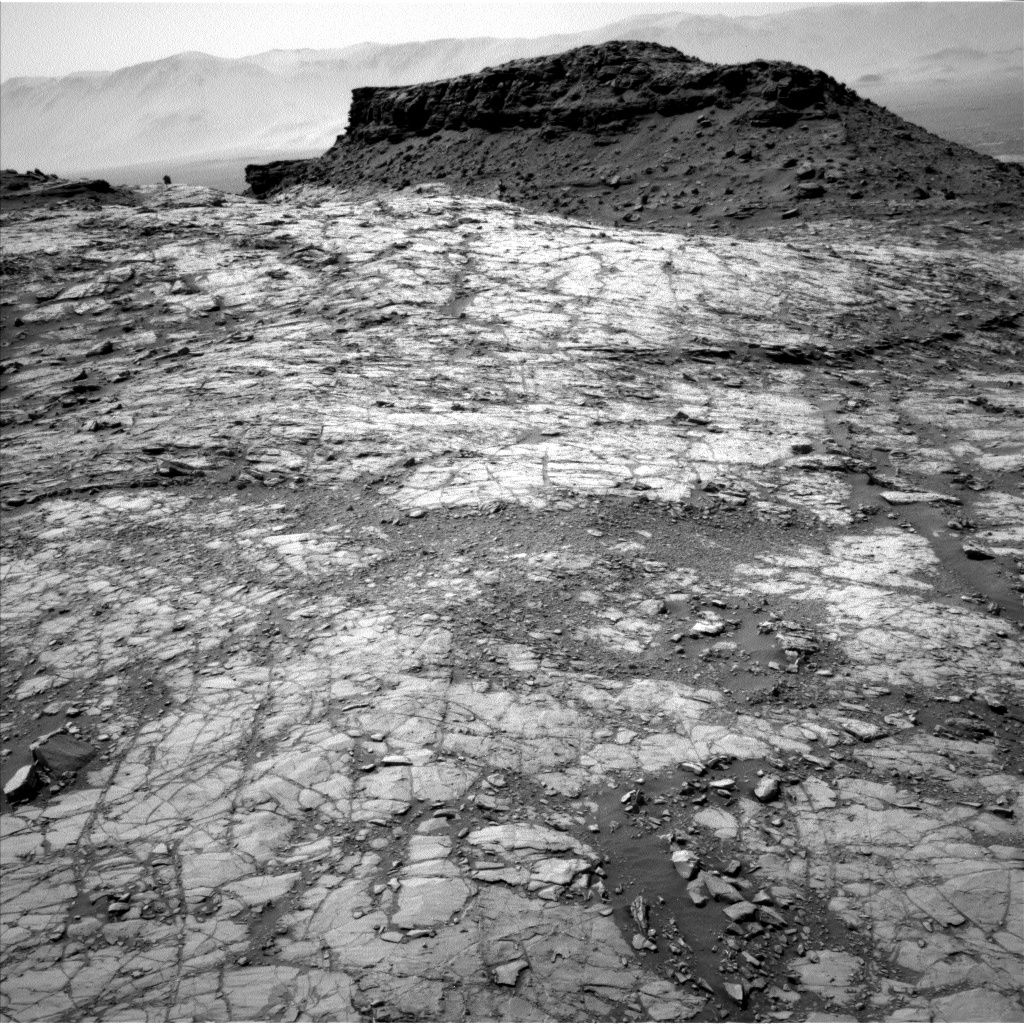
Curiosity Navcam Left B image taken on Sol 1428, August 12, 2016.
Credit: NASA/JPL-Caltech
Overnight and into the early morning hours of Sol 1430, the script calls for the Sample Analysis at Mars (SAM) Instrument Suite to perform the first part of an experiment on the Mojave drill sample that has been stored in the instrument for several months, Herkenhoff explains. The second part of the SAM experiment is planned for the next night, completing early on Sol 1431.
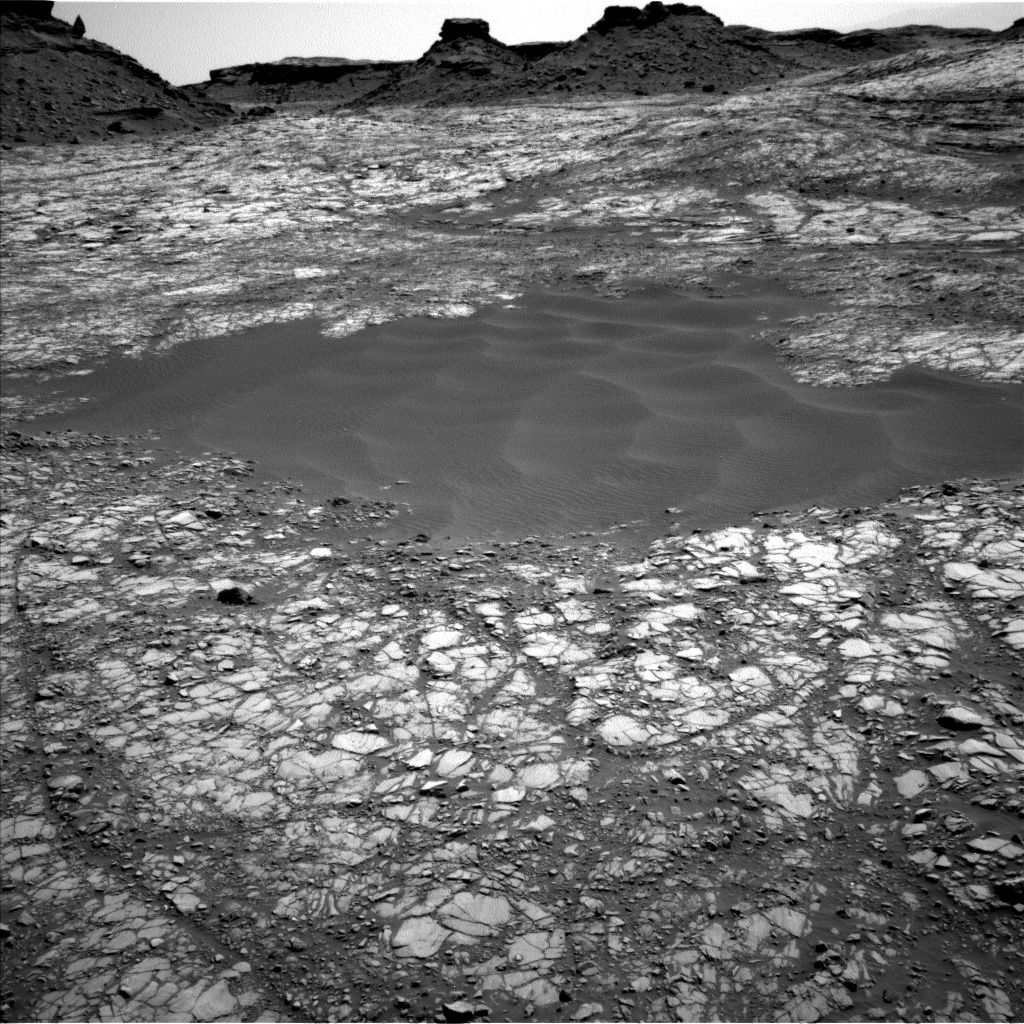
Curiosity Navcam Left B image taken on Sol 1427, August 11, 2016.
Credit: NASA/JPL-Caltech
Drive ahead
A planned drive of the rover is slated for Sol 1431, followed by acquisition of the data needed to plan another drive on Monday.
“So, even though we had to remove some activities during planning, the rover will be very busy this weekend,” Herkenhoff concludes.
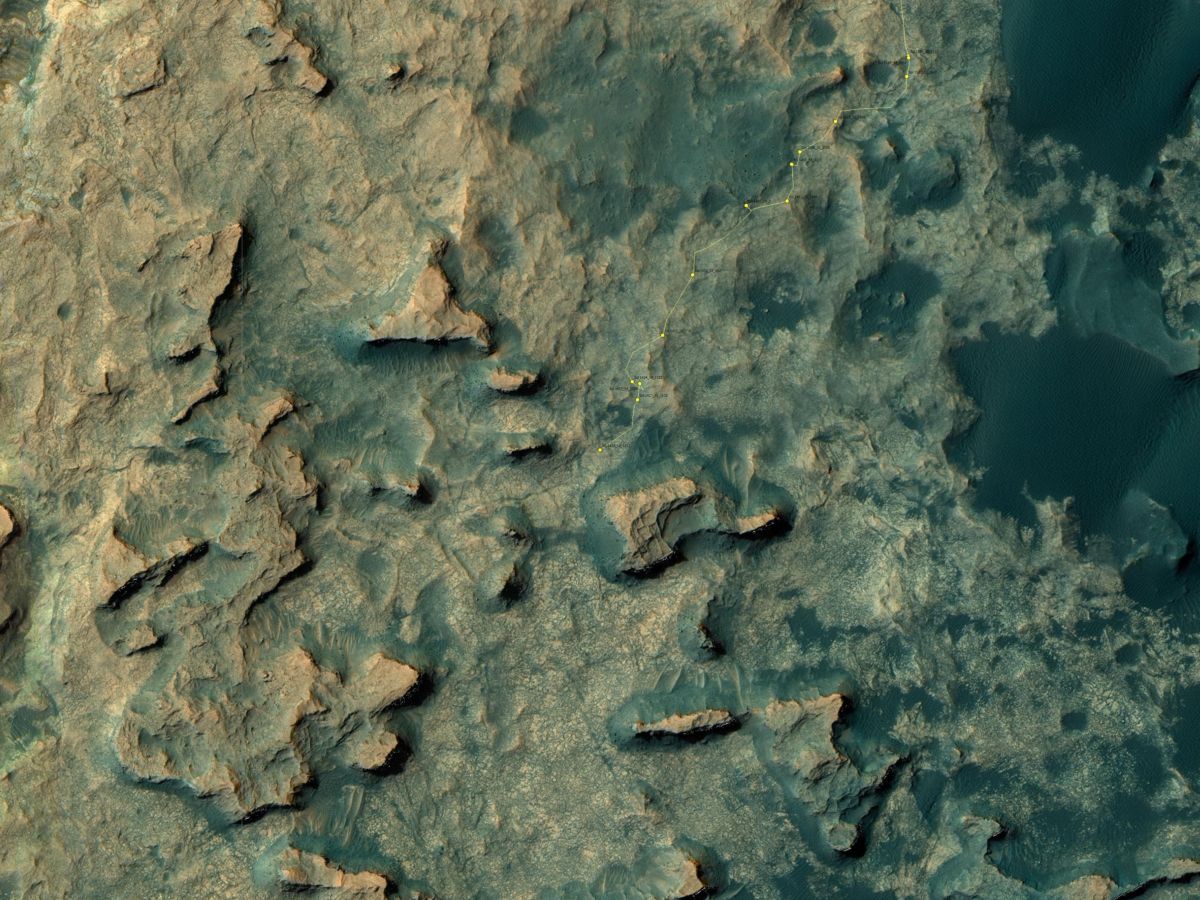
Click on this map to enlarge the route driven by NASA’s Mars rover Curiosity through the 1428 Martian day, or sol, of the rover’s mission on Mars (August, 12, 2016).
Numbering of the dots along the line indicate the sol number of each drive.
North is up. From Sol 1427 to Sol 1428, Curiosity had driven a straight line distance of about 136.95 feet (41.74 meters).
Since touching down in Bradbury Landing in August 2012, Curiosity has driven 8.47 miles (13.63 kilometers).
The base image from the map is from the High Resolution Imaging Science Experiment Camera (HiRISE) in NASA’s Mars Reconnaissance Orbiter.
Image Credit: NASA/JPL-Caltech/Univ. of Arizona
In an earlier communiqué from Lauren Edgar, a research geologist at the USGS Astrogeology Science Center, based on recent Mastcam imagery, “the view ahead should be quite scenic as we drive through the Murray Buttes!”
 Posted in Space News

