 By
By  May 13th, 2023
New drill site. Curiosity Front Hazard Avoidance Camera photo acquired on Sol 3823, May 9, 2023.
Image credit: NASA/JPL-Caltech
NASA’s Curiosity Mars rover at Gale crater is now performing Sol 3827 tasks.
The rover team reports successful drilling of a new hole on the Ubajara target.
Catherine O’Connell-Cooper, a planetary geologist at the University of New Brunswick; Fredericton, New Brunswick, Canada reports: “Drilling campaigns force us to sit and stop, whilst the ‘Ubajara’ drill sample is analyzed.” This takes a week or two, depending on the types of analysis that Chemistry & Mineralogy X-Ray Diffraction/X-Ray Fluorescence Instrument (CheMin) and the Sample Analysis at Mars (SAM) Instrument Suite chose to do.
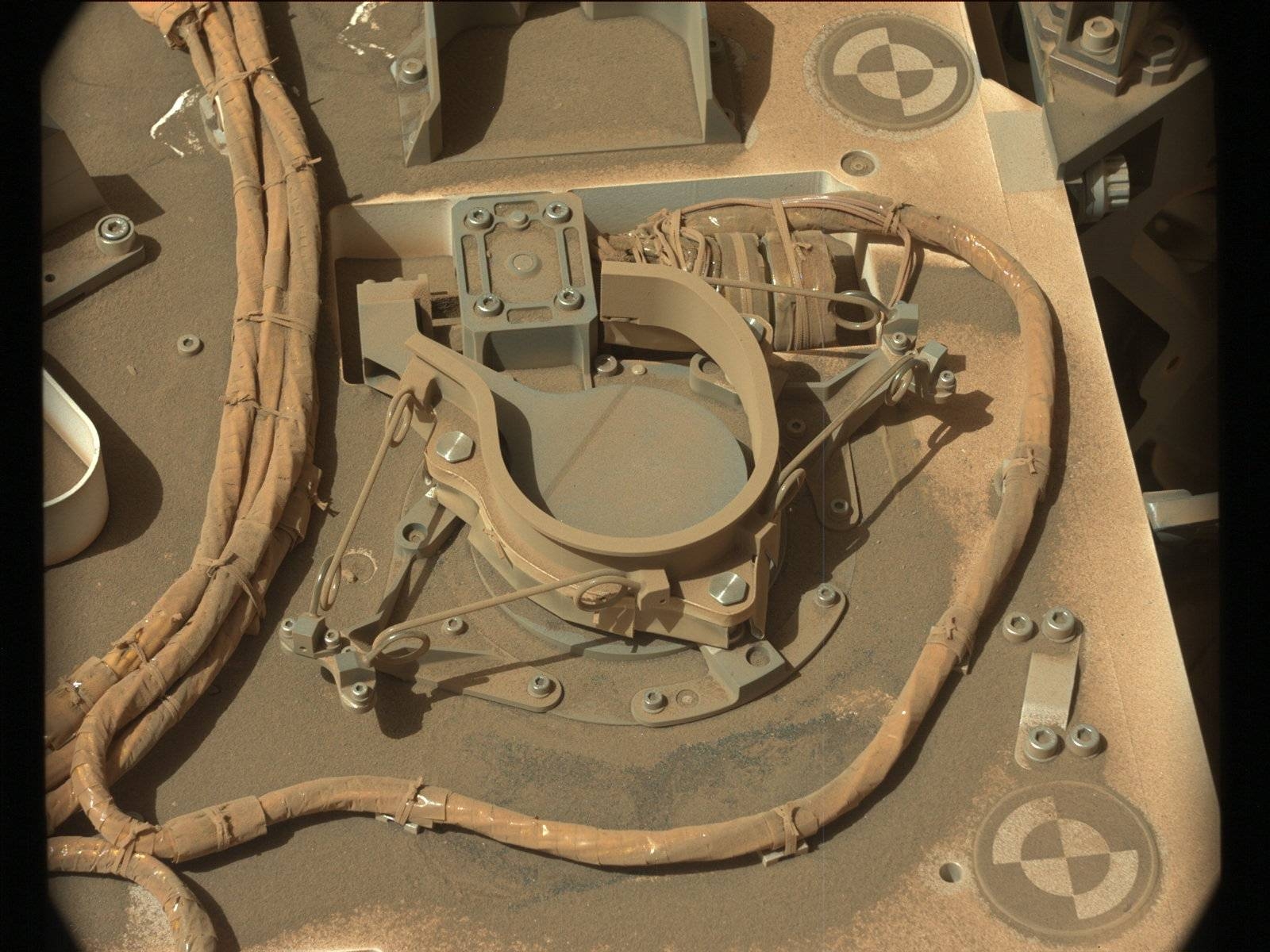
Curiosity Mast Camera Left image acquired on Sol 3825, May 11, 2023.
Image credit: NASA/JPL-Caltech/MSSS
Busy and power hungry
“This might sound like we are sitting quietly, just waiting but drill campaigns are furiously busy and ‘power hungry,’” O’Connell-Cooper notes.
CheMin planned the first part of their analysis last Wednesday, later adding a second set of analysis, integrating over the drilled “Ubajara” sample.
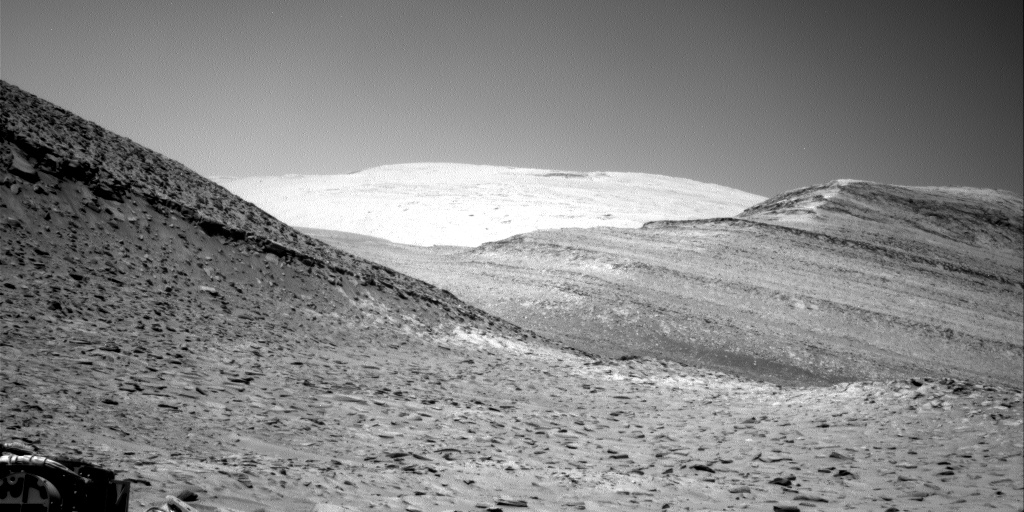
Curiosity Right B Navigation Camera photo acquired on Sol 3825, May 11, 2023.
Image credit: NASA/JPL-Caltech
SAM will do a “preconditioning” activity, which sets SAM up for analysis next week. These activities are power intensive, which constrains what geology and environmental scientists can fit into the plan, O’Connell-Cooper adds.
In an earlier report, Ashley Stroupe, a mission operations engineer at NASA’s Jet Propulsion Laboratory, explains: “Normally we take images of the CheMin inlet immediately before and after sample drop-off. This time we are doing the sample drop-off at night in order to minimize the time between dropping off and analysis. As a result, we have to take the images of the inlet outside of the arm activities. After a nap, Curiosity wakes up to drop off the sample to CheMin for an overnight analysis.”
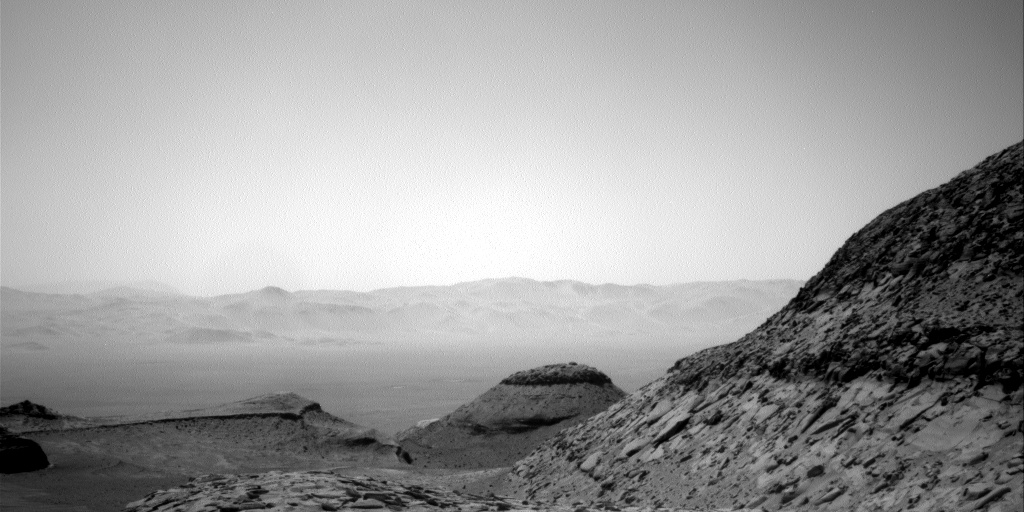
Curiosity Right B Navigation Camera photo acquired on Sol 3825, May 11, 2023.
Image credit: NASA/JPL-Caltech
“Science is very anxious to see how this sample differs from Tapo Caparo,” Stroupe points out, which was about 80 feet (25 meters) lower in elevation than the Ubajara location.
Small, raised resistant features
“Often, we leave a workspace with regret,” O’Connell-Cooper notes, as “there are only so many hours in a given day, and even though a given sol (day) on Mars is longer than one on Earth, we almost always identify more targets than we can possibly fit in!”

Curiosity MAHLI image of “Ilha Grande.”
Image credit: NASA/JPL-Caltech/MSSS.
So geologists are taking the opportunity to analyze everything that the robot’s Chemistry and Camera (ChemCam) can reach.
A newly scripted plan focused on small raised resistant features.
Hard to target
Earlier last week, the Alpha Particle X-Ray Spectrometer (APXS) analyzed a really small nodule feature at “Ilha Grande,” and there was interest in analyzing this target with ChemCam’s Laser Induced Breakdown Spectroscopy (LIBS) instrument, which is well suited to hitting these types of targets.
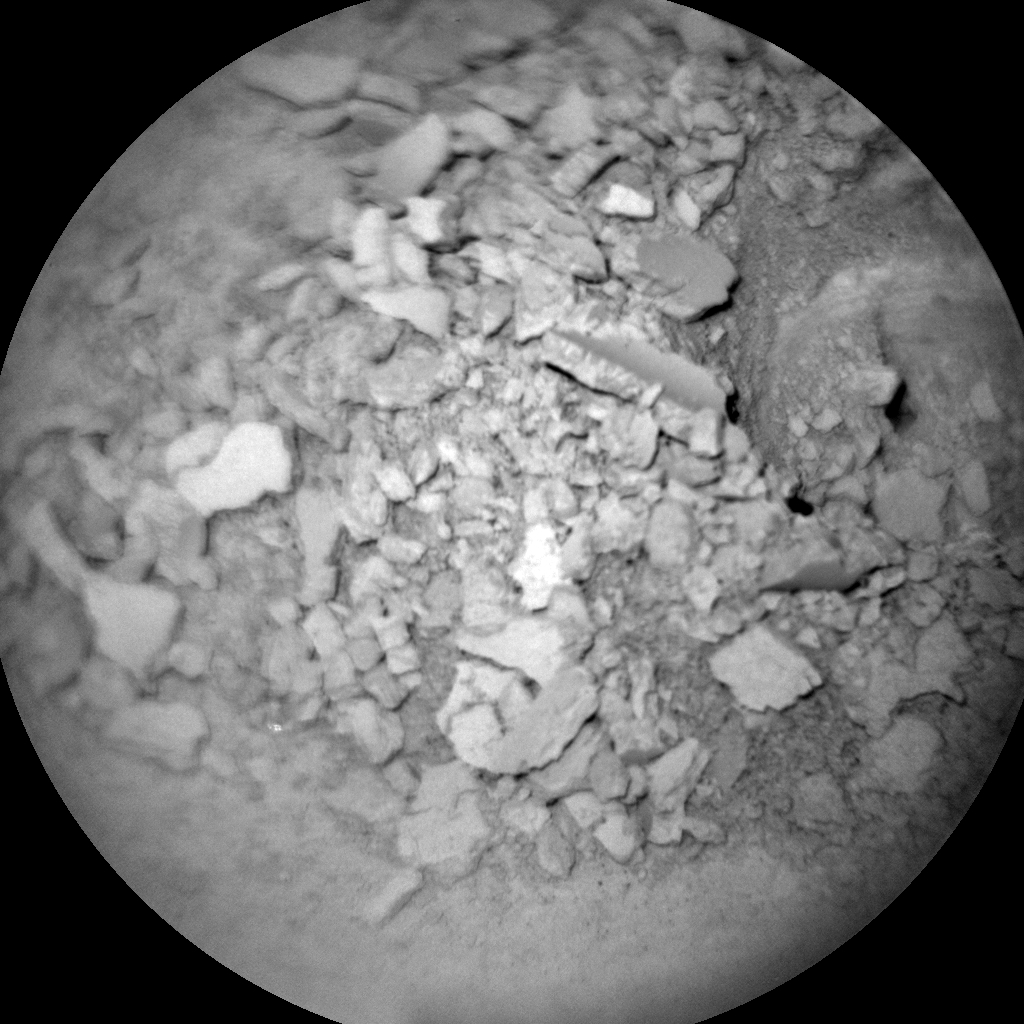
Curiosity Chemistry & Camera (ChemCam) Remote Micro-Imager (RMI) photo acquired on Sol 3825, May 11, 2023.
Image credit: NASA/JPL-Caltech/LANL
“ChemCam will use LIBS on Ilha Grande and a nearby larger mass of similar material (“Tucuma”) (which was too rough to analyze with APXS as it posed a danger to the instrument) in this plan,” O’Connell-Cooper explains. “The raised features are so small (Ilha Grande is 1 centimeter at its widest point) that they are hard to target with any great confidence, so targeting this early in our Ubajara stop will allow them to be refined and repeated if necessary. Mastcam will also image both ChemCam targets.”
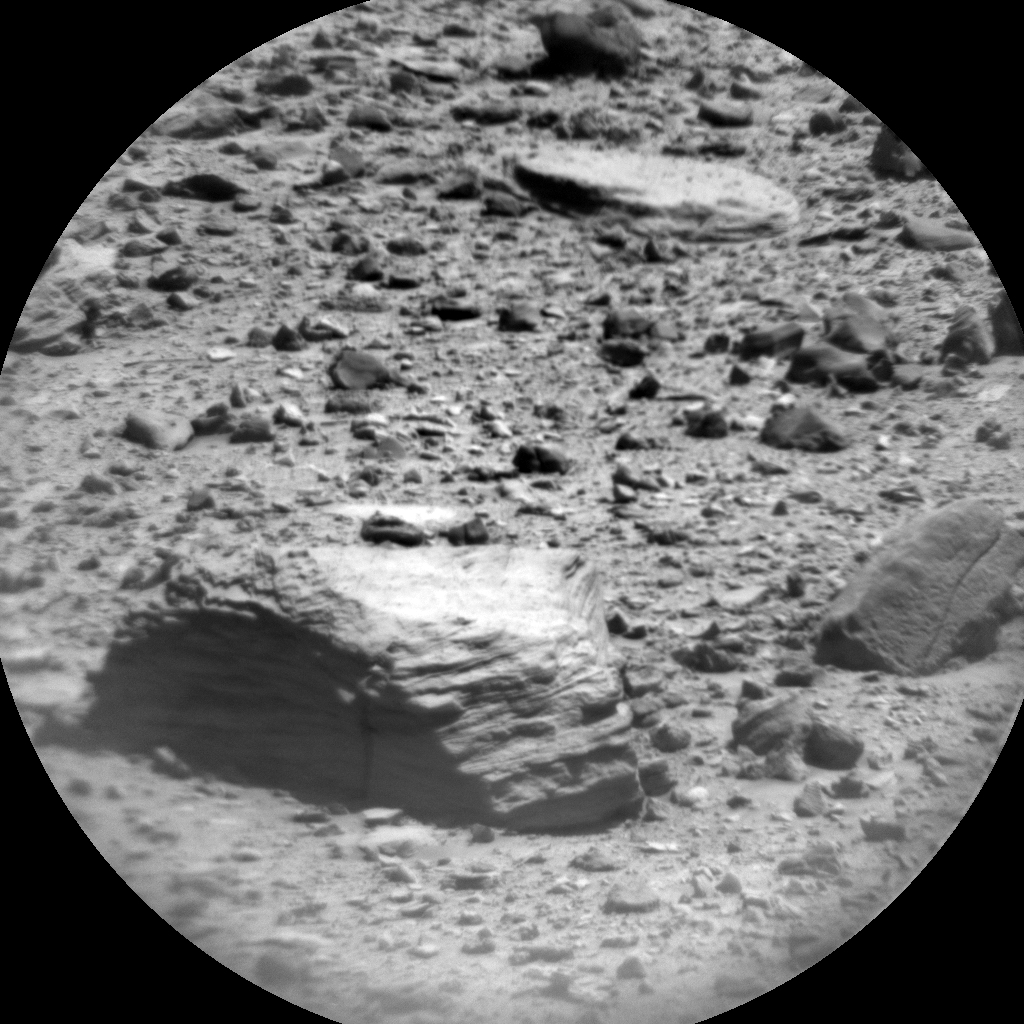
Curiosity Chemistry & Camera (ChemCam) Remote Micro-Imager (RMI)
photo taken on Sol 3826, May 12, 2023.
Image credit: NASA/JPL-Caltech/LANL
Change detection
In parallel to the geological themed part of the plan, the environmental group also uplinked several environmental activities.
“Mastcam will take two change detection images. These are typically done when we are stopped in a place for a few days. Taking images at the same time of day on a number of consecutive days allows us to see how much sediment is moving in our workspace, giving us an idea of wind directions and strengths,” O’Connell-Cooper reports.
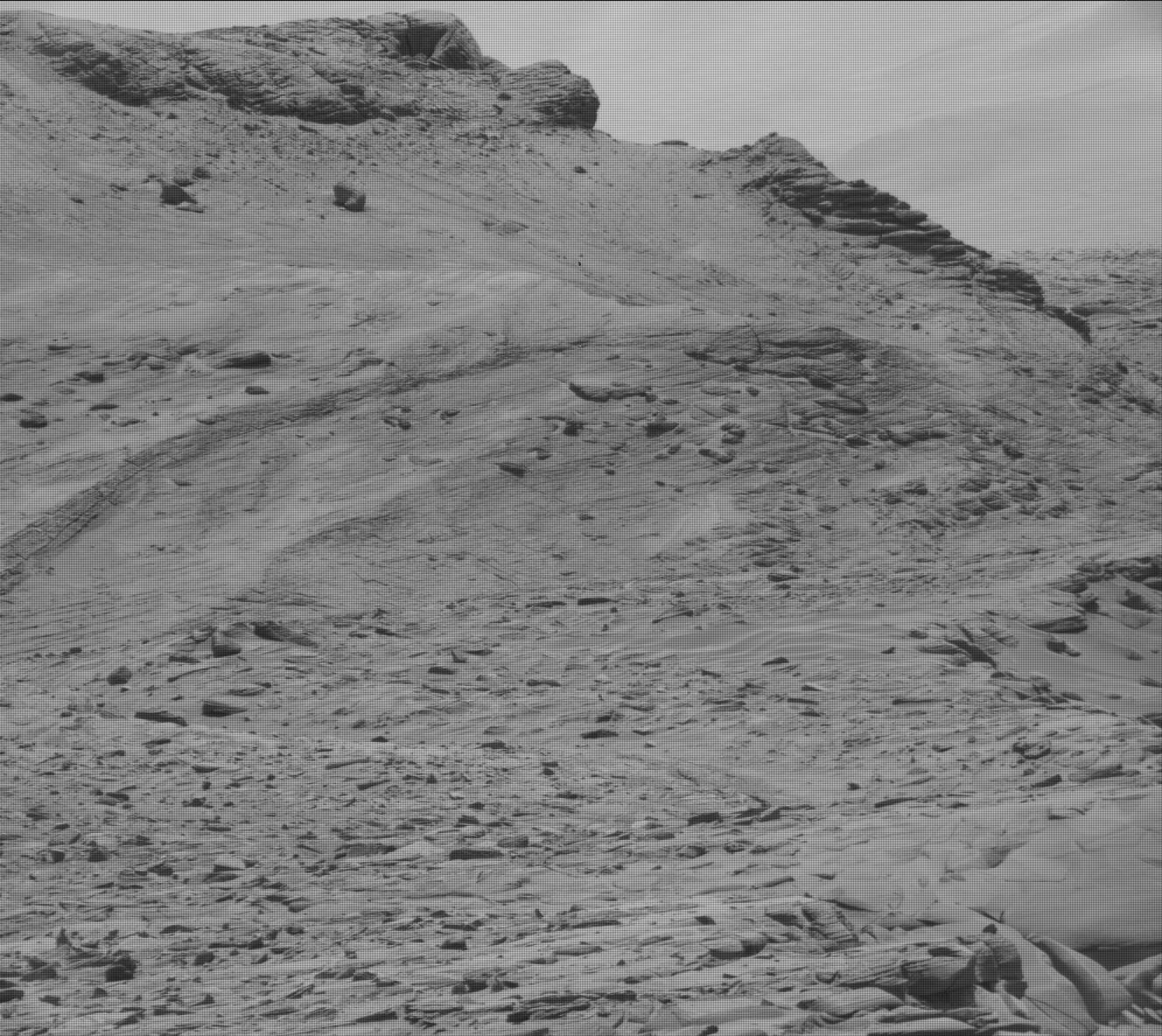
Curioisty Mast Camera Right photo taken on Sol 3824, May 10, 2023.
Image credit: NASA/JPL-Caltech/MSSS
Navcam will also look for indirect evidence of winds, through “dust devil” movies that can also tell researchers about wind direction and strength.
Mastcam will take a “crater rim extinction” image and a full tau measurement, to measure dust both within the crater and overhead in the atmosphere, whilst Navcam will survey clouds above the rover.
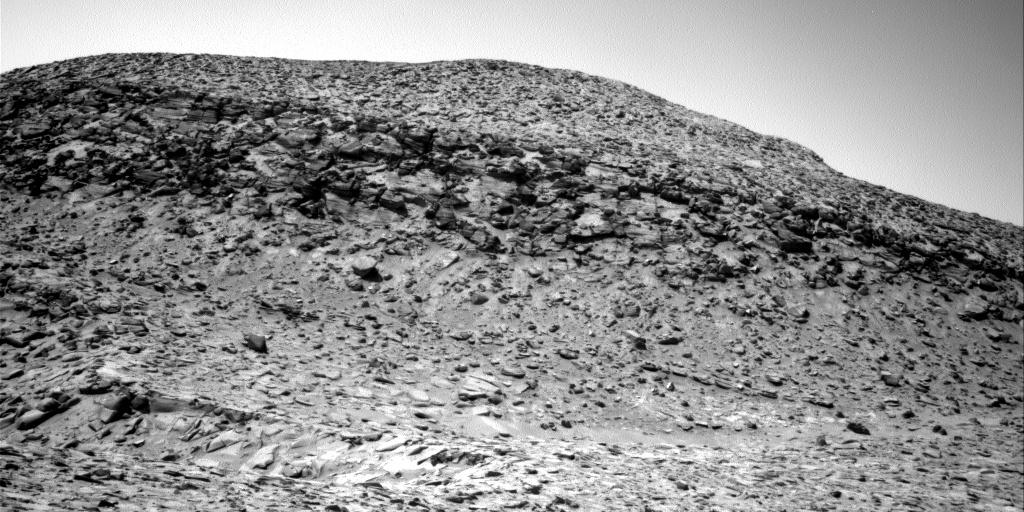
Curiosity Right B Navigation Camera photo acquired on Sol 3825, May 11, 2023.
Image credit: NASA/JPL-Caltech
The environmental portion of the plan is rounded out by Rover Environmental Monitoring Station (REMS) and Dynamic Albedo of Neutrons (DAN) activities, looking at temperatures (REMS) and potential traces of hydrogen (DAN), O’Connell-Cooper concludes.
 Posted in Space News

