 By
By  May 10th, 2016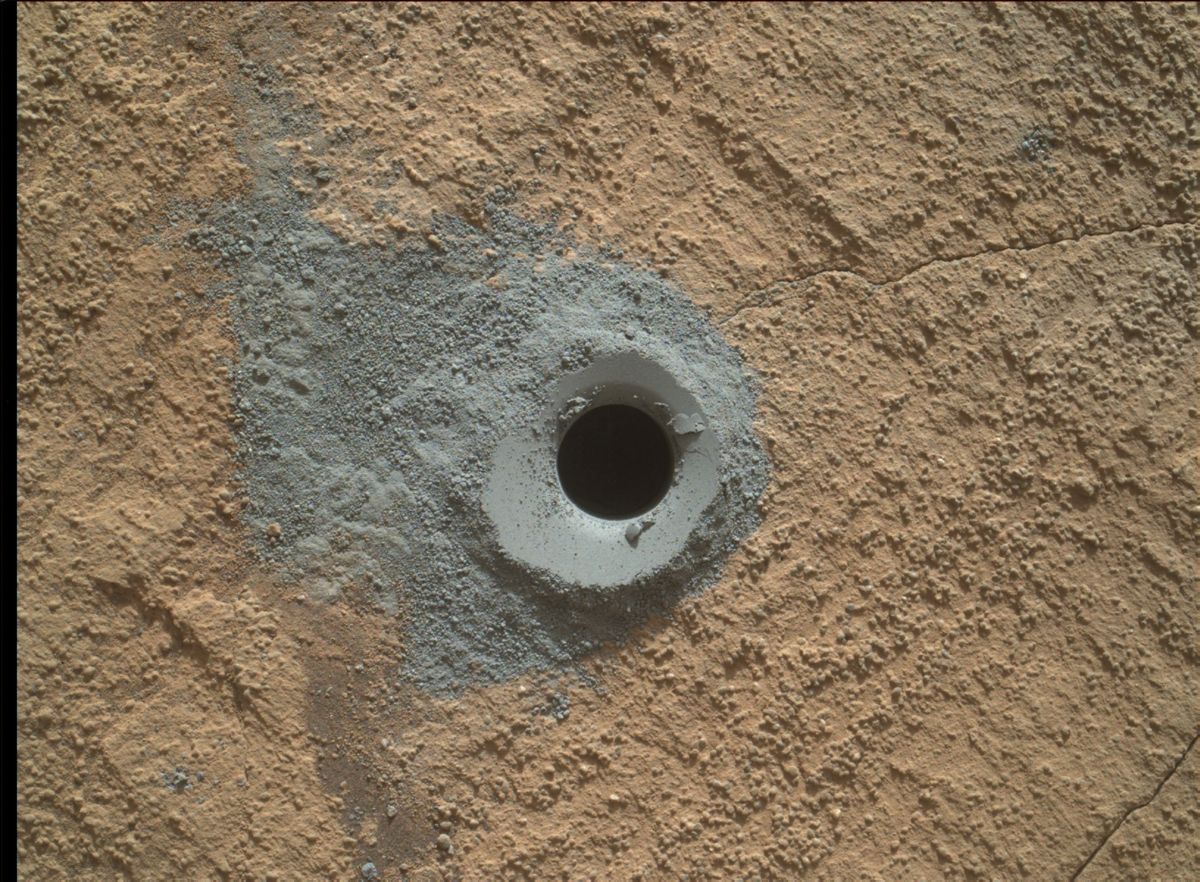
NASA’s Mars rover Curiosity acquired this image using its Mars Hand Lens Imager (MAHLI), located on the turret at the end of the rover’s robotic arm, on May 5, 2016, Sol 1332.
Credit: NASA/JPL-Caltech/MSSS
NASA’s Curiosity is now in Sol 1337, slated to go into an extensive arm workout.
Last weekend, the rover transferred and sieved the “Okoruso” drill sample, and analyzed it with the Chemistry & Mineralogy X-Ray Diffraction/X-Ray Fluorescence Instrument (CheMin).
The plan then called for imaging the drill location, starting by dumping the pre-sieved drill sample. Then use of the robot’s Mastcam was on tap to image the dump pile and drill site, reports Lauren Edgar, a research geologist at the USGS Astrogeology Science Center in Flagstaff, Arizona.
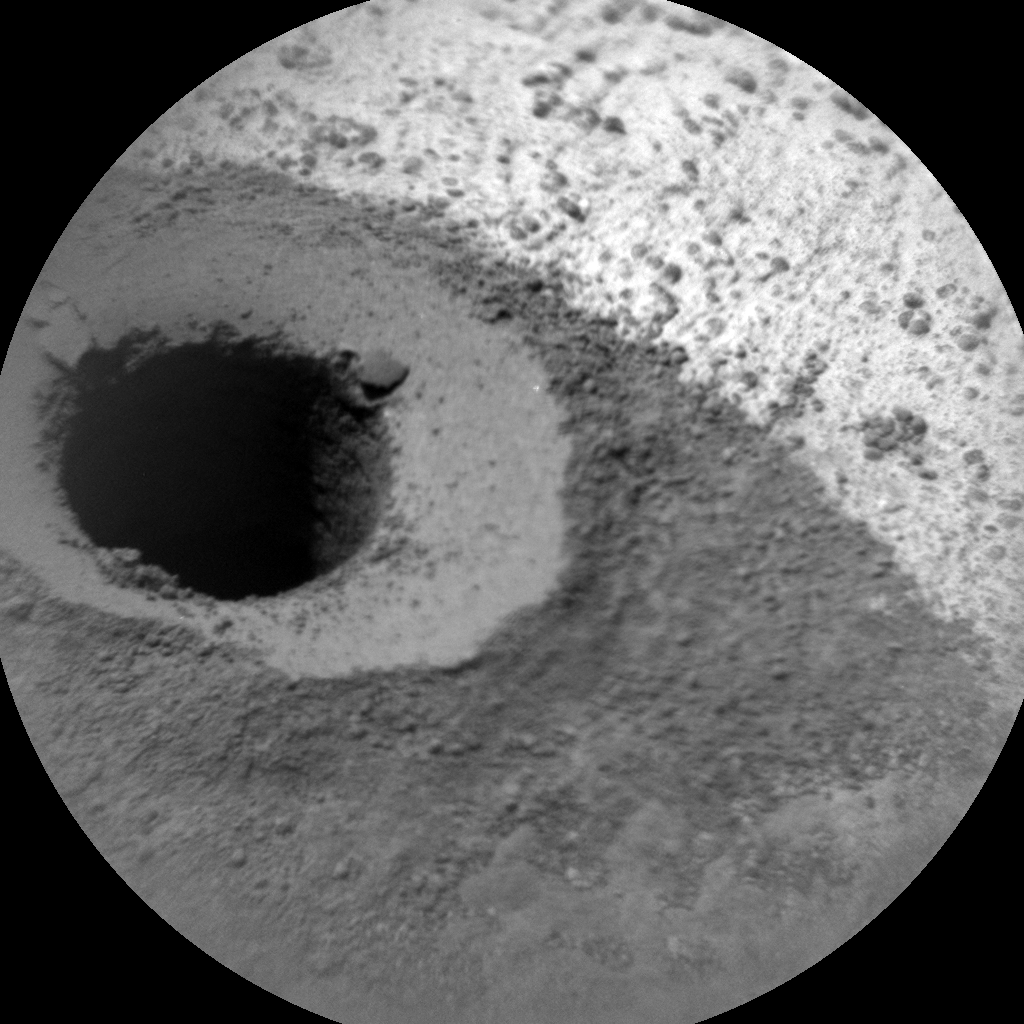
Curiosity ChemCam Remote Micro-Imager took this image on Sol 1336, May 9, 2016.
Credit: NASA/JPL-Caltech/LANLthe pre-sieved drill sample. Then use of the robot’s Mastcam is to image the dump pile and drill site, reports Lauren Edgar, a research geologist at the USGS Astrogeology Science Center in Flagstaff, Arizona.
Dump pile
Next item on the to-do list was to target the drill hole with the Chemistry & Camera (ChemCam) and also characterize a nearby bedrock target named “Ubib,” followed by use of the Mars Hand Lens Imager (MAHLI) to image the dump pile.
MAHLI is to also do some nighttime imaging of the drill hole and “Ubib” under different illumination conditions.
All in all, “that’s already several hours of arm activities, while holding a 66 pound (30 kg) turret at the end,” Edgar adds.
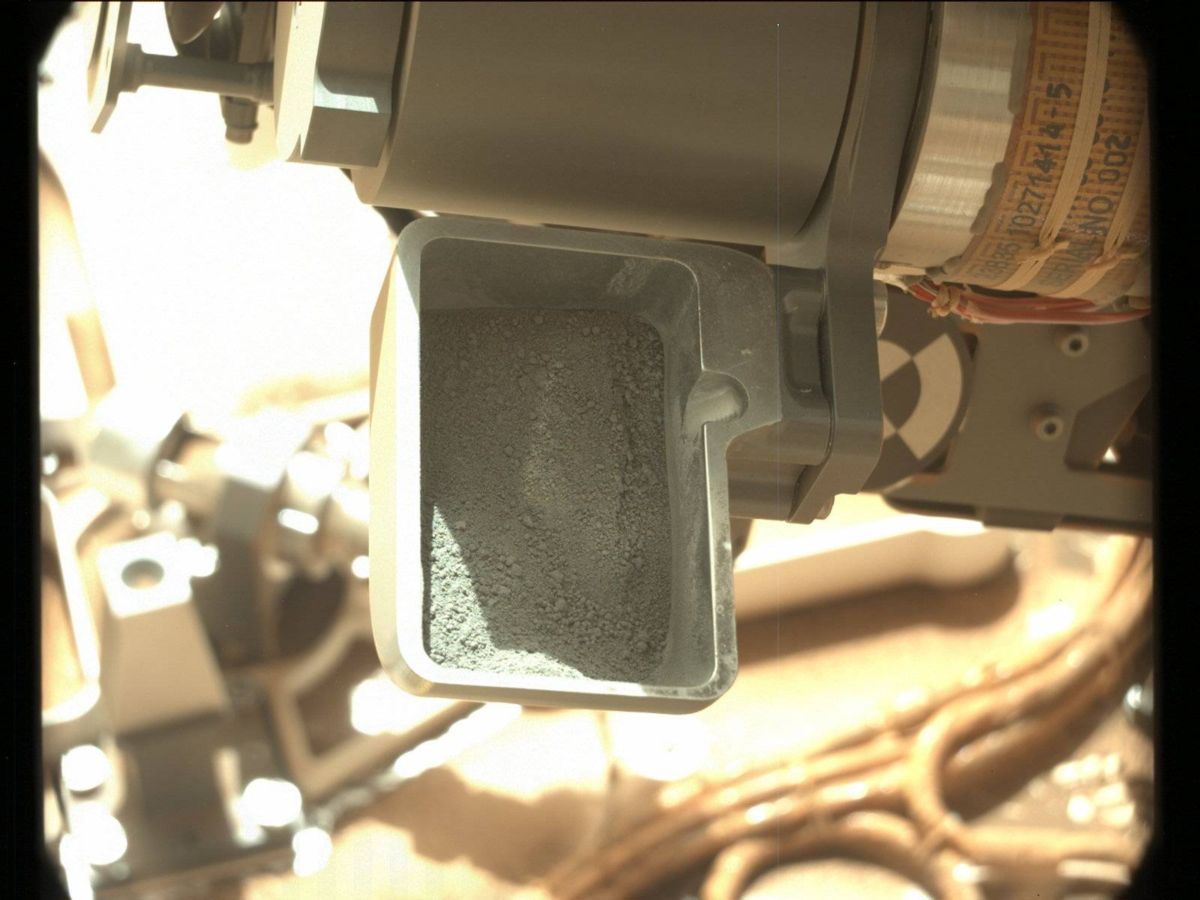
This image was taken by Curiosity’s Mastcam Left on Sol 1334, May 7, 2016.
Credit: NASA/JPL-Caltech/MSSS
Time for a selfie
After such an intense workout, what’s next?
“Time for a selfie,” Edgar says. Curiosity will take a MAHLI self portrait to document the drill site.
“But unlike most selfies, Curiosity’s selfie requires 60 different images, and will take nearly an hour to acquire. Finally, we’ll give the arm a break, and Curiosity will take several ChemCam and Mastcam observations of the drill tailings in the afternoon.
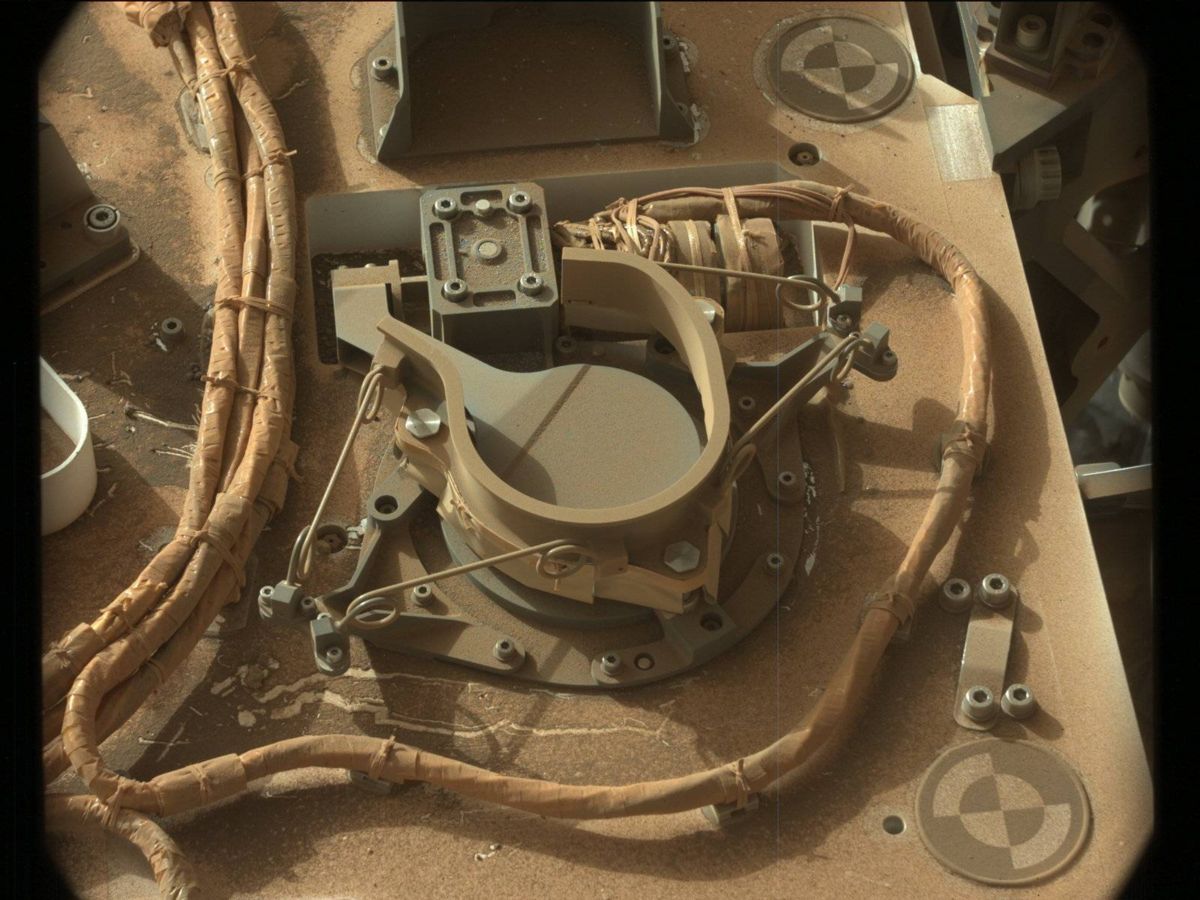
Curiosity Mastcam Left image taken on Sol 1334, May 7, 2016.
Credit NASA JPL Caltech MSSS
“Talk about a good workout…for a lot of great science,” Edgar concludes.
 Posted in Space News

