 By
By  November 3rd, 2022
Curiosity’s location at Sol 3640. Distance driven to that sol: 17.95 miles/28.89 kilometers.
Credit: NASA/JPL-Caltech/Univ. of Arizona
NASA’s Curiosity Mars rover at Gale Crater is now wrapping up Sol 3641 duties.
The rover has arrived at a spectacular workspace, “but what made it spectacular – rocks – is what also made it tricky,” reports Michelle Minitti, a planetary geologist at Framework in Silver Spring, Maryland.
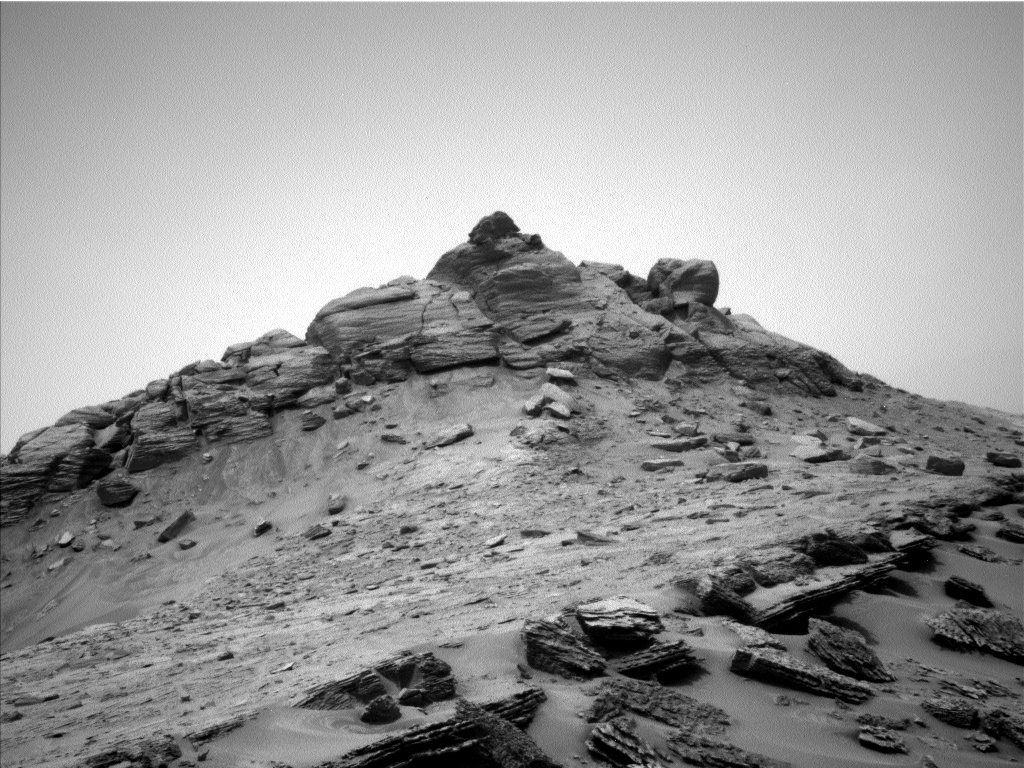
Curiosity Left B Navigation Camera image taken on Sol 3640, November 2, 2022.
Credit: NASA/JPL-Caltech
Stabilize the rover
“Our left front wheel was propped up just enough on one of the lovely and interesting rocks to make it unsafe to unstow the arm,” Minitti adds. “Fortunately, the rover planners were confident in finding a way to reposition the rover to stabilize us enough to get the arm out, so that [a] small maneuever was added to today’s plan [Sol 3639]. Our fingers are crossed we have better luck tomorrow!”
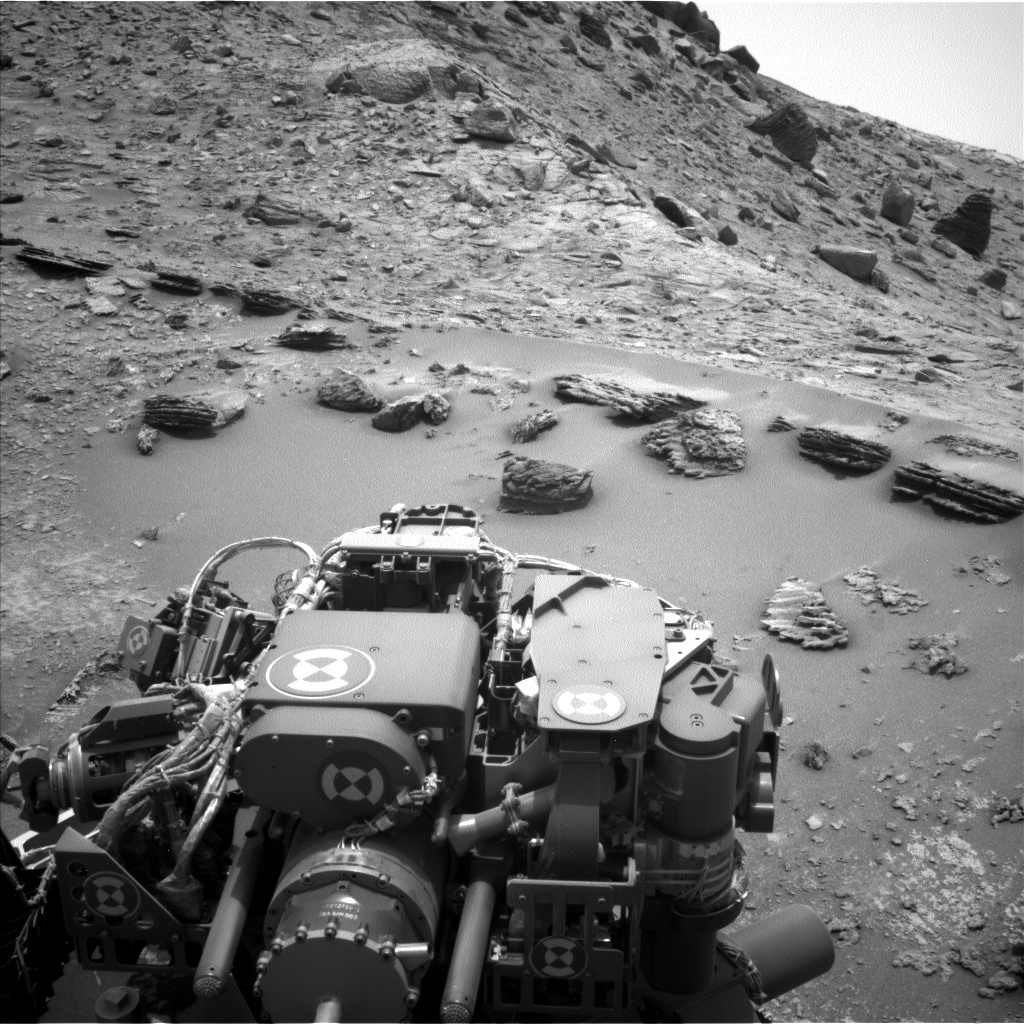
Curiosity Left B Navigation Camera image taken on Sol 3640, November 2, 2022.
Credit: NASA/JPL-Caltech
While the robot could not apply the Mars Hand Lens Imager (MAHLI) or the Alpha Particle X-Ray Spectrometer (APXS) to the rocks ahead of the rover, Minitti said “we had no restrictions, short of overworking uplink teams, on using Mastcam and ChemCam [Chemistry and Camera]. “We took full advantage of our additional time to image our amazing surroundings.”
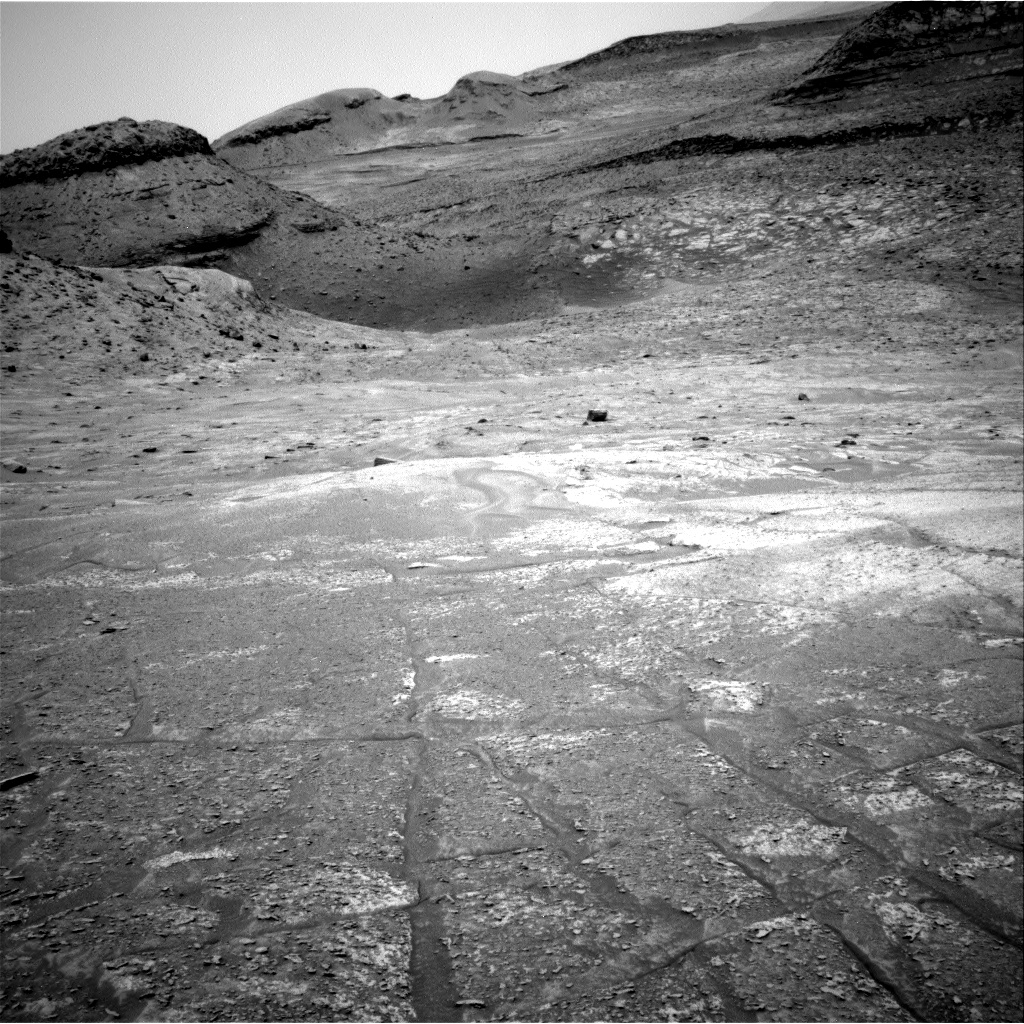
Curiosity Right B Navigation Camera image acquired on Sol 3640, November 2, 2022.
Credit: NASA/JPL-Caltech
Resistant ridges
A ChemCam raster was planned along one of the notable resistant ridges that span the workspace blocks, on target “Saracura.”
The ChemCam Remote Micro-Imager (RMI) was used to image a stack of the layers at the edge of the marker band, at target “Curecurema.”
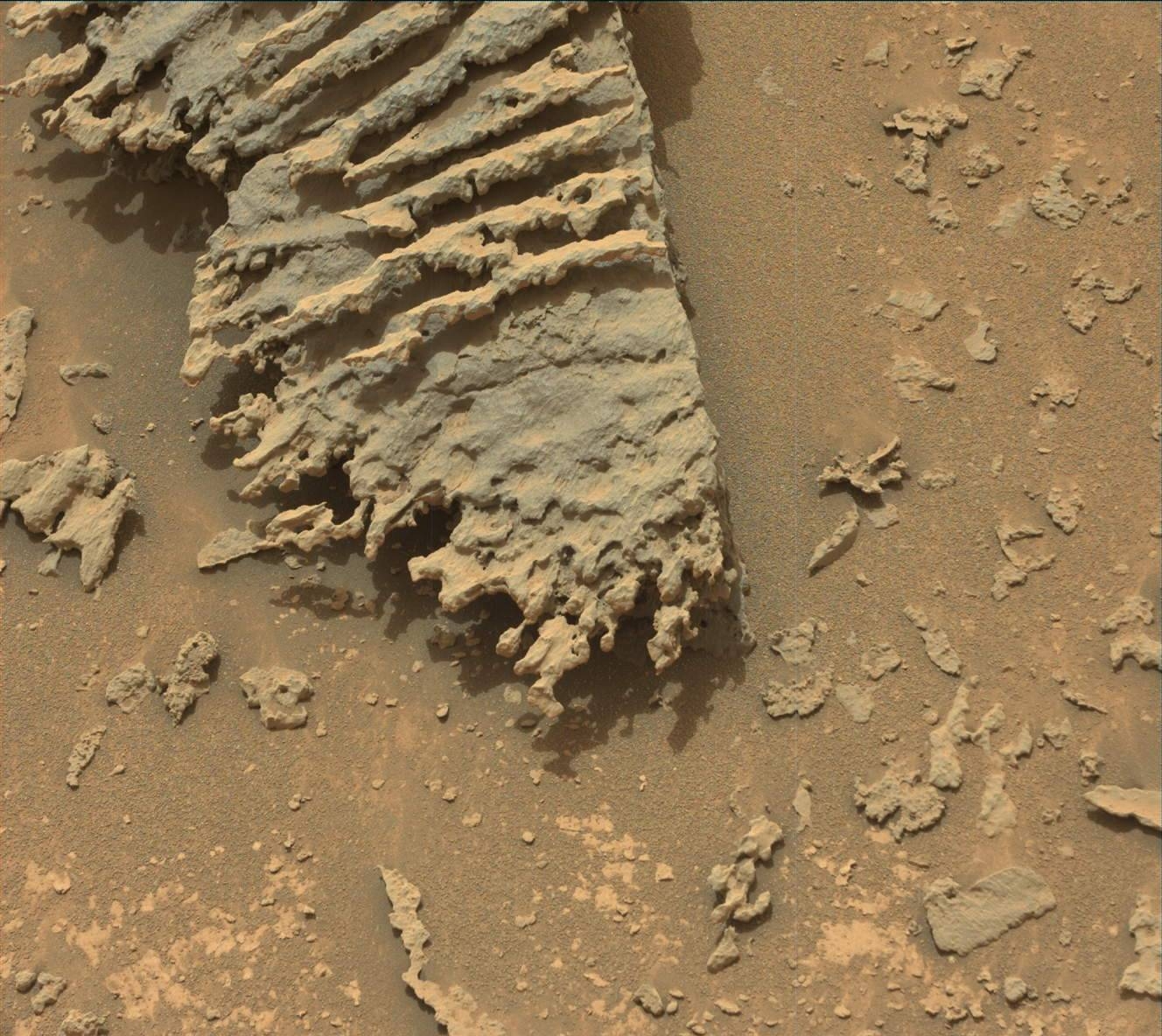
Curiosity Mast Camera Left image taken on Sol 3640, November 2, 2022.
Credit: NASA/JPL-Caltech/MSSS
“Layer-parallel imaging like this is a terrific way to interrogate the mechanisms that formed those layers. There were so many interesting textures on the workspace rocks that we could not help but wonder if chemistry had anything to do with them,” Minitti points out.

Curiosity Mast Camera Left image taken on Sol 3640, November 2, 2022.
Credit: NASA/JPL-Caltech/MSSS
Multispectral observations
To investigate this, mission operators planned Mastcam multispectral observations of two targets, “Patua” and “Tucano.” Mastcam was to also cover the scene with multiple large stereo mosaics.
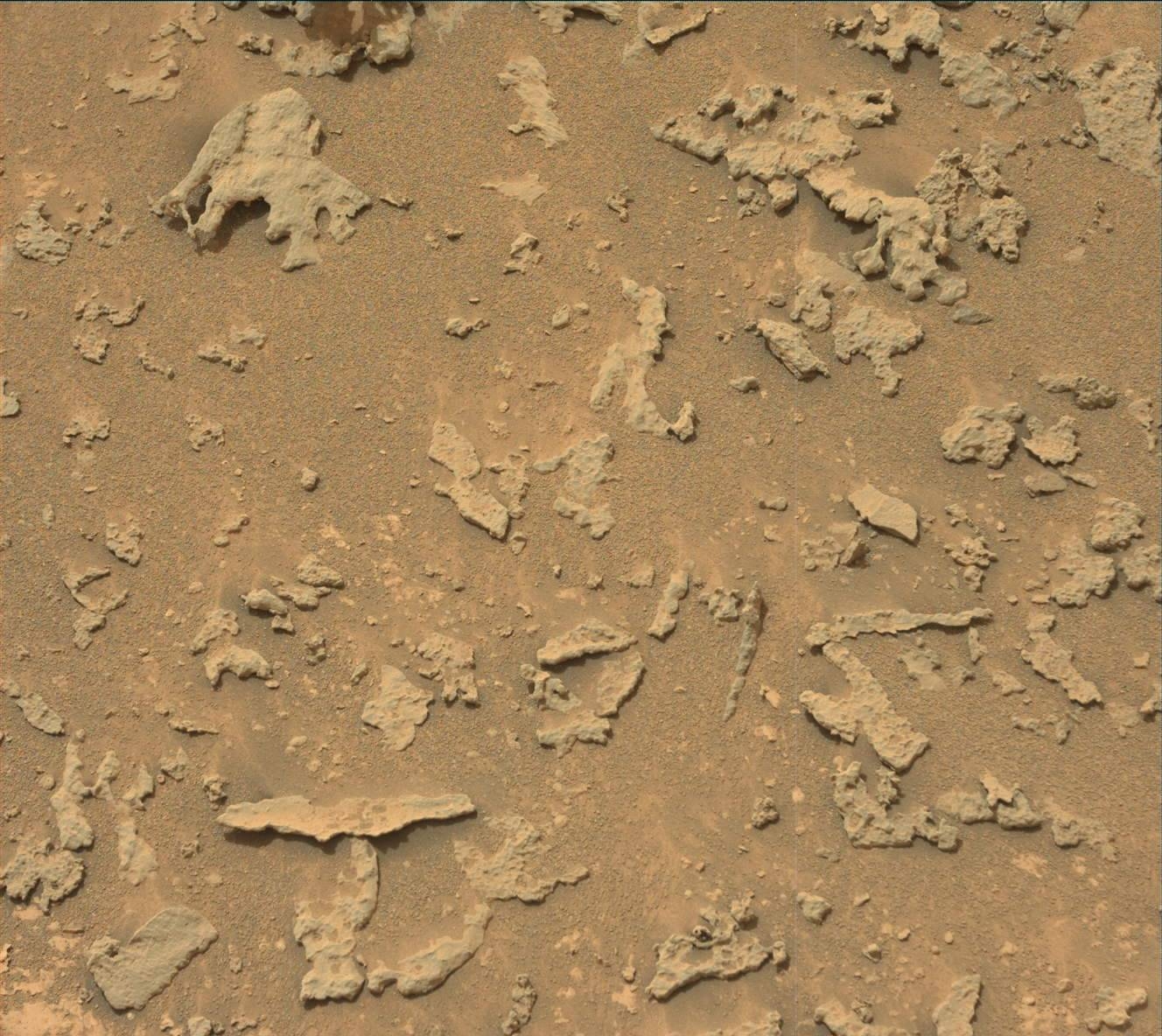
Curiosity Mast Camera Left image taken on Sol 3640, November 2, 2022.
Credit: NASA/JPL-Caltech/MSSS
“One will capture the marker band extending away from us to the south, another will cover the workspace blocks, and a third will image blocks similar to those in the workspace,” Minitti continues, “but out of reach, at target ‘Benevenuto.’”
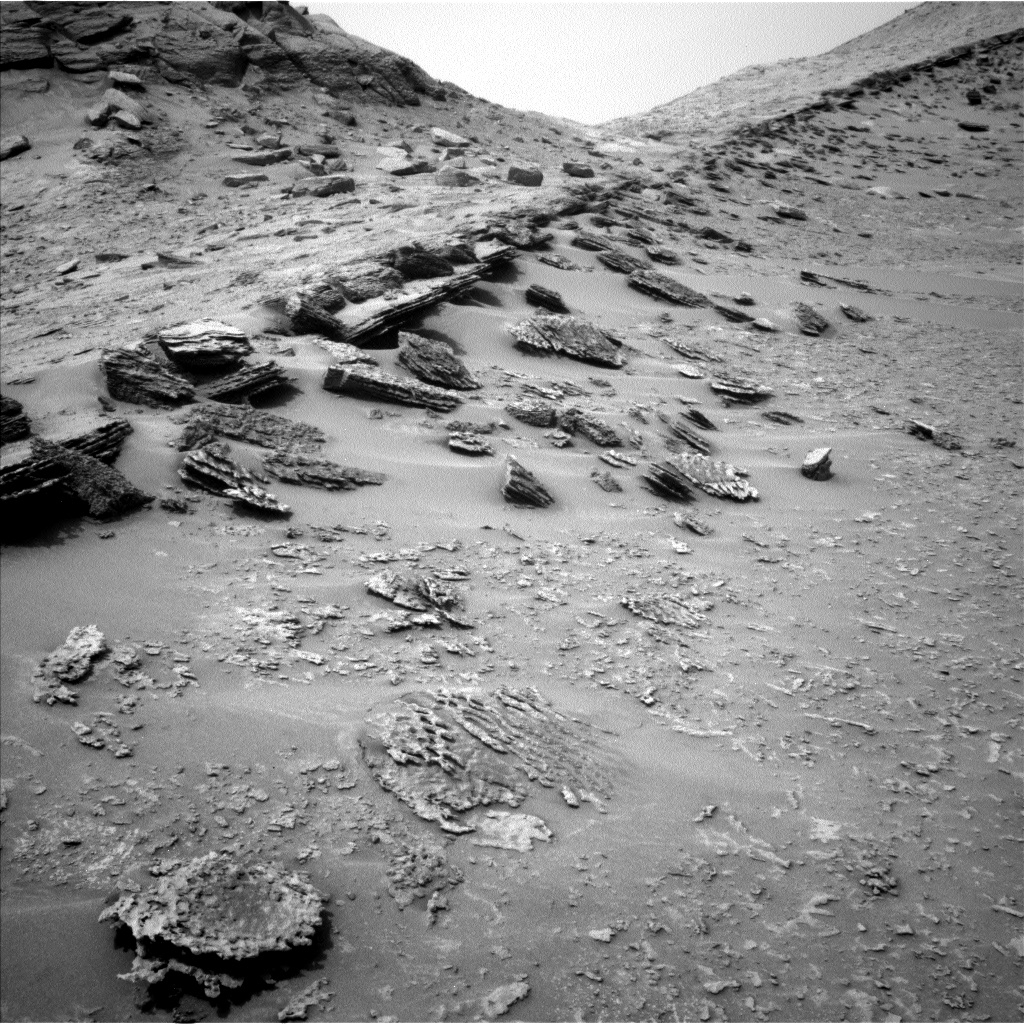
Curiosity Left B Navigation Camera image taken on Sol 3640, November 2, 2022.
Credit: NASA/JPL-Caltech
Curiosity managed time for a Navcam dust devil survey, and Dynamic Albedo of Neutrons (DAN) passive and active measurements before and after the rover was repositioned, respectively. Radiation Assessment Detector (RAD) and use of the Rover Environmental Monitoring Station (REMS) run throughout the plan.
 Posted in Space News

