 By
By  August 2nd, 2016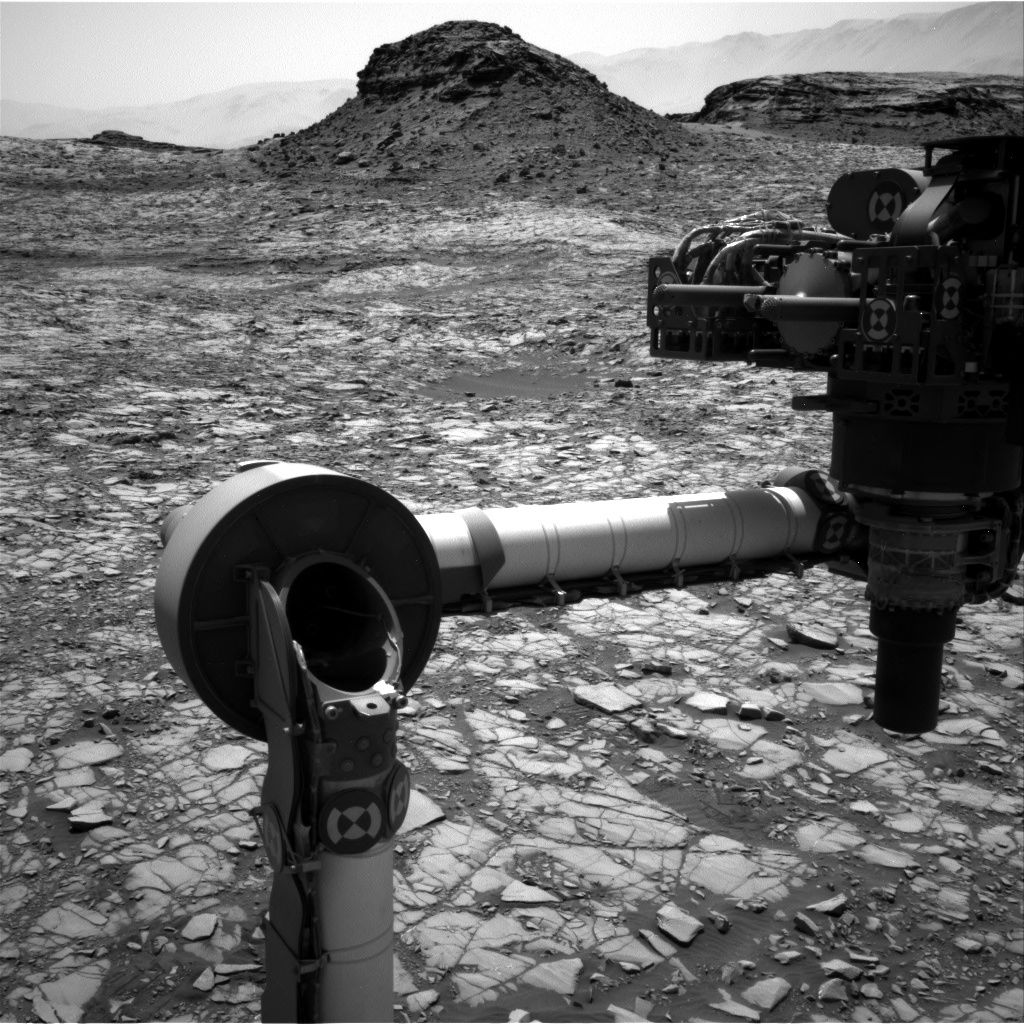
Curiosity Navcam Right B image taken on Sol 1417, August 1, 2016.
Credit: NASA/JPL-Caltech
NASA’s Curiosity rover has just entered Sol 1419 of its exploration of Mars.
A scripted plan now being implemented is focused on setting up the robot for its next drill hole.
“Originally there was going to be no science block at all, but we ended up with a little bit more power than expected,” reports Ryan Anderson, a planetary scientist at the USGS Astrogeology Science Center and a member of the Chemistry & Camera (ChemCam) team on the mission.
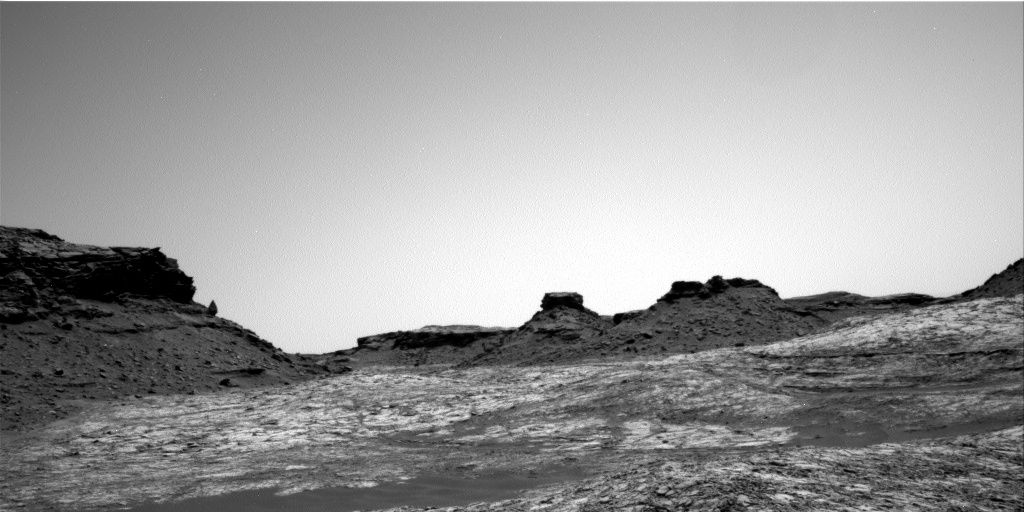
Curiosity Navcam Right B image taken on Sol 1417, August 1, 2016.
Credit: NASA/JPL-Caltech
“So we managed to fit in a ChemCam observation of the expected drill target, called ‘Marimba’ along with Mastcam documentation,” Anderson adds.
The brush off
Once that was done, Curiosity dumped its sieved sample from a previous drill at “Oudam” and did some contact science on Marimba.
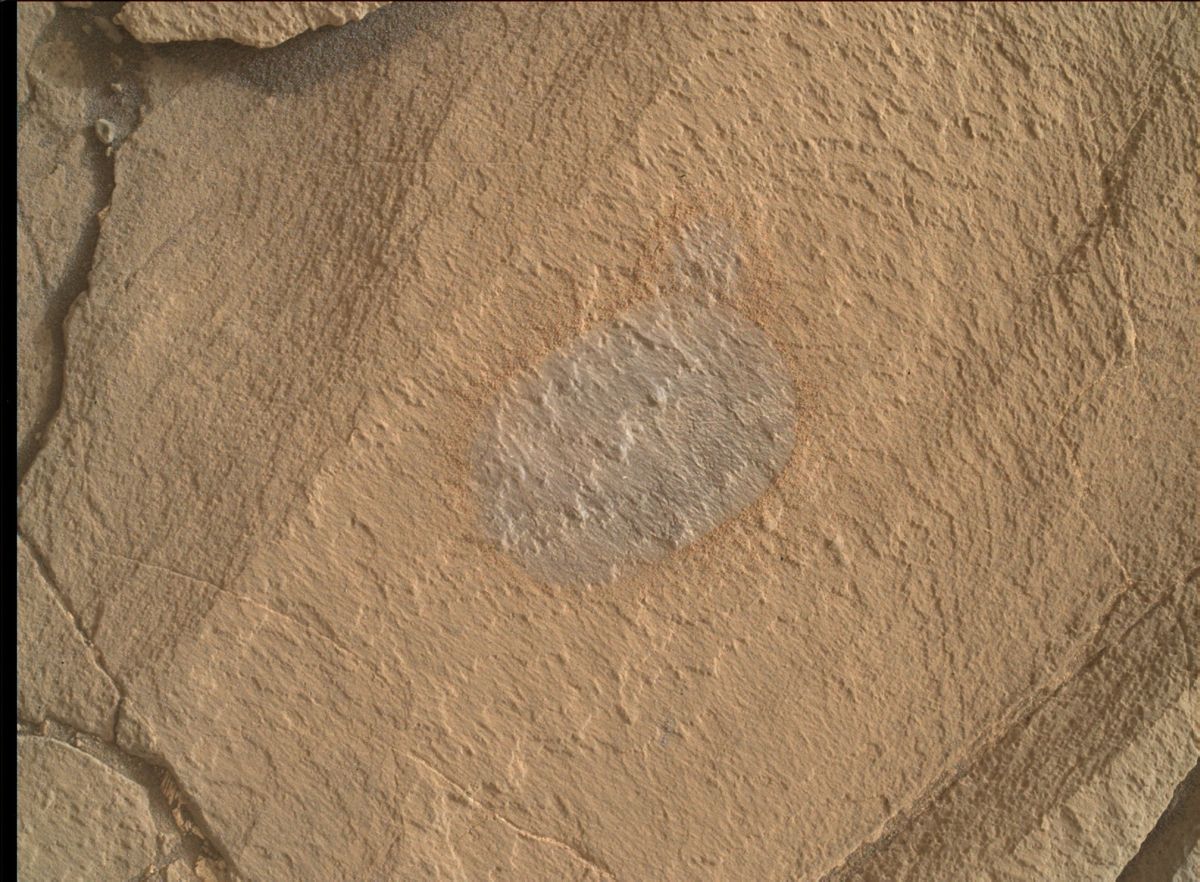
The dust off! NASA’s Mars rover Curiosity acquired this image using its Mars Hand Lens Imager (MAHLI) — located on the turret at the end of the rover’s robotic arm — on August 2, 2016, Sol 1418.
Credit: NASA/JPL-Caltech/MSSS
This included Mars Hand Lens Imager (MAHLI) and Alpha Particle X-Ray Spectrometer (APXS) activities of the drill location before and after brushing the dust off, Mastcam inspection of various rover components, and the “pre-load” test where researchers make sure the rock can handle the pressure exerted by the drill.
“If all of that goes well,” Anderson reports, “we should be able to drill later this week!”
 Posted in Space News

