 By
By  April 30th, 2022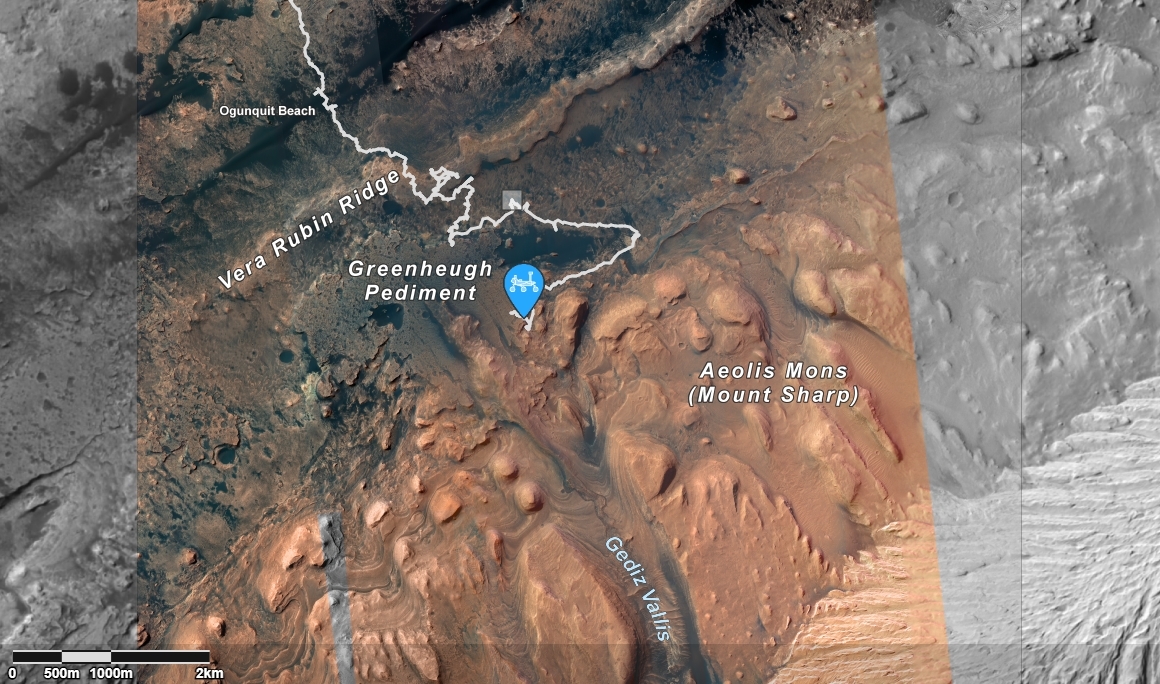
Curiosity’s location as of Sol 3458. Distance driven on this sol: 17.16 miles/27.62 kilometers.
Credit: NASA/JPL-Caltech/Univ. of Arizona
NASA’s Curiosity Mars rover at Gale Crater is now performing Sol 3459 duties.
While angular, pointy rocks have damaged the rover’s wheels since early in its mission, sometimes the wheels damage rocks as the rover drives over them, reports Ken Herkenhoff, a planetary geologist at the USGS Astrogeology Science Center in Flagstaff, Arizona.
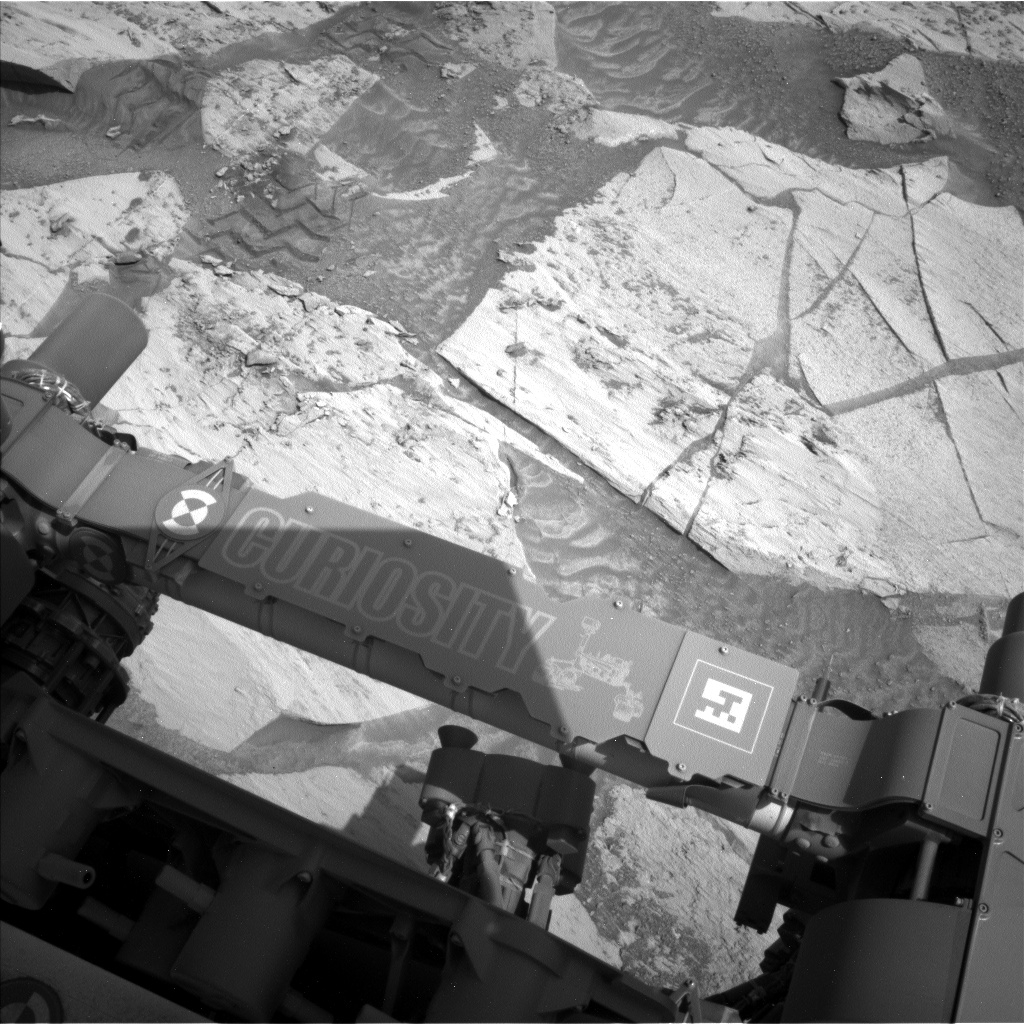
Sometimes Curiosity’s wheels damage rocks as the robot drives over them. As seen especially at the upper left side of this image, the bedrock was scraped and fractured by the rover during the Sol 3456 drive.
This image was taken by Left Navigation Camera on Sol 3456, April 27, 2022.
Credit: NASA/JPL-Caltech
Bedrock was scraped and fractured by the robot during a Sol 3456 drive.
“Unfortunately, that drive did not complete as planned, but the tactical team took advantage of the situation by targeting observations of the freshly-exposed rock surfaces.” Herkenhoff adds.
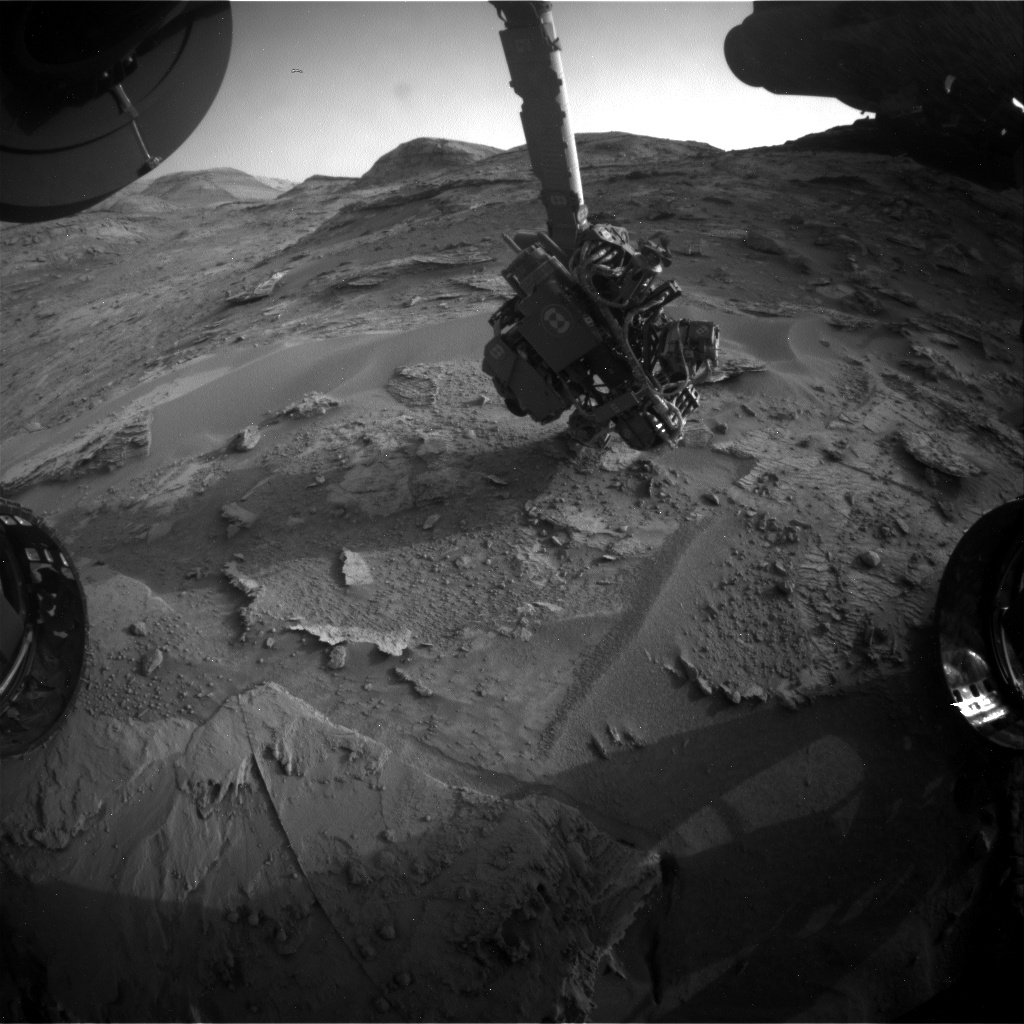
Curiosity Front Hazard Avoidance Camera Right B image taken on Sol 3459, April 30, 2022.
Credit: NASA/JPL-Caltech
Scrape mark
A new plan calls for the Alpha Particle X-Ray Spectrometer (APXS) to be placed on a scrape mark named “Cow Head” to measure its elemental chemistry, then the Mars Hand Lens Imager (MAHLI) was slated to take a full suite of images of the same target.
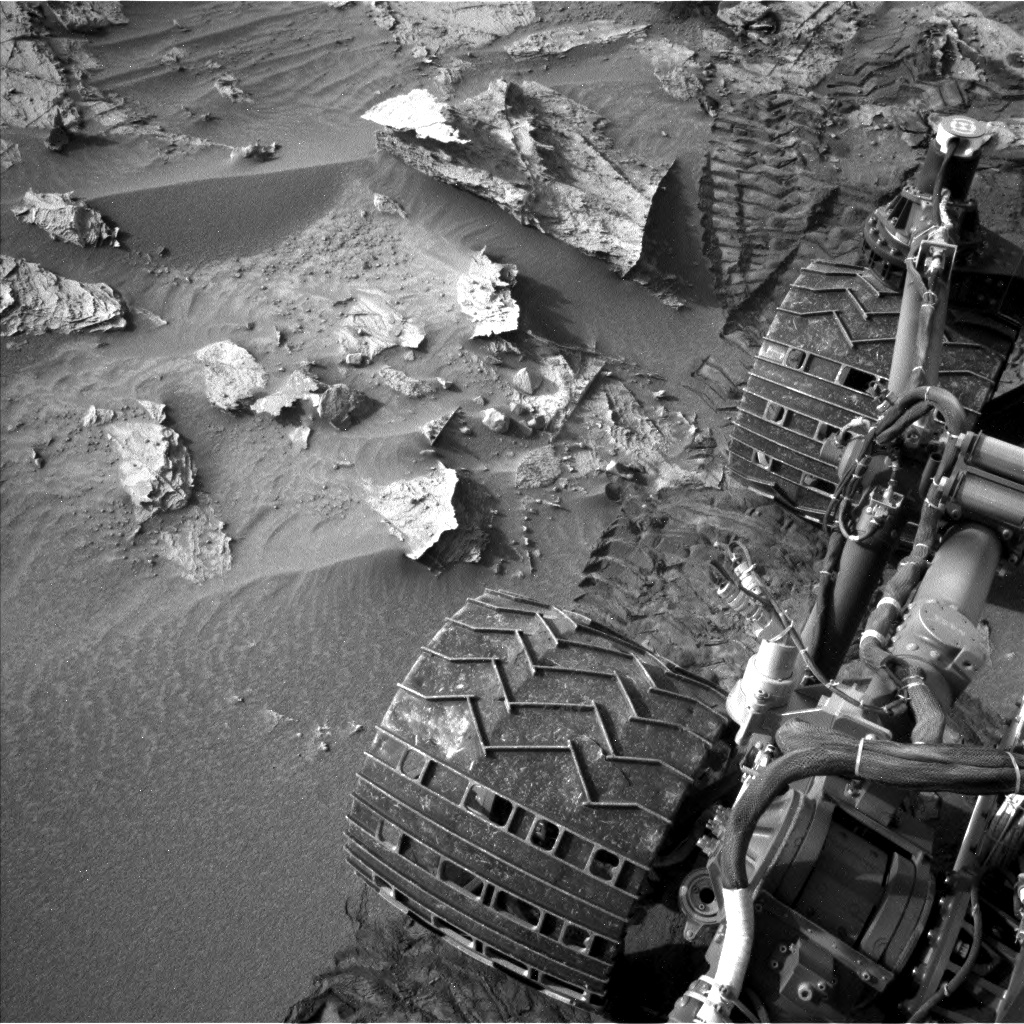
Curiosity Left B Navigation Camera photo taken on Sol 3458, April 29, 2022.
Credit: NASA/JPL-Caltech
“MAHLI will also take some images of a rock fragment ‘Orton Scar’ that was broken off a bedrock slab. Hopefully textural details will be more visible on these fresh faces than on the nearby undisturbed, dustier rocks,” Herkenhoff notes.
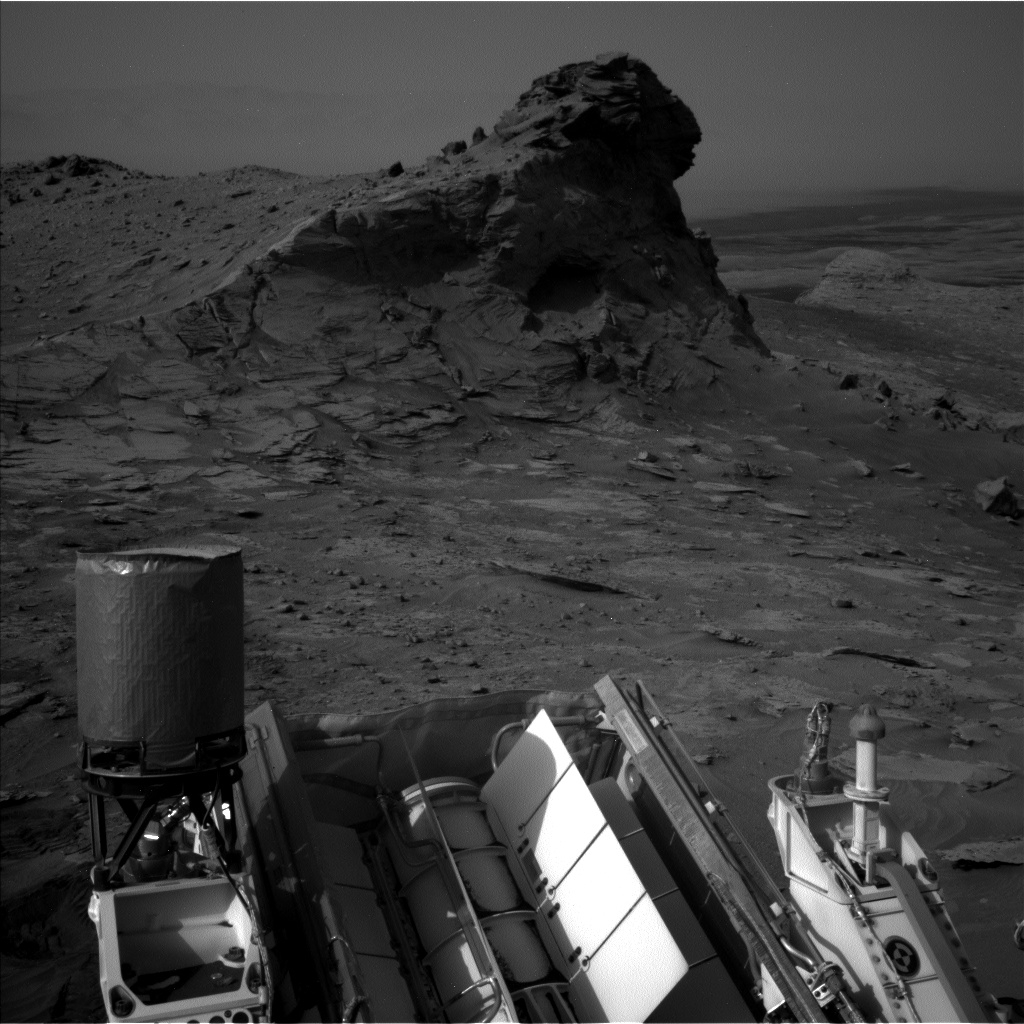
Curiosity Left B Navigation Camera photo taken on Sol 3458, April 29, 2022.
Credit: NASA/JPL-Caltech
Outcrop close-ups
Researchers will also take advantage of Curiosity’s new location to take Mastcam images of Maringma Butte, as the rover is closer to that outcrop than expected.
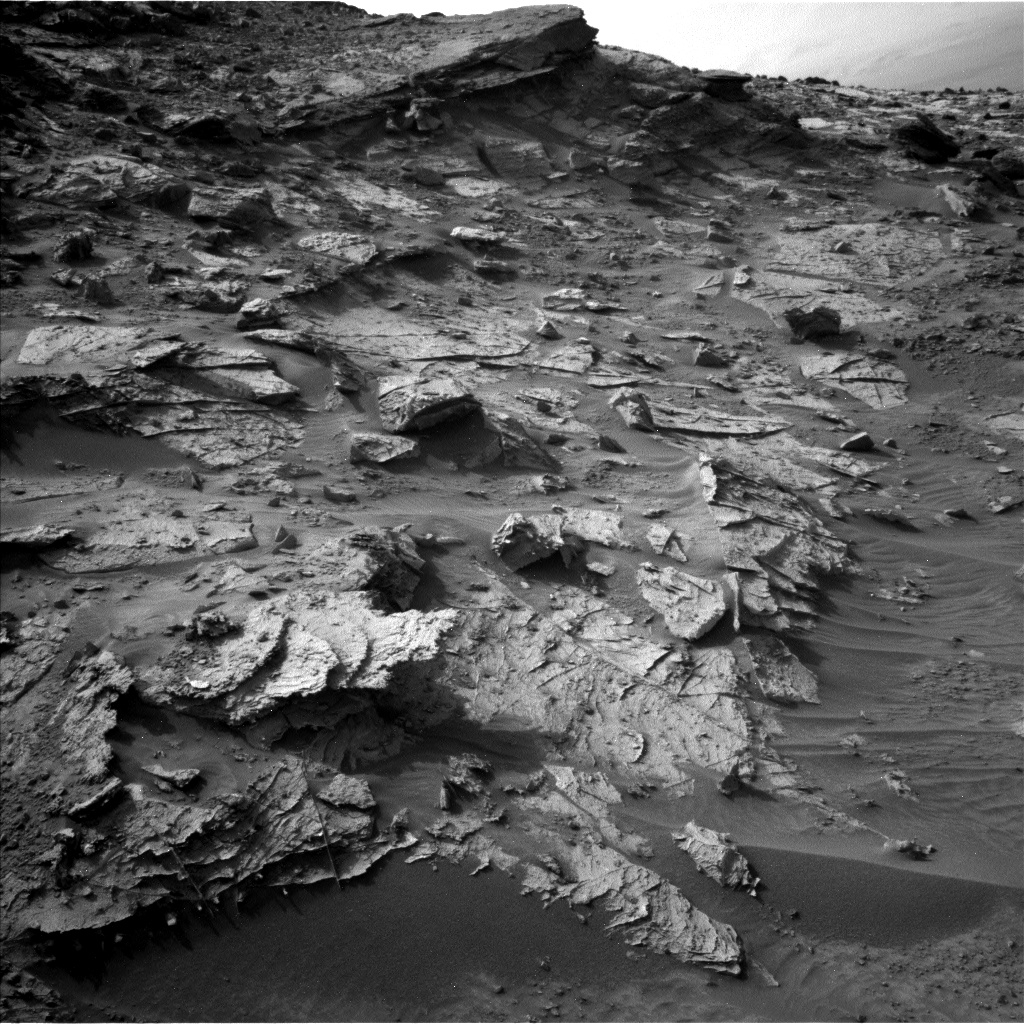
Curiosity Left B Navigation Camera photo taken on Sol 3458, April 29, 2022.
Credit: NASA/JPL-Caltech
“Mastcam will also acquire multispectral sets of images of the Cow Head and Orton Scar contact science targets. Navcam will search for dust devils and characterize the dustiness of the atmosphere toward the north before the rover drives again,” Herkenhoff reports.
After the drive and the typical post-drive imaging, the Mars Descent Imager (MARDI) was to again acquire a twilight image of the ground behind the left front wheel.
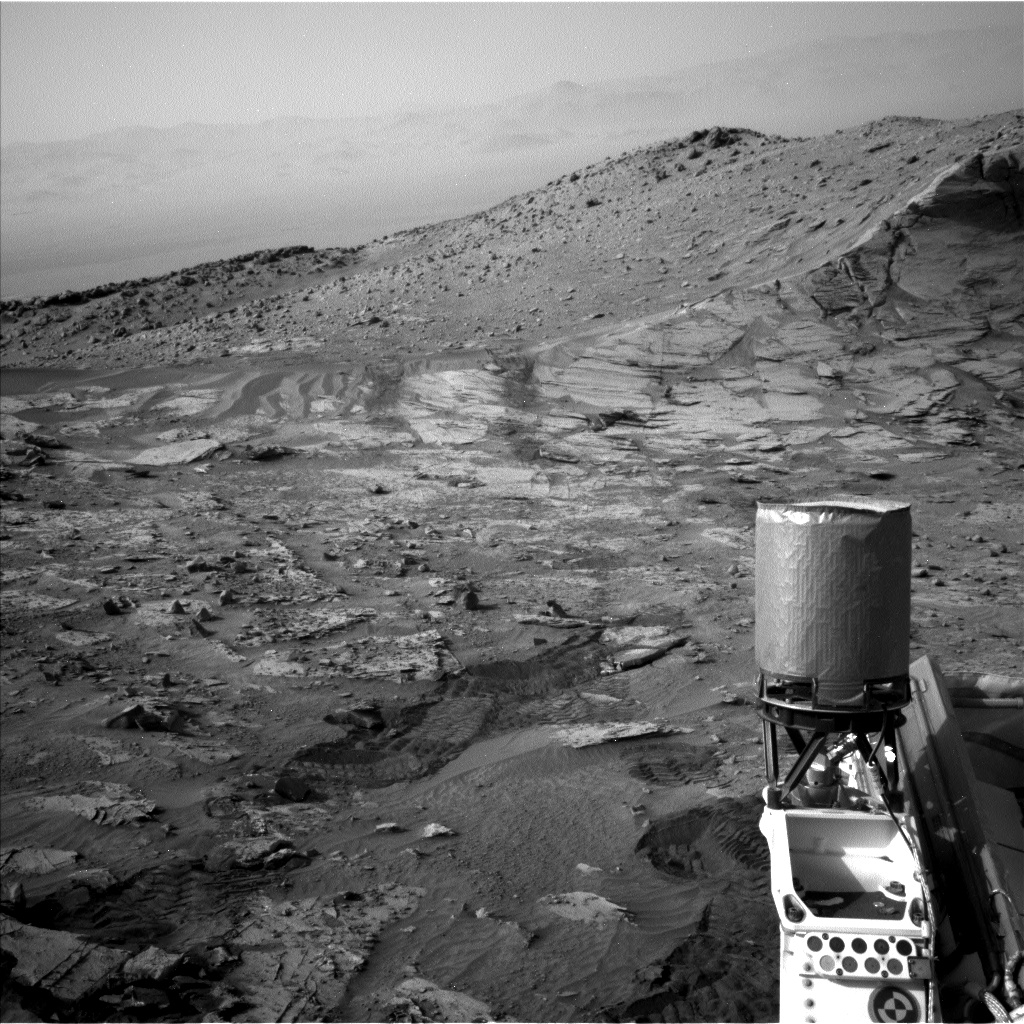
Curiosity Left B Navigation Camera photo taken on Sol 3458, April 29, 2022.
Credit: NASA/JPL-Caltech
 Posted in Space News

