 By
By  December 8th, 2015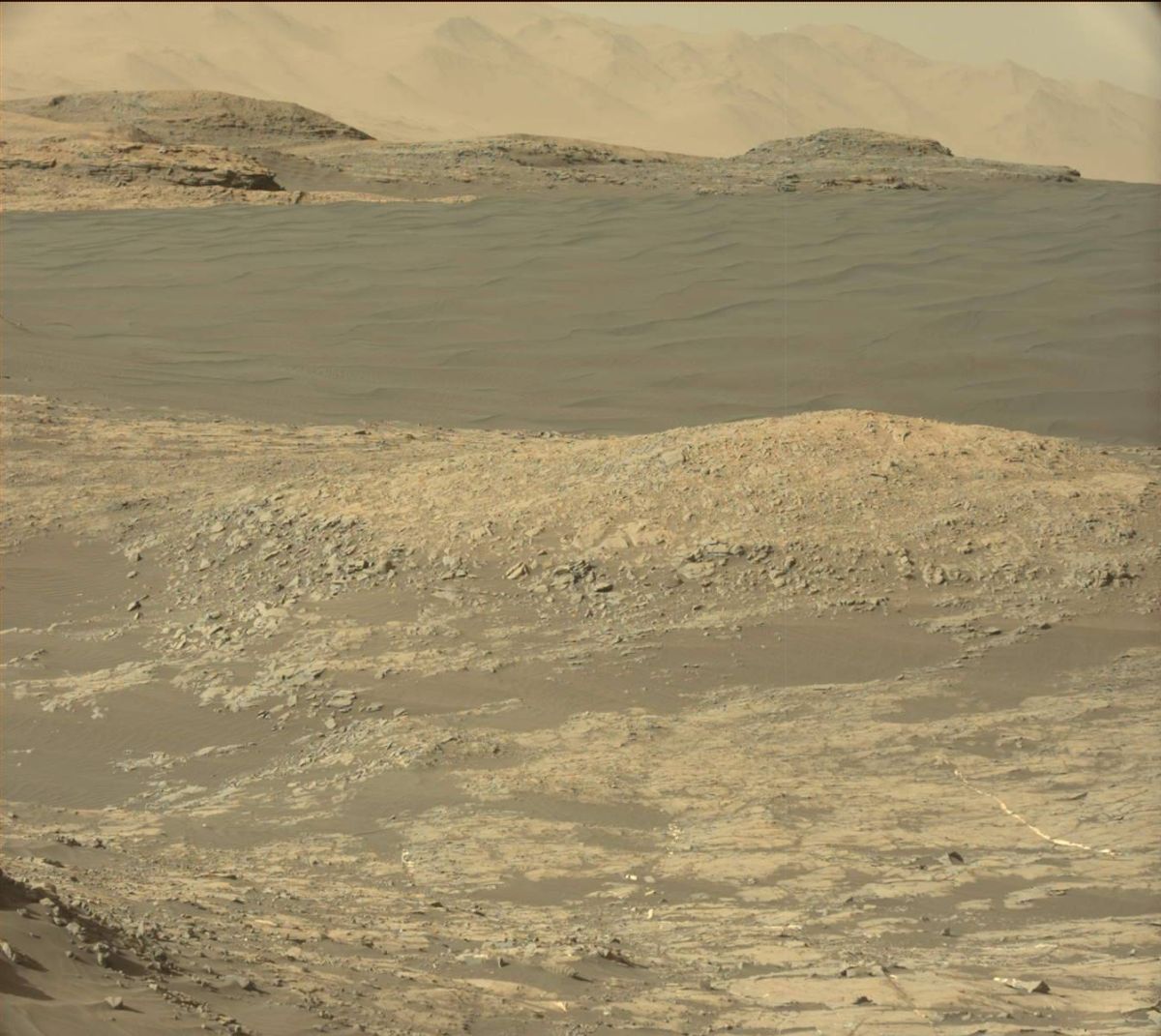
Curiosity image taken by the rover’s Mastcam Left on Sol 1185, December 6, 2015.
Credit: NASA/JPL-Caltech/MSSS
Wheeling about on Mars, the Curiosity rover successfully completed a mobility test last week, captured in images of the robot’s wheel tracks through a sand patch.
Curiosity drove roughly 115 feet (35 meters) toward a dune that is now named “Namib.”
“We’ve accomplished a lot of reconnaissance imaging of the dunes, and we’re looking ahead to monitoring the dune slipface and sampling the chemistry and mineralogy of an active dune,” reports Lauren Edgar, a research geologist at the USGS Astrogeology Science Center in Flagstaff, Arizona.
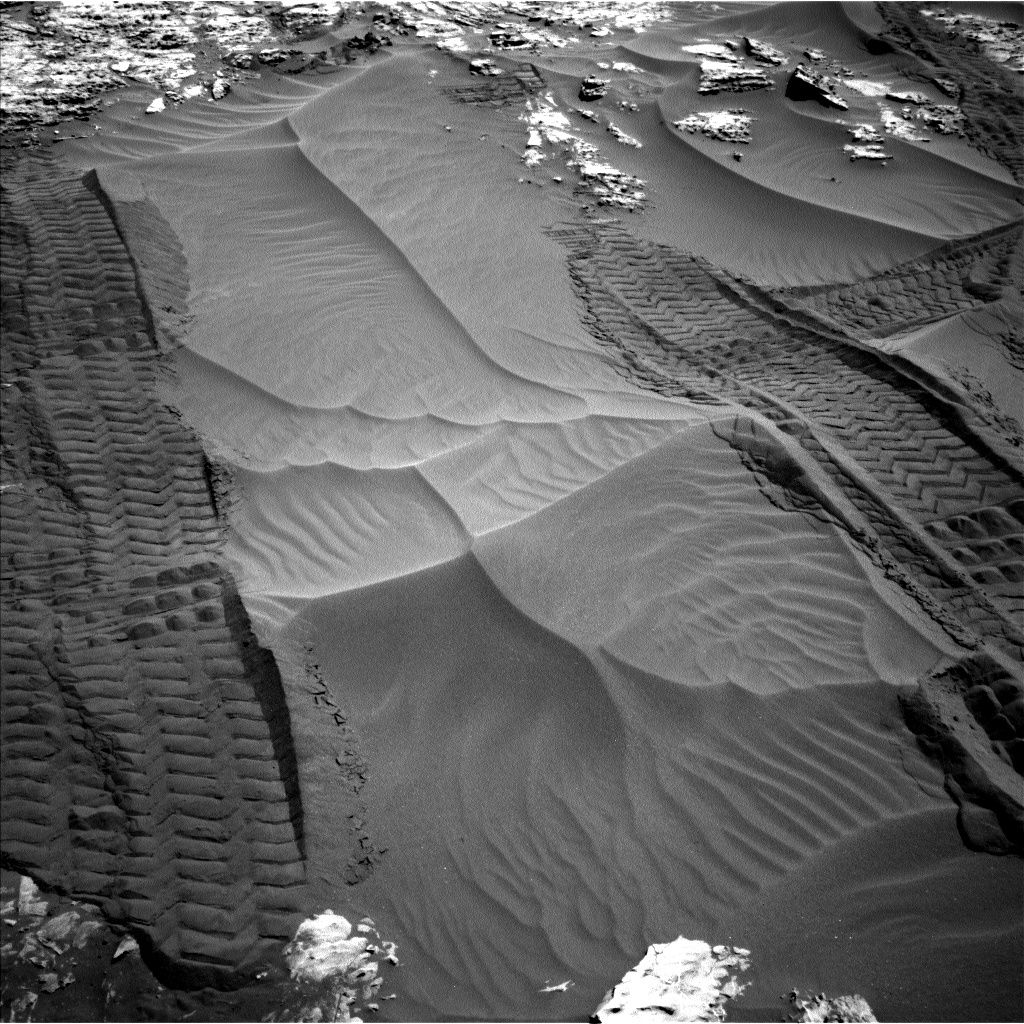
Curiosity’s Navcam Left B camera snapped this image on Sol 1185, December 6, 2015.
Credit: NASA/JPL-Caltech
Close-up images of sand grains were taken by Curiosity’s Mars Hand Lens Imager (MAHLI).
Now in Sol 1187, Edgar notes that the plan for the rover included several Chemistry & Camera (ChemCam) and Mastcam observations of the local bedrock at targets named “Rehoboth,” “Hamilton Range,” and “Twyfelfontein.”
“We’re also testing out some software for autonomous target selection. Then we’ll drive towards the “Namib” dune and take post-drive imaging to prepare for future targeting,” Edgar adds.
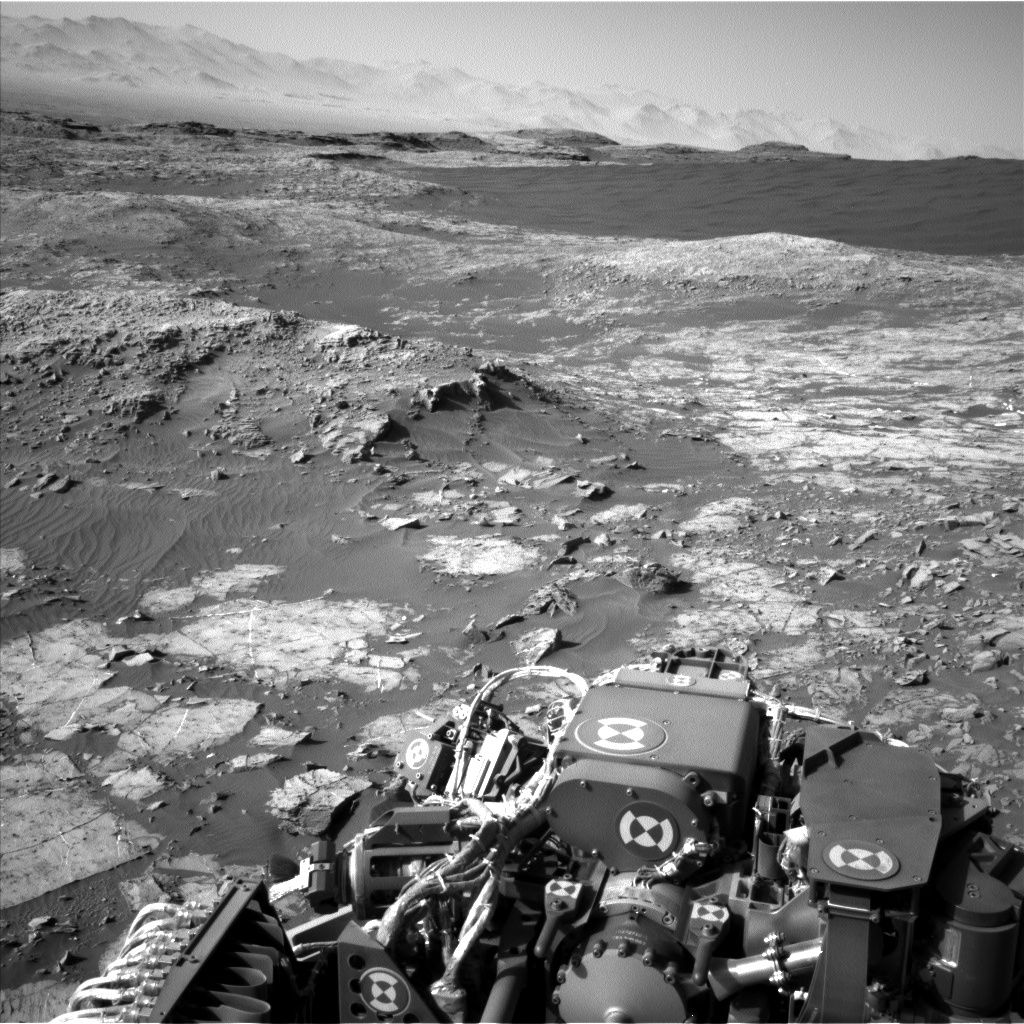
Curiosity Navcam Left B camera image taken on Sol 1185, December 6, 2015.
Credit: NASA/JPL-Caltech
Also slated is use of the rover’s ChemCam, Mastcam, and Navcam instruments to monitor the composition and opacity of the Martian atmosphere and search for dust devils.
 Posted in Space News

