 By
By  February 13th, 2018
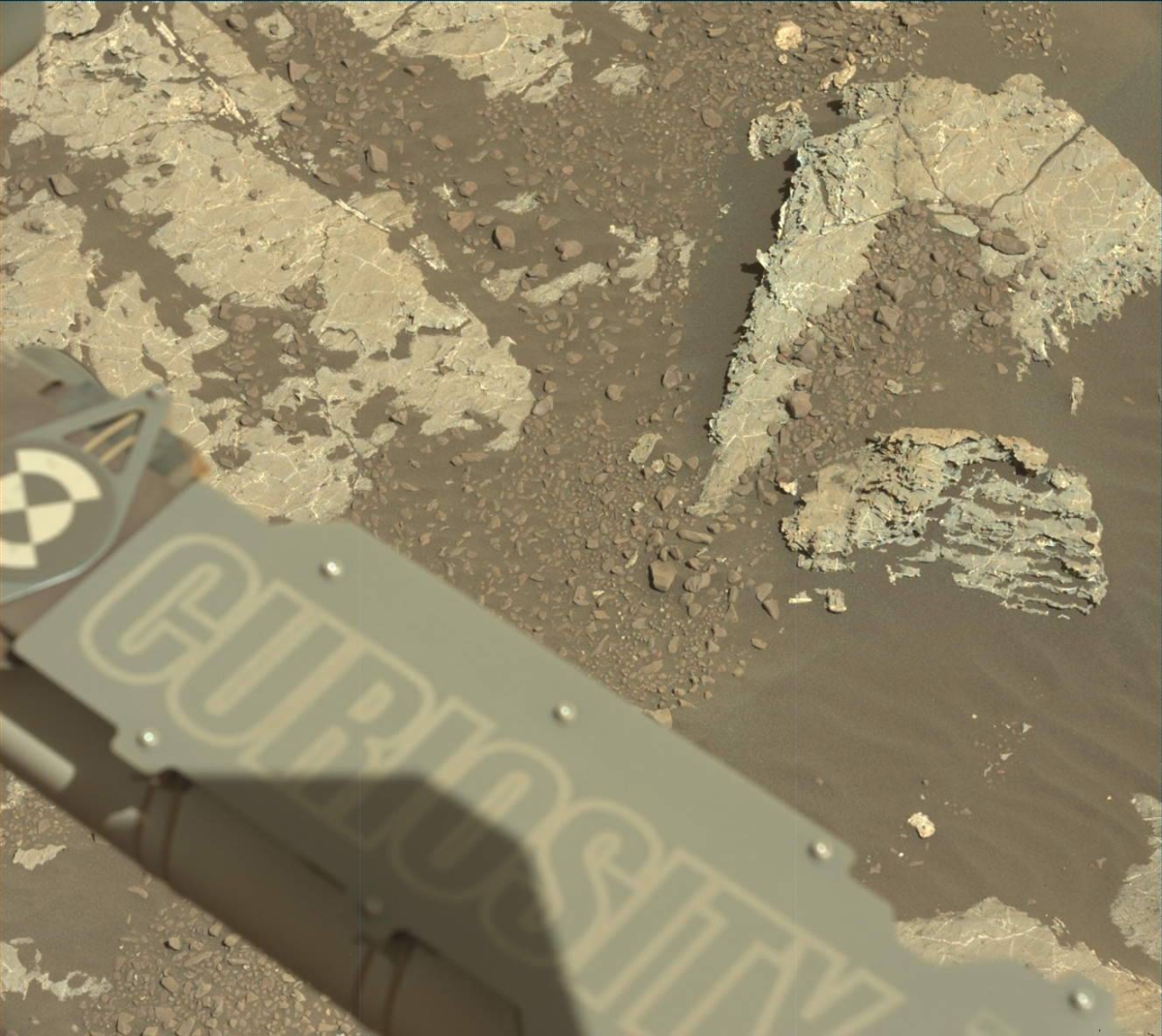
Curiosity Mastcam Left image taken on Sol 1962, February 12, 2018.
Credit: NASA/JPL-Caltech/MSSS
NASA’s Curiosity Mars rover is performing Sol 1964 activities.
Over last weekend Curiosity drove roughly 170 feet (52 meters) to the northeast to another patch of gray bedrock.
“The team is interested in characterizing the gray bedrock to determine if we might want to drill here,” reports Lauren Edgar, a planetary geologist at the USGS in Flagstaff, Arizona. “But before we can think about drilling again, we need to wrap up our analyses of the cached Ogunquit Beach sample.”
Power-hungry activity
This means that there is need for preconditioning of the Sample Analysis at Mars (SAM) Instrument Suite which is a very power-hungry activity. “That also means that there’s not a lot of power for other science activities,” Edgar notes, “but we did manage to squeeze in a few contact science activities.”
The one sol plan that was scripted starts with the SAM preconditioning activity, which heats up a sample cup in order to prepare for solid sample analysis.
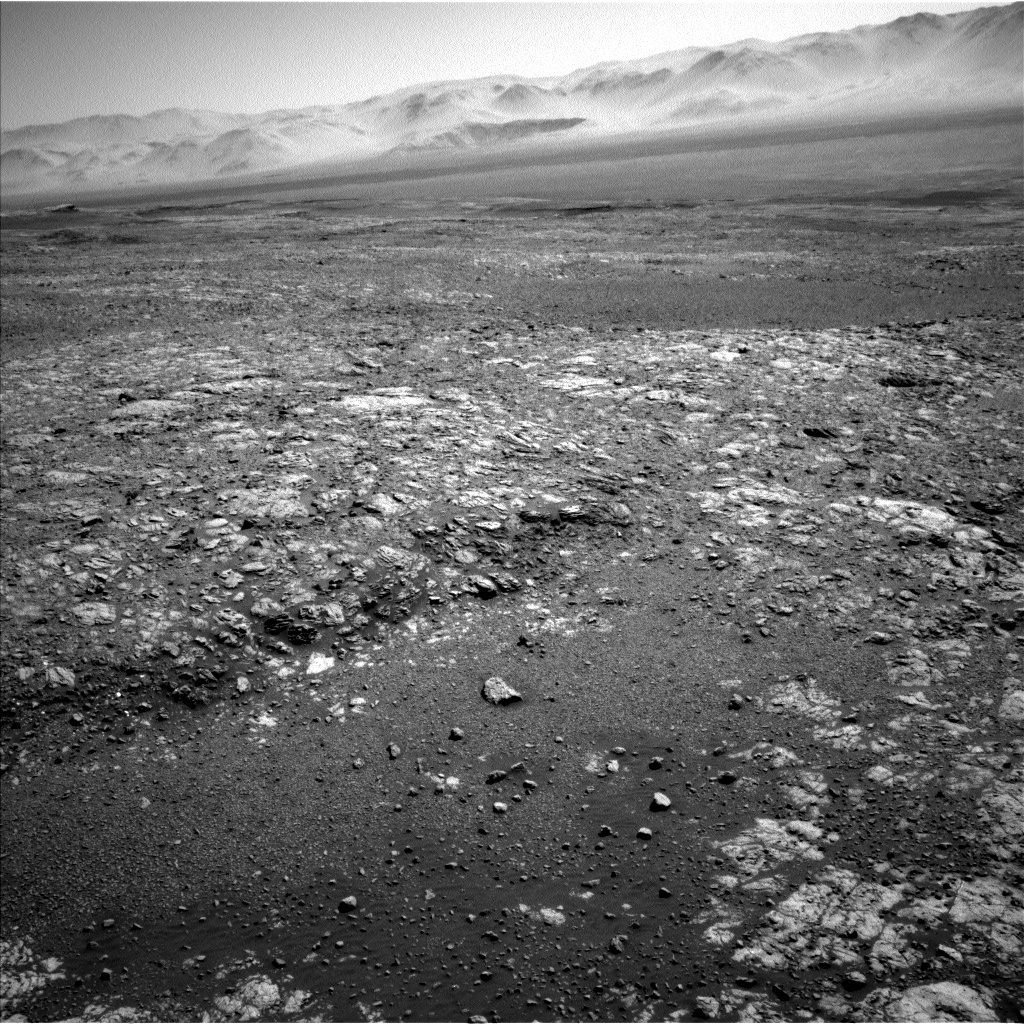
Curiosity Navcam Left B photo acquired on Sol 1962, Februry 12, 2018.
Credit: NASA/JPL-Caltech
Dust removal
In the afternoon, the rover was slated to use its Dust Removal Tool (DRT) to clear a fresh patch of gray bedrock to analyze with the robot’s Mars Hand Lens Imager (MAHLI) and use the Alpha Particle X-Ray Spectrometer (APXS) at the target “Newmachar,” followed by MAHLI imaging of the target “Yesnaby” to investigate a dark gray vein.
Additional workspace imaging to supplement the current coverage is also planned.
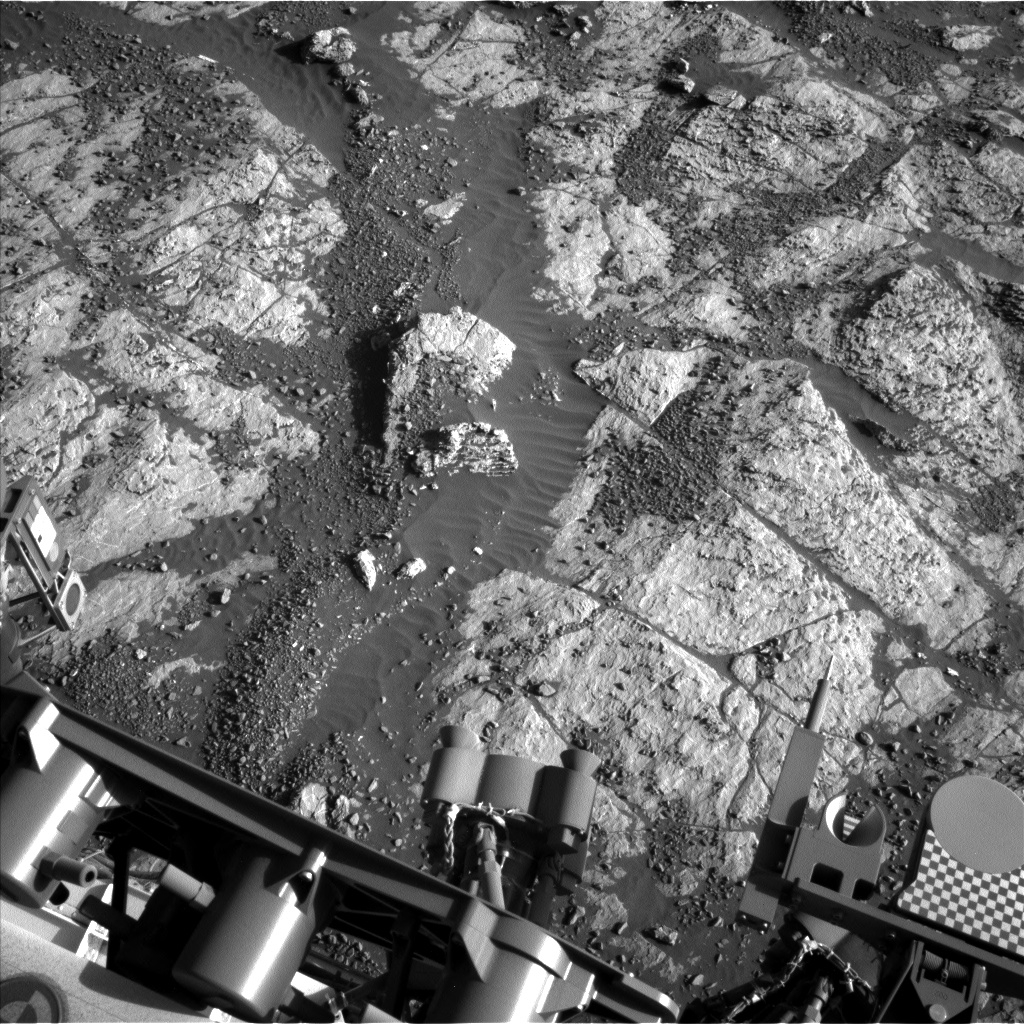
Curiosity Navcam Left B image acquired on Sol 1963, February 13, 2018.
Credit: NASA/JPL-Caltech
Drill again!
The plan also includes routine Dynamic Albedo of Neutrons (DAN) passive and Rover Environmental Monitoring Station (REMS) activities.
“While it was a relatively light plan in terms of science, it’s exciting to think about being able to drill again,” Edgar concludes, “so we’re looking forward to accomplishing the SAM analyses!”
 Posted in Space News

