 By
By  April 16th, 2022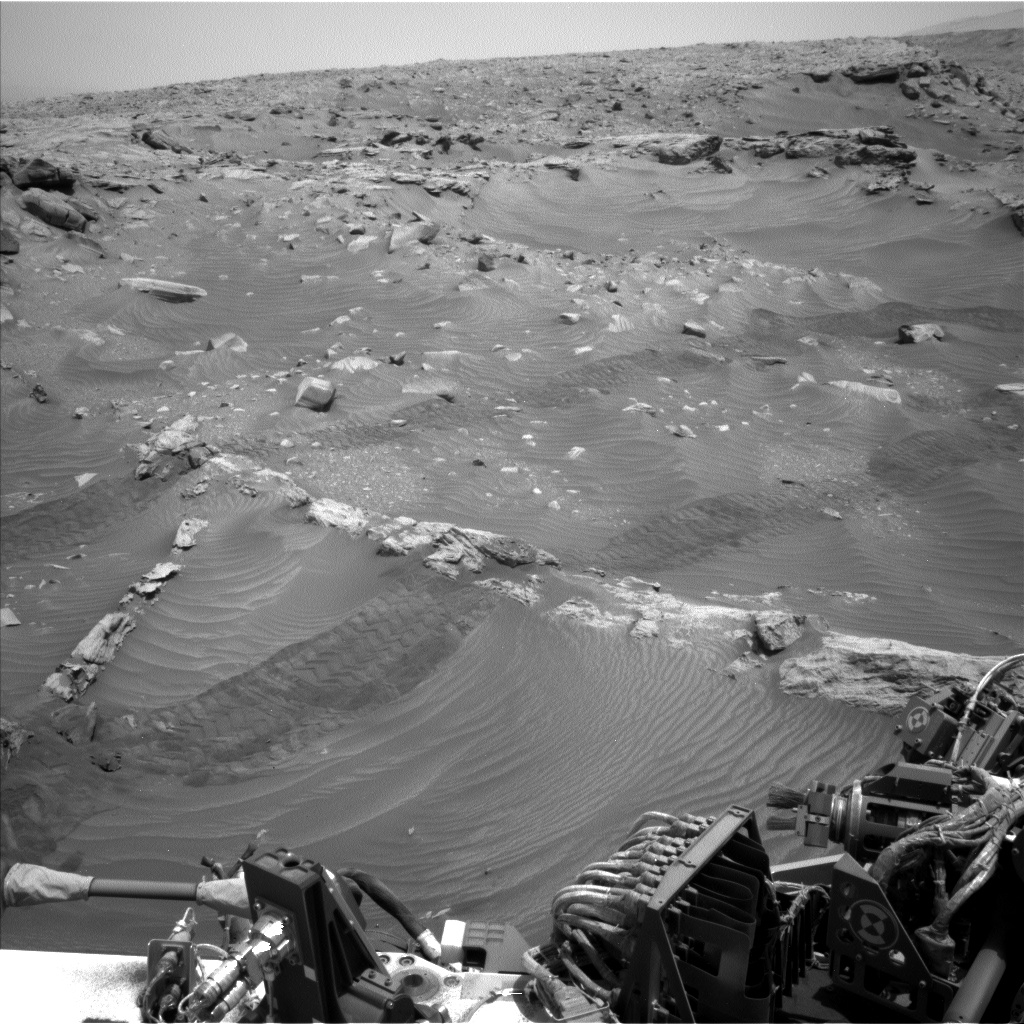
The curious case of cross-cutting ridges. This image was taken by Curiosity’s Left Navigation Camera on Sol 3440 April 10, 2022
Credit: NASA/JPL-Caltech
NASA’s Curiosity Mars rover at Gale Crater is now performing Sol 3446 duties.
“The curious case of cross-cutting ridges,” reports Sean Czarnecki, a planetary geologist at Arizona State University in Tempe, Arizona.
The rover has been focusing on examination of the linear ridges that cross-cut the local terrain.
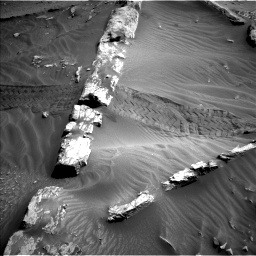
Curiosity Left B Navigation Camera image taken on Sol 3444, April 14, 2022.
Credit: NASA/JPL-Caltech
“These raised ridges look like boxes with their lids cut off and mostly buried in the local bedrock, and all we can see are the vertical box faces sticking up out of the ground,” Czarnecki adds. How these structures actually form is an active area of investigation, and Mars researchers hope the data gathered will help them “think outside the box” and shed some light on their origin.
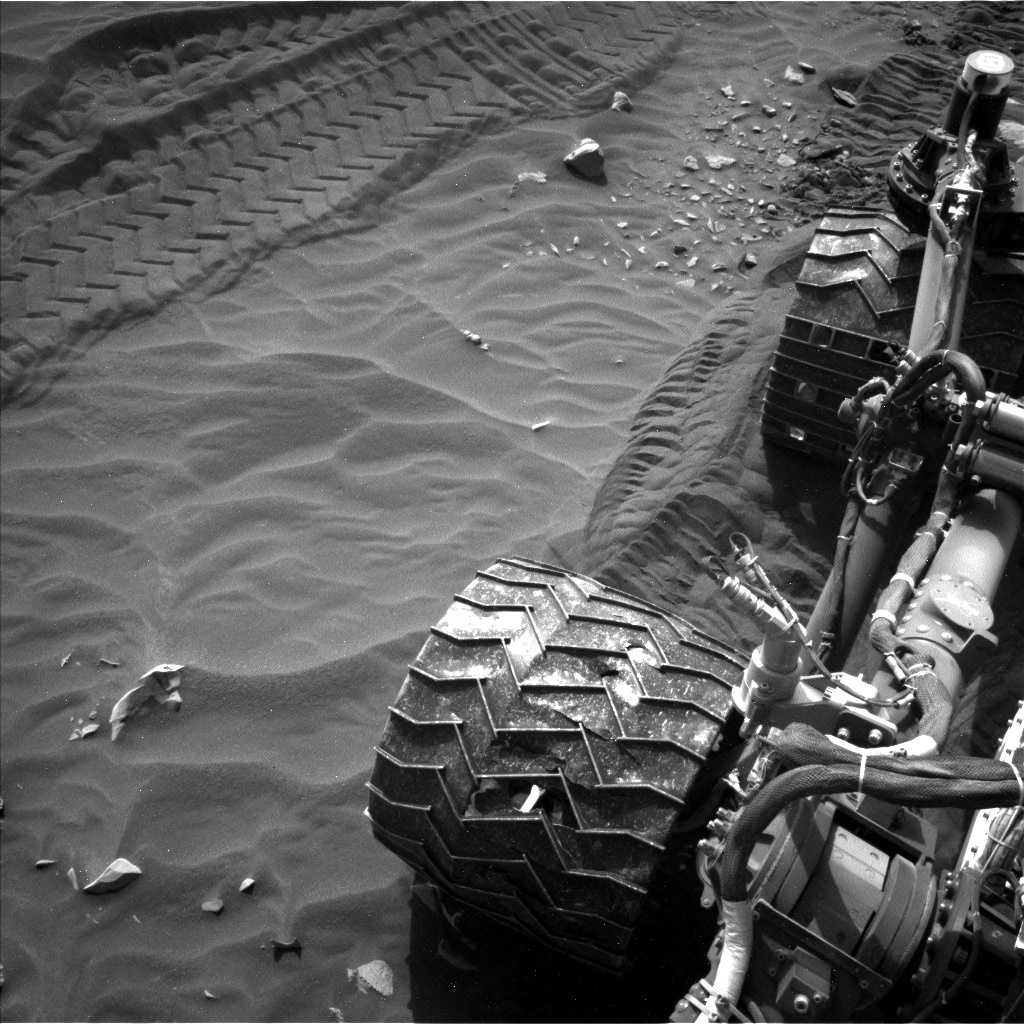
Curiosity Left B Navigation Camera image taken on Sol 3444, April 14, 2022.
Credit: NASA/JPL-Caltech
A recently scripted plan includes use of the Alpha Particle X-Ray Spectrometer (APXS) and the Mars Hand Lens Imager (MAHLI) on the target “Dun,” Chemistry & Camera (ChemCam) Laser Induced Breakdown Spectroscopy (LIBS) of “Ceres” (a target on Mars, not the dwarf planet!), and producing a ChemCam Remote Micro-Imager (RMI) mosaic of the Gediz Vallis ridge.
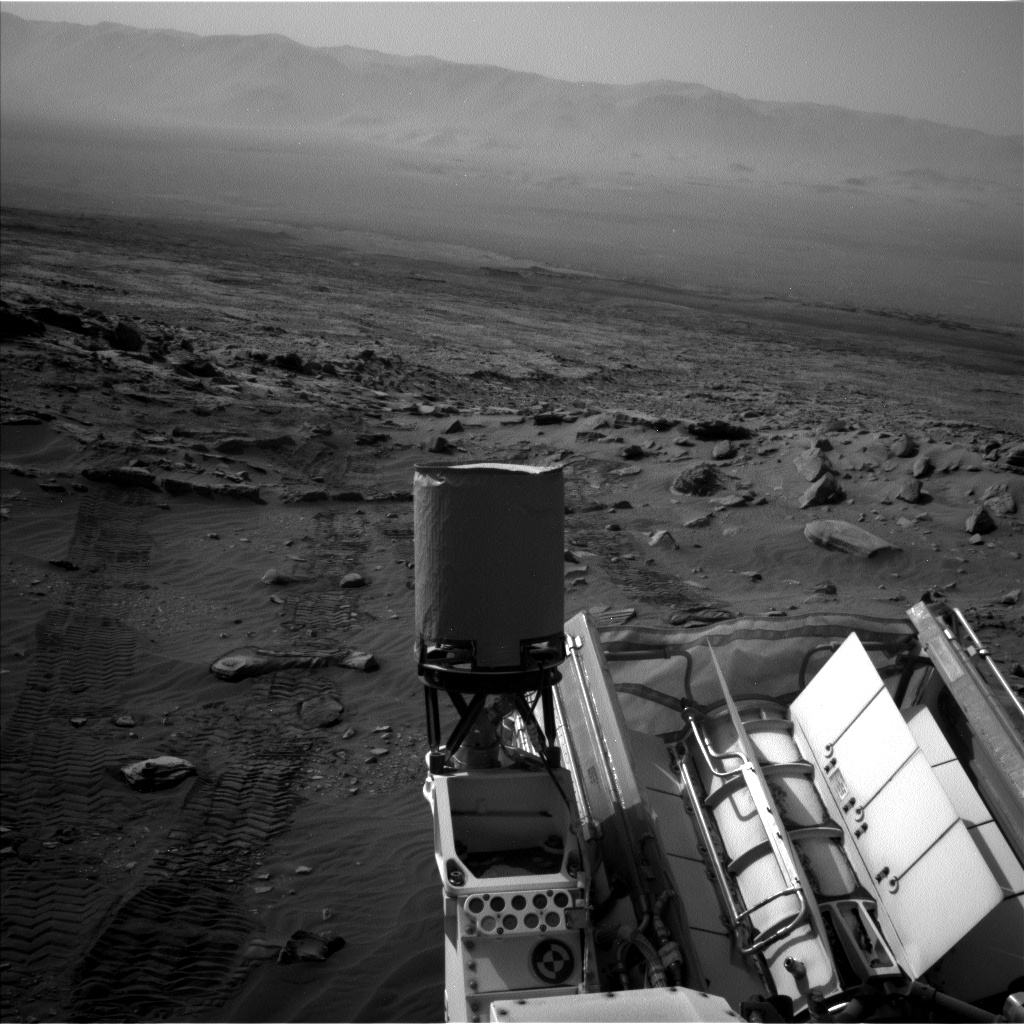
Curiosity Left B Navigation Camera image taken on Sol 3444, April 14, 2022.
Credit: NASA/JPL-Caltech
“Mastcam will be taking stereo images of targets ‘Feorachas’ and ‘Clavel’ as well as a mosaic of some old rover sand tracks to investigate surface granular processes,” Czarnecki reports.
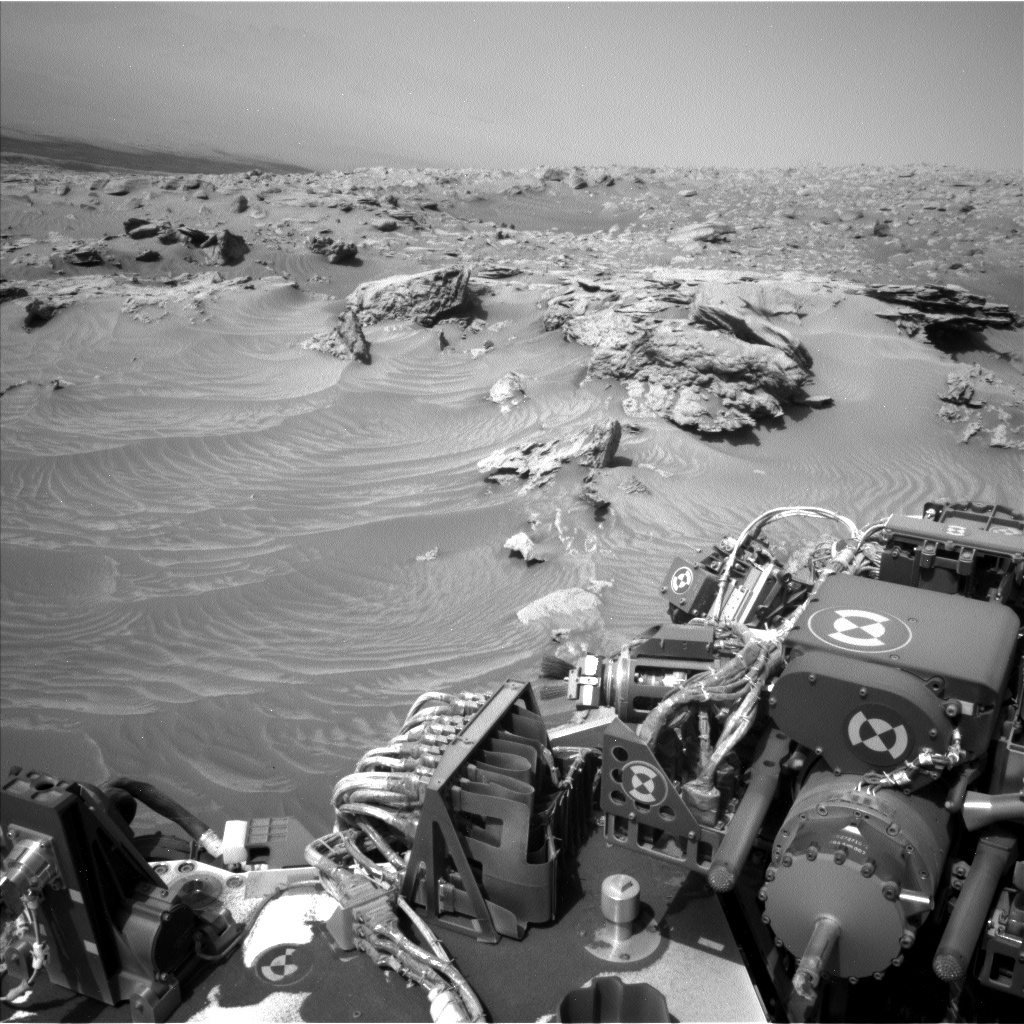
Curiosity Left B Navigation Camera image taken on Sol 3444, April 14, 2022.
Credit: NASA/JPL-Caltech
Mastcam and Navcam are making several dust devil observations among others, and of course Radiation Assessment Detector (RAD) Dynamic Albedo of Neutrons (DAN) and Rover Environmental Monitoring Station (REMS) are making their standard observations, Czarnecki concludes.
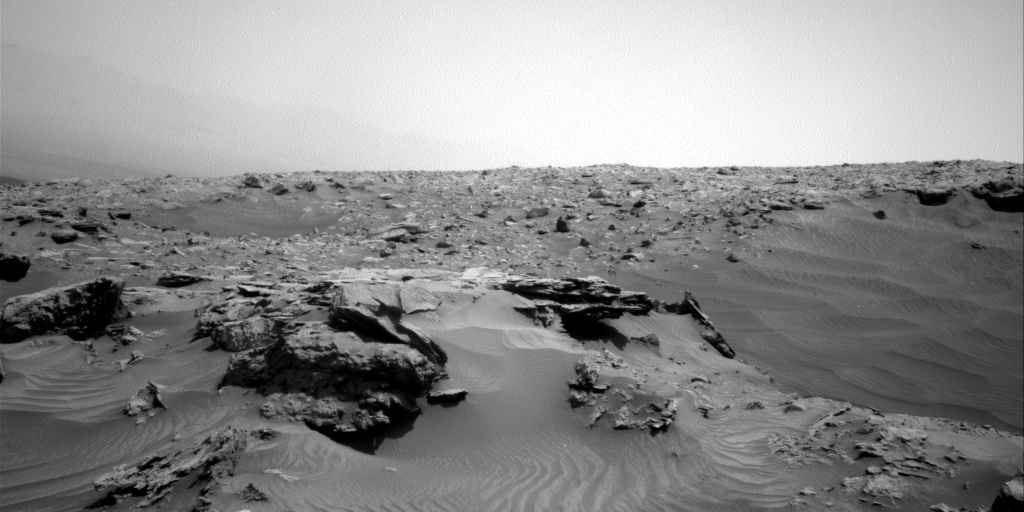
Curiosity Right B Navigation Camera photo taken on Sol 3445, April 15, 2022.
Credit: NASA/JPL-Caltech
 Posted in Space News

