 By
By  June 6th, 2026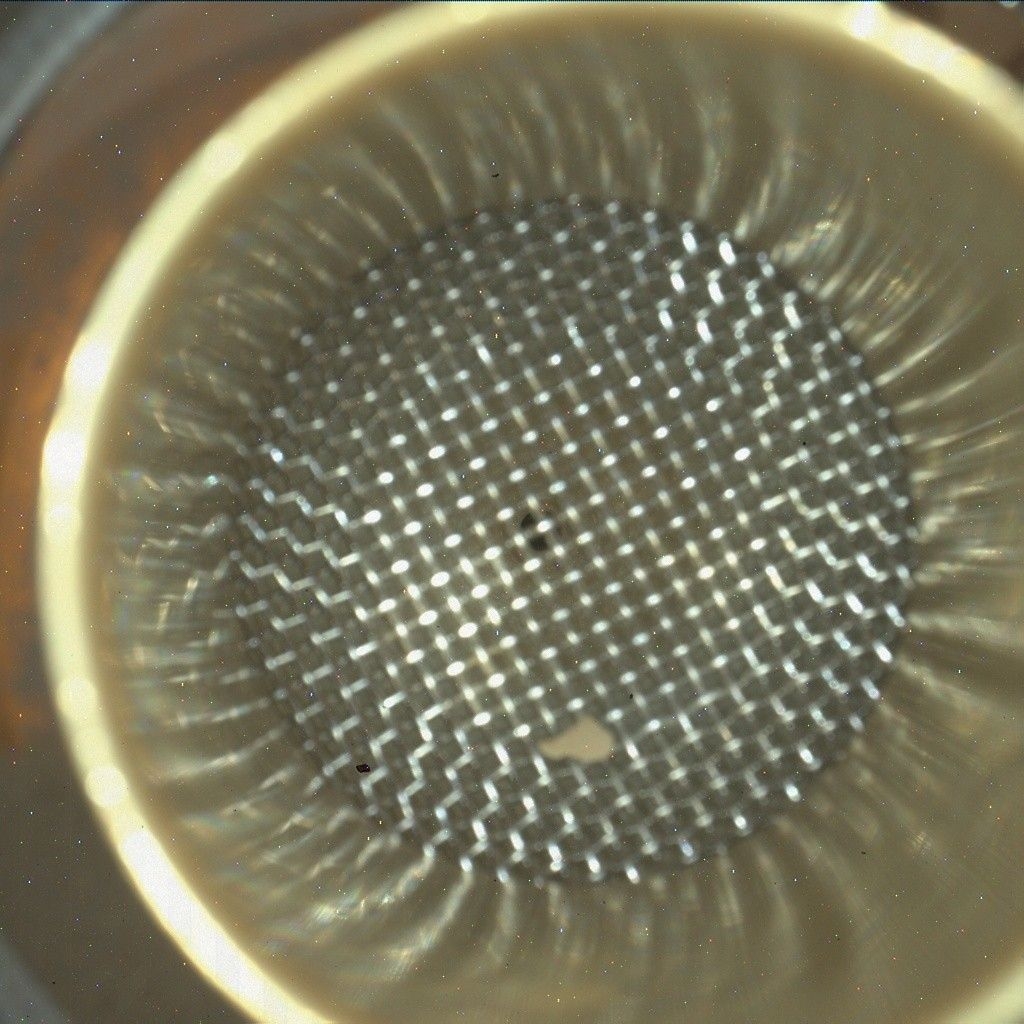
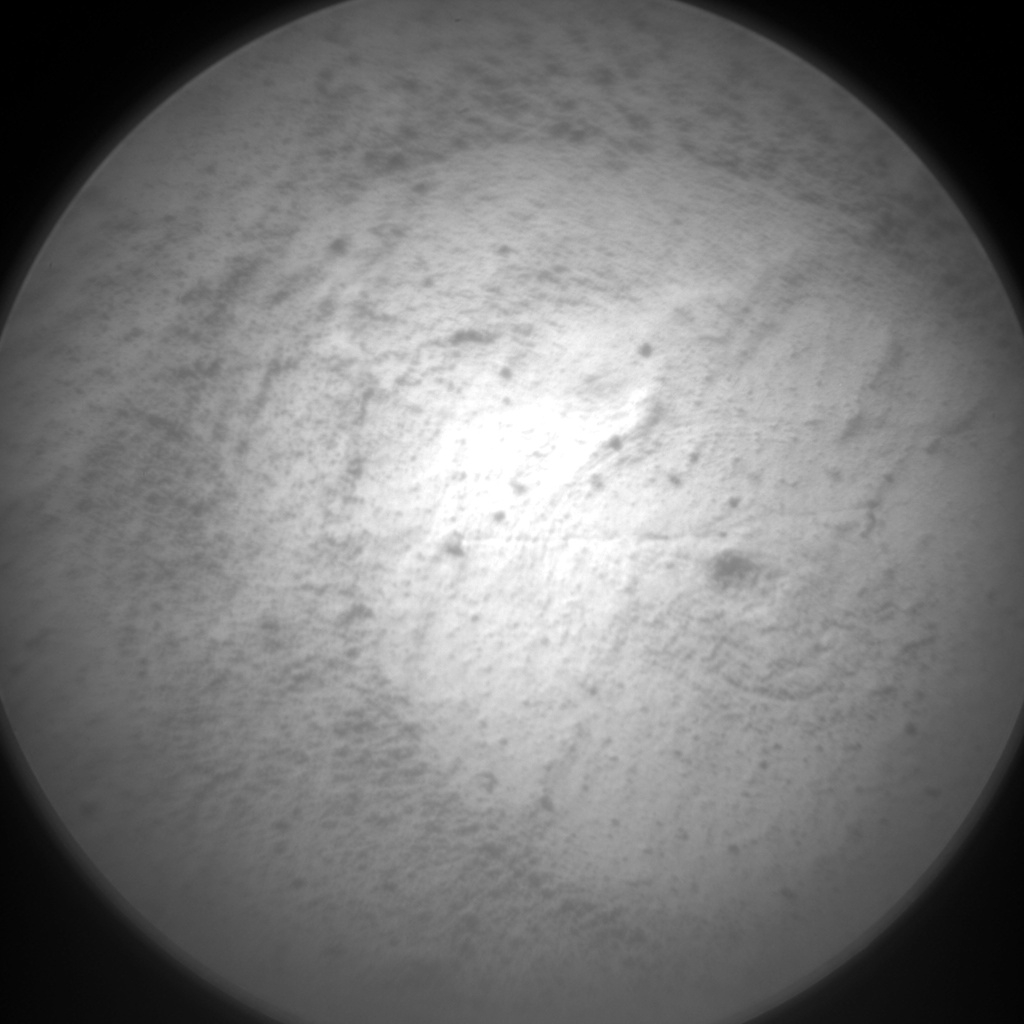
NASA’s Curiosity Mars rover acquired this image of the inlet on its Chemistry & Mineralogy X-Ray Diffraction instrument (CheMin). It analyzes the chemical composition of rocks and soil. Curiosity captured the image using its Mars Hand Lens Imager (MAHLI), a close-up camera located on the turret at the end of the rover’s robotic arm, on May 28, 2026 — Sol 4908.
Image credit: NASA/JPL-Caltech/MSSS
“Drilling always keeps the rover in place for a little while, and our 47th successful drill, ‘Campo Marte,’ was no exception,” reports Susanne Schwenzer, a professor of planetary mineralogy at The Open University in the United Kingdom.
“The team used the time wisely and on top of the drilling, we also have many observations,” adds Schwenzer. “We are driving onward to reach the next area up the hill on Mount Sharp.”
The Campo Marte drill was successful, and subsequently researchers are investigating the aftermath of that drilling.
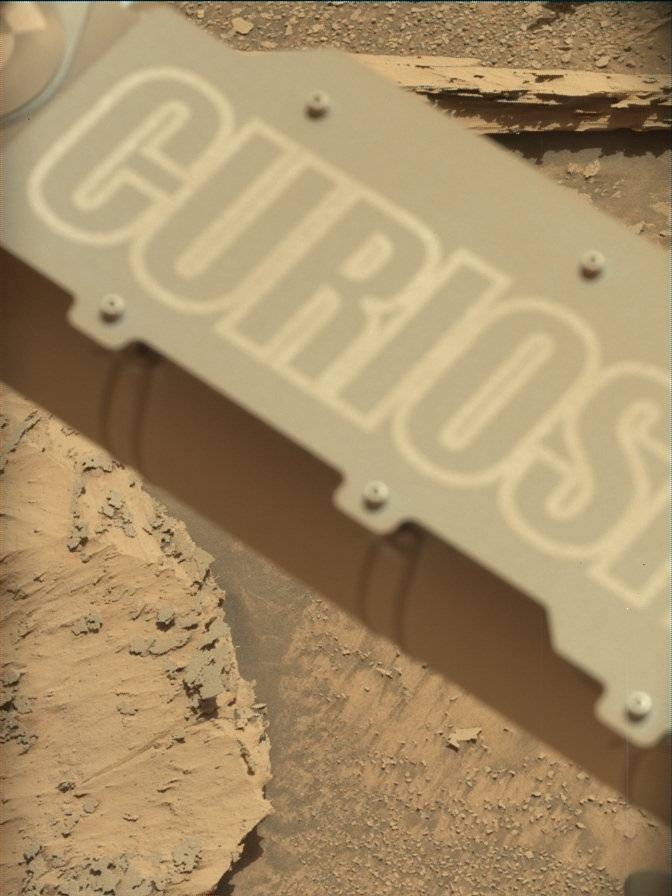
Image taken by MastCam Left onboard Curiosity on Sol 4916, June 5, 2026.
Image credit: NASA/JPL-Caltech/MSSS
Curiosity’s Chemistry & Mineralogy X-Ray Diffraction instrument (CheMin) obtained mineralogical data and the Sample Analysis at Mars (SAM) instrument inspected the volatile releases.
The robot’s Chemistry and Camera (ChemCam), Alpha particle X-ray spectrometer (APXS), the Mars Hand Lens Imager (MAHLI) and the rover’s Mastcam were also busy documenting the drill hole and the drill fines, as well as how much sample there was available overall, notes Schwenzer.
Different formation conditions?
“Of course, Curiosity also had a very good look at the other interesting targets in the area! Besides all the work on the drill hole, ChemCam carried out an expert’s targeting exercise by setting two targets up to aim at two different layers on adjacent spots on the finely laminated sediments,” says Schwenzer. “That involves aiming at millimeter-sized targets, named “Corcovado” and “Junakas,” respectively, about 3 meters away (about 10 feet).”
Mars investigators are curious if the layers are chemically different, which would tell them about different formation conditions, or if they are similar and the conditions when those layers formed were more similar.
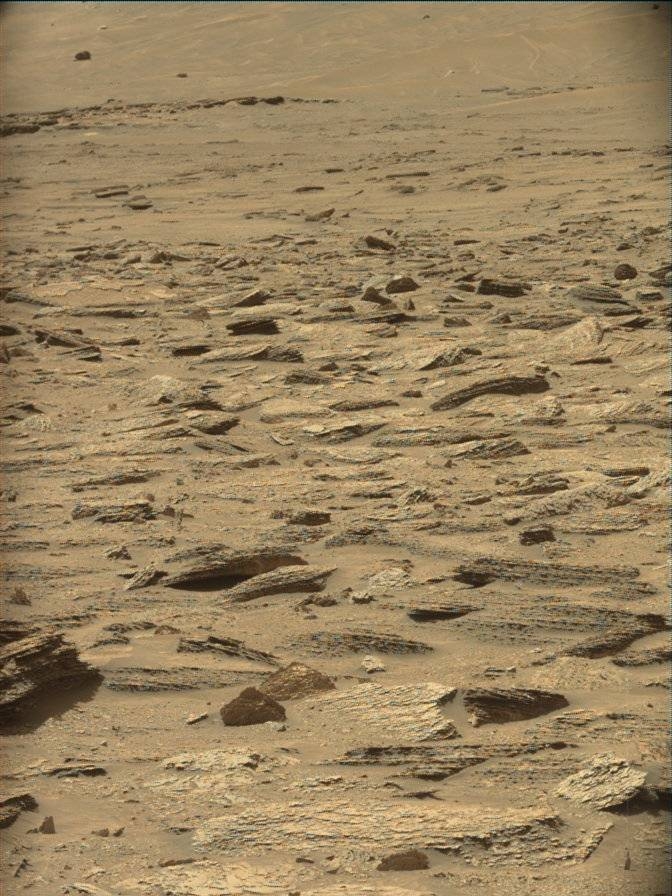
This image taken by Mast Camera (Mastcam) onboard NASA’s Mars rover Curiosity on Sol 4916, June 5, 2026.
Image credit: NASA/JPL-Caltech/MSSS
Layered bedrock
ChemCam is also looking at the target “Palcaya” to get more data on the chemistry of the layered bedrock, and will investigate the target “Alcamachi,” which is a float rock that looks intriguingly dark.
“Maybe that tells us it’s got a different chemistry? We will find out when we get the data,” points out Schwenzer.
In addition to the chemistry measurements, ChemCam will also carry out a spectral investigation on the target “Magallanas,” which was a little too far away to also point the laser at it, but is intriguingly dark.
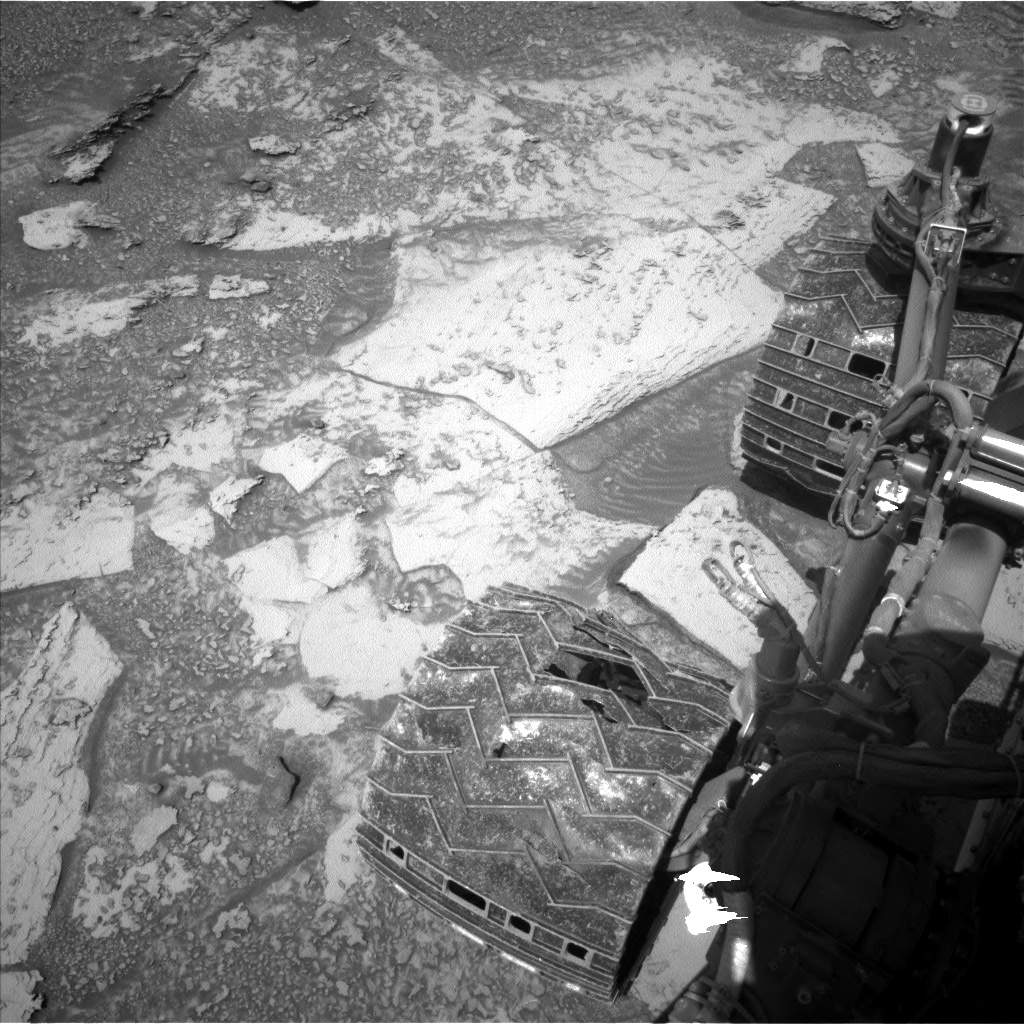
This image taken by Left Navigation Camera onboard NASA’s Mars rover Curiosity on Sol 4916, June 5, 2026.
Image credit: NASA/JPL-Caltech
Record breaking
Curiosity’s ChemCam also planned three long-distance Remote Microscopic Imager (RMI) sessions to document the sedimentary structures — younger and older ones — in the surrounding area.
“One of them drew the suspicion that it might break a record: it might be the longest strip of RMI images we have taken in one mosaic! The jury is out, it’s 24 frames and this way links up with an earlier, shorter set of images,” Schwenzer reports.
The reason the mosaic is so long, the Mars scientist adds, is because it images a small ridge with sedimentary textures that could tell us about the depositional conditions when the rock layers formed.
“But how cool is that — at 13+ years to still break our own records?”
This image taken by Chemistry & Camera (ChemCam) onboard NASA’s Mars rover Curiosity on Sol 4916, June 5, 2026.
Image credit: NASA/JPL-Caltech/LANL/CNES/CNRS/IRAP/IAS/LPG
Nighttime experiment
Meanwhile, Mastcam has been very busy getting the entire region around the robot imaged. In addition, some higher-resolution mosaics have been taken, most notably one of the locations where the remaining sample was dropped, and then of the workspace to see again how much sample might — or might not — have been left in the drill stem and fallen out when Curiosity did the motions that are designed to shake any remaining sample out of the drill, to leave it prepared for the next time.
“Another imaging task, but for MAHLI, is to always image the sample inlets, also, to see if they are clean and prepared for the next sample,” says Schwenzer. The MAHLI imagery of the CheMin inlet shows a little rock.
“It’s with us for a while, and the CheMin team now calls it “our pet rock,” notes Schwenzer. “APXS joined the drill-hole investigations and has been focused on it even more than usual. The team decided that this is a very good opportunity to increase counting statistics beyond the usual and well-tested levels by significantly increasing the measurement time.”
Schwenzer explains to achieve that, it measured the Campo Marte drill fines in and MAHLI used its LED lights to finish the experiment with a sparkling nighttime MAHLI experiment to document it all.
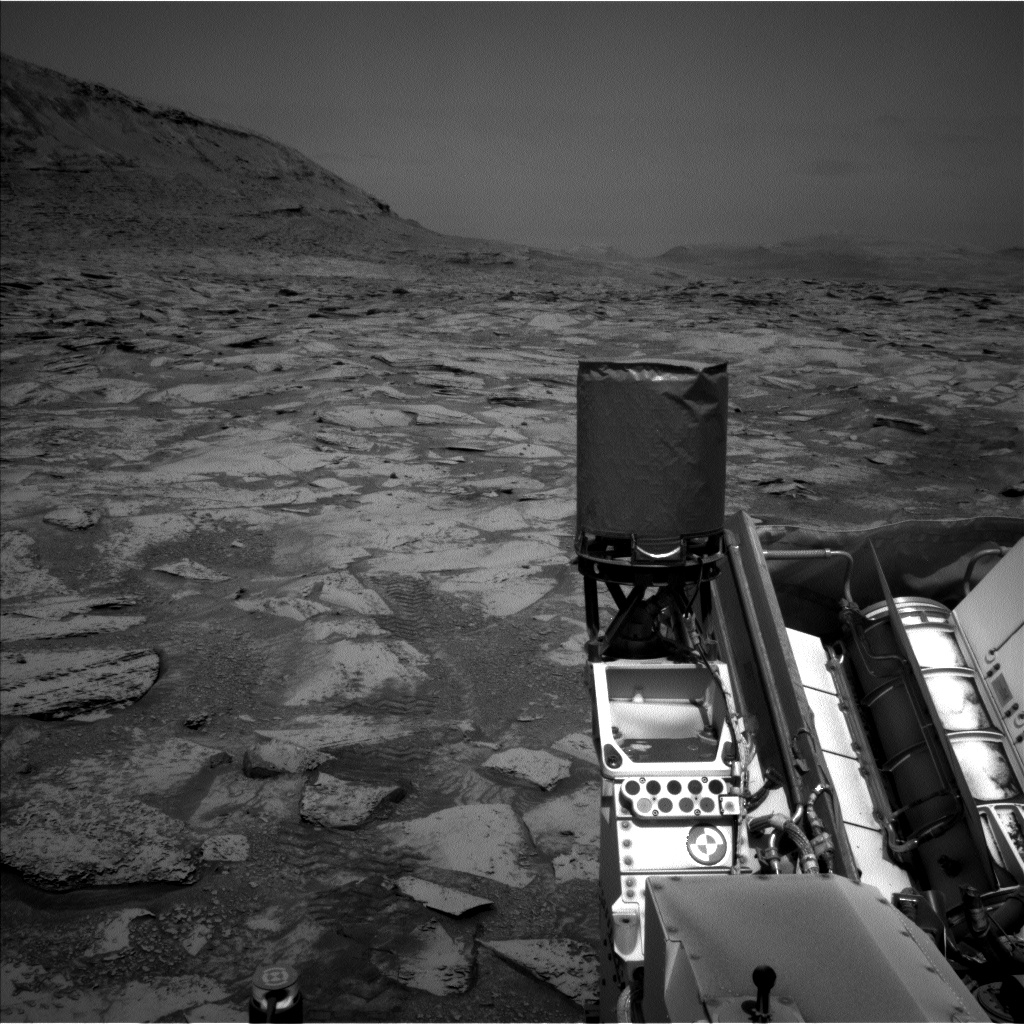
Image taken by Curiosity’s Left Navigation Camera on Sol 4916, June 5, 2026.
Image credit: NASA/JPL-Caltech
Up the hill
“Our environmental team has kept the rover busy by looking at atmospheric opacity, dust activity, dust-devil activity and, of course, also monitoring the environment in general,” Schwenzer adds.
“With all this finished, the rover will continue its way up the hill to the next interesting area. I heard something like “cross-bedding” during the discussions.
As a mineralogist, Schwenzer notes that such a decision was taken by people who know more about sediments than she does, “while I am itching to see the CheMin mineralogy results!”
 Posted in Space News

