 By
By  September 1st, 2021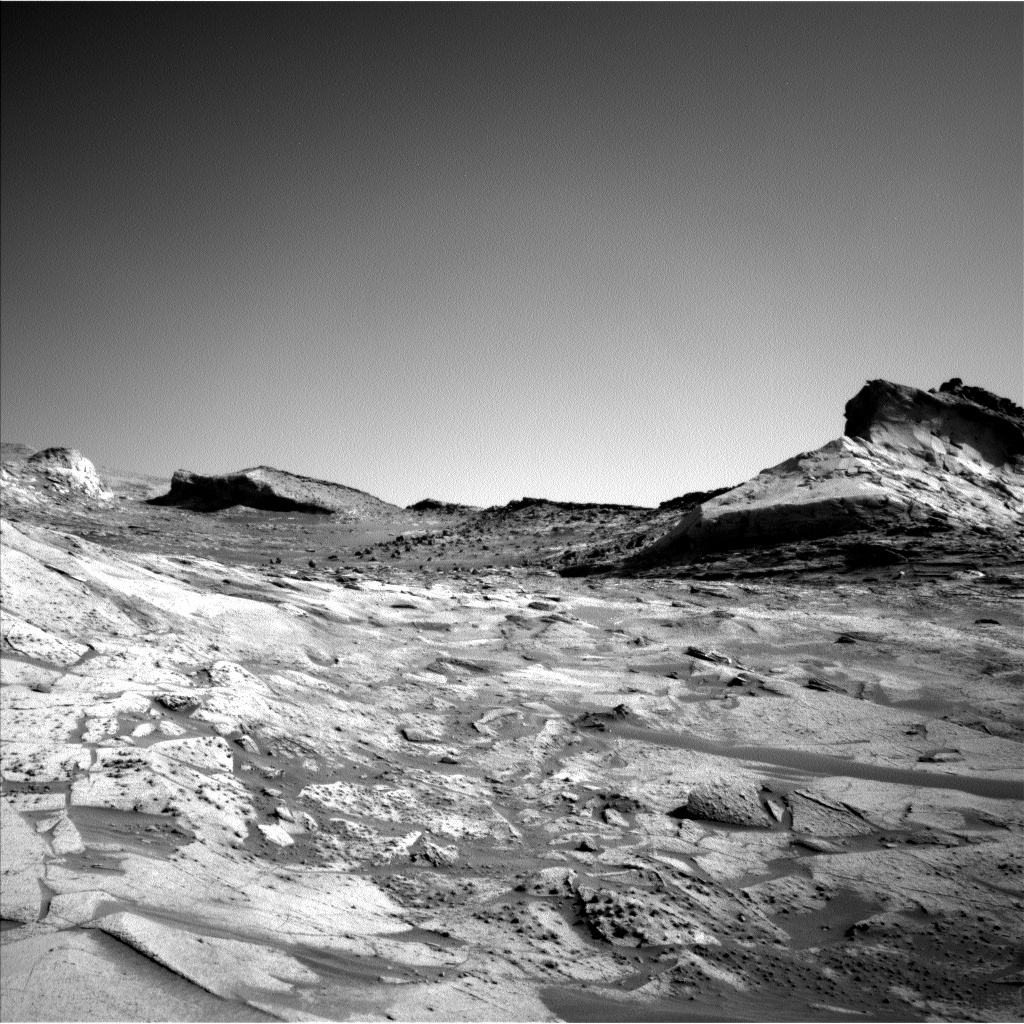
Among the sites now surrounding Curiosity is a steep, shadowed cliff visible in the upper left corner of this image taken by Left Navigation Camera on Sol 3222.
Credit: NASA/JPL-Caltech
NASA’s Curiosity Mars rover at Gale Crater is now performing Sol 3225 tasks.
Michelle Minitti, a planetary geologist at Framework in Silver Spring, Maryland, reports the robot’s short drive over last weekend took it within half a meter of a desired parking elevation – a prelude for the next attempt at drilling in Gale Crater.
Steep shadowed cliff
Among the sites surrounding Curiosity is a steep, shadowed cliff.
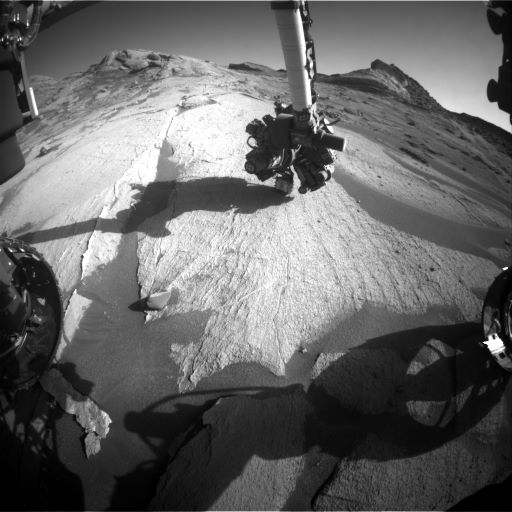
Curiosity Front Hazard Avoidance Camera Left B photo taken on Sol 3224, August 31, 2021.
Credit: NASA/JPL-Caltech
“That cliff marks the western wall of our narrow passageway up Mount Sharp,” Minitti notes, “which the team has named “Maria Gordon Notch.””

Maria Ogilvie Gordon, Scottish scientist
Credit: Wachtler – http://historyofgeology.fieldofscience.com/2011/06/women-geoscientist-in-dolomites-maria.html, Public Domain
Maria Ogilvie Gordon was a Scottish scientist in the late 19th and early 20th centuries with expertise in geology, paleontology, and zoology, Minitti adds.
“She combined her knowledge of modern and fossil corals and extensive fieldwork campaigns to describe the geologic history and stratigraphy of the Dolomite Mountains of Italy. Her work earned her the first Doctor of Science awarded to a woman in the United Kingdom. While Curiosity might not find corals on her way up Mount Sharp, she will certainly strive to follow Maria Gordon’s example of careful, thorough and important geologic work!”
As the rover sits within view of Maria Gordon Notch, the science team thought it only natural to name its next drill site after her, too.
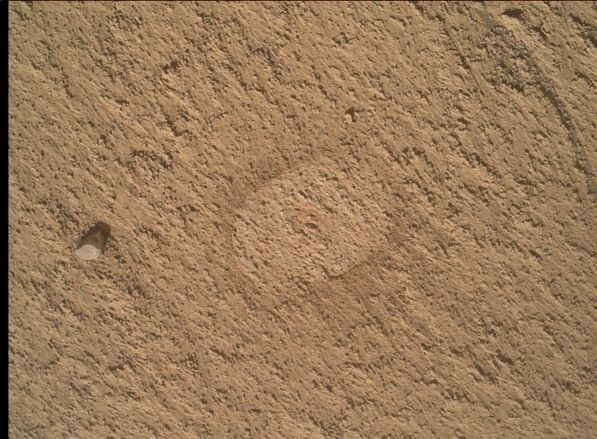
Brushing off target. Curiosity Mars Hand Lens Imager (MAHLI) photo produced on Sol 3224, August 31, 2021.
Credit: NASA/JPL-Caltech/MSSS
Load testing
Thus, a recently scripted plan focused on brushing the candidate drill target, “Maria Gordon,” followed by Mars Hand Lens Imager (MAHLI) imaging, Alpha Particle X-Ray Spectrometer (APXS) analyses, and load testing of the target.
Also run was a Chemistry & Mineralogy X-Ray Diffraction/X-Ray Fluorescence Instrument (CheMin) empty cell analysis to make sure that vessel is ready to receive sample, Minitti explains. “Those activities and the next anticipated activity – drilling itself – require a lot of power, so there was not much time for additional science observations.”
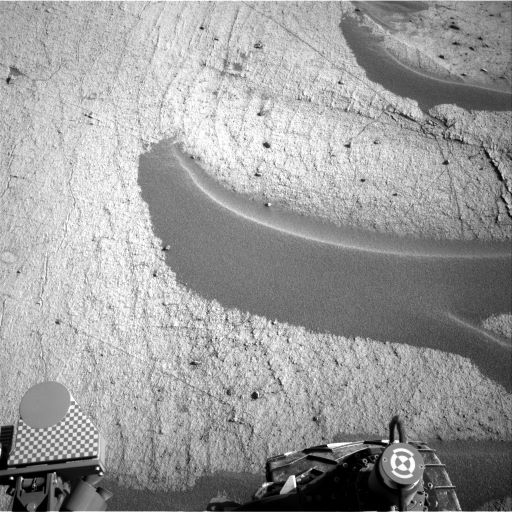
Curiosity Right B Navigation Camera photo acquired on Sol 3224, August 31, 2021.
Credit: NASA/JPL-Caltech
Rover Environmental Monitoring Station (REMS), Dynamic Albedo of Neutrons (DAN), and Radiation Assessment Detector (RAD) are slated to run at their regular cadence across the two sols of the plan, Minitti adds, “but the only additional environmentally-focused observation we added was a Navcam dust devil survey.”
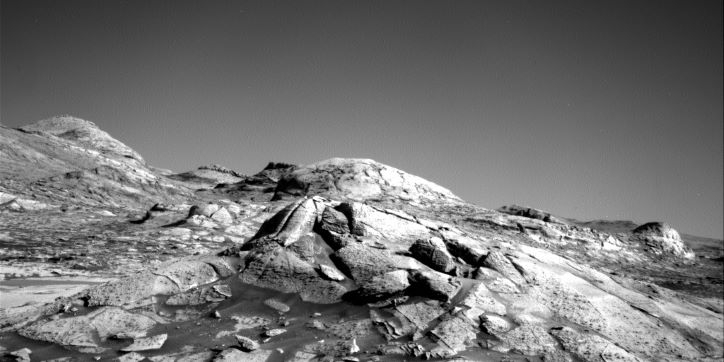
Curiosity Right B Navigation Camera image taken on Sol 3223, August 30, 2021.
Credit: NASA/JPL-Caltech
Mastcam mosaic
The geology working group managed to squeeze in a survey of their own, a 360 degree Mastcam mosaic acquired early in the morning.
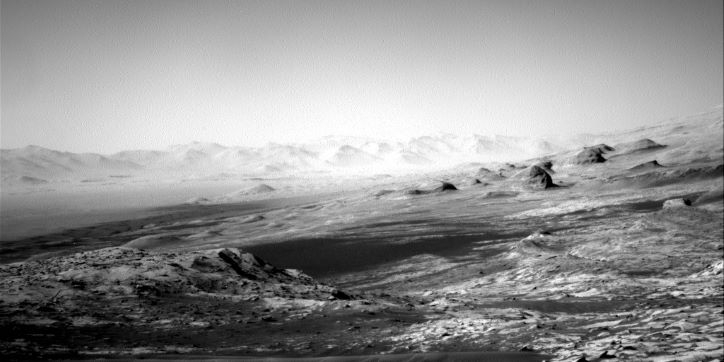
Curiosity Right B Navigation Camera image taken on Sol 3223, August 30, 2021.
Credit: NASA/JPL-Caltech
“The early morning time was desired to get lighting on the east-facing cliffs – including Maria Gordon Notch – rising from the terrain around us,” Minitti concludes. “The mosaic will surely provide a great overview of this site, and will help guide our subsequent observations among our own mountains of exploration.”
 Posted in Space News

