 By
By  August 21st, 2016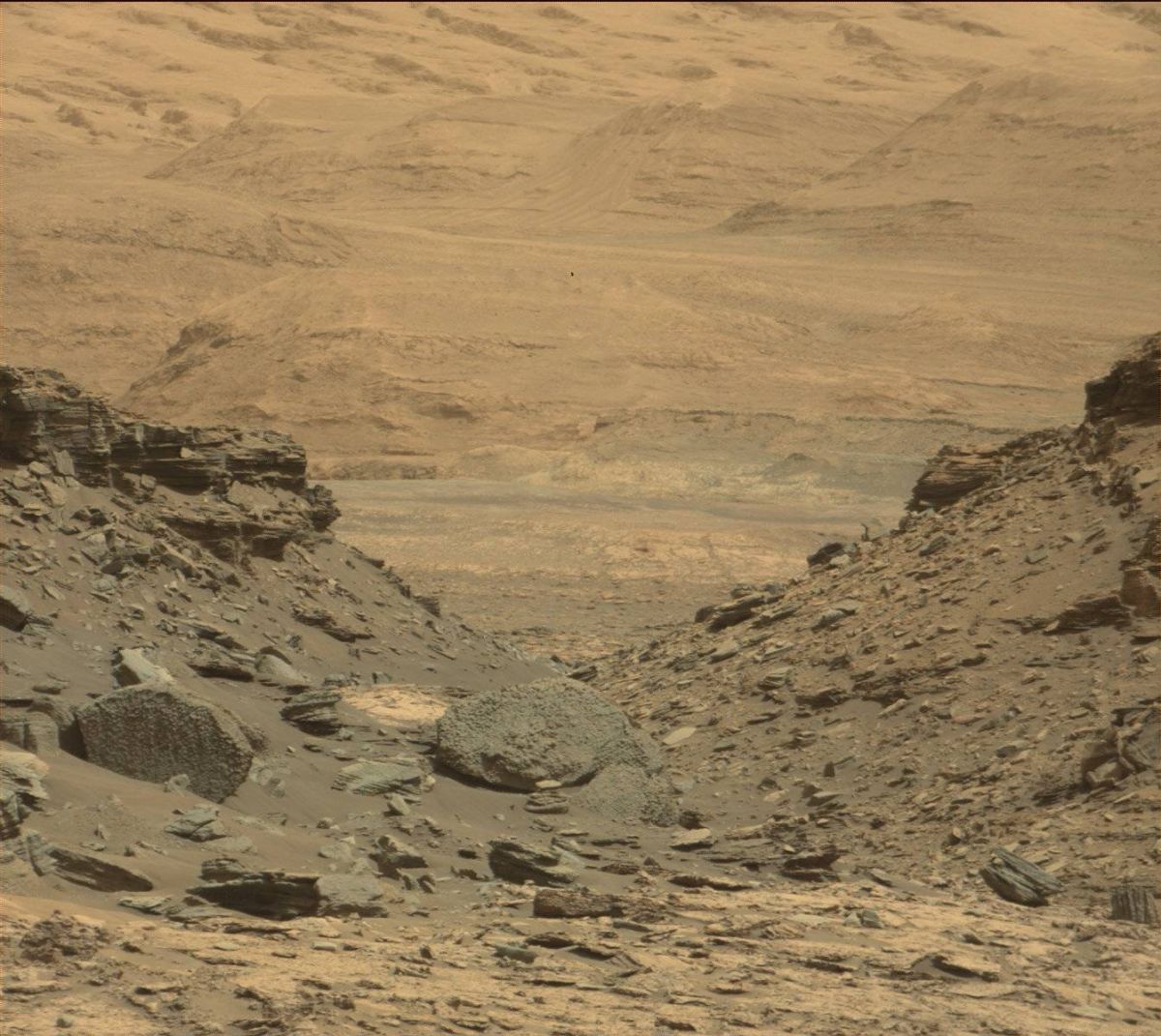
Curiosity Mastcam Right image taken on Sol 1434, August 18, 2016.
Credit: NASA/JPL-Caltech/MSSS
Now deep into Sol 1437 in its exploration of Mars, the Curiosity rover has succeeded in recent drives to various spots on the Red Planet.
“We are making good progress with our drives…we’re already approaching our next drill site…and the road in front of us is looking pretty smooth,” notes Ryan Anderson, a planetary scientist at the USGS Astrogeology Science Center in Flagstaff, Arizona.
Layered rock targets
Yesterday, on Sol 1436, the plan for the NASA robot was to start off with Chemistry & Camera (ChemCam) and Mastcam observations of the layered rock targets “Conda” and “Savungo.”
Mastcam then was slated to take a mosaic of one of the buttes, and another mosaic of an interesting feature within the Murray formation called “Chitado.”
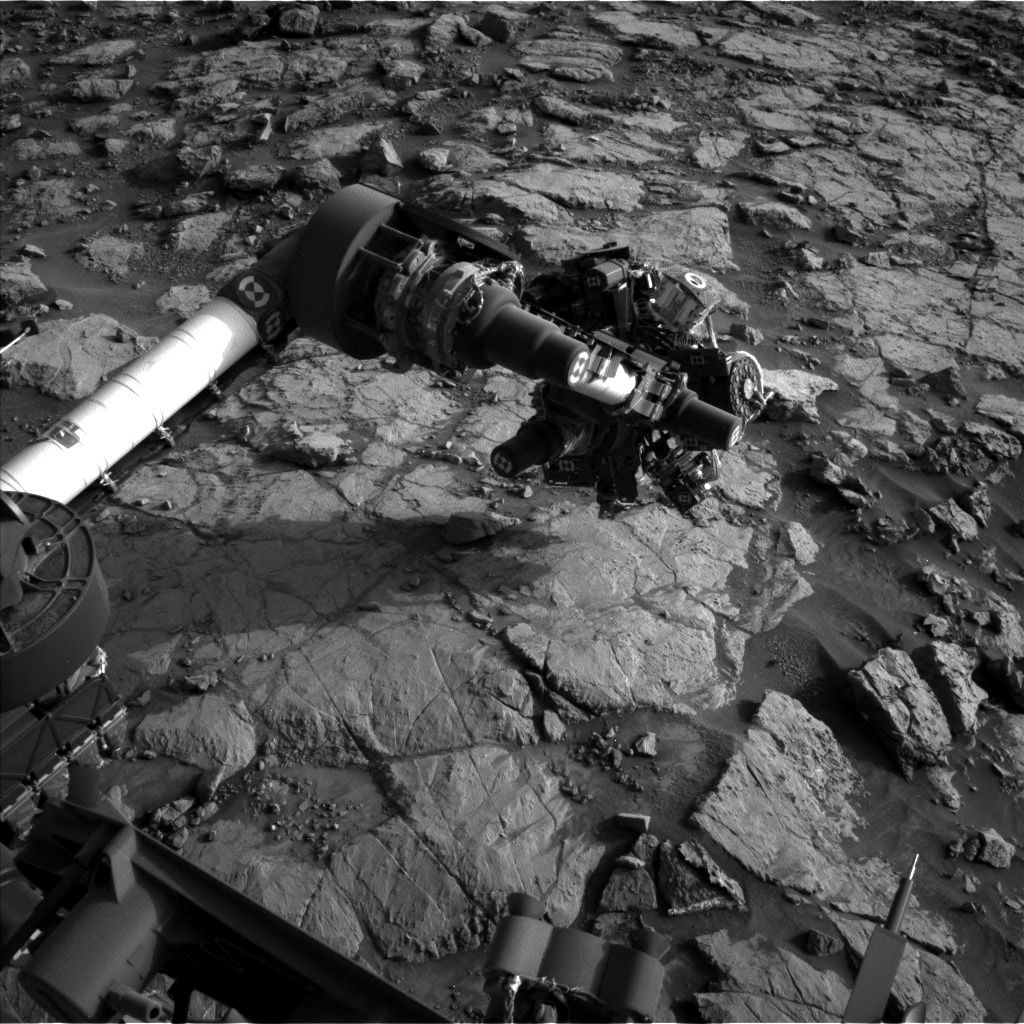
Curiosity Navcam Left B image taken on Sol 1436, August 20, 2016.
Credit: NASA/JPL-Caltech
Later in the day, the Mars Hand Lens Imager (MAHLI) will take a look at the targets “Biula” and “Conda”. Then Curiosity will brush the dust off of Conda and do an overnight Alpha Particle X-Ray Spectrometer (APXS) measurement. Chemistry & Mineralogy X-Ray Diffraction/X-Ray Fluorescence Instrument (CheMin) was also slated to do another analysis of Marimba2 overnight.
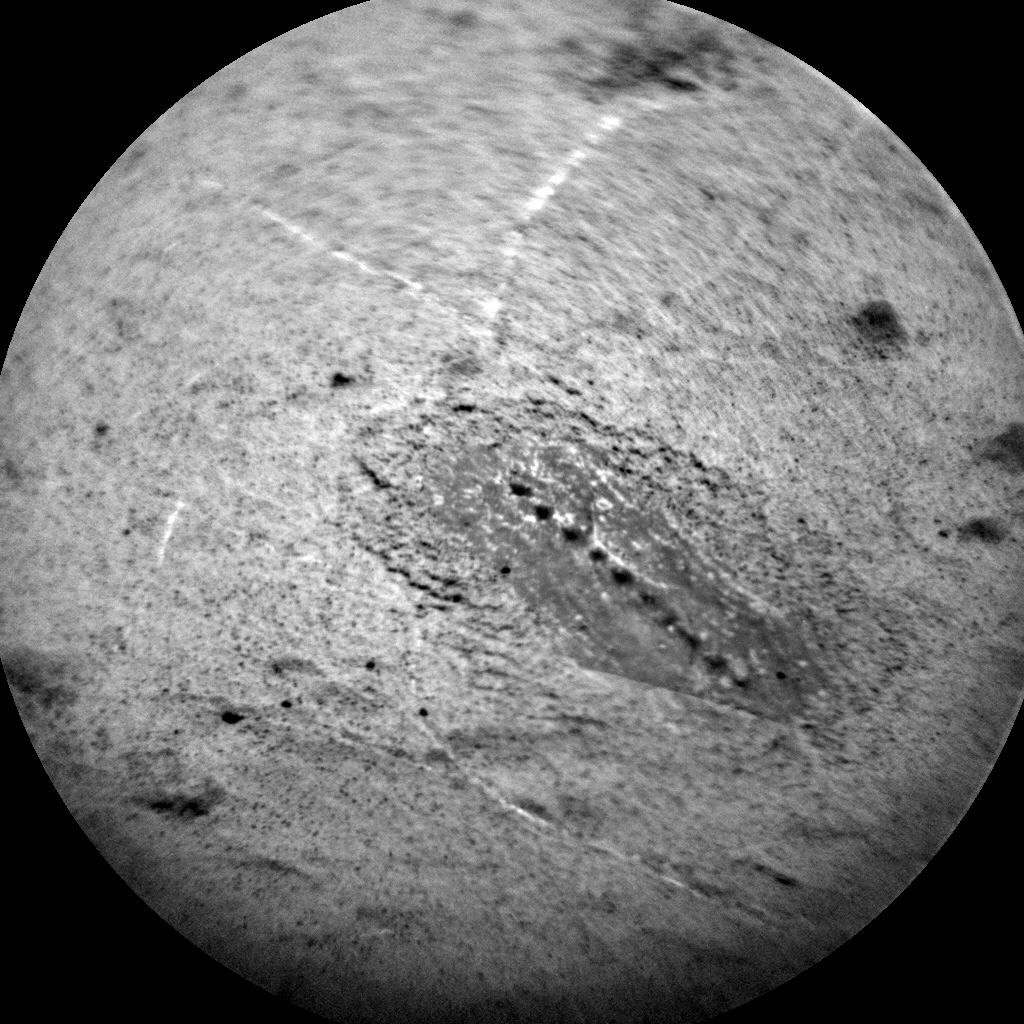
Curiosity ChemCam Remote Micro-Imager (RMI) photo taken on Sol 1436, August 20, 2016.
Image Credit: NASA/JPL-Caltech/LANL
On Sol 1437, ChemCam has on the schedule a passive observation of Conda and a Remote Micro-Imager (RMI) mosaic of the target “Chicala.”
Mastcam is then scheduled to take a picture of Chicala and do an atmospheric measurement.
Big mosaic, long drive
Anderson says that in the morning on Sol 1438, the robot’s Mastcam has a big 16×3 mosaic of the Murray Buttes, and Navcam is set to make an atmospheric observation.
Then the rover is on tap to take a long drive – perhaps up to 295 feet (90 meters) — followed by the usual post-drive imaging, Anderson says.
Dates of planned rover activities are subject to change due to a variety of factors related to the Martian environment, communication relays and rover status.
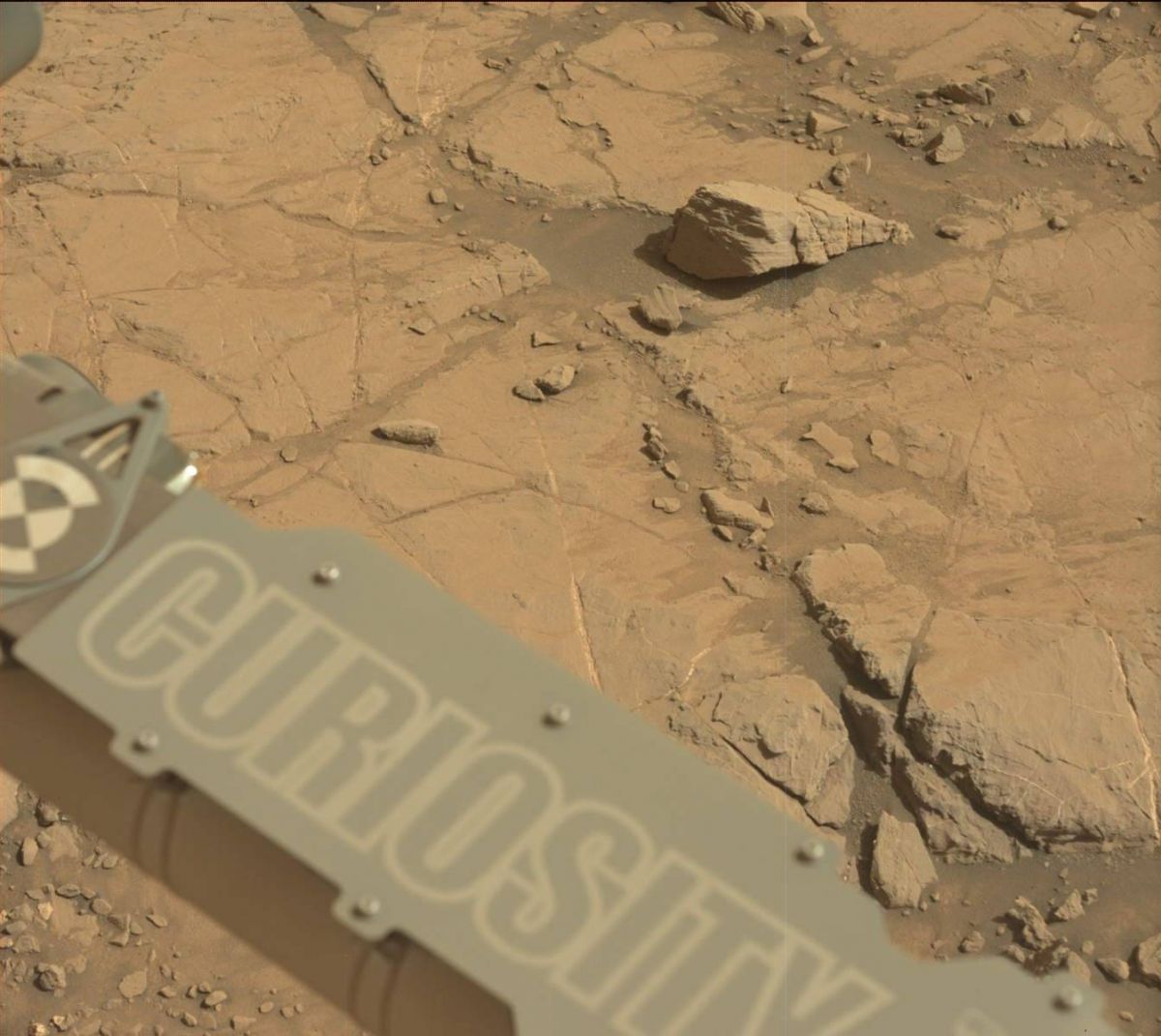
Curiosity Mastcam Left image taken on Sol 1435, August 19, 2016.
Credit: NASA/JPL-Caltech/MSSS
 Posted in Space News

